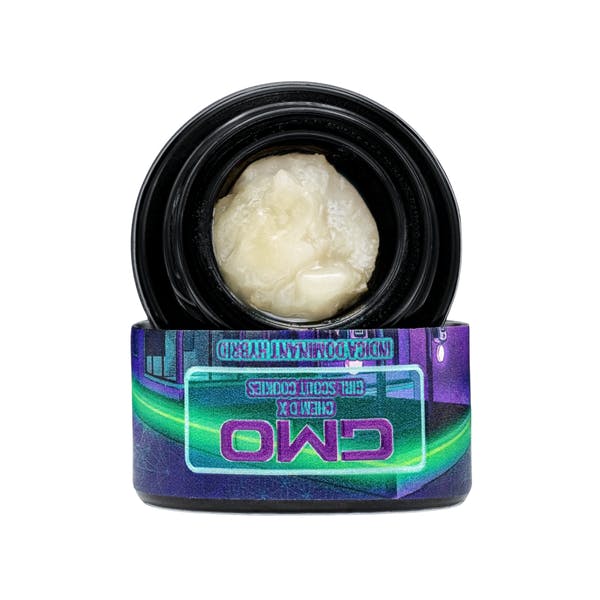
On sale· 20% OFF
THC 70.7%Indica-Hybrid
UmamiiUmamii | Live Rosin Jar | GMO · 2g
$80.00$100.00
$93after tax

weeddispensarynearme.com
You must be 21 years or older to enter. By entering, you confirm you’re of legal age in your state to purchase cannabis.
For use only by adults 21+ • Keep out of reach of children
West Village has long cultivated a reputation for discerning taste — from its farm-to-table tables on Bleecker Street to the independent boutiques lining Hudson Street. That same sensibility now extends to the cannabis shelf. Rosin, the solventless concentrate prized for its purity and expressive terpene profiles, has found a natural audience among the neighborhood's thoughtful, quality-first consumers in ZIP code 10014.
About Rosin
Rosin occupies a singular position in the New York adult-use cannabis market: it is the only major concentrate category produced entirely without chemical solvents. Rather than using butane, propane, or ethanol to strip cannabinoids from plant material, rosin is made through the application of calibrated heat and pressure alone. The result is a full-spectrum extract that retains the plant's original terpene architecture in a way that solvent-based processes often compromise. For consumers who care about what is — and is not — in their product, that distinction matters enormously. New York's Office of Cannabis Management licenses a growing cohort of cultivators and processors producing rosin under strict state oversight. Licensed rosin available through compliant dispensaries must meet testing standards for residual solvents (which, in rosin's case, should be effectively zero), pesticides, heavy metals, and microbial contaminants. Shopping through a licensed retailer is therefore the clearest path to verified quality, complete with a certificate of analysis tied to every batch. The format itself comes in several expressions. Fresh-press rosin is extracted from freshly harvested, uncured flower and tends to deliver the most vivid, volatile terpene bouquet — think bright citrus, floral, and fuel-forward notes. Hash rosin, derived from ice-water hash rather than raw flower, represents the category's premium tier: the additional refinement step yields a cleaner, more concentrated expression of the source cultivar. Cured flower rosin sits between the two in both process and price point. Consistency across these sub-formats ranges from a soft, peanut-butter-like badder to a more crystalline, sauce-adjacent texture, depending on post-processing technique and storage conditions. Understanding these distinctions helps consumers match their purchase to their preferred consumption ritual — a consideration that feels especially relevant in a neighborhood where intentionality is part of the culture.
Rosin for West Village shoppers
West Village residents inhabit one of Manhattan's most architecturally intimate neighborhoods — cobblestone side streets, Federal-style townhouses, and a street grid that deliberately resists the island's orderly logic. The pace here, relative to Midtown or even the adjacent Meatpacking District, is measured. Evenings on Christopher Street or a weekend afternoon drifting between the independent wine shops and cheese counters of Bleecker Street carry a certain unhurried quality that pairs naturally with the rosin consumer's tendency toward intentional, considered use. The neighborhood's demographic skews toward creative professionals, long-tenured residents who have watched the Village evolve across decades, and a younger cohort of design, media, and hospitality workers drawn by proximity to the Hudson River piers and the city's cultural institutions. This is a population accustomed to reading labels, asking where things come from, and paying a premium when provenance and craft justify it. Rosin's solventless story — essentially, craft cannabis in concentrated form — resonates here in the same register as a natural-process wine or a single-origin espresso. Weather plays a practical role as well. Rosin's terpene-rich consistency is sensitive to temperature: in West Village's colder months, when wind off the Hudson River makes the waterfront blocks feel considerably rawer than the temperature suggests, rosin stored in a pocket can stiffen slightly. A small, insulated travel case is worth the investment. Conversely, summer heat along the exposed stretches of Hudson Street can soften rosin toward a runnier consistency — silicone containers and cool, dark storage at home help maintain optimal texture year-round.
What to look for
When evaluating rosin at a licensed New York dispensary, the certificate of analysis is the most reliable starting point. Look for a batch-specific COA that lists terpene percentages alongside cannabinoid totals — not all retailers surface this data proactively, so it is worth asking. For rosin specifically, total THC typically ranges from the mid-60s to the low 80s percent by weight, depending on the source material and extraction technique. Hash rosin from premium, single-cultivar input tends to land toward the higher end of that range, but potency alone is a blunt instrument; terpene composition shapes the actual character of the experience far more than a THC number does. Terpene profiles worth knowing in the rosin context: myrcene contributes an earthy, herbal warmth and is commonly associated with more physically relaxing effects; limonene brings citrus brightness and tends toward an uplifted, conversational quality; caryophyllene offers spice and a subtly grounding character. Terpinolene and ocimene appear frequently in more floral, complex profiles and are often found in fresh-press expressions. For a West Village consumer planning a quiet evening in with a book or cueing up a film, a myrcene-forward rosin may suit the moment. For a social gathering around the corner from the White Horse Tavern, a limonene or terpinolene-leaning expression might feel more fitting. Format trade-offs deserve attention. Rosin badder is forgiving and easy to portion with a dab tool; sauce-and-crystals presentations require a bit more handling but reward with exceptional aromatic intensity. If you are new to concentrates, the general guidance is to start with a very small portion — a piece roughly the size of a grain of rice — and allow adequate time before reassessing. A quality nectar collector or low-temp quartz banger preserves terpenes far better than high-heat methods, which is particularly relevant for a product whose entire value proposition rests on its aromatic integrity.
Why ZenZest for rosin in West Village
ZenZest Cannabis Dispensary serves West Village shoppers primarily through its Staten Island location at 2343 Forest Ave, Staten Island, NY 10303 — approximately 11.0 miles from the heart of 10014. While that distance might seem significant on a map, ZenZest's same-day delivery program renders the geography largely academic: orders over $100 qualify for free same-day delivery to West Village addresses, covering more than 80 ZIP codes across New York. For a neighborhood where convenience and discretion are both valued, the ability to have licensed, lab-tested rosin delivered directly to a Hudson Street apartment or a Christopher Street townhouse is a meaningful amenity. ZenZest's curation philosophy aligns well with what West Village consumers tend to expect from a specialty retailer. The dispensary carries rosin across multiple price tiers and processing styles, from accessible cured-flower expressions to limited-run hash rosin from craft cultivators. Staff are trained to walk customers through COA documentation and terpene profiles rather than defaulting to THC-percentage comparisons alone. Whether you prefer to browse the full selection online and schedule delivery or make the trip to Forest Avenue for a more exploratory in-store experience, ZenZest operates as a consistent, licensed point of access to New York's premium concentrate market.
ZenZest Staten Island · 2343 Forest Ave, Staten Island, NY 10303 · 11 miles from West Village.
$93after tax
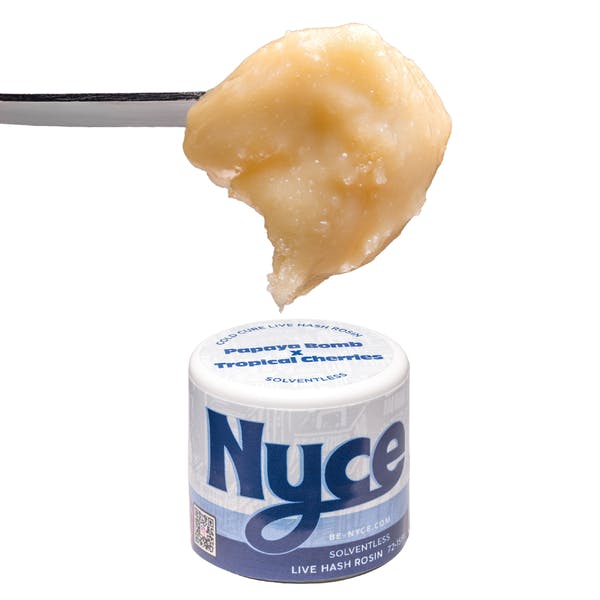
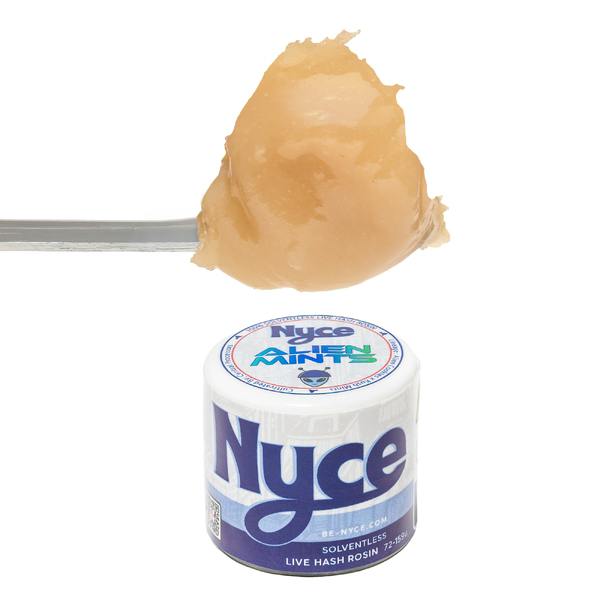
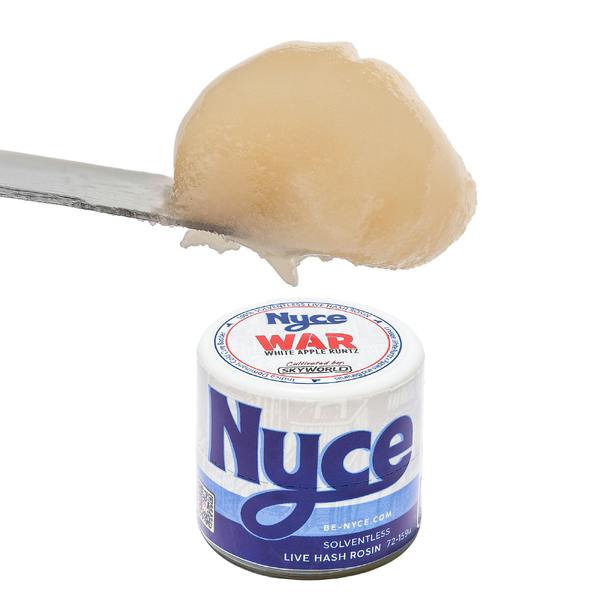
Rosin is produced using only heat and pressure — no chemical solvents such as butane, propane, or ethanol are involved at any stage. This solventless process preserves a broader range of native terpenes than most extraction methods, resulting in a flavor and aromatic profile that closely mirrors the source cultivar. For New York adult-use consumers shopping through licensed dispensaries, rosin also carries the advantage of effectively zero residual solvent content, a distinction that appears on the product's certificate of analysis.
Hash rosin begins from ice-water-extracted bubble hash rather than raw plant material, which introduces an additional refinement step before pressing. That extra process removes more plant waxes and lipids, yielding a cleaner, often more potent, and more aromatically precise final product. Whether the price differential is justified depends on what you value: if terpene clarity and purity of expression matter to you in the way a single-origin ingredient might matter to a West Village home cook, hash rosin tends to deliver a meaningfully different experience than standard flower rosin.
Rosin performs best when stored in an airtight, food-grade silicone or glass container kept away from light, heat, and humidity. In a West Village apartment — where steam-heat radiators can make winter interiors quite warm — keeping rosin in a cool cabinet or, for longer-term storage, a small dedicated refrigerator is advisable. Allow refrigerated rosin to return to room temperature before handling to avoid condensation forming on the product, which can affect texture and accelerate terpene degradation.
For a quieter, more inward occasion — a West Village evening in with a record on and no particular agenda — myrcene-dominant rosin profiles tend to align well. Myrcene contributes an earthy, herbal warmth and is one of the most prevalent terpenes in cannabis broadly. Linalool, which carries a subtly floral, lavender-adjacent quality, appears in certain cultivars and may complement a similarly restful intention. These are general tendencies, not prescriptions; individual responses vary, and starting with a small portion is always the appropriate approach.
Yes. ZenZest Cannabis Dispensary offers free same-day delivery on orders over $100, covering more than 80 ZIP codes across New York — 10014 is among them. Orders can be placed through ZenZest's online menu, with delivery coordinated to your West Village address. All products are sourced from New York state-licensed processors and arrive in compliant, sealed packaging with accompanying batch documentation available upon request.
Licensed rosin products in the New York adult-use market generally test between the mid-60s and low 80s percent total THC by weight, depending on the source material — whole flower versus bubble hash — and the specific cultivar used. Hash rosin from premium single-cultivar input tends to occupy the higher end of that range. It bears repeating that THC percentage is an incomplete picture; terpene composition shapes the qualitative character of the experience, and a lower-THC rosin with a rich, complex terpene profile will often prove more satisfying than a high-THC product with attenuated aromatics.
The most common and effective method for consuming rosin is dabbing: a dab rig (a water pipe fitted with a quartz or ceramic banger), a butane torch, and a dab tool for portioning and loading are the core components. For preserving rosin's terpene profile, low-temperature dabbing — heating the banger and allowing it to cool for 30 to 60 seconds before applying product — is strongly preferred over high-heat methods. Electronic 'e-nail' rigs offer precise temperature control and are increasingly popular among concentrate consumers who want consistency across sessions.
The blocks closest to the Hudson River Greenway experience notably stronger wind and, in winter, a penetrating cold that can affect rosin's consistency quickly — product can stiffen and become difficult to work with when exposed to temperatures below 50°F. If you plan to consume rosin outdoors near the piers, a small silicone container kept in an interior jacket pocket will maintain a more workable temperature. In summer, direct sun exposure along the waterfront can cause rosin to liquify rapidly, so keeping it shaded and capped is equally important.
Rosin can be appropriate for newer concentrate consumers, though some context is important. The potency range is significantly higher than that of whole flower, and the onset from dabbing is faster and more pronounced than from smoking or vaporizing flower. If you are transitioning from flower to concentrates for the first time, starting with the smallest reasonable portion — often described in the category as a 'rice grain' sized amount — and allowing a full fifteen to twenty minutes before considering more is the standard guidance for adult-use consumers. Rosin's expressive flavor profile also makes it a rewarding first concentrate experience for those who appreciate the sensory dimension of cannabis.
A certificate of analysis for rosin should include cannabinoid potency (total THC, total CBD, and other minor cannabinoids), terpene percentages by cultivar, and panels for residual solvents, pesticides, heavy metals, and microbial contaminants. For rosin specifically, the residual solvent panel should return non-detect results across all analytes — this is the chemical signature of a genuinely solventless product. Terpene data, when available, is arguably the most useful column for guiding a purchase decision. Any licensed New York dispensary should be able to provide or direct you to the COA for a specific product lot upon request.
Pick your store
We'll show pricing, deals, and delivery zones for the store you pick. You can switch any time from the header.