On sale· 20% OFF
THC 38.36%Hybrid
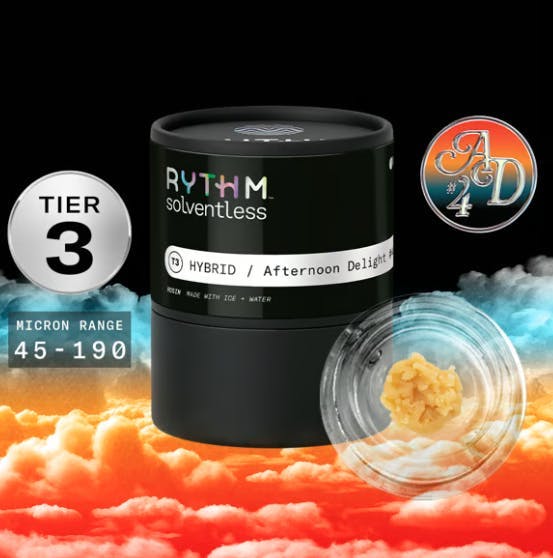
RYTHMRythm | Afternoon Delight #4 Live Resin Concentrate · 2g
$70.80$88.50
$82after tax

weeddispensarynearme.com
You must be 21 years or older to enter. By entering, you confirm you’re of legal age in your state to purchase cannabis.
For use only by adults 21+ • Keep out of reach of children
Richmond Hill, Queens — the stretch of Jamaica Avenue and Liberty Avenue where South Asian grocery shops meet Caribbean bakeries and the J and A trains rumble overhead — deserves a cannabis category as layered and alive as the neighborhood itself. Live resin, extracted from flash-frozen whole plants, captures every aromatic nuance a licensed cultivar can offer, making it the premium concentrate of choice for adults in 11418 and 11419 who want the full story of a strain.
About Live Resin
Live resin occupies a distinct tier within New York's licensed adult-use concentrate market. Unlike wax, shatter, or distillate, live resin is produced by flash-freezing cannabis plants immediately after harvest — before any curing or drying — and then extracting cannabinoids and terpenes while the plant material is still in that preserved, freshly cut state. The result is a concentrate with a terpene profile that closely mirrors what the living plant actually smelled and tasted like in its final hours, rather than a post-cure approximation. New York's Office of Cannabis Management licenses cultivators and processors who must adhere to strict testing and labeling standards before product reaches dispensary shelves. That regulatory framework means that every gram of live resin available at a licensed dispensary comes with a verified certificate of analysis, showing cannabinoid percentages, terpene percentages, and the absence of residual solvents, heavy metals, and pesticides. For consumers, this is not a minor administrative detail — it is the baseline of confidence that distinguishes the licensed market from unregulated sources. Live resin typically presents in several forms: a more fluid, sauce-like consistency rich in terpenes and THCA crystalline structures; a badder or budder texture that has been whipped to a creamier state; and live resin cartridges, which suspend the extract in its natural terpene matrix rather than adding cutting agents. Each format has its own shelf life, handling characteristics, and consumption ritual. Understanding these distinctions before making a purchase allows the consumer to match format to lifestyle rather than defaulting to the most familiar option. Because terpenes are preserved at unusually high percentages in quality live resin — often two to five times the concentration found in cured-flower extracts — the aromatic and sensory experience is markedly richer. Consumers who have only encountered distillate cartridges frequently describe switching to live resin as hearing a familiar song played on a full orchestra rather than a single instrument.
Live Resin for Richmond Hill shoppers
Richmond Hill is a neighborhood of commuters and entrepreneurs, a place where Liberty Avenue commerce starts early and the J and A lines carry residents to Midtown and Lower Manhattan for long workdays. The rhythm of daily life here — dense, purposeful, and multicultural — shapes how residents approach premium cannabis products. Live resin, with its emphasis on sensory depth and versatility of format, suits a community that appreciates quality without pretension, the kind of neighborhood where the best roti shop and the best record store share the same block. Seasonally, Richmond Hill's humid summers and sharp winters along the Myrtle Avenue corridor create natural occasions where concentrate formats outperform flower for discretion and portability. A live resin cartridge slips into a jacket pocket without carrying the aromatic footprint of loose cannabis, a meaningful consideration on a crowded J train platform under the elevated track at Jamaica Avenue. During the warmer months, when residents gather on stoops and in small backyards throughout 11419, a dab rig or a small portable e-nail with live resin provides a more measured, flavorful experience than combustion. The neighborhood's diverse population — with deep roots in South Asian, Indo-Caribbean, Guyanese, and Trinidadian communities — brings a cultural familiarity with botanical aromatics, herbal preparations, and the nuanced language of flavor. That sensibility translates naturally to live resin appreciation. Someone who has grown up distinguishing between a Scotch bonnet and a habanero, or between cumin-forward and coriander-forward spice blends, is already equipped to notice the difference between a limonene-dominant live resin and a myrcene-dominant one.
What to look for
When evaluating live resin at a licensed New York dispensary, the certificate of analysis is the starting point, not an afterthought. Look for total terpene percentages that exceed one percent by weight — quality live resin will often land between two and five percent, and exceptional batches may exceed that. The specific terpene composition matters more than any single cannabinoid number. Myrcene tends toward a heavier, earthy, relaxing profile; limonene brings citrus brightness and a more uplifted character; caryophyllene adds a peppery warmth with potential anti-inflammatory properties that many consumers find appealing. Terpinolene and ocimene appear in sativa-leaning cultivars and deliver herbal, almost floral complexity. THC potency in live resin typically ranges from sixty to eighty-five percent, significantly higher than flower. This is relevant information for anyone approaching the category for the first time — starting low and going slow is the standard guidance, and that advice is especially worth heeding with concentrates. A very small amount, well below what might feel intuitive, is the appropriate entry point. Experienced consumers will develop their own calibration over time, but patience in the early sessions protects the experience. For Richmond Hill residents weighing format choices, consider how and where consumption is most likely to happen. Live resin cartridges offer the most accessible entry point, requiring only a compatible 510-thread battery and no additional equipment. Sauce and badder formats deliver the most expressive terpene experience but require a dab rig or portable e-nail, an investment that pays dividends over time if concentrate use becomes a regular practice. For anyone making a longer commute out of 11418 or 11419, the cartridge format is pragmatically superior on weekday mornings, while the rig-based experience is better suited to a relaxed evening at home on a quiet residential block.
Why ZenZest for live resin in Richmond Hill
ZenZest Cannabis Dispensary's Queens location at 272-06 Union Tpke in Bellerose sits approximately 6.8 miles from the heart of Richmond Hill — a straightforward drive east along Jamaica Avenue or Union Turnpike, or accessible via a combination of the J train and local transit. The store carries a curated selection of licensed New York live resin products across formats, with staff who can walk through certificates of analysis, explain terpene profiles, and help consumers match a specific extract to their experience level and preferred occasions. The retail environment is designed to feel unhurried and informative rather than transactional. For residents in ZIP codes 11418 and 11419 who prefer not to make the trip, ZenZest offers free same-day delivery on orders over one hundred dollars to more than eighty New York ZIP codes, both of which are delivery-eligible. Orders can be placed through the ZenZest website and typically arrive the same day, making it possible to receive licensed, lab-tested live resin without leaving the neighborhood. Whether shopping in-store at Union Turnpike or ordering for delivery to a Richmond Hill address, ZenZest maintains the same standard of product verification and customer experience.
ZenZest Queens · 272-06 Union Tpke, Bellerose, NY 11004 · 6.8 miles from Richmond Hill.
$82after tax
The defining difference is the extraction starting material. Most concentrates begin with dried and cured cannabis, which has already lost a significant portion of its terpene content through the drying process. Live resin starts with flash-frozen fresh plant material, preserving the terpene profile much closer to its natural state. The result is a concentrate that smells and tastes substantially more complex and true to the original cultivar. For consumers in Richmond Hill who are new to concentrates, this distinction explains why two products with similar THC percentages can feel and smell entirely different.
Yes, live resin is substantially more potent than flower by comparison of similar volumes. Flower typically ranges from fifteen to thirty percent THC; live resin often falls between sixty and eighty-five percent. For anyone new to concentrates, the practical guidance is to treat the first session as an information-gathering exercise rather than a full experience. A very small amount — smaller than feels intuitive — is the right starting point. Give the experience time to develop before considering additional consumption. This approach, sometimes described as 'start low, go slow,' is consistent across all licensed New York adult-use products.
The most common formats are live resin cartridges, sauce, badder or budder, and sugar. Cartridges are the most portable and require only a compatible 510-thread battery. Sauce and badder formats deliver the richest terpene expression but require a dab rig or portable electronic nail. For residents making daily commutes from the J or A train stops along Jamaica Avenue and Liberty Avenue, a cartridge offers the most practical format during the week, with rig-based formats better suited to home use on less hectic evenings.
A certificate of analysis is a third-party lab report that verifies cannabinoid percentages, terpene percentages, and confirms the absence of harmful contaminants including residual solvents, pesticides, and heavy metals. New York's licensed dispensaries are required to carry products that meet OCM testing standards, and COAs should be accessible either on the product packaging or via a QR code. For live resin specifically, pay attention to the terpene section — a high total terpene percentage, typically two percent or above, indicates a more aromatic and characterful product.
Terpenes associated with more uplifting, cerebral experiences tend to include limonene, terpinolene, ocimene, and pinene. Limonene carries a citrus character and is commonly found in sativa-leaning cultivars. Terpinolene appears in strains described as herbal or floral and is often noted for a lighter, more alert quality. Ocimene adds a bright, sweet dimension. If the COA shows myrcene as the dominant terpene, expect a heavier, more body-centered effect. For Richmond Hill residents looking for a product suited to social evenings or creative time rather than rest, a limonene or terpinolene-forward live resin is worth requesting.
Both Richmond Hill ZIP codes — 11418 and 11419 — are within ZenZest's same-day delivery coverage area. Free same-day delivery applies to orders over one hundred dollars. Live resin, including cartridges, sauce, and badder formats, qualifies as part of that order minimum. Delivery is conducted by licensed adult-use personnel in accordance with New York State OCM regulations. Recipients must be twenty-one or older and present a valid government-issued ID at the time of delivery. Orders can be placed directly through the ZenZest website.
Live resin is sensitive to heat, light, and air exposure, all of which accelerate terpene degradation. The ideal storage environment is a sealed, airtight container kept in a cool, dark place — a drawer or cabinet away from any heat source. Refrigeration is acceptable for non-cartridge formats if the concentrate is in a sealed silicone or glass container, though condensation upon removal can introduce moisture. In a Richmond Hill apartment during summer months, when ambient temperatures can climb, keeping live resin away from windowsills and countertops near stoves is particularly important.
The extraction method is the primary distinction. Live resin cartridges are produced using hydrocarbon or CO2 solvent extraction from fresh-frozen plant material. Live rosin cartridges use a solventless process — typically heat and pressure — applied to fresh-frozen material or fresh-frozen bubble hash. Both preserve terpene content more effectively than distillate cartridges. Live rosin is generally considered the more premium solventless option and tends to carry a higher price point. Live resin cartridges are more widely available across New York's licensed market and offer an accessible introduction to full-spectrum concentrate formats.
For sauce or badder, the standard tool is a dab rig: a water pipe fitted with a banger or nail made of quartz, titanium, or ceramic, heated with a torch. Many experienced concentrate consumers prefer quartz bangers for their neutral flavor retention. A more approachable alternative for beginners is a portable electronic nail or e-rig, which maintains a consistent temperature without an open flame. Temperature control matters significantly with live resin — lower temperatures, roughly between 450 and 550 degrees Fahrenheit, preserve the most terpene expression. Higher temperatures produce larger vapor but sacrifice nuance.
Under New York's Marijuana Regulation and Taxation Act, all concentrate products including live resin must be produced by OCM-licensed processors, tested by accredited third-party laboratories, and sold through licensed dispensaries or licensed delivery services. Products cannot make health or medical claims on packaging. THC concentration limits and labeling requirements for concentrates are defined by OCM rules and are periodically updated. For consumers in Richmond Hill, this regulatory framework means that any live resin purchased through a licensed channel like ZenZest has passed verified safety testing — a meaningful assurance that unregulated products cannot provide.
Pick your store
We'll show pricing, deals, and delivery zones for the store you pick. You can switch any time from the header.