On sale· 20% OFF
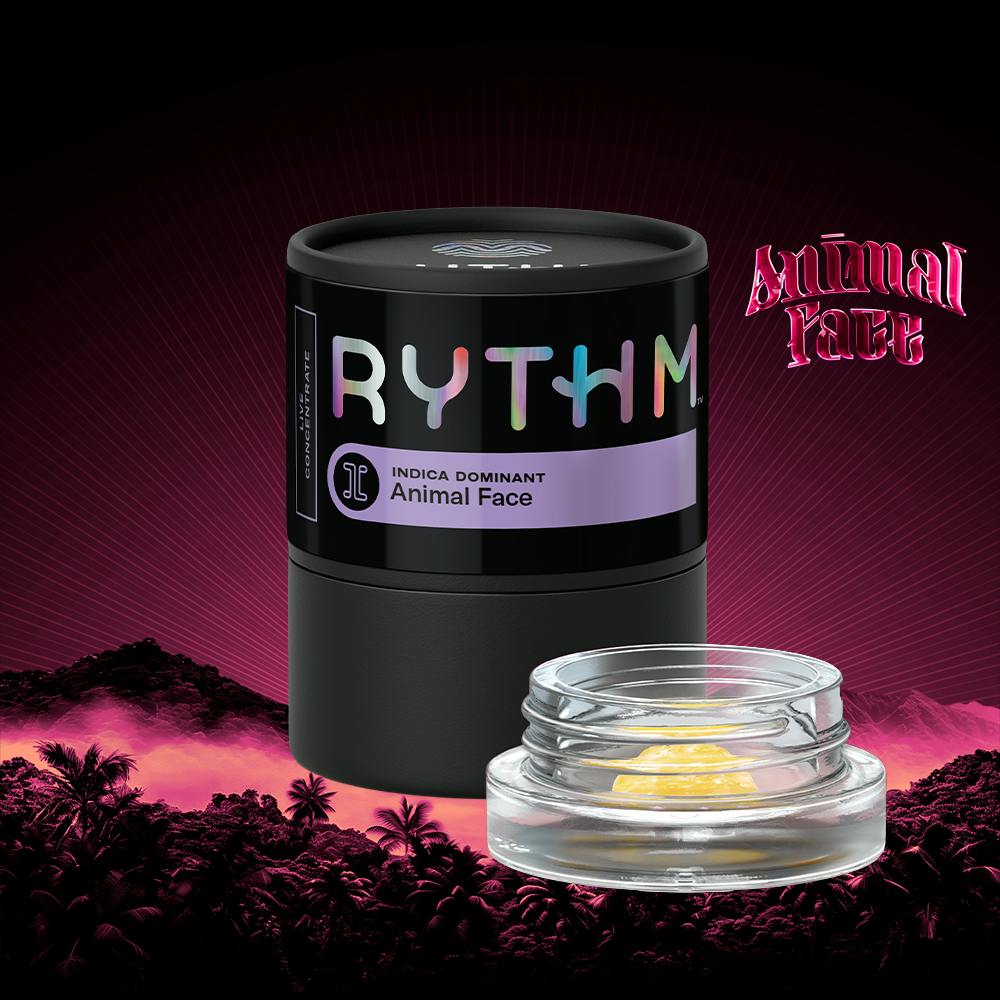
THC 79.9%Indica-Hybrid
RYTHMRythm | Animal Face | Live Resin Concentrate | Indica · 2g
$72.22$90.27
$84after tax

weeddispensarynearme.com
You must be 21 years or older to enter. By entering, you confirm you’re of legal age in your state to purchase cannabis.
For use only by adults 21+ • Keep out of reach of children
Greenpoint, Brooklyn's northernmost waterfront neighborhood, has cultivated a reputation for discerning taste — from its Polish bakeries on Manhattan Avenue to the design studios clustered near Franklin Street. That same sensibility extends to cannabis. For adults 21 and older seeking live resin in 11222, the category rewards the kind of patience and curiosity that Greenpoint residents tend to bring to everything they consume.
About Live Resin
Live resin occupies a distinct and privileged position within the New York licensed cannabis market. Unlike conventionally extracted concentrates, live resin is produced from cannabis biomass that has been flash-frozen immediately after harvest — before any curing or drying takes place. This preservation technique locks in the plant's full terpene profile at its most volatile and expressive moment, yielding a product that carries the aromatic complexity of a living flower rather than the flatter, more muted character of dried-and-cured starting material. The result is a concentrate with notably elevated terpene concentrations: myrcene, limonene, caryophyllene, linalool, and pinene tend to appear in measurable proportions that dried-flower or traditionally extracted products rarely match. That terpene richness translates directly into a more nuanced sensory experience — the so-called entourage effect, in which cannabinoids and terpenes interact synergistically, is often cited by enthusiasts as the central argument for live resin over simpler formats. Within New York State's licensed adult-use framework, live resin is sold in several common forms: sauce (a viscous, crystalline-rich consistency), sugar (a granular, slightly wet texture), badder or batter (a whipped, opaque consistency), and live resin cartridges designed for use with standard 510-thread batteries. Each consistency carries trade-offs in handling, storage, and intensity of flavor. Potency across formats generally ranges from the mid-60s to the high-80s in total THC percentage, though cannabinoid content alone is a limited proxy for quality — terpene percentage and freshness are equally informative indicators. For consumers new to concentrates, the general principle of starting with the smallest possible amount and waiting to assess the experience before adding more remains the most reliable guidance. Live resin is significantly more concentrated than flower or infused pre-rolls, and the margin between a satisfying and an overwhelming experience is narrower than with lower-potency formats.
Live Resin for Greenpoint shoppers
Greenpoint's character is built on a particular kind of slow attentiveness. The neighborhood is not performatively rushed. On a weekday afternoon, Manhattan Avenue still moves at a pace that allows for browsing, for conversation, for noticing things. Transmitter Park, with its unobstructed views of the Manhattan skyline across the East River, draws residents who are comfortable sitting with an experience rather than accelerating through it. That temperament aligns naturally with live resin — a category that rewards deliberate, low-and-slow consumption and a willingness to pay attention to what is actually in the product. Seasonally, Greenpoint's proximity to the waterfront creates weather conditions that are relevant to concentrate storage and use. Winters along the East River corridor can be genuinely cold, with wind off the water intensifying the chill on Franklin Street and around the park. Live resin, particularly looser sauce and sugar consistencies, benefits from cool, dark storage — conditions that Greenpoint winters provide incidentally when products are transported home. Summer months bring humidity that, if concentrates are not sealed properly, can subtly affect texture and terpene stability. The neighborhood also draws a creative professional demographic — architects, writers, photographers, and designers whose work requires sustained attention and a capacity for lateral thinking. This is a community already practiced in the art of noticing nuance. Live resin, with its layered aromatic profiles and the conversation it invites about cultivar origin and terpene expression, fits the intellectual curiosity that defines the Greenpoint resident as much as the neighborhood's beloved pierogi joints or its independent bookshop sensibility.
What to look for
When evaluating live resin in New York's licensed market, the first thing worth examining is the terpene percentage listed on the certificate of analysis — not just the total THC figure. A live resin product with a terpene content above two percent is generally considered expressive; above three percent signals exceptional preservation of the fresh-frozen plant's aromatic character. Look for COAs that break down individual terpenes rather than offering only a total figure, as the specific profile — whether myrcene-forward and earthy, limonene-dominant and citric, or caryophyllene-heavy and subtly spiced — tells you considerably more about the likely experience than THC percentage alone. Format selection matters practically for Greenpoint residents. Live resin sauce or badder consumed via a dab rig or e-rig offers the most complete terpene expression but demands dedicated equipment and a stationary setting — better suited to an evening in one of the neighborhood's converted-loft apartments than to a session at Transmitter Park. Live resin cartridges offer significantly more discretion and portability, and the best examples within New York's licensed catalog preserve a recognizable terpene character relative to their jarred counterparts, though some volatilization during the oil-preparation process is unavoidable. For Greenpoint shoppers specifically, it is worth asking licensed dispensary staff about the harvest-to-freeze interval for any live resin on the shelf — shorter windows correlate with better terpene retention — and about storage conditions during distribution. New York's licensed supply chain has matured considerably, but product turnover velocity varies. A jar of live resin that has sat in suboptimal conditions for several months will not deliver the aromatic complexity that makes the format worth its premium price point. Freshness, here, is not a marketing word but a technical reality.
Why ZenZest for live resin in Greenpoint
ZenZest Cannabis Dispensary operates its Queens location at 272-06 Union Tpke in Bellerose, NY 11004 — approximately 12.4 miles from Greenpoint's 11222 ZIP code. The store's licensed inventory spans the full range of live resin formats available within New York's adult-use market, including sauce, badder, sugar, and 510-thread live resin cartridges from state-licensed producers. Staff at the Queens location are available to walk through certificates of analysis, discuss terpene profiles, and help shoppers identify products matched to their experience level and preferred consumption method. For Greenpoint residents who prefer not to make the trip to Queens, ZenZest offers free same-day delivery on orders over one hundred dollars to more than eighty New York ZIP codes, with 11222 among the eligible areas. Orders can be placed directly and delivered to a Greenpoint address without a minimum beyond that threshold — a practical option for stocking up on multiple live resin formats or pairing a concentrate purchase with flower or accessories to meet the delivery minimum. All transactions are conducted in compliance with New York State adult-use regulations; valid government-issued ID confirming age 21 or older is required at the point of delivery.
ZenZest Queens · 272-06 Union Tpke, Bellerose, NY 11004 · 12.4 miles from Greenpoint.
$84after tax
$56after tax
The defining distinction is the starting material. Live resin begins with cannabis that has been flash-frozen immediately after harvest, before any drying or curing occurs. This preserves the plant's terpene content at its peak — the aromatic compounds that contribute most to flavor, scent, and the nuanced character of the experience. Conventionally extracted concentrates use dried and cured biomass, which allows a portion of those volatile terpenes to evaporate before extraction even begins. The result is a concentrate with measurably higher and more complex terpene profiles than shatter, wax, or standard distillate.
It can be, provided the approach is genuinely conservative. Live resin is significantly more concentrated than flower or infused pre-rolls, with total THC content typically ranging from the mid-60s to the high-80s in percentage terms. For someone transitioning from flower, starting with the smallest possible amount — and waiting a full fifteen to twenty minutes to assess the effect before considering more — is essential guidance. Live resin cartridges offer a more measured entry point than jarred concentrates consumed via a rig, as inhalation volume is easier to control with a standard 510-thread vaporizer.
Portability and discretion favor live resin cartridges for any outdoor setting, including Transmitter Park along Greenpoint's waterfront. Jarred consistencies like sauce, badder, or sugar require a dab rig or e-rig — equipment that is not practical for public use and is not permitted in New York's public spaces regardless. A live resin cartridge used with a standard 510-thread battery is the format that best preserves the category's aromatic complexity while remaining compatible with an outdoor, mobile context. Note that New York law prohibits cannabis consumption in many public spaces; always verify applicable local rules.
Live resin performs best when stored in a cool, dark environment — ideally between 60 and 70 degrees Fahrenheit, away from direct light and heat sources. Greenpoint's winter temperatures are naturally conducive to this, but centrally heated apartments can create warm ambient conditions that accelerate terpene degradation over time. A dedicated, airtight silicone or glass container stored in a cool cabinet or drawer is preferable to leaving product in a vehicle or near a window. For live resin sauce or sugar specifically, minimizing the number of times the jar is opened reduces oxidation and preserves freshness.
Terpene preference is personal, and no terpene profile should be treated as a guaranteed outcome — individual responses vary. That said, myrcene-dominant profiles are commonly associated by enthusiasts with a more grounded, settled character, while linalool (a floral, slightly herbal terpene also present in lavender) appears frequently in cultivars described as conducive to relaxation. Caryophyllene, which also occurs in black pepper and cloves, is notable for its interaction with the body's endocannabinoid system through CB2 receptors. Asking a licensed dispensary for the COA terpene breakdown before purchase is the most reliable way to make an informed selection.
In most cases within New York's licensed market, yes — the premium reflects genuine production complexity. Flash-freezing biomass immediately post-harvest requires logistical coordination and specialized equipment that dry-and-cure workflows do not demand. Solvent-based live resin extraction (typically using hydrocarbons like butane or propane) and solventless live rosin extraction (using ice water and pressure) both require careful processing and laboratory quality control. The resulting terpene fidelity and aromatic complexity are measurably different from conventionally extracted concentrates. Whether the price difference is worth it depends on how much terpene character matters to the individual consumer.
Yes. ZenZest Cannabis Dispensary offers free same-day delivery on orders exceeding one hundred dollars, and the 11222 ZIP code in Greenpoint is within the service area covering more than eighty New York ZIP codes. Orders are placed directly through ZenZest and delivered in compliance with New York State adult-use regulations. A valid government-issued ID confirming the recipient is 21 or older is required at the point of delivery. Combining a live resin purchase with other licensed products — flower, cartridges, accessories — is a practical way to reach the delivery threshold.
Both begin with flash-frozen fresh cannabis, which is what places them in the 'live' category and distinguishes them from conventionally extracted products. The processing diverges significantly from that point: live resin uses a solvent — typically butane or propane — to pull cannabinoids and terpenes from the frozen plant material, while live rosin uses only ice water, agitation, and heat and pressure, making it a solventless product. Solventless live rosin generally commands a higher price due to the labor intensity of production. Both are available within New York's licensed market, though live resin in its various consistencies currently has broader availability and a wider price range.
A certificate of analysis from an ISO-accredited New York testing laboratory will report cannabinoid content — total THC, total CBD, and minor cannabinoids — along with terpene percentages, either as a total figure or broken down by individual compound. For live resin evaluation, prioritize the terpene breakdown: a product reporting total terpenes above two percent and listing five or more individual terpenes is demonstrating genuine aromatic complexity. Also look for the testing date — freshness matters for concentrates. Any COA should confirm the product has passed testing for residual solvents, pesticides, heavy metals, and microbial contaminants, all of which are mandatory within New York's licensed framework.
Humidity and temperature fluctuation are the primary environmental concerns for live resin in Greenpoint's waterfront climate. Live resin cartridges are generally the most weather-resilient format for transport and on-the-go use — the oil is sealed within the cartridge hardware and less exposed to ambient conditions than an open jar. Among jarred consistencies, badder and batter textures tend to be more stable across modest temperature variation than sauce, which can separate or become runnier when warmed. Whatever format you choose, keeping the product in its sealed, licensed packaging until you reach a stable indoor environment is the most reliable precaution against climate-related quality degradation.
Pick your store
We'll show pricing, deals, and delivery zones for the store you pick. You can switch any time from the header.