
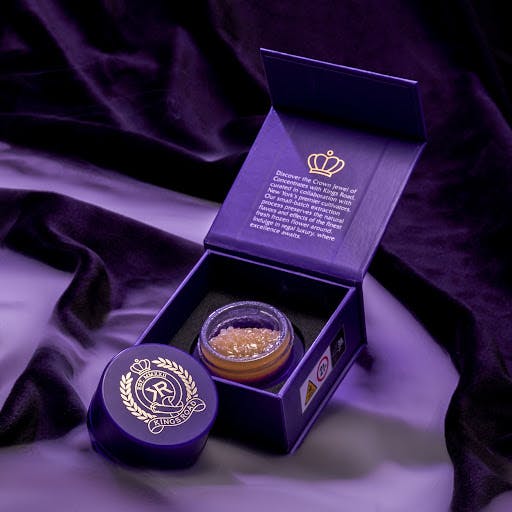
Brooklyn · Live Resin
Best Live Resin in Clinton Hill, Brooklyn
Clinton Hill, Brooklyn — the leafy, landmarked corridor where Pratt Institute's creative energy meets the brownstone elegance of Clinton Avenue — has cultivated a discerning cannabis culture to match its aesthetic. Live resin, the solvent-extracted concentrate prized for its preservation of the living plant's full aromatic and cannabinoid profile, finds a natural home among the neighborhood's design-literate, flavor-forward residents.
About Live Resin
Live resin occupies a distinct tier within the New York licensed concentrate market. Unlike cured-resin extracts, live resin is produced from cannabis that has been flash-frozen immediately at harvest, before any drying or curing can degrade the plant's native terpene content. The result is a concentrate that retains a richer, more complex aromatic signature — the kind of nuanced profile that differentiates a single-origin coffee from a commodity blend. In practical terms, New York adult-use consumers shopping for live resin will encounter it in several formats: sauce, sugar, badder, and cartridges are the most common presentations on licensed dispensary shelves. Sauce tends to preserve the highest terpene fractions and is characterized by crystalline THCA structures suspended in a viscous, aromatic liquid. Badder and sugar offer slightly different textures suited to varying consumption tools. Live resin cartridges — oil extracted via the live resin process and loaded into a vape hardware unit — deliver the aromatic complexity of the extract in a portable, lower-commitment format. All products sold through New York State licensed dispensaries are tested by accredited third-party laboratories and must carry a Certificate of Analysis confirming cannabinoid potency, residual solvents, pesticides, and microbial safety. For concentrate shoppers, reviewing the COA is not optional etiquette — it is the essential step that distinguishes a premium purchase from an uninformed one. Total terpene percentage, often listed separately, is the figure that most directly predicts the aromatic experience you will have. Live resin in New York typically presents THC concentrations between 65 and 90 percent depending on format, with cartridges trending toward the lower end and sauce or badder reaching the higher range. First-time concentrate users are encouraged to start low and go slow, allowing time to assess individual response before increasing consumption.
Live Resin for Clinton Hill shoppers
Clinton Hill's particular character — the unhurried weekend mornings on Clinton Avenue, the graduate students sketching in Pratt's sculpture garden, the practiced mix of restored Victorian rowhouses and converted industrial lofts along Myrtle Avenue — describes a community that tends to approach leisure deliberately and with some degree of connoisseurship. That sensibility translates directly to how the neighborhood's cannabis consumers engage with live resin. The category rewards patience and attentiveness, qualities that align with the creative-professional demographic concentrated in ZIP codes 11205 and 11238. A live resin sauce opened in a quiet apartment on Waverly Avenue, evaluated for its terpene profile before a studio session, is a fundamentally different experience than grabbing a pre-roll on a commute. The format asks something of its user — proper storage, appropriate hardware, a moment of intention — and Clinton Hill residents, accustomed to caring for vintage furniture and keeping a considered home, are generally well-suited to that relationship. Seasonally, Brooklyn's winters bear on the conversation as well. Live resin concentrates, unlike flower, are not meaningfully affected by the cold temperatures that can dry out and degrade cannabis bud during the stretch from December through March. Properly sealed in a glass container and kept away from direct light, a quality sauce or badder holds its terpene integrity through the kinds of cold snaps that roll off the East River and settle over the neighborhood's park-side blocks. For Clinton Hill residents who consume primarily at home rather than outdoors, live resin's storage stability is a practical advantage worth noting.
What to look for
Selecting a live resin product begins with the Certificate of Analysis, specifically the terpene panel. The dominant terpenes will do the most to shape the character of the experience. Myrcene, found in many indica-leaning cultivars, contributes an earthy, slightly musky warmth. Limonene brings citrus brightness and tends to appear in more sativa-forward profiles. Caryophyllene, which binds to CB2 receptors, carries a peppery depth and is increasingly associated with calming qualities. Terpinolene and ocimene signal more herbaceous, floral expressions often found in cultivars like Dutch Treat or some Haze descendants. For Clinton Hill's creative-professional residents, a live resin with a complex, multi-terpene profile — rather than a single dominant note — will generally reward closer attention. Format trade-offs matter practically. Live resin sauce and badder require a dab rig or a purpose-built electronic dab device, an upfront investment that delivers the fullest expression of the extract but is not suited to casual or portable use. Live resin cartridges sacrifice a degree of the terpene ceiling in exchange for convenience and discretion — a legitimate trade for the Pratt graduate student commuting to a studio in Bushwick or the professional heading to a co-working space near Myrtle-Willoughby. Disposable live resin vape pens occupy a middle ground: no hardware commitment, but single-use and less economical over time. For Clinton Hill shoppers specifically, consider THC range relative to your experience with concentrates. Products in the 70 to 80 percent THC range with a robust terpene panel often deliver a more textured experience than a high-THC, low-terpene alternative. The entourage effect — the interplay of cannabinoids and terpenes — is most intact in a well-preserved live resin, which is the entire premise of the category. Start with a modest amount, allow the experience to develop fully, and evaluate from there.
Why ZenZest for live resin in Clinton Hill
ZenZest Cannabis Dispensary serves Clinton Hill residents through its Staten Island location at 2343 Forest Ave, Staten Island, NY 10303, approximately 10.7 miles from the heart of the neighborhood. The store's licensed inventory is curated with the same attention to sourcing and transparency that the Clinton Hill market demands — staff can speak to COA data, help navigate terpene profiles, and assist customers in matching a live resin format to their specific hardware and lifestyle. For those who prefer to shop from home, ZenZest offers free same-day delivery on orders over $100 across more than 80 New York ZIP codes, with Clinton Hill's 11205 and 11238 among the eligible areas. The delivery model suits the neighborhood's pace particularly well — selecting a live resin product from a verified menu, reviewing lab data at leisure, and receiving it the same day at a Clinton Avenue brownstone or a Myrtle Avenue apartment is a materially better experience than navigating an unfamiliar retail environment. Adult-use customers 21 and older can explore ZenZest's current concentrate inventory online.
ZenZest Staten Island · 2343 Forest Ave, Staten Island, NY 10303 · 10.7 miles from Clinton Hill.
Live live resin for Clinton Hill
Full live resin menu →Live Resin in Clinton Hill — answers
What makes live resin different from other concentrates available at New York licensed dispensaries?+
Live resin is distinguished by its production process: the source cannabis is flash-frozen immediately after harvest rather than dried and cured. This preserves a significantly higher fraction of the plant's native terpenes — the aromatic compounds responsible for flavor and much of the experiential nuance. Cured-resin extracts are made from dried material and inevitably lose a portion of those volatile terpenes during processing. For Clinton Hill consumers who approach cannabis with the same interest in provenance and complexity they bring to food or wine, that distinction is meaningful rather than merely technical.
Is live resin appropriate for someone who primarily smokes flower and has never used concentrates before?+
It can be, with the right preparation. Live resin concentrates — particularly sauce and badder — are substantially more potent by weight than flower, with THC concentrations typically between 65 and 90 percent compared to flower's usual 18 to 30 percent range. New York adult-use consumers approaching concentrates for the first time should start with a very small amount, wait to assess the full effect before consuming more, and choose a format like a live resin cartridge, which allows more incremental control than dabbing. There is no urgency to consume a large quantity; the terpene-forward experience of live resin is perceptible at modest doses.
What hardware do I need to consume live resin sauce or badder at home in Clinton Hill?+
Live resin sauce and badder are traditionally consumed using a dab rig — a water pipe designed for concentrates — paired with a quartz banger heated with a torch. Electronic dab devices, sometimes called e-rigs or smart rigs, offer more temperature precision and are popular among consumers who want repeatable results without the variability of torch heating. Either option requires a modest upfront investment. Alternatively, some consumers add a small amount of live resin to a bowl of flower, which requires no specialized equipment, though it does dilute the product somewhat. A licensed dispensary associate can walk you through hardware options appropriate to your budget and living situation.
How should I store live resin to protect it during Brooklyn's cold winters?+
Live resin should be stored in an airtight, opaque glass container away from direct light, heat, and dramatic temperature swings. Cold temperatures themselves do not damage live resin concentrate — unlike flower, which can become dry and brittle in winter conditions — but condensation from temperature cycling can introduce moisture and degrade the product over time. In a Clinton Hill apartment, a drawer or cabinet away from windows and radiators is generally sufficient. Refrigeration is occasionally recommended for long-term storage, but for typical usage timelines, a consistent room-temperature environment is adequate.
What terpenes should I look for in a live resin if I want an energetic, creative-oriented effect?+
While effects are shaped by the full cannabinoid and terpene profile — and individual responses vary — certain terpene signatures are commonly associated with more alert, cerebral qualities. Limonene, terpinolene, and ocimene tend to appear in cultivars characterized as uplifting or stimulating, and they contribute bright, citrus, or floral aromatic notes. Pinene, which carries a distinct conifer quality, is also present in many sativa-leaning live resin products. For a Pratt student or Clinton Hill creative professional looking for something to accompany focused work or a studio session, a live resin with these dominant terpenes is a reasonable starting point — though individual response should always guide ongoing choices.
Are live resin cartridges meaningfully different from standard distillate vape cartridges sold at New York dispensaries?+
Yes, the distinction is substantive. Standard distillate cartridges typically use THC oil that has been heavily refined, stripping out most terpenes and minor cannabinoids in the process. Terpenes, whether botanical or cannabis-derived, are then added back in afterward. Live resin cartridges retain the native terpene fraction of the flash-frozen plant, preserving a more authentic and complex aromatic profile without the same degree of reconstruction. Flavor fidelity and the entourage interplay of cannabinoids with naturally occurring terpenes are generally more pronounced in a live resin cartridge, though they come at a higher price point than standard distillate options.
Does ZenZest deliver live resin concentrate to Clinton Hill ZIP codes 11205 and 11238?+
Yes. ZenZest Cannabis Dispensary offers free same-day delivery on orders over $100 to more than 80 New York ZIP codes, and Clinton Hill's 11205 and 11238 are among the eligible areas. Customers can browse ZenZest's licensed inventory online, review available concentrate products, and place an order for same-day delivery directly to a Clinton Hill address. All deliveries are made in compliance with New York adult-use regulations, and orders are available to verified customers 21 and older.
How do I read a Certificate of Analysis for a live resin product?+
A Certificate of Analysis for a live resin will typically include sections on cannabinoid potency, terpene content, residual solvents, pesticides, heavy metals, and microbial contaminants. For concentrate shoppers, the most directly relevant figures are total THC or THCA potency, total terpene percentage, and the residual solvent panel — confirming that extraction solvents fall below the safety thresholds established by New York State. A total terpene percentage above two or three percent generally signals a more aromatically complex product. All New York licensed dispensary products are required to carry COA documentation, and reputable retailers will make this data accessible on request or directly on their menu.
What is the price range I should expect for live resin at a licensed New York dispensary?+
Live resin concentrates at New York licensed dispensaries typically range from approximately $40 to $80 per gram for sauce, badder, or sugar, depending on the producer, cultivar, and market conditions. Live resin cartridges generally fall between $45 and $70 for a half-gram unit. Prices at the higher end of that range are typically associated with single-source, small-batch productions where the terpene profile is a central selling point. Within Clinton Hill's 11205 and 11238 ZIP codes, delivery orders over $100 from ZenZest eliminate additional cost, making a multi-product order an economically sensible approach for regular concentrate consumers.
Is there a meaningful difference between indica-leaning and sativa-leaning live resin products, and how should that inform my purchase?+
The indica and sativa designations have limited scientific grounding as predictors of effect — modern cannabis genetics are extensively hybridized, and the experiential character of any product is more reliably predicted by its specific cannabinoid and terpene profile than by a broad categorical label. That said, licensed dispensaries in New York continue to use these categories as a shorthand navigation tool, and they can be a useful starting point. A more informative approach is to ask about or look up the dominant terpenes and whether they align with the kind of experience you are seeking, then cross-reference with your own history with similar cultivars. A knowledgeable dispensary associate can help refine that process.