On sale· 20% OFF
THC 70.7%Indica-Hybrid
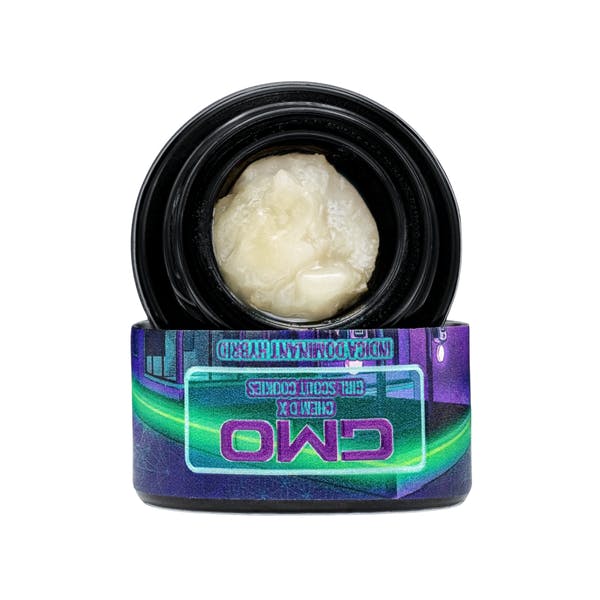
UmamiiUmamii | Live Rosin Jar | GMO · 2g
$80.00$100.00
$93after tax

weeddispensarynearme.com
You must be 21 years or older to enter. By entering, you confirm you’re of legal age in your state to purchase cannabis.
For use only by adults 21+ • Keep out of reach of children
Chelsea's art galleries, the elevated greenway of the High Line, and the culinary energy of Chelsea Market draw a discerning crowd that values craft and provenance. That same sensibility translates naturally to rosin — a solventless cannabis concentrate pressed from flower or hash that delivers purity, terpene depth, and a clean experience increasingly sought by adult-use consumers across ZIP codes 10001 and 10011.
About Rosin
Rosin occupies a singular position in the landscape of New York's licensed adult-use cannabis market. Unlike hydrocarbon extracts that rely on butane or propane to strip cannabinoids from plant material, rosin is produced through applied heat and pressure alone — no solvents, no residual chemicals, no ambiguity about what ended up in the final product. The result is a concentrate that retains the full spectrum of terpenes, minor cannabinoids, and flavonoids present in the source material, giving experienced consumers a remarkably faithful representation of the cultivar they started with. New York's Office of Cannabis Management licenses extract producers to a rigorous standard, and the rosin category has attracted some of the state's most technically precise operators. Live rosin — made from fresh-frozen flower rather than dried and cured material — commands the top of the market, prizing the preservation of volatile aromatic compounds that evaporate during conventional drying. Hash rosin, pressed from ice-water-extracted bubble hash, adds another layer of refinement, concentrating trichome heads before the final press and resulting in a cleaner, often lighter-colored product with pronounced clarity. Consumers new to concentrates should understand that rosin's THC potency typically ranges from the mid-50s into the low 80s percent by weight — meaningfully higher than flower. This is not an entry-level format, and the standard guidance for anyone exploring concentrates for the first time is to start low and go slow, allowing the experience to develop before adding more. That said, because the terpene profile in quality rosin is so intact, many seasoned consumers report that a smaller quantity of rosin delivers a more nuanced, complete experience than a larger quantity of a lesser extract. Format variety within the rosin category has expanded considerably. Rosin can be purchased as a loose, sauce-like consistency, as a more stable badder or budder, as cold-cure crumble, or pressed into rosin chips suitable for lower-temperature sessions. Each texture reflects a slightly different post-processing choice rather than a difference in source quality, and New York's licensed dispensaries carry an increasingly sophisticated range of all of them.
Rosin for Chelsea shoppers
Chelsea occupies a stretch of Manhattan west of Sixth Avenue where galleries, boutique fitness studios, and the architecture of the High Line coexist with the working grain of Ninth Avenue's markets and the dense residential blocks between 14th and 30th Streets. It is a neighborhood accustomed to paying attention to craft — to the provenance of an olive oil at Chelsea Market, to the particular medium a painter chose for a show in the gallery district. That same habit of attention maps almost perfectly onto the rosin category, where source material, pressing temperature, and post-process handling all register in the final product. The High Line's elevated promenade draws both residents and visitors into an outdoor experience that spans roughly a mile and a half above the West Side rail yards. For adults who incorporate cannabis into intentional leisure time — a walk along the structure at dusk, an afternoon spent moving between gallery openings on West 21st or 24th Street — a small, well-preserved dab of live rosin offers a terpene-forward experience without the combustion byproducts associated with smoking flower. Rosin's compatibility with portable, low-temperature dab devices makes it a particularly practical format for Chelsea's on-the-go, culturally active adult consumer. Seasonal considerations matter here too. Chelsea winters funnel sharp wind off the Hudson through the numbered cross streets, and consumers who prefer to keep their sessions indoors during colder months often migrate toward concentrates precisely because a smaller quantity goes further. In the warmer months, when the High Line's plantings are in bloom and outdoor dining spills across Ninth Avenue, the aromatic complexity of a well-preserved rosin — its myrcene, limonene, or caryophyllene notes — is arguably more legible to a palate already attuned to flavor and place.
What to look for
Shopping for rosin in New York's licensed market begins with understanding the source material. Flower rosin, pressed directly from dried and cured cannabis, is the most accessible price point and a solid starting place. Hash rosin — pressed from bubble hash rated by micron grade — steps up in refinement, with 70- to 90-micron full-melt hash generally considered the highest-quality input. Live rosin, sourced from fresh-frozen material, preserves the most volatile terpenes and commands a corresponding premium. For Chelsea consumers whose reference points include specialty coffee and natural wine, the live rosin tier is the most direct analogue to a single-origin, minimal-intervention product. Terpene profiles deserve close attention. A rosin heavy in myrcene tends toward an earthy, relaxing character; limonene-forward profiles are brighter and more citrus-driven; caryophyllene contributes a peppery warmth. Many licensed New York products now include detailed terpene lab reports on their labels or accompanying documentation — reading those figures is the most reliable way to anticipate an experience before purchasing. THC percentages in rosin are high by definition, but the ratio of THC to minor cannabinoids like CBG or CBC, and the overall terpene percentage, are arguably more instructive indicators of quality than THC alone. Format and consistency affect the practical experience. A cold-cure badder is stable at room temperature and easy to handle on a small dab tool, making it a sensible choice for consumers who are new to concentrates or who use them intermittently. Sauce and live rosin in its more liquid forms require slightly lower temperatures and reward a precise setup. For Chelsea consumers who commute or travel frequently between neighborhoods, pre-filled rosin vape cartridges — where available from licensed producers — offer a more portable option, though they trade some terpene fidelity for convenience. As always, start low and go slow with any concentrate format.
Why ZenZest for rosin in Chelsea
ZenZest Cannabis Dispensary maintains two licensed retail locations serving the greater New York area, and for Chelsea residents in ZIP codes 10001 and 10011, the nearest physical store is ZenZest Staten Island at 2343 Forest Ave, Staten Island, NY 10303 — approximately 11.6 miles from the neighborhood. The store carries a curated selection of adult-use concentrates, including rosin in multiple formats and potency tiers, sourced from New York State licensed producers. For Chelsea consumers who prefer to shop from home rather than make the trip across the harbor, ZenZest offers free same-day delivery on orders over $100 to more than 80 eligible New York ZIP codes — a meaningful convenience for a neighborhood where time is a considered resource. Orders placed through the ZenZest platform are fulfilled from licensed inventory, arrive in compliant packaging, and are delivered by verified adult-use-authorized personnel. Whether you are stocking up on live rosin ahead of a long weekend or making a first foray into the concentrate category, ZenZest's delivery option brings a well-edited selection directly to your Chelsea address.
ZenZest Staten Island · 2343 Forest Ave, Staten Island, NY 10303 · 11.6 miles from Chelsea.
$93after tax
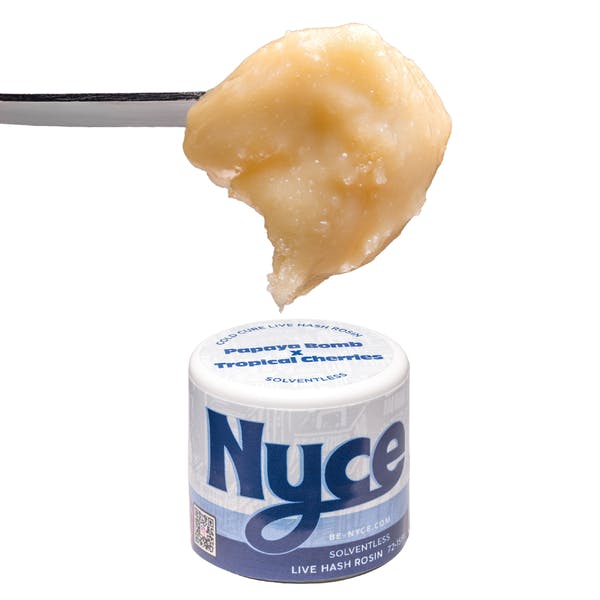
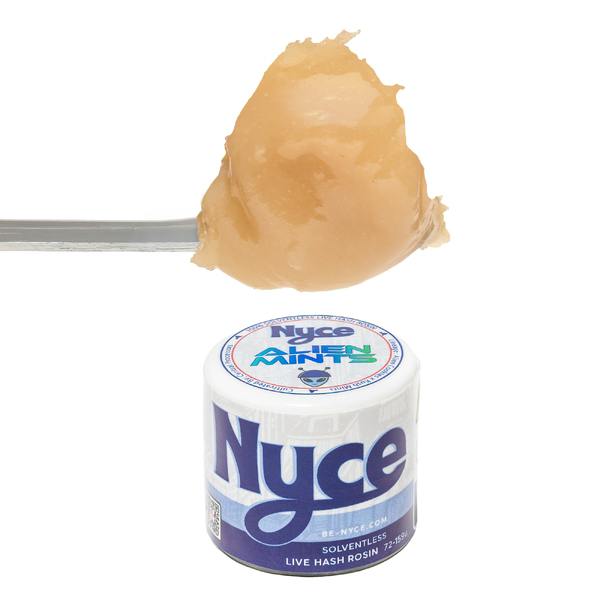
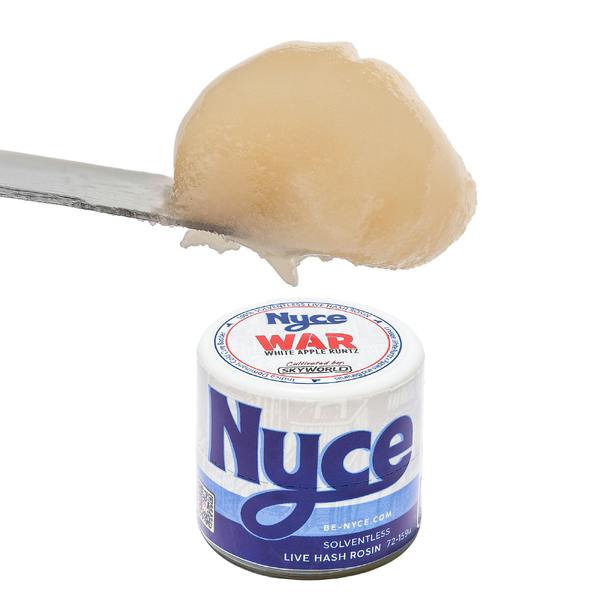
Rosin is produced without chemical solvents — heat and pressure are the only inputs. This distinguishes it from BHO (butane hash oil), CO2 oil, or distillate, all of which use chemical extraction processes. The solventless method preserves a broader spectrum of terpenes and minor cannabinoids from the source material, which many consumers find produces a more complete, nuanced experience. In New York's licensed adult-use market, rosin is available in several sub-formats, including flower rosin, hash rosin, and live rosin, each reflecting the quality of its source material.
Rosin is a high-potency format with THC levels typically ranging from the mid-50s to the low 80s percent by weight. If you are new to concentrates, the standard guidance is to start low and go slow — begin with a very small amount and give yourself time to assess the effect before consuming more. Rosin is not recommended as a first cannabis experience. Consumers who have some familiarity with flower but are new to concentrates should consider consulting with a knowledgeable budtender at a licensed dispensary before purchasing.
Rosin is sensitive to heat and light. In Chelsea, where summer temperatures in ground-floor apartments can rise considerably, proper storage is important for preserving terpene integrity and consistency. A small, airtight glass or silicone container kept in a cool, dark location — a drawer, cabinet, or the lower shelf of a refrigerator in a sealed container — will extend the shelf life and protect the aromatic compounds. Avoid leaving rosin in direct sunlight or near a stove. Most licensed New York products will include storage recommendations on their packaging.
The most common method is a dab rig paired with a quartz banger and a small torch, or an e-nail (electronic nail) that allows precise temperature control without an open flame — often preferred in a residential setting. Low-temperature dabbing, generally in the 450–550°F range, is recommended for rosin to preserve terpenes and avoid harshness. Compact, battery-powered electronic dab devices are another option that eliminate the torch entirely and are better suited to smaller living spaces. A dab tool and non-stick container to handle the rosin complete a basic setup.
Terpenes are the aromatic compounds that give each cannabis cultivar its distinct character and contribute to the overall experience alongside cannabinoids. On a licensed New York rosin product, the label or accompanying certificate of analysis will list individual terpenes and their percentages. Myrcene is associated with earthy, relaxing qualities; limonene with bright, citrus-forward notes; caryophyllene with warmth and spice. A total terpene percentage above two or three percent is generally considered expressive. Reading these figures gives you a more reliable preview of a product than THC percentage alone.
Yes. ZenZest Cannabis Dispensary offers free same-day delivery on orders over $100 to more than 80 eligible New York ZIP codes, which includes Chelsea addresses in 10001 and 10011. Delivery is fulfilled from licensed inventory and handled by adult-use-authorized personnel. Orders must be placed by an adult 21 or older, and a valid ID will be verified upon delivery. This makes restocking your rosin supply straightforward whether you are on a tight schedule during the workweek or preparing for a weekend at home.
Live rosin is made from fresh-frozen cannabis that was harvested and immediately frozen to preserve volatile terpenes that would otherwise evaporate during drying and curing. Hash rosin is pressed from bubble hash — trichome-rich material separated from dried flower using ice water and filtration — which concentrates the plant's most resinous components before the final press. Live rosin generally delivers the most aromatic, nuanced profile; hash rosin offers exceptional purity and potency. For Chelsea consumers accustomed to paying for craft and provenance, both tiers represent a meaningful step above standard flower rosin.
All adult-use cannabis products sold through licensed New York dispensaries are required to pass third-party laboratory testing before reaching retail. A certificate of analysis (COA) for rosin will include cannabinoid potency (THC, CBD, and minor cannabinoids), terpene profile and percentage, residual solvent testing (which should show none or undetectable for rosin), and screening for pesticides, heavy metals, and microbials. When evaluating a rosin product, look at total terpene percentage alongside THC, and check that pesticide and heavy metal results are within OCM-established limits.
Licensed New York rosin is available in several textures: badder or budder (a soft, creamy consistency easy to work with a dab tool), cold-cure (a more stable, grainy texture that forms when warm rosin is cured at low temperatures), sauce (a more fluid, terpene-rich consistency that requires careful handling), and occasionally rosin chips or pucks from the pressing process. Badder is typically the easiest starting point. Sauce-consistency products tend to be the most aromatic and are favored by consumers prioritizing terpene expression. Personal preference and equipment will guide your choice over time.
Chelsea's gallery corridor — concentrated along West 20th through 26th Streets — attracts residents and visitors who engage closely with craft, material process, and intentional experience. Rosin's solventless production method, its dependence on source material quality, and its legible terpene expression make it a category that resonates with that same orientation. Much as a natural wine or a single-origin espresso rewards a consumer who pays attention to process, rosin rewards inquiry into cultivar, input quality, and production method. It is, in that sense, a concentrate well suited to the sensibility Chelsea has cultivated over the past two decades.
Pick your store
We'll show pricing, deals, and delivery zones for the store you pick. You can switch any time from the header.