
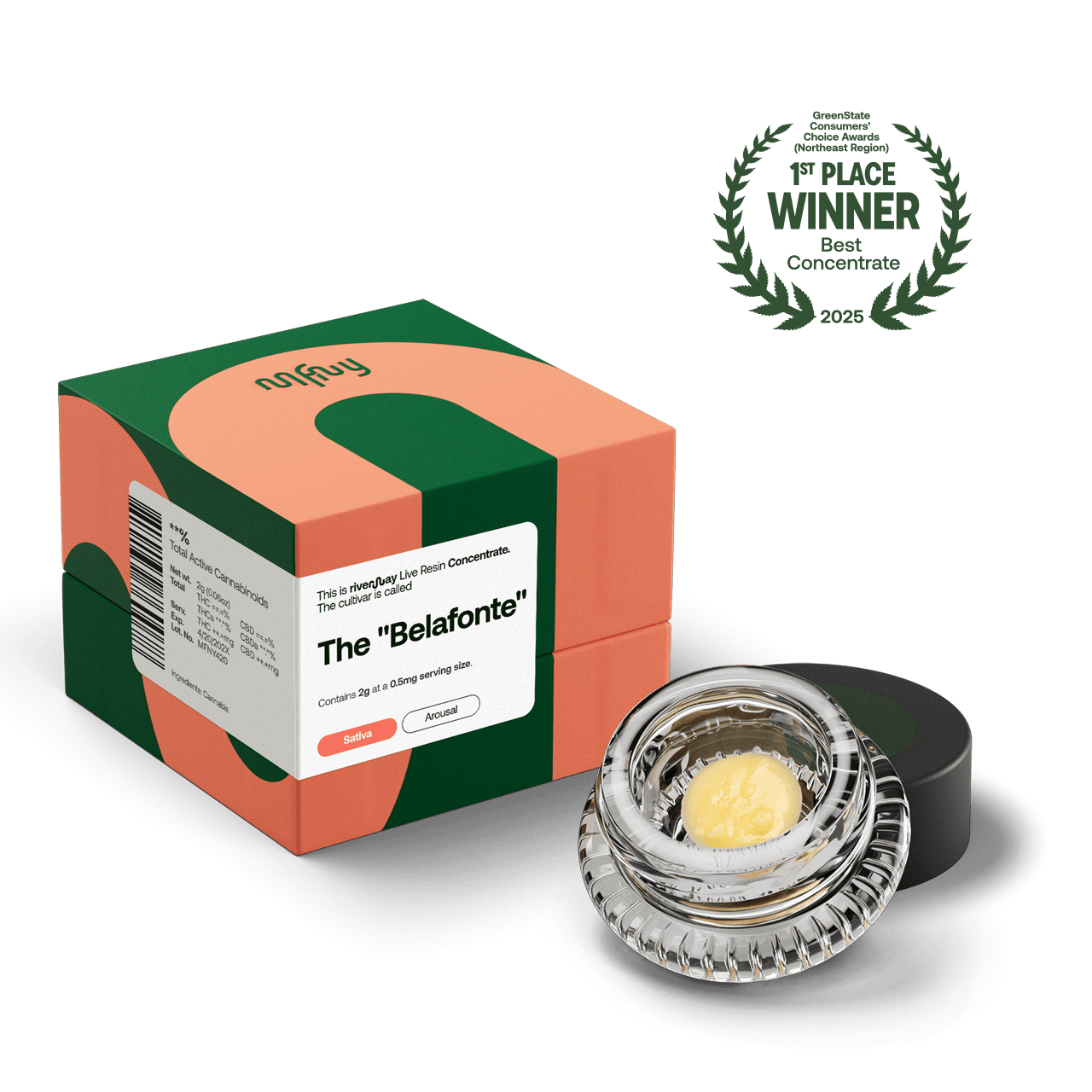
Brooklyn · Live Resin
Best Live Resin in Carroll Gardens, Brooklyn
Carroll Gardens, Brooklyn's quiet brownstone corridors and the unhurried rhythm of Court Street set a particular kind of standard — one that extends naturally to cannabis. Live resin, the concentrate category defined by fresh-frozen flower and full-spectrum flavor, fits this neighborhood's appreciation for craft and provenance. For adults 21 and older seeking the most expressive extract available through New York's licensed market, this guide is your starting point.
About Live Resin
Live resin occupies a distinct tier within New York's adult-use concentrate landscape. Unlike extracts produced from cured and dried flower, live resin begins with cannabis that is harvested and immediately frozen at subcritical temperatures — a process that locks in the volatile terpene and cannabinoid compounds that would otherwise degrade during conventional drying. The result is a product widely regarded by extract enthusiasts as the most faithful aromatic representation of the living plant. In practical terms, New York's licensed dispensaries carry live resin in several formats: jarred sauce (a terpene-rich, semi-liquid consistency), sugar wax, badder, and increasingly, live resin cartridges and all-in-one vape devices. Each format preserves the fresh-frozen spectrum to varying degrees — jarred sauce and badder tend to retain the highest terpene concentration, while cartridges trade some of that complexity for convenience and discretion. New York's Office of Cannabis Management requires that all adult-use concentrates sold through licensed retailers meet strict testing standards for residual solvents, microbials, and potency accuracy. This regulatory framework is meaningful for concentrate buyers: third-party certificates of analysis (COAs) are accessible for every licensed product, giving informed shoppers granular data about what they're purchasing — total THC, total terpene percentage, and individual terpene profiles. Live resin commands a premium relative to distillate or BHO products, and that premium reflects real production costs — the labor of same-day harvest freezing, the yield losses inherent to working with delicate fresh material, and the extraction expertise required to preserve rather than destroy what the plant produces. For the shopper who approaches cannabis the way they approach a well-sourced bottle of natural wine or a single-origin espresso, live resin is the logical category to explore.
Live Resin for Carroll Gardens shoppers
Carroll Gardens carries a particular sensibility that has proven resistant to the homogenizing forces reshaping much of Brooklyn. The blocks between Smith Street and Court Street remain defined by owner-occupied brownstones, deeply rooted Italian-American families, and a newer generation of residents who value specificity — in their food, their wine, their coffee, and increasingly, their cannabis. The neighborhood's restaurant culture along Smith Street is among Brooklyn's most quietly distinguished, and that context shapes how Carroll Gardens residents tend to approach elevated products of any kind: with curiosity, patience, and an expectation of quality over novelty. The extract category maps well onto this disposition. Live resin is not a beginner's impulse purchase — it rewards the kind of deliberate attention that Carroll Gardens residents bring to other artisan categories. A Saturday afternoon at home on a parlor-floor brownstone, or a quiet evening before walking to one of the neighborhood's wine bars on Court Street, are precisely the occasions where a small amount of a well-chosen live resin sauce or badder makes sense for adults who have calibrated their own tolerance. Seasonally, Brooklyn winters — and Carroll Gardens gets full exposure to the wind tunnels that funnel off the Gowanus Canal just blocks to the east — make discrete indoor-friendly formats especially appealing. A live resin cartridge tucked into a coat pocket serves a different purpose than a jarred sauce best appreciated at home. Understanding the format spectrum, matched to the specific rhythms of this neighborhood, is the foundation of a considered purchase.
What to look for
The first variable to evaluate in any live resin purchase is terpene content — expressed as a percentage on the COA. Well-produced live resin typically registers between two and eight percent total terpenes, and that range translates directly into aroma, flavor, and the nuanced experiential qualities that distinguish one cultivar from another. Look for dominant terpenes listed by name: myrcene suggests an earthy, relaxing quality; limonene tends toward a citrus brightness; caryophyllene brings a peppery complexity; and terpinolene can deliver a floral, almost herbal lift. These compounds are not marketing language — they are measurable molecules, and their presence or absence tells you more about a live resin product than any strain name alone. THC potency in live resin concentrates typically ranges from 60 to 90 percent, which places these products in a fundamentally different category than flower or infused pre-rolls. Adults new to concentrates should follow start-low, go-slow guidance — the standard recommendation from harm-reduction educators — and approach even a small amount with the same deliberateness they would apply to a first experience with a high-ABV spirits category. A rice-grain-sized amount of a jarred sauce or badder is a meaningful starting point for someone whose prior experience has been limited to flower. Format trade-offs matter in Carroll Gardens specifically. If your primary occasions are at home — weekend evenings, quiet weeknights — a jarred sauce or badder used with a concentrate-compatible device offers the fullest terpene expression and the most flexibility in quantity. If your occasions include a commute on the F or G trains, or socializing along Smith Street, a live resin all-in-one device is far more practical. New York's licensed cartridge market includes genuine live resin hardware from cultivators who publish full COAs, so discretion and quality are not mutually exclusive.
Why ZenZest for live resin in Carroll Gardens
ZenZest Cannabis Dispensary serves Carroll Gardens residents primarily through its Staten Island location at 2343 Forest Ave, Staten Island, NY 10303 — approximately 9.0 miles from the 11231 ZIP code. For adults who prefer to shop in person, the store carries a rotating selection of live resin formats from New York's licensed cultivators and processors, with staff who can walk through COA data and help match a specific terpene profile to what a shopper is looking for. For Carroll Gardens residents who prefer not to make the trip, ZenZest offers free same-day delivery on orders over $100 to more than 80 eligible New York ZIP codes — and 11231 qualifies. Orders placed through the ZenZest platform arrive the same day, making it straightforward to stock a specific live resin product without rearranging a schedule. For a neighborhood that values convenience without sacrificing quality, that delivery footprint is a meaningful differentiator in the licensed New York market.
ZenZest Staten Island · 2343 Forest Ave, Staten Island, NY 10303 · 9 miles from Carroll Gardens.
Live live resin for Carroll Gardens
Full live resin menu →Live Resin in Carroll Gardens — answers
What exactly makes live resin different from other concentrates sold at New York dispensaries?+
The defining difference is the starting material. Live resin is produced from cannabis flower that is harvested and immediately frozen — rather than dried and cured — before extraction. Freezing the plant at subcritical temperatures preserves the full terpene and minor cannabinoid profile that would otherwise volatilize during conventional processing. The outcome is a concentrate with a more complex, plant-accurate aroma and flavor than distillate or standard BHO extracts. New York's licensed market carries both types, and the COA will confirm whether a product is genuinely derived from fresh-frozen material.
Is live resin appropriate for someone who primarily smokes flower and has never used a concentrate?+
It can be, with appropriate preparation. Live resin concentrates typically register between 60 and 90 percent THC, placing them in a potency category that is substantially higher than even the strongest licensed flower. Adults transitioning from flower to concentrates are well-served by starting with the smallest usable amount — often described as a rice-grain-sized serving — and waiting a full session before assessing effects. Carroll Gardens dispensary shoppers new to the category might also consider beginning with a live resin cartridge, which offers a more controlled delivery format than jarred sauce or wax.
Which live resin format makes the most sense for someone living in a Carroll Gardens brownstone apartment?+
For residents in a private brownstone setting where home use is the primary occasion, a jarred live resin sauce or badder used with a compatible concentrate device — often called a dab rig or an e-rig — offers the most complete terpene experience and the greatest flexibility over quantity. These formats preserve the aromatic complexity that makes live resin worth the premium. Residents with shared building entrances or noise-sensitive neighbors may also appreciate that concentrate consumption, particularly with an e-rig, tends to produce less residual odor than combustion.
What should I look for on a certificate of analysis when buying live resin in New York?+
Four data points deserve close attention on any New York licensed concentrate COA: total THC percentage, total terpene percentage, the individual terpene breakdown by compound, and the residual solvent panel. Total terpenes above two percent generally indicate a product that will express meaningful aromatic complexity. The individual terpene listing — myrcene, caryophyllene, limonene, terpinolene, and others — tells you far more about character than a strain name. The residual solvent panel confirms that extraction was performed cleanly, which matters in a product category where solvent-based processing is common.
How does Brooklyn's winter weather affect which live resin format is the most practical choice?+
Carroll Gardens winters, particularly the exposed blocks near the Gowanus Canal on the neighborhood's eastern edge, create genuine practical considerations for concentrate formats. Jarred sauce and concentrate devices are best suited to indoor use — cold temperatures can alter the consistency of terpene-rich sauce and affect battery performance in hardware. A live resin all-in-one vape device is designed for portability and functions more reliably across temperature ranges, making it the more practical choice for adults whose occasions include time outdoors or in transit on the F or G trains.
Can ZenZest deliver live resin concentrates to the Carroll Gardens ZIP code?+
Yes. Carroll Gardens' primary ZIP code, 11231, is among the more than 80 New York ZIP codes eligible for ZenZest's free same-day delivery on orders over $100. Live resin products available through the ZenZest platform can be ordered and delivered the same day, which is particularly useful for a category where product availability rotates with cultivar seasonality. Residents who want to secure a specific live resin drop from a particular New York processor without making a separate trip can do so directly through ZenZest's delivery service.
Are terpene percentages on live resin labels regulated and verified in New York?+
Yes. New York's Office of Cannabis Management requires that all licensed adult-use cannabis products, including concentrates, undergo third-party laboratory testing before reaching retail. Terpene content, total THC, CBD, and the residual solvent panel must all be tested and accurately reported on the certificate of analysis that accompanies each product. Shoppers can request COA documentation at any licensed dispensary. This testing requirement is one of the meaningful consumer protections that distinguishes New York's licensed market from unlicensed alternatives, particularly relevant in a premium category like live resin.
What terpene profiles tend to appeal to Carroll Gardens' evening and weekend-at-home occasions?+
This is an inherently personal consideration, but within the live resin category, terpene profiles that tend to align with calm, at-home occasions often lean toward myrcene-forward or linalool-forward cultivars — compounds associated with earthy, relaxing aromatic character. For the kind of quiet Saturday evening that Carroll Gardens' brownstone streets seem designed for, or a post-dinner hour in a parlor-floor apartment, a cultivar with those dominant terpenes and a moderate THC percentage in the 65-to-75 percent range offers a meaningful experience without overextending. Staff at licensed dispensaries, including ZenZest, can help cross-reference terpene data to available inventory.
Is there a meaningful quality difference between live resin cartridges and jarred live resin sauce?+
Yes, in a technical sense. Jarred live resin sauce, badder, and sugar wax represent the concentrate at its least adulterated — the terpene percentage is typically higher, the aromatic profile more complex, and the expression of the original cultivar more direct. Live resin cartridges, by necessity, require that the oil be processed to a viscosity compatible with hardware, and some terpene loss occurs during that step. That said, quality live resin cartridges from licensed New York producers retain far more of the fresh-frozen spectrum than distillate-based cartridges, and the convenience trade-off is legitimate for Carroll Gardens residents whose primary occasion is not at home.
How does live resin pricing compare to other concentrate categories at New York licensed dispensaries?+
Live resin sits at the upper tier of New York's licensed concentrate market, typically priced higher than distillate cartridges, standard BHO wax, or rosin from cured flower. The premium reflects real production economics: fresh-frozen harvest logistics, lower extraction yields from delicate fresh material, and the expertise required to preserve rather than strip terpene content during processing. For Carroll Gardens shoppers accustomed to paying a meaningful premium for craft food or beverage products — a category the neighborhood's Court Street and Smith Street corridors represent well — the live resin price point maps intuitively to what genuine craft production costs.