
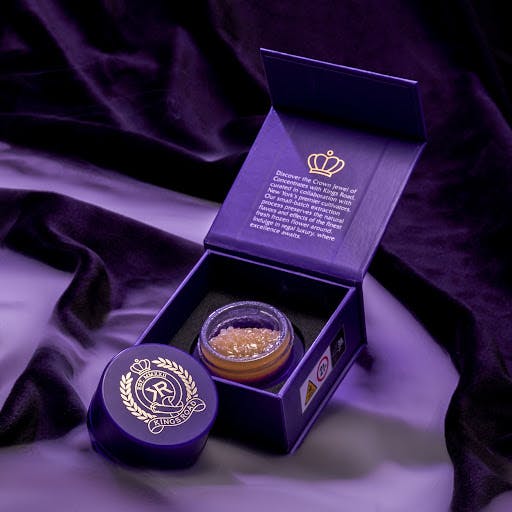
Brooklyn · Live Resin
Best Live Resin in Boerum Hill, Brooklyn
Boerum Hill's quiet brownstone blocks and the low hum of Atlantic Avenue set a particular tone — one that calls for a concentrate as considered and craft-forward as the neighborhood itself. Live resin, extracted from flash-frozen cannabis to preserve the full aromatic spectrum of the living plant, belongs here among the wine bars and independent boutiques of Smith Street as naturally as anything else curated for a discerning palate.
About Live Resin
Live resin occupies a distinct tier in the New York licensed cannabis market. Unlike concentrates derived from dried and cured flower, live resin begins its life the moment the plant is harvested. Cultivators flash-freeze the biomass within hours of cutting, locking in the volatile terpene compounds that would otherwise degrade during a conventional drying cycle. The result is an extract that reads less like a refined distillate and more like a faithful portrait of the original cultivar — aromatic, complex, and rich in the minor cannabinoids and terpenoids that contribute to what researchers sometimes call the entourage effect. In the New York adult-use market, live resin arrives in several formats. Sauce, the most common, separates into a crystalline THCA fraction suspended in a terpene-rich liquid called high-terpene full-spectrum extract, or HTFSE. Badder and sugar wax offer more homogeneous textures that are slightly easier to handle for those new to dabbing. Vape cartridges filled with live resin oil bridge the gap between the accessibility of distillate carts and the full-flavor experience of traditional concentrates — a format particularly relevant in a dense urban borough where discretion and convenience share equal weight. All products sold through New York's Office of Cannabis Management licensing framework must pass third-party testing for potency, residual solvents, pesticides, and microbials before reaching dispensary shelves. That regulatory baseline is a meaningful consumer protection: when you purchase live resin at a licensed shop, you are buying a product whose cannabinoid and terpene percentages reflect actual laboratory analysis, not marketing conjecture. Reading those certificates of analysis, or COAs, is the single most empowering step any concentrate shopper can take. For adults 21 and older, live resin generally delivers a more nuanced, terpene-forward experience than distillate-based products. Potency varies considerably by format and producer — some sauce products exceed 80 percent total cannabinoids, while live resin cartridges often land in the 65-to-75 percent range, a difference worth understanding before you shop.
Live Resin for Boerum Hill shoppers
Boerum Hill carries itself with a particular kind of earned confidence. The neighborhood's ZIP code, 11217, straddles the boundary between the brownstone quiet of Bergen Street and the animated commercial energy of Atlantic Avenue, where Yemeni coffee shops, natural wine importers, and design-forward home goods stores share blocks with commuter foot traffic from the Atlantic Terminal transit hub. This is a neighborhood that rewards intentionality — residents here tend to research their purchases, read labels, and have opinions about provenance. That sensibility maps directly onto the live resin category. The concentrate shopper in Boerum Hill is less likely to grab the first cartridge on the shelf and more likely to ask which cultivar the sauce came from, whether the terpene profile skews myrcene-heavy or leans toward the brighter, more citric limonene end of the spectrum. Smith Street's walkable retail corridor has long attracted independent operators who treat product knowledge as a form of hospitality — and the best licensed dispensaries carry that same curatorial instinct into their concentrate selections. Practically speaking, Boerum Hill residents face a range of consumption contexts: the compact parlor-floor apartment where a live resin cartridge offers discretion; the brownstone roof deck on a warm evening where a proper dab rig and a terpene-forward sauce can be a genuinely social ritual; the late commute in from Atlantic Terminal when a half-gram of live resin badder at home functions as decompression. Each of these occasions calls for a slightly different format choice, which is why understanding the full live resin category — rather than defaulting to a single product type — serves the Boerum Hill consumer particularly well.
What to look for
When evaluating live resin, the terpene panel on the COA is at least as important as the total THC figure. Look for transparency: a quality live resin product from a New York licensed producer will typically list the top five to eight terpenes by percentage alongside total cannabinoid content. Myrcene tends toward earthy, herbal relaxation; limonene and terpinolene lean citric and uplifting; caryophyllene contributes a peppery, grounding note and is the only terpene known to interact directly with CB2 receptors. Pinene, often associated with clarity and alertness, can offset some of the sedative pull of high-myrcene profiles. Identifying which terpene cluster resonates with your preferences will guide you more reliably than THC percentage alone. Format trade-offs matter considerably in an urban context. Live resin sauce delivers the most complete aromatic experience and the highest terpene retention, but requires a dab rig or an e-rig, a 510-thread battery at minimum, and some comfort with handling sticky, crystalline material. Live resin cartridges eliminate most of that friction — they attach to any standard battery and slip into a coat pocket, relevant on a brisk walk down Bergen Street or a wait on the Atlantic Avenue platform. Badder and sugar wax sit in the middle: easier to scoop than sauce, more flavorful than many distillate products, and compatible with both traditional rigs and certain portable vaporizers. For those newer to concentrates, the guidance consistent across the industry is to start low and go slow — a small amount of live resin delivers considerably more cannabinoids per inhalation than flower, and the experience arrives quickly. Seasoned consumers in Boerum Hill's craft-cannabis cohort often note that the quality of the terpene experience at lower doses is preferable to chasing potency numbers at higher ones. Prioritize a clean, solvent-free COA, a producer whose cultivation practices are documented, and a format that fits your actual consumption context before fixating on THC totals.
Why ZenZest for live resin in Boerum Hill
ZenZest Cannabis Dispensary serves the Boerum Hill market through its Staten Island location at 2343 Forest Ave, Staten Island, NY 10303, approximately 9.8 miles from the 11217 ZIP code. The store's concentrate selection is curated with the same editorial intention that characterizes the broader ZenZest retail experience — meaning live resin sauce, badder, and cartridge formats are stocked with attention to producer transparency and terpene documentation, not simply shelf velocity. For Boerum Hill residents who prefer not to make the trip, ZenZest offers free same-day delivery on orders over one hundred dollars to more than eighty New York ZIP codes, with 11217 among the eligible areas. That threshold is easy to meet when building a considered concentrate order — a gram of sauce, a live resin cartridge, and a complement of accessories can arrive at a Bergen Street or Atlantic Avenue address within the same day the order is placed. For a neighborhood that values quality, convenience, and accountability in equal measure, ZenZest's licensed, lab-tested inventory and flexible delivery structure represent a natural fit.
ZenZest Staten Island · 2343 Forest Ave, Staten Island, NY 10303 · 9.8 miles from Boerum Hill.
Live live resin for Boerum Hill
Full live resin menu →Live Resin in Boerum Hill — answers
What exactly makes live resin different from other concentrates sold at New York dispensaries?+
Live resin is produced from cannabis biomass that is flash-frozen immediately after harvest, preserving the full terpene and minor cannabinoid profile of the living plant. Most other concentrates — including wax, shatter, and distillate — begin with dried and cured flower, a process that degrades many of the volatile aromatic compounds. The result is an extract that reads closer to the original cultivar's aromatic fingerprint. In New York's licensed market, all live resin must pass OCM-mandated third-party testing before reaching dispensary shelves.
Is live resin appropriate for someone who primarily smokes flower and is trying concentrates for the first time?+
Live resin can be a reasonable entry point into concentrates precisely because its terpene richness makes the experience feel more familiar and plant-forward than high-distillate products. That said, the cannabinoid concentration is substantially higher than flower — even a small amount delivers a more intense effect more quickly. The standard guidance applies: start with the smallest functional dose, wait to assess the effect before adding more, and choose a setting where you are comfortable and unhurried. A live resin cartridge is typically the most approachable format for first-time concentrate users.
What terpene profiles tend to work well for unwinding after a commute through Atlantic Terminal?+
This is ultimately a personal preference rather than a prescription, but consumers who find myrcene-dominant profiles conducive to evening relaxation often gravitate toward live resin cultivars with names suggesting herbal or tropical lineage — strains expressing high myrcene alongside linalool or beta-caryophyllene tend to read as grounding rather than activating. Conversely, if the goal is social ease rather than deep rest, a limonene or terpinolene-forward sauce might feel more appropriate. Reading the terpene panel on the COA before purchasing is the most reliable way to anticipate the experiential direction of a given live resin product.
How should live resin be stored in a Boerum Hill apartment, where space and temperature can vary seasonally?+
Live resin is sensitive to heat and light, both of which degrade terpenes and destabilize the product's texture over time. In a brownstone apartment that may run warm in summer or near a radiator in winter, storing concentrate in an airtight silicone or glass container inside a cool, dark drawer or cabinet is advisable. Refrigeration is acceptable for sauce or badder if the container is fully sealed and allowed to return to room temperature before opening — condensation introduced into a concentrate container can affect quality. Most live resin products carry a recommended shelf life on their packaging.
Can I use live resin in a standard vape pen, or do I need specialized equipment?+
It depends entirely on the format. Live resin cartridges are designed for standard 510-thread batteries and require no additional equipment beyond the battery itself — the most accessible entry point. Live resin sauce, badder, and sugar wax require either a traditional dab rig with a torch, an electronic dab rig, or a portable concentrate vaporizer compatible with thick extracts. These devices range considerably in price and learning curve. If equipment investment is a barrier, beginning with a live resin cartridge from a New York licensed dispensary is the most practical approach.
Does the Smith Street and Bergen Street area of Boerum Hill have its own licensed dispensaries, or do most residents rely on delivery?+
The licensed dispensary landscape in Brooklyn continues to develop as the OCM processes applications and retail licenses. Some 11217 residents shop at licensed locations in adjacent neighborhoods — Carroll Gardens, Park Slope, or Downtown Brooklyn — while others find that delivery from licensed retailers like ZenZest, which serves the 11217 ZIP code with free same-day delivery on orders over one hundred dollars, is more convenient given the neighborhood's commuter rhythm and the limited parking on its residential streets.
What should I look for on a live resin COA to verify quality?+
A credible certificate of analysis from a New York licensed producer will include total THC and CBD by percentage, a full terpene panel with individual percentages, and passing results for residual solvents, pesticides, heavy metals, and microbial contaminants. Residual solvent results are particularly relevant for concentrates — hydrocarbon-extracted live resin should show non-detectable or well-below-action-level readings for butane and propane. If a product's COA is not accessible via a QR code on the package or through the retailer's website, that is a meaningful gap in transparency.
Is live resin more expensive than other concentrates, and is the price difference justified?+
Live resin does carry a premium over distillate-based products and often over cured-resin concentrates, reflecting the additional cold-chain infrastructure and processing complexity involved in flash-freezing fresh biomass. In New York's adult-use market, gram prices for sauce or badder from established producers typically run higher than equivalent distillate cartridges. Whether the premium is justified depends on what you value: if terpene fidelity, cultivar expression, and a more complete cannabinoid profile matter to you, the difference is generally considered worthwhile by concentrate enthusiasts.
Are live resin products available for same-day delivery to the 11217 ZIP code?+
Yes. ZenZest Cannabis Dispensary offers free same-day delivery on orders over one hundred dollars to more than eighty New York ZIP codes, including 11217. Boerum Hill residents can place an order through ZenZest's platform and receive licensed, lab-tested live resin products — sauce, badder, or cartridge formats depending on availability — delivered to a Bergen Street, Atlantic Avenue, or Smith Street address without the need to travel to a physical storefront.
How does live resin compare to live rosin, and which makes more sense for a Boerum Hill shopper?+
Live resin is typically produced through hydrocarbon extraction using solvents like butane or propane, while live rosin uses only heat and pressure — no solvents — applied to fresh-frozen material. Both begin from flash-frozen biomass and preserve terpene integrity well. Live rosin generally carries a higher price point due to its lower yield and solventless process, and is often preferred by consumers who prioritize a fully solventless experience. Live resin offers comparable terpene richness at a somewhat lower price and broader availability in the New York licensed market, making it a practical entry point for Boerum Hill residents curious about full-spectrum concentrates.