THC 81.16%Sativa
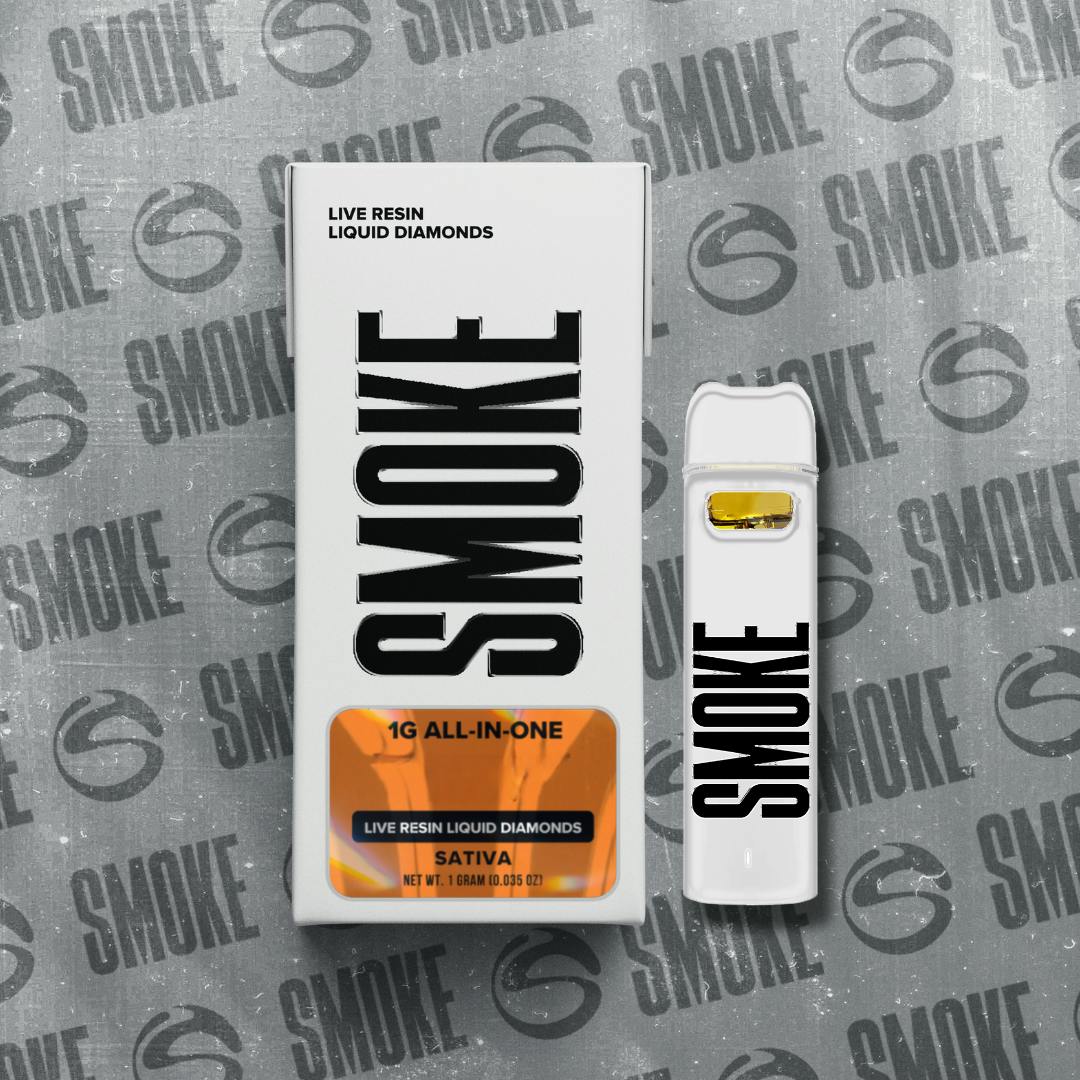
Smoke OilSmoke Too Sweet Haze Live Resin Liquid Diamonds AIO Disposable · 1g
$20.00
$23after tax

weeddispensarynearme.com
You must be 21 years or older to enter. By entering, you confirm you’re of legal age in your state to purchase cannabis.
For use only by adults 21+ • Keep out of reach of children
1 live products in stock
Quick answer · What is the Too Sweet Haze cannabis strain?
Too Sweet Haze arrives as a study in contrasts: the heady, cerebral lift of classic haze genetics tempered by an unexpected confectionery warmth that lingers on the palate long after the exhale. Its golden-green buds carry a brightness that feels almost luminous under good light, and the experience it delivers — clear-eyed, socially open, gently energized — makes it a natural companion for the kind of afternoon that refuses to be ordinary.
$23after tax
About Too Sweet Haze
Too Sweet Haze is a sativa-dominant hybrid whose precise parentage has not been fully disclosed by its originating breeders, though the 'Haze' designation places it firmly within one of cannabis's most storied lineage trees. Classic Haze itself traces back to the Santa Cruz, California scene of the 1970s, where breeders working under the informal banner of the 'Haze Brothers' crossed Colombian, Mexican, Thai, and South Indian landraces to produce what would become the backbone of countless modern sativas. Too Sweet Haze builds on that foundation, incorporating what most community sources describe as a sweetness-forward phenotype selection — likely the result of crossing a Haze cut with a terpene-rich hybrid carrying pronounced myrcene and ocimene expression, which accounts for the departure from the sharp, spicy profile of traditional Haze. The exact year of release and the named breeder remain unconfirmed in widely available public records, which is not unusual for smaller-batch craft genetics that circulate within regional markets before reaching commercial shelves. What is documented is the strain's reception: it has been noted on platforms such as Leafly and AllBud for its accessible Haze character — retaining the trademark soaring, clear-headed quality while shedding some of the rawer, almost metallic edge that purists associate with the original Haze family. Genetic siblings within the broader Haze tree include Amnesia Haze, Super Silver Haze, and Neville's Haze, each offering a slightly different expression of the same foundational genetics.
The onset of Too Sweet Haze is characteristically sativa in its pacing: most consumers report the first perceptible shift within five to ten minutes of inhalation, beginning as a gentle brightening behind the eyes and a loosening of the shoulders that does not tip into sedation. This early phase is defined by an uptick in mental acuity and a quality of attention that feels widened rather than narrowed — thoughts arrive with a certain associative fluency that creative work tends to welcome. The limonene and terpinolene content likely contribute to this clarity, as both terpenes have been studied in relation to mood elevation and alertness in the existing terpene literature. At peak, the experience settles into a sustained cerebral warmth that can run two to three hours depending on individual tolerance and consumption method. The body component remains understated — a mild ease rather than any pronounced heaviness — which is consistent with the low myrcene threshold observed in most Haze-adjacent genetics. This makes it notably functional: conversation flows, sensory detail feels enriched, and the threshold for distraction remains relatively low. The comedown is gradual and clean for most consumers. There is seldom a sharp descent; instead, the elevated quality of attention simply softens over time, returning toward baseline without a pronounced crash. As always, individual response varies, and those newer to high-terpene sativas are well served by the familiar guidance: start low, go slow.
The nose on Too Sweet Haze is its most immediately distinguishing feature, and it announces itself with a candied citrus note — specifically bright tangerine and Meyer lemon peel — that sits at the front of the olfactory profile. This sweetness is attributable in large part to terpinolene, a terpene common to Haze descendants that carries floral and slightly fruity overtones, and to limonene, which contributes the sharper citrus edge. Beneath these top notes, ocimene adds a herbal, almost sweet-grassy quality that rounds the profile without flattening it. On closer inspection — and especially when the flower is broken apart — secondary terpenes assert themselves. A thread of myrcene introduces a soft earthiness, grounding what would otherwise be an entirely airy fragrance. Faint traces of caryophyllene occasionally push through as a mild spice on the back of the nose, a characteristic nod to the Haze lineage's original equatorial influences. There is no skunk, no diesel, and very little pine — the profile is consistently sweet-forward and approachable. On the palate, whether smoked or vaped at moderate temperatures, Too Sweet Haze delivers on its aromatic promise. The inhale reads as smooth citrus with a faint floral lift; the exhale produces a lingering sweetness with a gentle herbal tail. Vapor at lower temperatures — around 170 to 185 degrees Celsius — tends to preserve the terpinolene brightness most faithfully, while combustion brings the earthier myrcene notes forward more prominently. The smoke is relatively clean and thin, without the denser, resinous texture of many indica-leaning varieties.
Too Sweet Haze produces buds that are immediately recognizable as sativa in structure: elongated, airy, and loosely formed rather than the compact, golf-ball density associated with indica-dominant varieties. The calyxes stack in an open, almost feathery fashion, allowing light to pass through the flower in a way that makes the trichome coating particularly visible. That coating is substantial — fine, milky-white glandular trichomes dust every surface with a frosty uniformity that belies the open bud architecture. The color palette sits in the medium-green to golden-green range, with some phenotypes expressing a faint lime-yellow hue that deepens toward the base of each cola. Pistils are rust-orange to amber, threading through the structure in long, curling strands that add warmth to the overall visual impression. Under direct light, particularly in properly cured flower, the trichome heads catch and scatter with a luminous quality. Bag appeal is high for a sativa, and the looseness of the structure means the flower grinds evenly and without unnecessary resistance.
Too Sweet Haze reflects its Haze heritage in the cultivation space: it is not a beginner's strain to grow, primarily because of the extended flowering window and the vertical stretch that sativa-dominant Haze genetics are known for. Indoor cultivators should anticipate a flowering period in the range of ten to twelve weeks, which is long by contemporary hybrid standards but characteristic of strains with deep Haze ancestry. Height management through low-stress training or Screen of Green (ScrOG) techniques is typically necessary to keep plants within the vertical limits of most grow rooms. Yields indoors are moderate rather than prolific, reflecting the energy the plant directs toward terpene and resin production rather than sheer bud mass. Outdoors, in warm, Mediterranean-style climates with a long season, Too Sweet Haze can express its full potential — plants grow tall and are best harvested in late October in the Northern Hemisphere. Humidity control during the final weeks of flowering is important, as the open bud structure, while visually elegant, is less resistant to botrytis than denser varieties. For the cultivator-curious shopper, this is a strain that rewards patience and environmental precision, producing flower whose aromatic complexity justifies the longer commitment.
Too Sweet Haze is at its most natural in the hours between midmorning and early evening — that window of the day when the mind is alert but not yet spent, and when sensory engagement feels like a pleasure rather than an effort. It is a strain well suited to solo creative sessions: writing, drawing, music production, or any practice that benefits from sustained focus paired with a loosening of self-critical thought. The social register is also well served here; its clear-headed, verbally fluent quality makes it a thoughtful choice for a small gathering where conversation is the main event. On the pairing front, the limonene and terpinolene profile suggests a natural affinity with foods that carry their own brightness — a citrus-forward ceviche, a light herb salad dressed with lemon, or a well-made sparkling water with fresh ginger. Musically, the strain's profile aligns with artists who occupy the space between rhythm and texture: West African highlife, early Talking Heads, or the more expansive corners of Brazilian tropicália all feel like sympathetic companions. Whatever the setting, the consistent note is one of engaged, unhurried presence — this is not a strain that demands anything of the evening.
Amnesia Haze
Shares the same Haze lineage and offers a comparable cerebral, citrus-forward lift that fans of Too Sweet Haze's clear-eyed elevation will recognize immediately.
Super Silver Haze
A classic Haze cross with a similarly energizing profile and sweet-spicy terpene character, making it a natural step for those drawn to Too Sweet Haze's sustained mental clarity.
Strawberry Cough
Its sweet berry-meets-herb aromatic profile and smooth, socially open sativa effects appeal to the same consumer who appreciates Too Sweet Haze's approachable, confectionery-inflected experience.
Tangie
A tangerine-dominant terpene profile and bright sativa character make Tangie a close sensory relative to Too Sweet Haze for consumers who prioritize citrus aroma and mood elevation.
Chocolope
Like Too Sweet Haze, Chocolope pairs Haze genetics with an unexpectedly sweet, dessert-adjacent flavor profile and a daytime-functional cerebral effect that creative consumers tend to return to.
Too Sweet Haze is a sativa-dominant hybrid, oriented firmly toward the cerebral, energizing end of the cannabis spectrum. Its Haze lineage — itself built from Colombian, Mexican, Thai, and South Indian landrace genetics — underpins a profile that favors mental clarity and sensory engagement over physical relaxation. While a mild body ease is present, the dominant experience is uplifting and outward-facing rather than sedating.
The flavor profile is led by bright citrus — think tangerine peel and Meyer lemon — with a candied, slightly floral sweetness that carries through both the inhale and the exhale. Secondary notes include a soft earthiness and occasional mild spice on the finish. Terpinolene and limonene are the primary drivers of that sweet-citrus character, while myrcene and caryophyllene contribute the grounding, slightly herbal undertones that keep the profile from feeling one-dimensional.
Consumers most commonly describe a clear-headed, gently energized uplift that settles into a sustained period of mental engagement and social ease. Onset is relatively prompt for an inhalable, typically within five to ten minutes. The body component is mild — a looseness rather than any sedating weight. The experience tends to run two to three hours for most consumers, with a gradual rather than abrupt return to baseline. It is widely regarded as a functional daytime option.
Consumers who enjoy Too Sweet Haze often find common ground with Amnesia Haze and Super Silver Haze, both of which share the same Haze lineage and cerebral lift. Tangie offers a closely related citrus terpene profile, while Strawberry Cough delivers a comparable sweetness and smooth social quality. Chocolope is another useful reference point for those drawn specifically to the dessert-adjacent flavor dimension alongside the sativa effect arc.
Too Sweet Haze can be approachable for newcomers given its relatively smooth, sweet flavor and clean-finishing effects, but its sativa potency and Haze heritage deserve respect. First-time or low-tolerance consumers should approach with the standard guidance — start with a small amount and allow sufficient time before re-dosing. The energizing, thought-amplifying quality of strong sativas can feel overwhelming for some, so a measured, intentional approach is always advisable.
Terpinolene and limonene are the most prominent terpenes, accounting for the strain's signature sweet-citrus and floral aromatic character. Ocimene contributes a lighter, herbal-sweet dimension, while myrcene provides a grounding earthiness in secondary position. Caryophyllene appears as a minor but perceptible spice note, particularly on the exhale, adding mild complexity to what is otherwise a predominantly bright and sweet terpene profile.
Too Sweet Haze is best suited to daytime and early-evening use. Its clear-headed, energizing character makes it a natural fit for late mornings through the early-afternoon creative window, and it transitions well into social early evenings. Most consumers find it counterproductive to use close to bedtime, as the sativa-dominant, limonene-influenced profile tends to sustain alertness rather than ease the transition toward rest.
In keeping with its Haze ancestry, Too Sweet Haze has an extended flowering period, typically falling between ten and twelve weeks for indoor cultivation. This is longer than many contemporary hybrids, which generally finish in eight to nine weeks. Outdoor cultivation in warm climates extends the timeline further, with harvest typically occurring in late October in the Northern Hemisphere. The longer commitment is generally regarded as worthwhile given the terpene complexity of the finished flower.
Related strains
Pick your store
We'll show pricing, deals, and delivery zones for the store you pick. You can switch any time from the header.