On sale· 25% OFF
THC 85%Indica
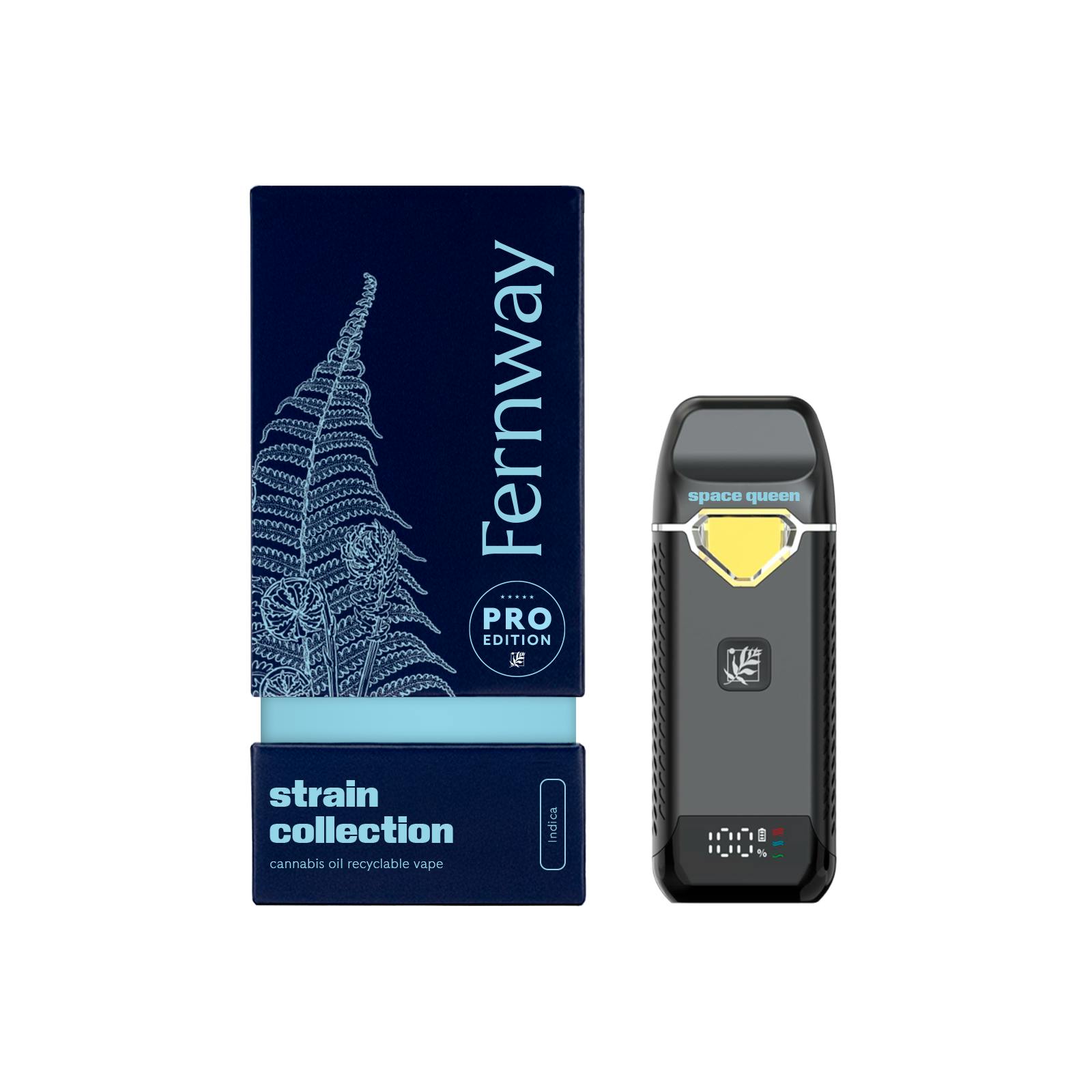
FernwayFernway Space Queen Disposable Vape - 1g - Indica · 1g
$37.17$49.56
$44after tax

weeddispensarynearme.com
You must be 21 years or older to enter. By entering, you confirm you’re of legal age in your state to purchase cannabis.
For use only by adults 21+ • Keep out of reach of children
1 live products in stock
Quick answer · What is the Space Queen cannabis strain?
Space Queen carries the kind of quiet authority that needs little introduction. A well-regarded hybrid leaning toward its indica character in contemporary cultivations, it pairs a dense, resinous structure with an aroma profile that toggles between tropical fruit and cool pine. The experience it offers is layered — grounding without heaviness, clear-headed without the edge of a sharp sativa — and it has earned a devoted following among those who prize balance over extremes.
$44after tax
About Space Queen
Space Queen was bred by Vic High of BC Growers Association, a Canadian collective that became quietly influential in the late 1990s and early 2000s Pacific Northwest cannabis scene. The cross unites Romulan — a dense, sedating indica long associated with Vancouver Island — with Cinderella 99, the legendary Mr. Soul creation from Brothers Grimm Seeds that itself descends from a chance find of a Jack Herer seed inside a Sensi Star purchase. That Cinderella 99 lineage, tracing back through Princess and then to Jack Herer's Haze-Northern Lights-Skunk backbone, introduces the cerebral lift and tropical fruit character that distinguishes Space Queen from a straightforward indica. The strain emerged in an era when Canadian breeders were quietly advancing hybrid genetics with less commercial fanfare than their Dutch counterparts, and it circulated for years as a clone-only or small-batch seed offering before broader recognition arrived. Several phenotypes have been documented in the community: some lean heavily toward the Romulan parent, presenting with compact structure and pronounced body weight, while others express the Cinderella 99 influence more vividly through aroma and a brighter initial effect. Genetic siblings and related projects include Space Jill, a backcross to Cinderella 99, and various exploratory crosses by later breeders who licensed or sourced the original genetics. Romulan itself has debated origins — some accounts place it as a pure indica import; others suggest Northern California influence — which adds a layer of complexity to Space Queen's full genetic picture.
The onset of Space Queen tends to arrive within five to ten minutes of inhalation, announcing itself with a mild pressure behind the eyes and a subtle brightening of sensory perception. This initial phase carries a faintly cerebral quality — attributable in part to the terpinolene and myrcene interplay — that does not tip into anxiety for most experienced consumers. Thoughts may arrive with slightly more vivid color, and conversation, if present, tends to feel easier and more free-associative. As the experience deepens toward the fifteen-to-thirty minute window, the body comes forward. The Romulan parentage begins to assert itself: a warmth settles into the shoulders, the jaw softens, and the initial cerebral brightness mellows into something more even and sustained. This mid-arc phase is where Space Queen's indica character is most apparent, though it rarely produces the full-floor sedation associated with a heavyweight indica. The dual heritage keeps the effect balanced — present and physical, but not immobilizing. Duration typically runs two to three hours at moderate consumption, with a gentle comedown rather than an abrupt drop. The tail end of the experience often presents as a quiet, comfortable stillness. Myrcene, which is frequently dominant in lab-tested samples, is associated in the literature with relaxation and mild sedative contribution. Terpinolene adds an uplifting, slightly aromatic dimension. Consumers new to cannabis or those with lower tolerance are well advised to start with a single, measured inhalation and allow ample time before proceeding.
The aroma profile of Space Queen is one of its most discussed attributes, and for good reason. The dominant terpenes in well-grown specimens lean toward myrcene, terpinolene, and caryophyllene, which together produce a bouquet that is simultaneously tropical, herbal, and subtly spiced. On first approach, the nose registers something between ripe mango and overripe citrus — a quality traceable to terpinolene, which is also found in strains like Jack Herer and Dutch Treat and is associated with sweet, floral-citrus aromatic notes. Breaking the bud or grinding introduces a secondary layer: a cool, almost piney undercurrent that some cultivations express more prominently than others, suggesting minor pinene presence, though this varies considerably by phenotype. Caryophyllene contributes a faint peppery warmth that prevents the profile from reading as purely sweet. Some examples also present a light vanilla or cream undertone, though this is less consistently documented and may reflect specific curing practices rather than a stable terpene expression. In vapor, the palate receives a soft tropical-fruit opening that translates the aroma faithfully. The mid-draw introduces a gentle herbal quality, and the finish is clean with a mild sweetness that lingers briefly. In combustion, the smoke is relatively smooth at moderate temperatures, with the sweetness still discernible but tempered by a slightly earthier character. The overall flavor impression is of a well-integrated profile — nothing shrill or chemical — which contributes to Space Queen's reputation as an approachable, pleasant-tasting cultivar.
Space Queen presents with buds that reflect its mixed heritage: not quite the compact, chunky architecture of a pure indica, nor the elongated, airy structure typical of a sativa-dominant variety. Phenotypes trending toward the Romulan side tend to produce denser, more spherical calyxes with tight internode spacing, while Cinderella 99-forward expressions may run slightly more open and elongated. The color palette is characteristically a medium-to-deep green, often with subtle olive undertones, and occasionally with faint purple blushes on the outer leaves when exposed to cooler nighttime temperatures during the final weeks of flowering. Pistils are typically a warm amber-orange, weaving visibly through the bud structure. Trichome coverage is generous — a reflection of both parent strains' resin production — giving cured buds a frosted, slightly luminous quality under light. The overall impression is of a well-finished, aesthetically coherent flower that reads as premium without ostentation.
Space Queen is considered a moderately accessible cultivar for home growers, though the variation between phenotypes means that selecting and stabilizing a preferred expression requires some patience and experience. Flowering time runs approximately eight to nine weeks indoors, which is on the shorter end of the hybrid spectrum and reflects the indica-dominant Romulan influence on the plant's internal clock. Indoors, the plant rewards low-stress training and moderate canopy management: left unguided, some phenotypes will stretch noticeably in the early flowering transition, a trait from the Cinderella 99 lineage. Yields indoors are reported as moderate, sufficient to reward careful cultivation without being exceptional. Outdoors, Space Queen performs well in temperate climates with warm summers and dry falls — the Pacific Northwest origins suggest adaptability to conditions that mimic coastal British Columbia. The strain is noted for resin production, and experienced cultivators often cite it as worthwhile for concentrate work. Humidity control during late flowering is advisable given the density of some phenotypes, which can be susceptible to moisture retention in the interior of tighter colas.
Space Queen occupies a useful position in a thoughtfully curated personal collection: it suits the hours between late afternoon and early evening, when the day's commitments have resolved but the night has not yet fully arrived. The balanced effect profile — grounding body, approachable mental clarity — makes it a natural companion for creative work that does not demand the sharp focus of a pure sativa but benefits from a relaxed, open mental state. Writing, sketching, or working through a playlist with focused attention all align well with what the strain offers. The tropical and herbal terpene profile pairs gracefully with foods that share its aromatic register: a dish built around mango, coconut, or fresh citrus will echo and amplify the strain's own flavor notes. A light Thai curry or a well-made ceviche would not feel out of place as an accompanying meal. For music, the mid-tempo warmth of ambient jazz or contemporary electronic with organic textures — the kind of music that rewards close listening without demanding physical response — complements the experience arc well. Shared between two or three people in a quiet, comfortable setting, Space Queen tends to encourage relaxed conversation and easy presence.
Cinderella 99
As a direct parent of Space Queen, Cinderella 99 shares the tropical fruit aroma and bright early effect, making it a natural next step for anyone drawn to Space Queen's more cerebral, uplifting moments.
Romulan
The other half of Space Queen's parentage, Romulan offers the body-forward, deeply relaxing indica character that surfaces in Space Queen's second-phase effect, suited to those who want to lean further into the physical dimension.
Dutch Treat
Sharing terpinolene as a dominant terpene, Dutch Treat delivers a similarly sweet, fruity aroma and an effect that balances relaxation with mild cerebral engagement, making it a comfortable lateral move from Space Queen.
Jack Herer
Given Space Queen's Cinderella 99 lineage traces back to Jack Herer's genetics, fans of the classic spice-and-pine profile and balanced hybrid effect will find familiar territory in Space Queen's quieter, more indica-influenced expression.
Chernobyl
A Subcool / TGA Genetics cross involving Space Queen itself, Chernobyl shares the lime-citrus and tropical aromatic thread while adding a somewhat more energetic sativa lean, making it appealing to those who enjoyed Space Queen but prefer a lighter body component.
Space Queen is a hybrid strain, the product of crossing the indica-dominant Romulan with the sativa-leaning Cinderella 99. In contemporary cultivations and general classification, it is often listed as indica-dominant, reflecting the Romulan influence on its body effect and bud structure. However, the Cinderella 99 parentage ensures a meaningful cerebral component that distinguishes it from a straightforward indica.
Space Queen is widely noted for a tropical fruit-forward flavor profile, with ripe mango and citrus as the most frequently cited descriptors. A secondary herbal and mildly piney undercurrent adds depth, while a gentle peppery warmth from caryophyllene rounds out the finish. In vapor, the sweetness is clean and well-defined; in combustion, an earthier quality emerges without obscuring the fruit character.
Space Queen typically produces a layered experience: an initial, mild cerebral brightness giving way to a warm, relaxing body effect that settles in within fifteen to thirty minutes. The overall character is balanced — physically comfortable and calming without heavy sedation, mentally accessible without sharpness or edge. Most consumers report a duration of two to three hours, with a gentle, even comedown. Those new to cannabis are encouraged to start low and go slow.
Consumers who enjoy Space Queen often find common ground with Cinderella 99 and Romulan, its parent strains. Dutch Treat shares a terpinolene-forward aromatic profile and comparable balance. Chernobyl, which incorporates Space Queen in its own lineage, offers a related but slightly more energetic tropical expression. Jack Herer, an ancestor through Cinderella 99, appeals to those drawn to Space Queen's brighter, early-onset moments.
Space Queen can be approachable for adults new to cannabis, provided they follow a start-low, go-slow approach. The balanced hybrid profile means it is less likely to produce the disorienting intensity of a high-potency sativa or the immobilizing weight of a dense indica. That said, individual responses vary, and the cerebral onset can catch less experienced consumers off guard. A single measured inhalation, followed by a twenty-minute wait, is a sensible starting point.
Myrcene is frequently cited as the dominant terpene in Space Queen, contributing earthy, tropical, and mildly herbal aromatic notes and associated in the literature with relaxing, sedative-adjacent effects. Terpinolene is a prominent secondary terpene, responsible for the sweet, fruity, and faintly floral top notes. Caryophyllene adds a subtle spice and pepper dimension and is the only terpene known to interact with the endocannabinoid system's CB2 receptors directly.
Space Queen was bred by Vic High, associated with BC Growers Association, a respected collective operating out of British Columbia, Canada. The strain emerged in the late 1990s to early 2000s, a period of quiet but significant innovation among Pacific Northwest and Canadian breeders. It circulated initially as a clone-only variety before seeds became more broadly available, and it has since influenced a number of subsequent hybrid projects.
Yes, Space Queen is known to express distinct phenotypes, a natural consequence of its two genetically divergent parent strains. Some phenotypes favor the Romulan influence — presenting with denser structure, more pronounced body effect, and a heavier aroma — while others lean toward the Cinderella 99 side, offering a brighter aroma, slightly more open bud architecture, and a more prominent cerebral onset. The specific phenotype available at any given time can meaningfully shape the experience.
Related strains
Pick your store
We'll show pricing, deals, and delivery zones for the store you pick. You can switch any time from the header.