
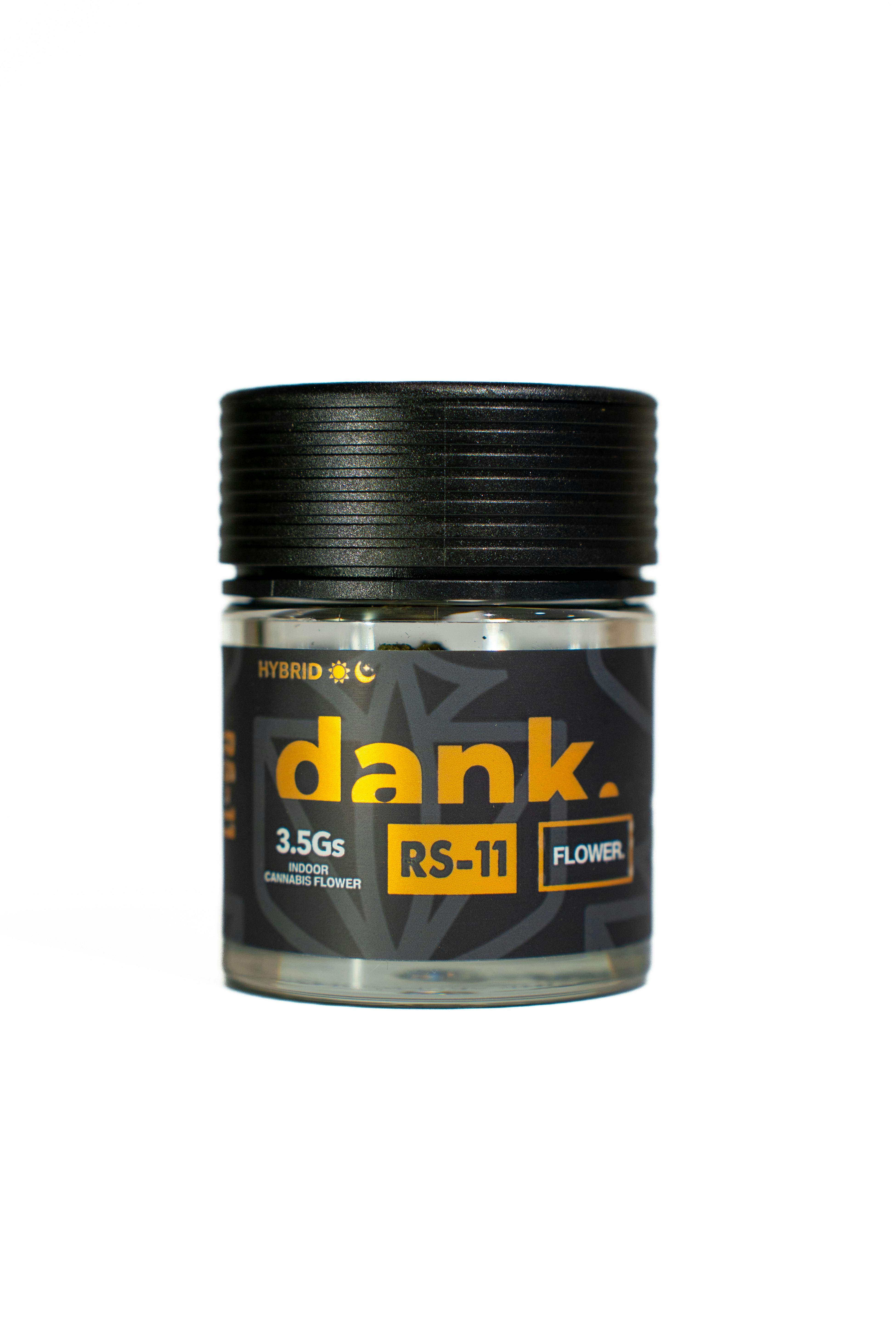
Hybrid
All strains RS-11
2 live products in stock
Quick answer · What is the RS-11 cannabis strain?
RS-11, also known as Rainbow Sherbet #11, is a visually arresting hybrid whose tightly coiled buds arrive dressed in violet, emerald, and pale gold. Born from a storied lineage of dessert-forward genetics, it delivers a layered aromatic experience — sweet fruit meeting a quiet, resinous earthiness — followed by an effect profile that balances mental clarity with a gradual, settling warmth that suits the unhurried afternoon.
Shop RS-11 · 2 of 2 live products
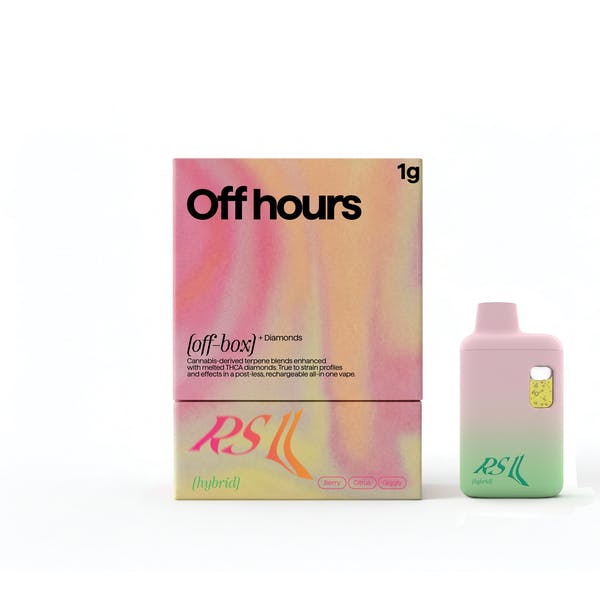
THC 89.55%Hybrid
Off HoursOff hours - Box All-in-one Liquid Diamonds Vape Pen (RS 11) · 1g
$33.63
$38after tax
About RS-11
Everything to know about RS-11.
Lineage & origin
RS-11 is generally attributed to the selective breeding program at Wizard Trees, a California-based collective recognized for producing heavily trichomed, flavour-forward cultivars. The strain is understood to be a cross of Pink Guava and OZK — the latter itself a phenotype of Zkittlez — though some catalogues describe the parentage as Rainbow Sherbet crossed with a Zkittlez-influenced male, and the lineage remains a point of ongoing discussion in cultivator communities. What is consistent across sources is the clear influence of Zkittlez genetics, the award-winning hybrid developed by 3rd Gen Family and Terp Hogz, which contributed its signature fruity terpene complexity and tight, resin-heavy bud structure. Pink Guava brings a tropical sweetness and a broader cannabinoid expression that rounds the profile. RS-11 rose to prominence in the early 2020s as part of a wider movement toward what collectors began calling "gas-meets-dessert" cultivars — strains that pair loud, fuel-tinged undercurrents with confection-like top notes. It quickly attracted attention on the East Coast elite market, appearing in limited drops and generating considerable secondary interest among connoisseurs. A small number of phenotype expressions have been noted, with some cuts leaning more toward the citrus-forward character of Zkittlez and others expressing a deeper, berry-tinged darkness closer to the Pink Guava parent.
Effects
The onset of RS-11 tends to present within the first few minutes, initially as a gentle lift behind the eyes and a brightening of sensory focus. This cerebral opening phase is characteristically smooth rather than jolting — thoughts become more associative and conversation flows with an ease that feels earned rather than chemically imposed. The Zkittlez heritage, with its terpene-driven entourage contributions, likely plays a role in this measured, clear-headed early arc. As the experience deepens into its peak — typically between fifteen and forty-five minutes after consumption — a body component begins to layer in beneath the mental brightness. This is not sedation in any clinical sense, but rather a softening of physical tension that complements rather than overtakes the cerebral quality. The hybrid balance here is genuine: neither the racy edge of a purely sativa-dominant cultivar nor the floor-lock of a heavy indica. The dominant terpene profile, led by caryophyllene, limonene, and myrcene, broadly aligns with research suggesting anti-anxiety and mood-modulating tendencies, though individual response varies considerably. The comedown is gentle and gradual, rarely abrupt, with most consumers reporting a slow return to baseline over one to two hours. Those newer to cannabis are well-advised to start low and allow sufficient time between increments, as the potency of RS-11 cuts available in the New York adult-use market can be substantial.
Aroma, flavor & terpenes
The aromatic profile of RS-11 is among its most discussed characteristics, and it rewards a slow, attentive approach. On first opening, the dominant impression is a layered sweetness — ripe tropical fruit, something adjacent to guava or passionfruit, threaded through with a berry undercurrent. This is the work of limonene, which contributes the bright citrus-adjacent lift, and myrcene, which anchors the profile with its characteristic musky, fruit-forward earthiness. A secondary note of cream or fresh dough emerges as the initial brightness settles, a quality that many attribute to the Zkittlez influence and that gives the strain its dessert-strain credibility. Caryophyllene, the lone terpene that also acts as a dietary cannabinoid receptor agonist, introduces a subtle spice — faintly woody, almost peppery — that keeps the sweetness from becoming cloying. On the palate, smoked flower delivers the fruit and cream notes upfront with the spice arriving on the exhale. Vapor tends to amplify the tropical and citrus registers while softening the earthier base notes, making it a particularly transparent method for appreciating the full terpene expression. Terpinolene, present in smaller concentrations in some phenotypes, can contribute a faint floral or herbal lift that adds dimensionality to the overall bouquet. The finish is clean and lingers pleasantly, with the sweetness fading last.
Appearance
RS-11 produces dense, tightly structured buds that reflect the influence of its Zkittlez lineage — compact calyxes layered in a way that gives each flower a sculpted, almost architectural quality. The colour palette is one of the strain's most immediately recognizable traits: a base of deep emerald green is interrupted by patches of muted violet and occasional near-blue tones, a result of anthocyanin expression that intensifies under cooler finishing temperatures during cultivation. Amber and burnt-orange pistils wind through the structure, providing warm contrast against the cooler foliage. Trichome coverage is generous and even, with a dense frost of capitate-stalked glandular trichomes that gives the dried flower a silvered, almost luminous appearance under direct light. Well-cured RS-11 should feel slightly yielding under gentle pressure — neither crumbling dry nor compressing without resistance.
Growing notes
RS-11 is considered an intermediate to advanced cultivar, best suited to growers with some prior experience managing resin-heavy, density-prone hybrids. Its compact bud structure, while visually striking, creates conditions that require careful environmental management — specifically humidity control during late flower to mitigate the risk of mold developing within the tightly packed calyxes. The strain performs well indoors under controlled lighting and climate, with a typical flowering window of approximately nine to ten weeks. Indoor yields are described as moderate, rewarding those who invest in low-stress training techniques to improve light penetration and canopy evenness. Outdoor cultivation is feasible in temperate climates with reliable late-summer warmth, though the strain's preference for stable, dry conditions during the final weeks of flower makes it vulnerable in regions prone to early autumn humidity or rain. Cooler nighttime temperatures during the final two weeks of maturation are often credited with intensifying the violet and blue anthocyanin expression that makes RS-11 visually distinctive. For the cultivator-curious shopper, RS-11 represents a strain whose finished quality reflects the care taken at every stage of its growth.
When it's best enjoyed
RS-11 occupies a particular sweet spot among hybrid cultivars — substantial enough to mark the transition between one part of the day and the next, but balanced enough to preserve the capacity for engagement and conversation. It suits the late afternoon particularly well: the hour after a long working day when the mind benefits from a change in register but the evening still holds promise. Solo creative work — writing, sketching, working through a playlist — benefits from the strain's tendency to invite associative thinking without inducing distraction or fragmentation. For a more social setting, it integrates naturally into a small dinner gathering, arriving before or alongside a meal rather than after. In terms of food pairings, the fruit-forward terpene profile — limonene and myrcene prominent — finds a complementary counterpart in dishes with tropical or citrus notes: a ceviche with fresh mango, or a cheese course anchored by something aged and slightly funky to echo the strain's earthy undertones. Musically, the profile aligns with albums that blend textural warmth with melodic precision — neo-soul, late-period jazz fusion, or carefully produced ambient music that rewards close listening.
If you like RS-11, also explore
Zkittlez
As a direct genetic ancestor of RS-11, Zkittlez shares the same fruit-forward terpene architecture and tight, resinous bud structure, making it a natural reference point for those exploring the lineage.
Gelato
Gelato's dessert-strain sweetness and balanced hybrid effect profile appeal to the same palate as RS-11, with a comparably smooth onset and a body warmth that supports rather than overrides mental clarity.
Runtz
A cross of Zkittlez and Gelato, Runtz shares RS-11's candy-fruit aromatic register and hybrid disposition, making it a reliable companion recommendation for consumers drawn to confection-leaning cultivars.
Ice Cream Cake
For RS-11 enthusiasts who gravitate toward the creamy, dough-like secondary notes in the strain's flavor profile, Ice Cream Cake offers a deeper exploration of that dessert-forward character with a somewhat more indica-leaning body effect.
Tropicana Cookies
Tropicana Cookies echoes RS-11's citrus-meets-tropical aromatic quality and similarly balanced hybrid effects, making it a fitting option for those who appreciate the limonene-forward brightness in RS-11's opening.
Common questions
Is RS-11 indica or sativa?+
RS-11 is classified as a hybrid, and in practice it behaves as a genuinely balanced one. Its onset carries a cerebral, focus-sharpening quality associated with sativa-leaning genetics, while the mid-to-late experience introduces a body warmth more typical of indica influence. Neither character dominates the other, which makes it a versatile option for consumers who find purely sativa or purely indica cultivars too one-dimensional.
What does RS-11 taste like?+
RS-11 leads with ripe tropical fruit — guava, passionfruit, and a berry undertone — followed by a creamy, dough-like secondary note that earns it its dessert-strain reputation. On the exhale, caryophyllene introduces a mild spice and woody finish that balances the sweetness. Vapor tends to express the citrus and tropical notes most clearly, while smoked flower adds a subtle earthiness to the overall palate.
What are the typical effects of RS-11?+
The typical experience begins with a clear, uplifting cerebral shift — heightened focus, conversational ease, and a brightening of sensory perception. Over the following thirty to sixty minutes, a body warmth layers in gradually, softening physical tension without inducing heavy sedation. The overall arc is smooth, with a gentle comedown over one to two hours. Potency varies by batch and individual tolerance, so starting with a modest amount is always advisable.
What strains are similar to RS-11?+
Consumers who enjoy RS-11 tend to appreciate Zkittlez for its shared lineage and fruit-forward terpenes, Runtz for its candy-sweet profile and hybrid balance, and Gelato for its dessert-strain character and smooth effect arc. Tropicana Cookies offers a comparable citrus brightness, while Ice Cream Cake appeals to those drawn to RS-11's creamy secondary notes and body-warming finish.
Is RS-11 good for beginners?+
RS-11 can be approachable for beginners given its balanced hybrid effects and smooth onset, but the potency of many cuts available in the adult-use market is meaningful. First-time or low-tolerance consumers should follow a start-low, go-slow approach — beginning with a small amount and allowing ample time before considering more. The strain's pleasant flavor profile makes it easy to overconsume, which is a practical reason for mindful pacing.
What are the dominant terpenes in RS-11?+
The dominant terpenes in RS-11 are generally identified as caryophyllene, limonene, and myrcene. Caryophyllene contributes a spicy, woody edge and is the only terpene known to interact directly with cannabinoid receptors. Limonene provides the bright citrus-tropical lift in the aroma, and myrcene anchors the profile with earthy, fruity depth. Terpinolene may appear in minor concentrations in certain phenotypes, adding a faint floral or herbal accent.
Who bred RS-11 and where does it come from?+
RS-11 is most commonly attributed to Wizard Trees, a California-based breeding collective. The strain emerged in the early 2020s and is understood to be a cross involving Pink Guava and OZK, a Zkittlez-derived phenotype, though some sources describe the parentage differently and the full genetic documentation has not been publicly released by the breeder. It gained significant recognition on the East Coast cannabis market through limited releases and collector interest.
How should I store RS-11 flower to preserve its terpenes?+
To preserve the aromatic complexity that defines RS-11, flower should be stored in an airtight glass container kept at a stable, cool temperature — away from direct light, heat, and humidity fluctuation. A relative humidity of 58 to 62 percent within the container, maintained with a humidity pack if needed, helps preserve trichome integrity and prevents the drying out that diminishes the terpene profile. Properly stored, flower retains its character for several months.
Related strains