
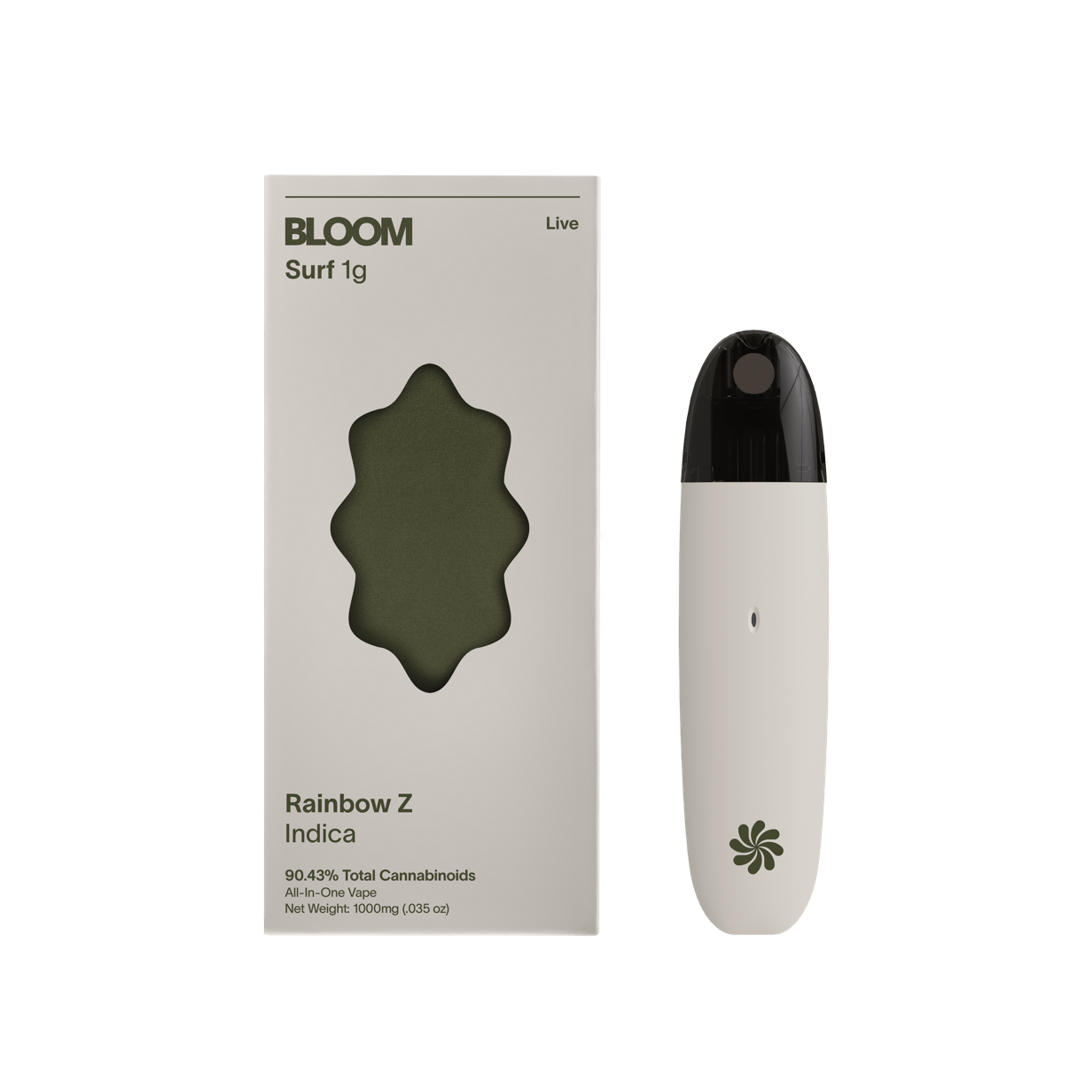
Indica
All strains Rainbow Z
1 live products in stock
Quick answer · What is the Rainbow Z cannabis strain?
Rainbow Z arrives as a quietly commanding indica — its dense, jewel-toned buds a visual overture to the layered experience within. Born from celebrated genetics and shaped by the craft cultivation movement, this strain rewards patient appreciation. Grape, berry, and fuel notes unfold in sequence, anchoring a warm, full-body settle that feels less like sedation and more like the slow release of a long-held breath. For the discerning New York shopper, Rainbow Z is an evening ritual in flower form.
Shop Rainbow Z · 1 of 1 live products
About Rainbow Z
Everything to know about Rainbow Z.
Lineage & origin
Rainbow Z is widely attributed to the cross of Rainbow Belts and Zkittlez, two strains that arrived at the height of the West Coast craft cannabis renaissance. Rainbow Belts itself is understood to be a combination of Zkittlez and Moonbow — the latter a cross of Do-Si-Dos and Mandarin Sunset — meaning Zkittlez genetics appear twice in Rainbow Z's family tree, reinforcing the strain's signature candy-fruit character. The breeder of record most frequently cited in industry circles is Beleaf Cannabis, though the broader craft community has produced numerous phenotype hunts under the same name, leading to some phenotypic variation across markets. Zkittlez, one of the two principal parents, earned its reputation through a Best Indica win at the 2016 Emerald Cup, cementing a lineage (Grape Ape crossed with Grapefruit, finished with an unnamed third variety) that has since influenced dozens of contemporary hybrids. Rainbow Belts, for its part, contributed structural complexity — the dense, trichome-heavy architecture and a terpene palette that leans toward sweet earthiness cut with floral brightness. Genetic siblings and close relatives in the broader Zkittlez family — Runtz, Gushers, and Gelato 41 — share Rainbow Z's tendency toward resin production and dessert-adjacent flavor profiles, making it a natural point of interest for collectors who have explored those lineages and are seeking something with a slightly more grounded, indica-forward character.
Effects
The onset of Rainbow Z tends to arrive within five to ten minutes of inhalation, beginning as a gentle pressure at the temples and a softening behind the eyes — the classic early signature of a myrcene-forward indica. The initial cerebral quality is mild but present: a loosening of mental rigidity that some describe as a quiet clearing of background noise. This phase rarely tips into anxiety, which is one reason Rainbow Z has found favor among experienced consumers who prefer their evenings uncluttered. As the experience deepens over the following twenty to thirty minutes, the body component becomes more prominent. A spreading warmth moves through the shoulders and chest, encouraging a slower posture and a more deliberate pace. The caryophyllene in the terpene profile is thought to contribute a subtly grounding, almost spice-forward quality to this body phase, while linalool — where present in well-grown phenotypes — may lend a soft, almost floral ease to the overall character. Peak effects are typically felt between thirty and sixty minutes after consumption. The comedown is gradual and unhurried. Most consumers report a drift toward drowsiness rather than an abrupt conclusion, making Rainbow Z well-suited to late-evening use when the transition to rest is the goal. Duration tends to run between two and three hours depending on individual tolerance. As always, new consumers are encouraged to start with a modest amount and allow ample time before considering additional consumption.
Aroma, flavor & terpenes
The aromatic profile of Rainbow Z is one of its most immediately recognizable qualities. On the jar, the dominant impression is of ripe mixed berries — dark grape, boysenberry, and a suggestion of overripe plum — underscored by a faintly sharp, petrol-like note that keeps the sweetness from becoming one-dimensional. This interplay is largely the work of myrcene, the most commonly found terpene in cannabis and one that delivers that characteristic musky, fruit-forward depth, alongside caryophyllene, which introduces the subtle fuel and spice undertone. On closer inspection, secondary terpenes reveal themselves. Linalool, when present in quantity, adds a soft floral lift reminiscent of dried lavender or violet candy — a note that rounds the edges of the more assertive fruit and fuel components. Some phenotypes carry detectable amounts of limonene, which can push the nose toward a brighter, citrus-adjacent direction, lending the overall profile an almost sorbet-like freshness before the earthier base reasserts itself. On the palate, whether smoked or vaporized at moderate temperatures, Rainbow Z tends to open with sweetness — grape skin and candy — before transitioning through a slightly doughy, almost pastry-like mid-note. The exhale carries the fuel and spice character more prominently, leaving a warm, lingering finish. Vaporizing at lower temperatures (around 170–185°C) tends to preserve the floral and citrus top notes most faithfully, while higher temperatures coax the earthier, more resinous qualities forward.
Appearance
Rainbow Z buds present with the structural density expected of a well-grown indica — tight, compact calyxes that hold their shape firmly and feel substantial in the hand. The colour palette is one of the strain's most striking features: deep forest greens are overlaid with patches of royal purple and violet, a phenotypic expression of anthocyanin pigments that develop more fully when plants are exposed to cooler temperatures during the late flowering window. These purples can range from subtle lavender washes to near-indigo concentrations depending on the growing environment. Russet and amber pistils wind through the bud structure with quiet contrast, while the trichome coverage is consistently described as generous — a dense, almost sugared layer of milky-to-amber glandular resin that gives trimmed buds a frosted appearance under direct light. The overall visual impression is of a strain that has been selected as much for aesthetics as for effect, which aligns with its origins in the phenotype-hunt culture of West Coast craft cultivation.
Growing notes
Rainbow Z is considered a moderately challenging cultivar, best suited to growers who have foundational experience with indica-dominant hybrids and an appreciation for the attentiveness that resin-rich genetics require. The plant tends toward a compact, bushy structure — a trait inherited through its indica-heavy lineage — and benefits from low-stress training (LST) or a screen-of-green (SCROG) setup to maximize canopy light penetration and airflow. Indoors, Rainbow Z typically flowers in approximately eight to nine weeks, yielding moderate to above-average harvests when conditions are dialed. The strain responds well to cooler nighttime temperatures in the final two weeks of flower, which encourages the development of its signature purple coloration. Outdoors in a temperate climate, it is best suited to a long, warm season with harvest falling in early to mid-October in the Northern Hemisphere. Humidity management is important given the density of the buds, which can be susceptible to mold in poorly ventilated environments. For the cultivator-curious shopper, Rainbow Z represents a cultivar that rewards patience and environmental precision with visually striking, aromatic results.
When it's best enjoyed
Rainbow Z is most at home in the quiet hours after the demands of the day have receded — a Thursday evening in a well-appointed apartment, the city settling into its later register outside the window. It suits the solo wind-down with particular elegance: the kind of session that begins with a record on the turntable and ends with a book left open on the chest. The body-forward character makes sustained physical activity less appealing, but it pairs beautifully with passive engagement — a long film, a slow dinner prepared at leisure, or a bath drawn with intention. For food pairings, the grape and berry terpene notes find a natural counterpart in aged cheeses with fruity rinds, or in dark chocolate with at least seventy percent cacao — the bitterness of the chocolate acting as a foil to the strain's inherent sweetness. Musically, Rainbow Z's character aligns with slow-tempo, textured listening: late-period John Coltrane, Sade, or the more contemplative corners of neo-soul. For those who prefer a shared experience, it works well in small, unhurried company — the kind of gathering where conversation slows to a more considered pace and that is regarded as a feature rather than a lull.
If you like Rainbow Z, also explore
Zkittlez
As a direct parent of Rainbow Z, Zkittlez shares the same candy-fruit aroma and relaxing indica character, making it the most logical reference point for anyone exploring the Rainbow Z profile.
Runtz
Runtz occupies the same dessert-forward, resin-rich indica-hybrid space, with a similarly sweet and fuel-edged nose that appeals to Rainbow Z enthusiasts.
Gelato 41
Gelato 41's dense bud structure, purple phenotypic expression, and balanced body-to-mind effect arc make it a compelling companion strain for Rainbow Z admirers.
Gushers
Gushers shares Zkittlez lineage and delivers a similar sweet, tropical-fruit flavor alongside the kind of slow, spreading body effect that defines the Rainbow Z experience.
Moonbow
As a genetic grandparent of Rainbow Z through Rainbow Belts, Moonbow carries the same earthy-floral depth and indica-forward temperament that characterizes Rainbow Z's more contemplative qualities.
Common questions
Is Rainbow Z indica or sativa?+
Rainbow Z is classified as an indica-dominant strain, a designation consistent with its lineage — Rainbow Belts crossed with Zkittlez, both of which lean indica in character. Its effects reflect that classification: the experience tends to settle into the body rather than energize the mind, making it most appropriate for evening or late-afternoon use when a calming, unhurried session is the intention.
What does Rainbow Z taste like?+
Rainbow Z delivers a layered flavor experience that opens with ripe grape and mixed berry sweetness, transitions through a subtly doughy or pastry-like mid-palate, and finishes with a warm, fuel-and-spice exhale. Some phenotypes carry a faint floral note — attributed to linalool — that softens the overall profile. The flavor is complex without being aggressive, and tends to be more expressive when vaporized at moderate temperatures.
What are the typical effects of Rainbow Z?+
Rainbow Z typically produces a gentle cerebral onset — a softening of mental tension — followed by a deepening body warmth that encourages stillness and ease. The experience is not sharply sedating in its early phase but tends to drift toward drowsiness as it progresses. Peak effects generally arrive between thirty and sixty minutes after consumption and last two to three hours, though individual experience varies with tolerance and consumption method.
What strains are similar to Rainbow Z?+
Consumers who enjoy Rainbow Z often find common ground with Zkittlez, Runtz, Gelato 41, Gushers, and Moonbow. These strains share either direct genetic lineage or a comparable terpene profile — candy-fruit sweetness, resin-rich bud structure, and an indica-forward effect arc that favors relaxation over stimulation. Zkittlez and Moonbow are the closest genealogical relatives given their role in Rainbow Z's family tree.
Is Rainbow Z good for beginners?+
Rainbow Z can be approachable for adult consumers new to cannabis, but its indica potency and the density of its resin profile suggest that a cautious, start-low-go-slow approach is wise. First-time or low-tolerance consumers are encouraged to begin with a small amount, allow a full thirty minutes before assessing effects, and choose an evening setting where relaxation — rather than productivity — is the goal. Having water and a light snack nearby is always a sensible practice.
What are the dominant terpenes in Rainbow Z?+
The terpene profile of Rainbow Z is typically led by myrcene, which contributes the musky, berry-fruit depth that defines the strain's aroma, and caryophyllene, which introduces a spice and fuel undertone while also being the only terpene known to interact with the body's endocannabinoid receptors directly. Linalool — associated with floral, lavender-adjacent notes — and limonene, which adds citrus brightness, appear as secondary contributors depending on the specific phenotype and growing conditions.
When is the best time of day to enjoy Rainbow Z?+
Rainbow Z is best suited to the evening hours, given its indica-dominant character and its tendency to encourage physical stillness and, with extended use, drowsiness. Late afternoon — after obligations have concluded but before sleep is imminent — is another natural window. It is generally not considered a daytime strain for those who need to remain sharp, focused, or physically active, and is better reserved for moments of intentional rest or quiet leisure.
Who bred Rainbow Z and where does it come from?+
Rainbow Z is most commonly attributed to Beleaf Cannabis, a craft breeder that gained recognition within West Coast cannabis circles, though the broader market has seen numerous independent phenotype hunts under the same name, leading to some variation. The strain's roots are firmly in the California craft cannabis movement of the mid-to-late 2010s — a period defined by an emphasis on terpene complexity, visual appeal, and lineage transparency — from which Zkittlez, one of its parent strains, emerged as a competition-winning benchmark.
Related strains