THC 44.75%Hybrid
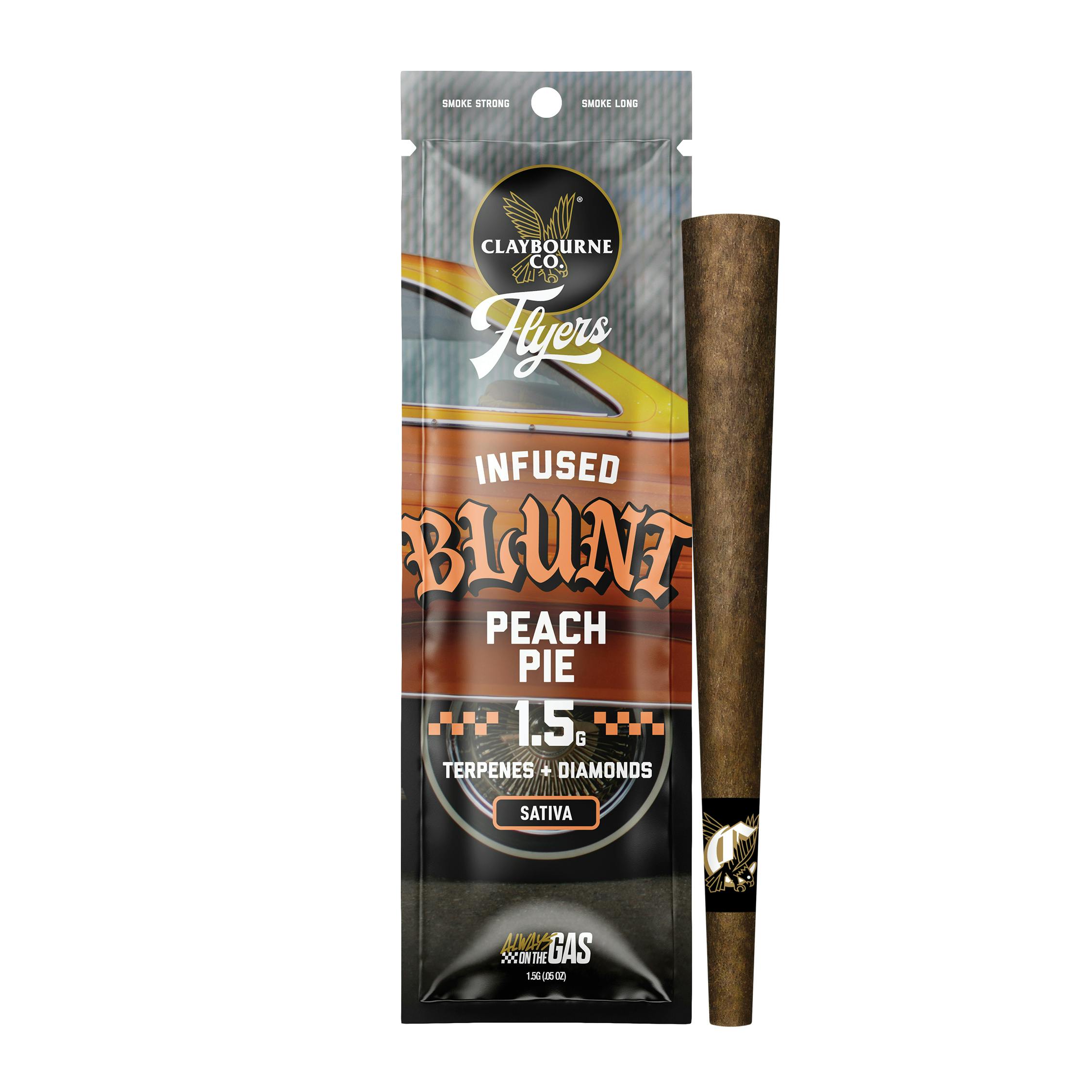
Claybourne Co.Claybourne | Peach Pie | Infused Blunt | Pre-Roll 1ct · 1.5g
$36.28
$41after tax

weeddispensarynearme.com
You must be 21 years or older to enter. By entering, you confirm you’re of legal age in your state to purchase cannabis.
For use only by adults 21+ • Keep out of reach of children
1 live products in stock
Quick answer · What is the Peach Pie cannabis strain?
Peach Pie arrives like the last warmth of a summer afternoon — sun-ripened stone fruit on the nose, a gently euphoric lift on the mind, and a body ease that settles in without announcement. This hybrid strikes a considered balance between cerebral engagement and physical comfort, making it as fitting for a quiet evening in as for a relaxed social gathering. Its terpene-rich profile rewards those who pause long enough to appreciate the full aromatic arc.
$41after tax
About Peach Pie
Peach Pie's exact genetic lineage is the subject of some debate in the broader cannabis community, and no single breeder has publicly staked a definitive, universally accepted claim to the strain. The most widely cited parentage pairs OG Kush with a phenotype of Cherry Pie, with some accounts folding in Durban Poison or a sweet peach-leaning phenotype of Girl Scout Cookies to explain the pronounced stone-fruit character. Cherry Pie itself is a well-documented cross of Granddaddy Purple and Durban Poison, so any influence from that lineage would introduce the dense berry sweetness and mild sativa brightness that Cherry Pie is known for. OG Kush, one of the most influential West Coast cultivars of the modern era, contributes its signature fuel-and-earth backbone alongside notable myrcene and caryophyllene expression. Some phenotypic variations sold under the Peach Pie name lean distinctly toward the indica end of the hybrid spectrum, suggesting that different breeders may be working with subtly different parent stock. This is not unusual for a strain whose name evokes a sensory experience — breeders across legal markets have selectively bred toward the peach-forward aroma profile independently. Genetic siblings in this broader flavor family include Peach Ringz and Peaches and Cream, both of which share a similar stone-fruit terpene architecture, though neither carries the same OG-influenced body weight that makes Peach Pie distinct.
Peach Pie typically announces itself within five to ten minutes of inhalation — an opening cerebral warmth that tends to lift mood and soften the edges of the day's accumulated tension without tipping into anxious overstimulation. This initial phase is characterized by a pleasant mental brightness: thoughts move with a certain ease, conversation feels natural, and creative associations come more readily. The onset is gentle enough that even moderately experienced consumers often find it approachable, though the standard counsel applies — start low, go slow, especially when exploring a new batch or a new cultivar. As the session progresses into its peak, typically between twenty and forty-five minutes in, the body component becomes more pronounced. This is likely attributable to the myrcene-dominant terpene profile working in concert with the OG Kush-derived cannabinoid expression — a combination that tends to produce the characteristic relaxation-without-sedation that many hybrid consumers seek. The body settles, muscles ease, and the earlier mental brightness transitions into something softer and more contemplative. Duration for most consumers lands in the two-to-three-hour range. The comedown is notably gradual and unhurried, rarely producing the abrupt clarity drop associated with more purely sativa-leaning cultivars. Rather, it tapers into a restful, grounded ease that makes Peach Pie well suited to evening hours.
The aromatic profile of Peach Pie is one of its most immediately compelling qualities. On first encounter, the nose registers ripe peach skin and a faint floral sweetness — characteristics most directly attributed to the presence of myrcene, the most abundant terpene in this cultivar and one strongly associated with fruity, slightly musky warmth. Beneath that leading note, a secondary layer of citrus and light earthiness emerges, where limonene and caryophyllene share the stage: limonene contributes the brighter, zest-forward quality, while caryophyllene introduces a subtle peppery depth that keeps the overall profile from reading as purely sweet. Linalool, when present — and in many cuts of Peach Pie it is — adds a delicate lavender-adjacent softness that sits at the back of the bouquet like a quiet grace note. Some phenotypes also carry trace expressions of ocimene, which can push the profile toward a slightly herbal, almost tropical brightness. On the palate, the smoke or vapor opens with that same stone-fruit sweetness, transitioning mid-exhale into a warm, doughy quality that earns the 'pie' portion of the name — a mild vanilla and baked pastry suggestion that lingers pleasantly. The finish is clean, with a gentle earthiness that marks OG influence without overwhelming the sweeter top notes.
Peach Pie buds present with the kind of visual cohesion that reflects careful cultivation and attentive post-harvest handling. The structure tends toward medium-dense: not the compressed, rock-hard formation of a pure indica, but substantial enough to hold its shape with clear structural integrity. Calyxes are typically well-formed and rounded, layered in a way that gives each bud a slightly tapered, almost torch-like silhouette. The color palette leans into olive and forest greens, occasionally punctuated by hints of soft purple in phenotypes that have experienced cooler late-flowering temperatures — a visual echo of its Granddaddy Purple ancestry through the Cherry Pie line. Pistils run a warm amber-to-rust spectrum, curling through the green in a way that contributes visual warmth. Trichome coverage is notably generous: a dense, slightly milky frost that catches light and signals the aromatic richness within. Well-grown examples carry the kind of trichome density that makes the surface appear almost textured under close inspection.
Peach Pie is considered a moderately challenging cultivar for home growers, primarily because the pursuit of its peak aromatic expression demands precise environmental management — temperature swings during the final weeks of flowering, in particular, can either enhance or mute the terpene profile depending on execution. Indoors, flowering time generally falls in the eight-to-nine-week range, with yields that lean moderate rather than prolific; growers working with this strain tend to prioritize quality over volume, and the plant responds well to that philosophy. Outdoor cultivation is viable in temperate climates where late-summer and early-fall conditions are mild, dry, and consistent — the Pacific Northwest and Northern California's more sheltered valleys have proven hospitable to similar OG-Cherry Pie hybrids. The plant responds well to low-stress training techniques that open the canopy and allow light penetration to lower bud sites. Its indica-leaning structure means it stays compact enough for managed indoor environments, though adequate airflow is important given the density of its flower formation. For the cultivator-curious consumer, Peach Pie is a strain that rewards patience and environmental attentiveness above all else.
Peach Pie occupies a particular niche in the daily ritual: it is most at home in the transitional hours — late afternoon into evening — when the day's obligations have released their grip but the night's full quiet has not yet arrived. It suits the kind of unhurried social setting where conversation flows without agenda: a small dinner gathering, a low-key creative session, or a long walk through a city neighborhood as dusk settles in. For food pairings, the strain's stone-fruit and doughy terpene profile finds a natural complement in similarly warm, slightly sweet culinary experiences — a charcuterie spread anchored by aged Gouda and fig preserves, or a simple stone-fruit galette. On the musical front, the gentle cerebral lift and softening body ease pair intuitively with recordings that occupy a similar emotional register: mid-tempo jazz, ambient soul, or the kind of acoustic folk that asks nothing more of the listener than presence. Peach Pie is not a strain that demands occasion; it is one that quietly elevates whatever occasion already exists.
Cherry Pie
As a likely parent strain, Cherry Pie shares Peach Pie's sweet, fruit-forward terpene profile and gentle hybrid balance, making it a natural point of comparison for those who enjoy the stone-fruit aromatic character.
Peach Ringz
Peach Ringz shares a similar peachy, candy-adjacent terpene expression and hybrid disposition, appealing to the same consumer who gravitates toward sweet, fruit-dominant profiles without heavy sedation.
Gelato
Gelato's dessert-forward flavor profile and balanced cerebral-body hybrid effects offer a comparable experience arc for consumers drawn to Peach Pie's warmth and smoothness.
Wedding Cake
Wedding Cake's rich, doughy sweetness and OG-influenced body ease resonate with the same qualities that make Peach Pie approachable and satisfying for evening hybrid sessions.
Sunset Sherbet
Sunset Sherbet's fruity, creamy terpene profile and mood-lifting hybrid character make it a compelling alternative for Peach Pie enthusiasts who appreciate soft euphoria layered over physical ease.
Peach Pie is a hybrid, and most phenotypes lean slightly toward the indica side of the spectrum without fully committing to it. Consumers typically report an initial cerebral lift that transitions into a more body-centered ease — reflecting its mixed genetic heritage. The balance makes it versatile across a range of settings, though the moderately relaxing body effect means it is often better suited to afternoon and evening use than to highly active daytime pursuits.
The flavor profile centers on ripe stone fruit — specifically peach skin — with a secondary doughy, almost pastry-like warmth on the exhale that justifies the 'pie' designation. Subtle citrus brightness and a mild earthiness round out the experience. The smoke or vapor is generally smooth and clean, with a gentle sweetness that lingers pleasantly on the palate rather than fading abruptly. The overall effect is closer to a ripe summer dessert than to anything sharp or overtly herbal.
Consumers most frequently describe an initial euphoric mental lift that softens mood and encourages a gentle openness — social but not restless. As the session develops, a relaxing body quality emerges that eases physical tension without typically producing heavy sedation. The overall experience arc is gradual and smooth, with a comedown that tapers quietly rather than dropping off. As with any cannabis cultivar, individual responses vary, and newcomers are encouraged to start with a modest amount.
Consumers who enjoy Peach Pie often find common ground with Cherry Pie, given the shared lineage and fruit-forward terpene profile. Gelato and Wedding Cake offer comparable dessert-adjacent flavor experiences with similarly balanced hybrid effects. Peach Ringz is a natural companion for those specifically drawn to the stone-fruit character, while Sunset Sherbet appeals to fans of the gentle, mood-lifting quality that defines Peach Pie's opening phase.
Peach Pie's generally balanced hybrid character makes it more approachable than many potent indica-dominant or high-THC cultivars, but it is not without effect. Beginners are advised to follow the standard guidance: start with a small amount, allow adequate time for effects to manifest fully before considering more, and choose a comfortable, low-pressure setting. The gradual onset and smooth experience arc are qualities that experienced consumers often cite as beginner-friendly, relatively speaking.
Myrcene typically leads the terpene profile, contributing the warm, ripe-fruit muskiness that defines the strain's aromatic signature. Caryophyllene follows, adding a subtle peppery earthiness and a degree of physical ease. Limonene provides brighter citrus top notes, while linalool — present in many phenotypes — introduces a soft floral quality. Trace amounts of ocimene may appear in certain cuts, adding a faint herbal brightness. This combination creates the layered, dessert-adjacent profile the strain is known for.
Peach Pie's hybrid character places it most naturally in the late afternoon to evening window — after the day's responsibilities have wound down but before full nighttime rest. Its initial mental lift makes it engaging enough for relaxed social or creative settings, while the body ease that develops over the course of the session suits the transition toward a quieter evening. Those who respond more strongly to its indica-leaning qualities may find it most comfortable in the hours immediately before bed.
The lineage of Peach Pie is not definitively settled, and no single breeder has made a widely accepted public claim to the strain's origin. The most commonly cited parentage involves OG Kush and Cherry Pie, with some accounts suggesting additional influence from Girl Scout Cookies or Durban Poison phenotypes. The uncertainty is not unusual for a strain defined primarily by its sensory profile rather than a formal breeding program, and different cuts on the market may reflect subtly different genetic backgrounds.
Related strains
Pick your store
We'll show pricing, deals, and delivery zones for the store you pick. You can switch any time from the header.