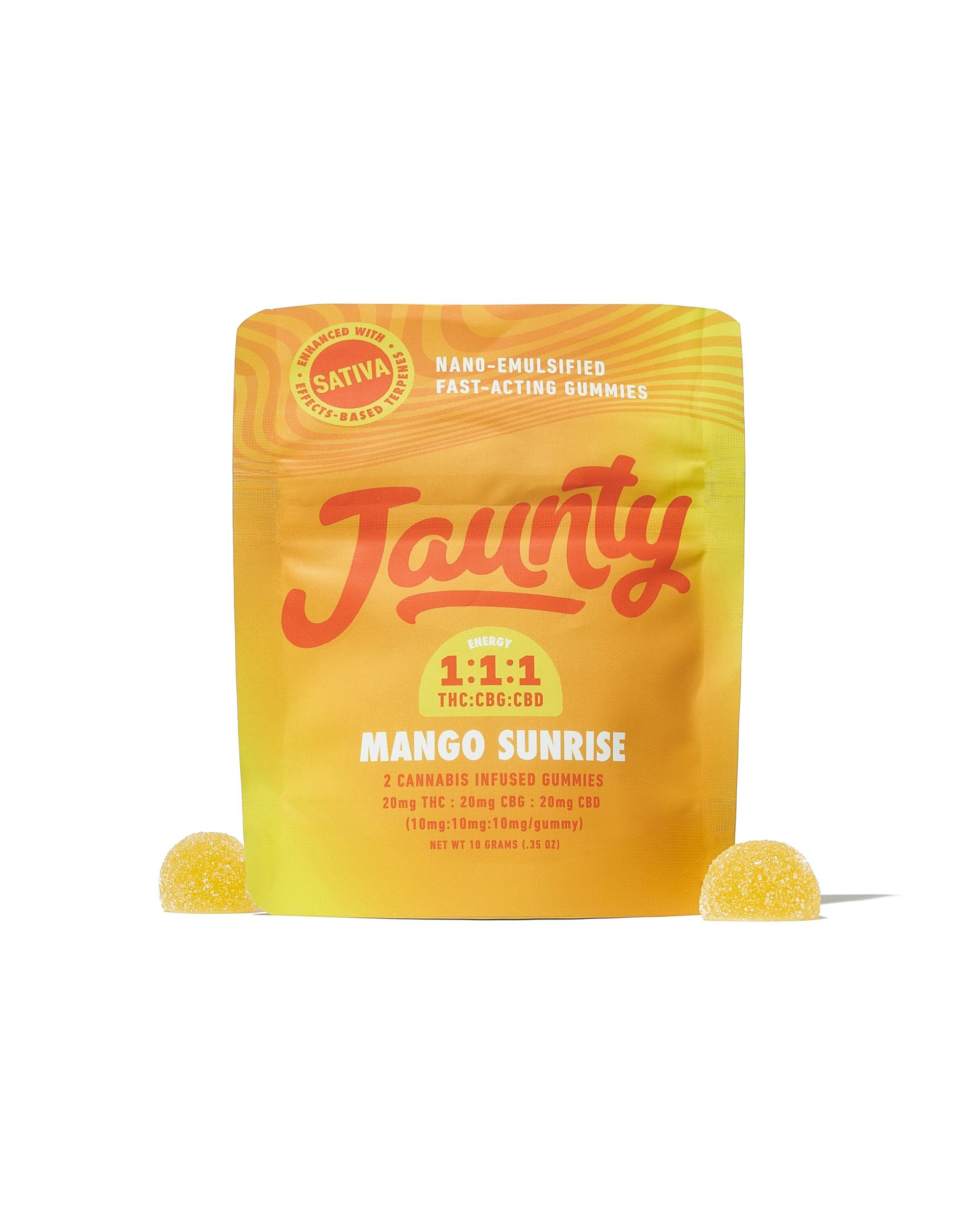
THC 0.18%·CBD 0.2%Sativa
JauntyMango Sunrise | 1:1:1 | THC:CBG:CBD | 20mg | 2pk · .1g
$5.31
$6after tax

weeddispensarynearme.com
You must be 21 years or older to enter. By entering, you confirm you’re of legal age in your state to purchase cannabis.
For use only by adults 21+ • Keep out of reach of children
2 live products in stock
Quick answer · What is the Mango Sunrise cannabis strain?
Mango Sunrise arrives like the first light of a clear morning — bright, tropical, and unhurried. A sativa-leaning cultivar built around sun-ripened fruit aromatics and an energising cerebral lift, it suits those who want their day sharpened rather than softened. The terpene profile leans heavily on sweet citrus and stone fruit, while the effect arc favors clarity and social warmth over sedation. For the New York adult-use consumer who prizes intention alongside enjoyment, Mango Sunrise offers both in measured proportion.
$6after tax
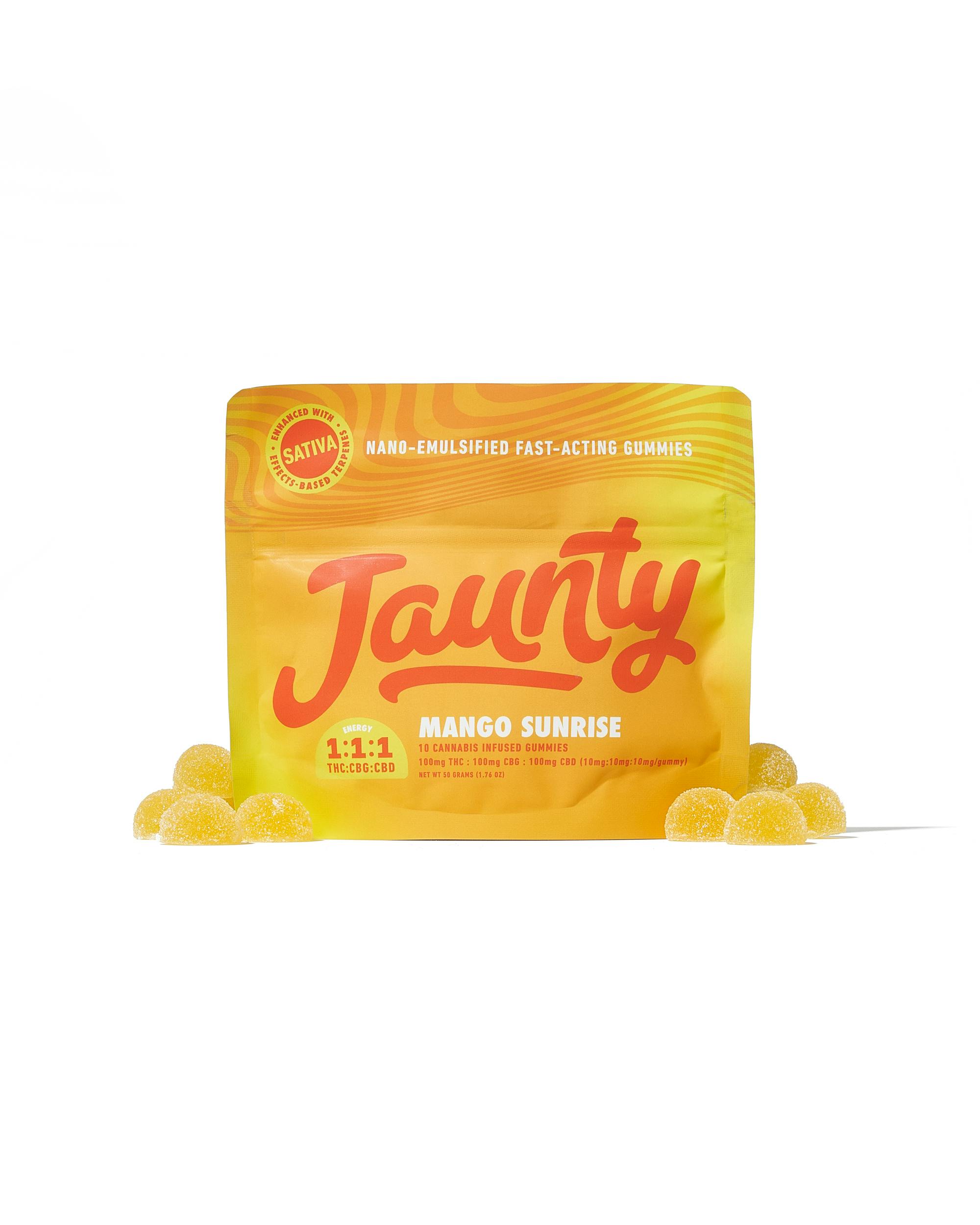
$27after tax
About Mango Sunrise
Mango Sunrise is a sativa-dominant hybrid whose precise genetic lineage has not been uniformly documented across a single authoritative breeder. Several phenotypes circulating under this name are understood to descend from crosses involving Mango — itself a cultivar with roots tracing back to the Hindu Kush landrace family and popularised in the 1990s by Dutch breeder KC Brains — and a citrus-forward sativa partner that varies by source, with some accounts pointing to strains in the Tangie or Orange lineage family. The Mango parent contributes the characteristic stone-fruit sweetness and indica-leaning body notes, while the sativa cross introduces the uplifting, cerebral brightness that defines the morning-ready character of this cultivar. Because multiple breeders and regional collectives have worked with the Mango genetic base over the decades, distinct phenotypes exist under the Mango Sunrise banner; shoppers may encounter slight variation in terpene expression and effect character depending on the specific seed source or cut. What remains consistent across documented expressions is the dominant tropical aroma, the energetic onset, and a relatively clear-headed peak that distinguishes it from heavier indica-derived Mango descendants. It occupies a similar cultural and genetic space to strains like Mango Haze and Tropicana Cookies, both of which share a lineage philosophy of fusing fruit-forward aromatics with functional, day-use sativa energy.
The onset of Mango Sunrise typically arrives within five to ten minutes of inhalation — sooner for those with lower baseline tolerance — presenting first as a gentle pressure behind the eyes and a lightening of the shoulders that signals the shift from the ordinary cadence of the day. The cerebral component moves to the foreground quickly: thoughts become more associative, conversation feels easier to initiate and sustain, and there is a mild but reliable amplification of sensory detail, particularly with music and visual environments. This is not a disorienting or anxiety-prone lift for most consumers; the effect character reads as clarifying rather than accelerating. At peak, roughly thirty to sixty minutes in, the experience settles into a warm, focused energy that many find conducive to creative tasks or sociable afternoon activities. The body remains largely unencumbered — a lightness rather than a heaviness — which is consistent with the strain's sativa-dominant terpene profile and the influence of limonene and terpinolene on mood elevation. Duration for most consumers sits between two and three hours, with a gradual and gentle comedown that rarely tips into fatigue. The terpene terpinolene, present in many documented Mango-family expressions, is associated in preliminary research with mild anxiolytic and uplifting properties, lending some scientific grounding to the strain's reputation as a daytime-appropriate choice. As always, those new to cannabis are encouraged to start with a modest amount and allow adequate time before re-dosing.
The aromatic profile of Mango Sunrise is immediately and unambiguously tropical. On the nose, the dominant impression is of ripe mango flesh — specifically the dense, syrupy sweetness of a Ataulfo or Alphonso variety at full maturity — underscored by a citrus brightness that keeps the overall profile from reading as cloying. This primary character is driven by myrcene, the most prevalent terpene in most documented Mango-family cultivars, which contributes the characteristic musky, ripe-fruit warmth, and by terpinolene, which adds a layer of floral-citrus lift and the faint herbal edge that prevents the sweetness from becoming one-dimensional. Secondary aromatic notes include a subtle pine undercurrent — attributable to alpha-pinene — that sharpens the profile on the inhale and introduces a clean, almost forested quality beneath the fruit. Limonene, where present in a given phenotype, amplifies the citrus aspect and brings a faint zest reminiscent of orange peel. Some cuts carry a trace of ocimene, which contributes a delicate, almost herbal-sweet complexity that experienced consumers may identify as slightly floral or anise-adjacent. On the palate, particularly when consumed via a well-calibrated vaporiser at moderate temperature, the smoke or vapor is smooth and fruit-forward on the inhale, resolving into a clean, mildly sweet finish on the exhale. There is little harshness; the overall impression is of a well-integrated profile where sweetness, citrus, and a whisper of pine move in sequence rather than competing.
Mango Sunrise typically presents in moderately dense, elongated buds consistent with its sativa lineage — not the compact, golf-ball structures of a heavy indica, but not loosely airy either. The calyxes are well-defined and layered, often tapering slightly toward the tip. The colour palette leans toward medium to bright green, with phenotype-dependent variation that can introduce warmer yellow-green hues in the upper leaves, evoking the tropical theme the name suggests. Pistils are a warm amber to burnt orange, appearing in generous density throughout the bud and adding visual warmth against the green backdrop. Trichome coverage is substantial across well-cultivated specimens — a milky-to-amber resin layer that gives the surface a frosted, almost translucent quality in good light. The overall visual impression is of a vigorous, well-finished flower: vivid, resinous, and structurally cohesive without the extreme compression of over-manicured commercial product.
Mango Sunrise is understood to perform well in both indoor and outdoor environments, though the consistency and full expression of its tropical terpene profile tends to be best realised under controlled indoor conditions where temperature and humidity can be managed precisely. Sativa-dominant genetics like those underlying Mango Sunrise typically favour a warm, Mediterranean-style climate outdoors — steady daytime temperatures, low humidity in the final weeks of flower, and ample direct light. Outdoor harvests in favourable climates generally land in mid to late October in the Northern Hemisphere. Indoors, flowering time for most Mango Sunrise phenotypes sits in the range of nine to eleven weeks — slightly longer than many indica-leaning hybrids, as is common with sativa-dominant genetics. Yields are generally moderate to generous under optimised conditions. The plants tend toward vigorous vertical growth and may benefit from low-stress training or light topping to manage canopy height and promote even light distribution. For the cultivator-curious shopper, this is a strain best appreciated for the care it rewards rather than the ease it offers; it is not considered a beginner's cultivar, owing to its stretch during the vegetative stage and its sensitivity to humidity fluctuations during late flowering.
Mango Sunrise is, by both terpene character and effect profile, a strain oriented toward the first half of the day — the Sunday morning with nowhere pressing to be, or the Saturday afternoon before something sociable and unhurried. Its combination of cerebral brightness and manageable body ease makes it a fitting companion for creative work that benefits from a loosened associative mind: writing, sketching, playlist curation, or the kind of slow cooking that is as much about the process as the result. For food pairings, the strain's tropical aromatics find a natural echo in dishes built around bright acidity and stone fruit — a chilled Thai mango salad, a citrus-dressed ceviche, or a simply prepared breakfast with fresh papaya and lime. On the musical side, the warm, uplifting energy of the experience aligns well with mid-tempo soul, West African highlife, or Brazilian MPB — genres that share the strain's quality of being simultaneously warm and alert. It is equally well-suited to shared company: a rooftop gathering, a gallery visit, or a relaxed walk through a well-planted New York park where the sensory amplification the strain provides has room to be appreciated.
Mango Haze
Shares the Mango genetic base and tropical fruit aromatics, but leans further into a hazy, cerebral sativa character that fans of Mango Sunrise's uplifting quality will recognise immediately.
Tangie
Tangie's dominant citrus-and-sweet-orange terpene profile occupies a similar olfactory register to Mango Sunrise, and its energetic, mood-brightening sativa effects follow a comparable arc.
Tropicana Cookies
For consumers drawn to Mango Sunrise's fruit-forward nose and functional daytime energy, Tropicana Cookies delivers a comparable tropical-citrus experience with an added layer of cookie-dough richness on the palate.
Pineapple Express
A well-documented tropical sativa hybrid that shares Mango Sunrise's accessible, sociable effect character and fruit-forward terpene presentation, making it a natural point of reference for returning shoppers.
Super Lemon Haze
Consumers who enjoy the clear-headed, citrus-inflected sativa lift of Mango Sunrise and want a slightly sharper, lemon-dominant terpene expression will find Super Lemon Haze a coherent next exploration.
Mango Sunrise is a sativa-dominant hybrid. Its genetic lineage combines the fruit-forward warmth of the Mango family — which carries some indica heritage from Hindu Kush landraces — with a brighter, uplifting sativa partner. The net effect profile leans clearly toward energy, mental clarity, and sociability rather than the body-heaviness and sedation associated with indica-dominant cultivars. It is generally considered a daytime or early-evening strain.
Mango Sunrise tastes predominantly of ripe tropical fruit — specifically the dense, syrupy sweetness of mango — with a citrus brightness that keeps the profile lively and clean. On the exhale, there is a mild herbal-pine note that grounds the sweetness. Consumed via vaporiser at moderate temperatures, the palate impression is smooth and fruit-forward throughout, with very little harshness. The overall flavour character is cohesive and pleasant for consumers who favour sweet, tropical profiles.
The typical experience begins with a cerebral lift — a brightening of mood and a loosening of mental tension — that arrives within minutes of inhalation. At peak, the effect is energising and sociable, with enhanced sensory appreciation and an ease of conversation. The body remains largely light and unencumbered. Duration sits around two to three hours for most consumers, with a gentle comedown. It is not generally associated with heaviness or sedation in moderate use.
Consumers who enjoy Mango Sunrise frequently explore Mango Haze, Tangie, Tropicana Cookies, Pineapple Express, and Super Lemon Haze. Each shares some combination of tropical or citrus-forward aromatics and an uplifting, sativa-leaning effect profile. Mango Haze is the closest genetic relative; Tangie and Tropicana Cookies offer a citrus-dominant variation on the same theme; Pineapple Express and Super Lemon Haze provide accessible entry points for fans of the daytime-energy character.
Mango Sunrise is approachable for many beginners given its relatively smooth aromatic profile and a sativa effect that, in modest amounts, tends toward clarity rather than intensity. That said, sativa-dominant cultivars can occasionally prompt heightened mental activity that some new consumers find overstimulating. The standing guidance applies: start with a small amount, allow sufficient time to assess the effect before considering more, and choose a comfortable, familiar environment for a first experience.
The dominant terpenes in most documented Mango Sunrise expressions are myrcene and terpinolene. Myrcene contributes the characteristic ripe-fruit, musky warmth central to the Mango family's aroma. Terpinolene adds a floral-citrus brightness and mild herbal complexity. Secondary terpenes may include limonene, which amplifies citrus notes and mood elevation, alpha-pinene, which introduces a clean pine undercurrent, and trace amounts of ocimene, which lends a delicate floral-sweet complexity to the overall profile.
Mango Sunrise is well-suited to daytime and early-afternoon use. Its sativa-dominant effect arc — energising onset, clear-headed peak, light body sensation — aligns naturally with morning or midday consumption when mental engagement and sociability are desirable. Many consumers find it particularly fitting for creative work, outdoor activities, or relaxed social settings. It is generally less suited to late-evening use for those who find sativa-leaning energy interferes with winding down toward sleep.
The lineage and originating breeder of Mango Sunrise are not uniformly documented in a single authoritative public source. Multiple phenotypes circulate under the name, with varying parental combinations rooted in the Mango genetic family. The Mango parent itself is associated with KC Brains, a Dutch seed company active since the 1990s. Consumers should expect some phenotypic variation between different producers' versions of Mango Sunrise, particularly in terpene intensity and effect character.
Related strains
Pick your store
We'll show pricing, deals, and delivery zones for the store you pick. You can switch any time from the header.