
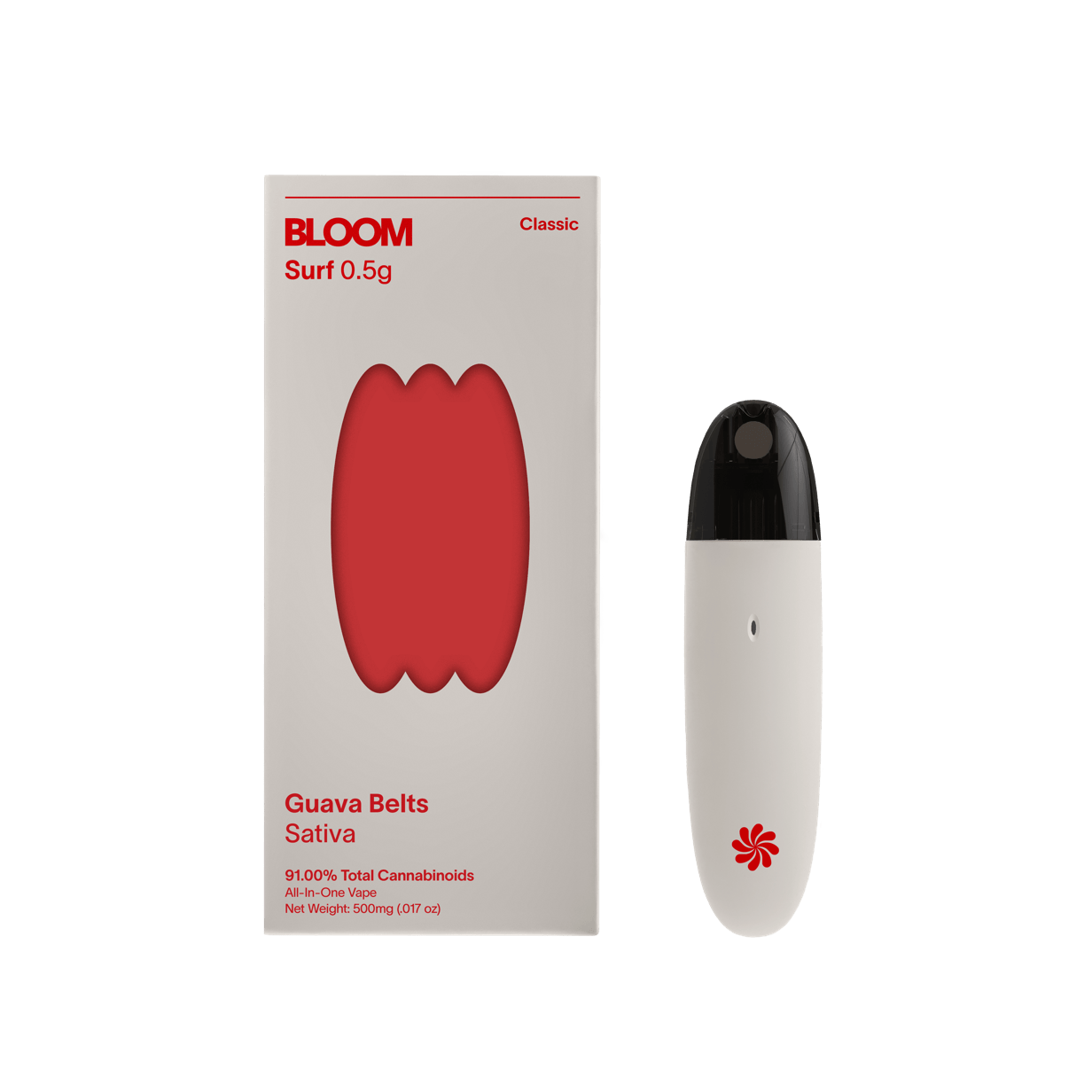
Sativa
All strains Guava Belts
1 live products in stock
Quick answer · What is the Guava Belts cannabis strain?
Guava Belts arrives like a memory of a warm afternoon — tropical, unhurried, and quietly luminous. This sativa-leaning cultivar offers a lifted mental clarity anchored by a fruit-forward terpene profile that recalls ripe guava and sun-dried citrus peel. It is the kind of flower that earns a second look in the jar and a lingering appreciation on the palate, making it a natural fit for the discerning New York consumer who prizes experience as much as effect.
Shop Guava Belts · 1 of 1 live products
About Guava Belts
Everything to know about Guava Belts.
Lineage & origin
Guava Belts is a relatively contemporary cultivar whose precise genetic lineage has not been fully disclosed by a single, universally recognized breeder, making its documented heritage somewhat limited compared to legacy strains. The working consensus among seed banks and cultivators who have released or grown the variety points toward a Guava-derived parent — most likely a phenotype of Papaya or a closely related tropical indica hybrid — crossed with a strain from the Runtz or candy-forward family, which contributes its characteristic sweetness and resin production. The 'Belts' suffix, common in a wave of confection-themed naming conventions that became prevalent in the early-to-mid 2020s, signals its candy lineage clearly. The broader Guava family has roots in Oni Seed Co.'s work with tropical phenotypes, particularly Guava Cake, though Guava Belts as a distinct strain does not appear to originate there directly. It emerged from the underground and craft-market circuit, gaining traction among growers on the West Coast and in the legacy markets of the Northeast before appearing in licensed adult-use channels. Its sativa classification is phenotype-dependent; most cuts that have been catalogued lean toward uplifting, clear-headed expression, which distinguishes it from heavier, more sedative members of the Guava family. Genetic siblings in spirit include Guava Cake, Tropic Thunder, and other tropical-candy hybrids that share its resinous, fruit-drenched character.
Effects
The onset of Guava Belts tends to be relatively brisk for a sativa-leaning cultivar, with initial effects often noted within five to ten minutes when smoked or vaped. The first wave is predominantly cerebral — a gentle brightening of mood and a sharpening of focus that does not tip into anxious overstimulation for most consumers. This makes the early arc of the experience feel social and accessible, characterized by a quiet elevation rather than a jarring rush. As the experience settles into its peak, typically between fifteen and forty-five minutes in, a mild physical warmth often emerges alongside the mental clarity. This body layer is consistent with the myrcene presence common to Guava-family genetics, offering a softening of physical tension without the heaviness associated with indica-dominant cultivars. The cerebral engagement remains the dominant note, making it conducive to conversation, creative thought, and sensory appreciation. Duration for most consumers falls in the two-to-three-hour range, with a gradual, gentle taper into relaxation rather than an abrupt drop. The comedown is notably smooth — one of Guava Belts' more appreciated qualities among experienced consumers. There is rarely the mental fog sometimes associated with heavier hybrids. The terpene interplay between limonene and myrcene is thought to contribute to this balanced arc: limonene's mood-elevating properties sustaining the upswing, while myrcene moderates the pace of the overall experience. As always, individual response varies, and those new to cannabis are well advised to start low and go slow.
Aroma, flavor & terpenes
Guava Belts presents one of the more immediately recognizable aromatic profiles in the contemporary tropical-sativa category. The dominant impression on the nose is of ripe guava — that distinctive combination of musky sweetness and bright, slightly fermented tropical fruit — underscored by a secondary wave of citrus peel, likely driven by a meaningful limonene concentration. Together, these top notes create an opening that feels genuinely fruit-forward without veering into artificial or synthetic territory. Deeper in the terpene profile, myrcene contributes an earthy, mango-adjacent warmth that rounds out the tropical character and prevents it from reading as sharp or one-dimensional. Caryophyllene introduces a subtle spice — not quite pepper, more like a faint clove note — that adds complexity on the exhale and is well-documented in cannabis research for its interaction with the body's endocannabinoid-adjacent CB2 receptors. Some phenotypes of Guava Belts also carry a whisper of ocimene, which can express as a floral, almost herbal brightness reminiscent of fresh basil or sweet anise, lifting the overall bouquet. On the palate, whether smoked in a well-rolled joint or experienced through a quality vaporizer at moderate temperatures, Guava Belts is smooth and approachable. The inhale carries the tropical fruit center — guava and citrus — while the exhale resolves into a lingering, gently spiced sweetness not unlike a fruit-forward candy. The finish is clean, without the harshness that sometimes accompanies high-resin tropical cultivars.
Appearance
Guava Belts typically presents with medium-to-dense bud structure — not quite as tightly packed as an OG-family cultivar, but with enough cohesion to suggest healthy resin production and careful cultivation. The calyxes tend to be moderately elongated, which is characteristic of sativa-leaning genetics, and they stack in a layered, almost architectural fashion when the plant has been grown with appropriate canopy management. The color palette leans into forest and sage greens, occasionally punctuated by deeper olive or moss tones depending on the phenotype and whether the plant experienced any temperature fluctuation in its final weeks of flower. Pistils are typically a warm amber to burnt orange, providing visual contrast against the green. Trichome coverage is generous — a dense, frosty layer that gives well-cured Guava Belts a slightly luminous quality under direct light. This trichome density reflects its candy-hybrid parentage and is part of what makes the strain appealing on visual inspection alone.
Growing notes
Guava Belts is considered an intermediate-to-advanced cultivar in terms of difficulty, owing in part to its sativa-leaning stretch and the attention required to maximize its terpene expression. Indoors, it tends to perform well under controlled conditions with a flowering window generally cited between sixty-three and seventy days, placing it in the nine-to-ten-week range typical of hybrid-sativa crosses. Yields indoors are moderate to above-average when canopy techniques such as low-stress training or screen-of-green methods are employed to manage its vertical growth tendency. Outdoors, Guava Belts favors warm, Mediterranean-style climates with consistent sun exposure and low humidity during the late flowering period — conditions that encourage terpene development while minimizing the risk of mold, to which its denser buds can be somewhat susceptible. In a New York context, outdoor cultivation would ideally conclude before the first cold snaps of October. For the cultivator-curious shopper, Guava Belts rewards patient, attentive growers with a harvest that is visually striking and aromatically expressive — a meaningful payoff for the additional care it requires relative to more forgiving hybrid cultivars.
When it's best enjoyed
Guava Belts is most at home in the golden hours — late morning through mid-afternoon — when the mind is alert enough to appreciate its cerebral lift and the day still holds enough open space to follow where that lift leads. It is a natural companion for solo creative work: writing, sketching, curating a playlist, or moving through a new museum exhibition with deliberate attention. The clarity of its sativa arc sustains focus without the tunnel-vision intensity sometimes associated with more stimulating cultivars. Socially, Guava Belts earns its place at a relaxed gathering — a rooftop afternoon, a dinner table where the conversation is expected to wander pleasantly. Its fruit-forward profile pairs thoughtfully with foods that share its tropical register: a chilled ceviche with mango and citrus, a light cheese board anchored by fresh chevre and sliced stone fruit, or a well-made sparkling water with a wedge of guava or passion fruit. On the audio side, its terpene character — bright, warm, and gently complex — finds a natural counterpart in jazz with a Latin influence, or in ambient electronic music that moves without urgency. It is, in the most precise sense, a strain for the unhurried and the attentive.
If you like Guava Belts, also explore
Guava Cake
Sharing the ripe tropical fruit character of Guava Belts, Guava Cake offers a similarly inviting aroma and a smooth experience, though it typically leans slightly heavier in its body effect — a natural next step for Guava Belts fans curious about the broader Guava family.
Tropicana Cookies
For consumers drawn to Guava Belts' citrus-forward brightness and uplifting sativa arc, Tropicana Cookies delivers a comparably clean, mood-elevating experience with its own distinct orange and citrus terpene signature.
Runtz
Fans of Guava Belts' candy-sweet finish and dense trichome coverage will find a familiar confection-driven character in Runtz, which likely shares genetic territory and offers a comparable balance of flavor and smooth effect.
Papaya
Papaya shares the musky tropical depth underlying Guava Belts' aroma, and consumers who appreciate that earthy-fruit foundation will find Papaya a satisfying, if somewhat more relaxed, companion in the same flavor family.
Mimosa
Mimosa's bright citrus and uplifting sativa energy make it an accessible recommendation for Guava Belts enthusiasts who enjoy fruit-forward cultivars with a clean, socially functional character.
Common questions
Is Guava Belts indica or sativa?+
Guava Belts is classified as a sativa-leaning cultivar, though like most contemporary hybrids its genetic background includes indica influence. The experience it typically produces — a clear-headed, mood-brightening lift with moderate physical warmth — aligns with what most consumers associate with sativa-dominant effects. Phenotype variation exists across different grows, so some cuts may express a slightly more balanced hybrid character than others.
What does Guava Belts taste like?+
Guava Belts tastes closely aligned with its name — a tropical, fruit-forward profile centered on ripe guava with citrus peel brightness and a subtle candy sweetness on the finish. On the exhale, a faint spiced warmth, likely from caryophyllene, adds depth. The overall palate experience is smooth and approachable, without harsh or overly resinous notes, making it a genuinely pleasurable flower to consume in either a joint or a quality vaporizer.
What are the typical effects of Guava Belts?+
Guava Belts typically produces a clear, uplifted mental state with a moderate physical warmth that eases without overwhelming. Onset is generally brisk, with the experience peaking in a balanced cerebral-and-body elevation that most consumers find functional and social. Duration commonly falls in the two-to-three-hour range. As with any cannabis product, individual response varies considerably, and those newer to cannabis should approach with a measured, start-low-go-slow mindset.
What strains are similar to Guava Belts?+
Consumers who enjoy Guava Belts often find a similar appeal in Tropicana Cookies for its bright citrus sativa lift, Guava Cake for shared tropical depth, Mimosa for its fruit-forward social character, Runtz for its candy-sweet profile and resin quality, and Papaya for the earthy-tropical base note that anchors the Guava family. Each offers a meaningful point of overlap while maintaining its own distinct identity.
Is Guava Belts good for beginners?+
Guava Belts can be suitable for newer consumers when approached thoughtfully. Its sativa orientation means the mental effects are present and noticeable, which some beginners may find more stimulating than expected. The advice that applies broadly to adult-use cannabis applies here: start with a small amount, allow adequate time to assess the onset before consuming more, and choose a comfortable, familiar environment for the first experience. It is not among the more challenging cultivars, but mindful consumption is always recommended.
What are the dominant terpenes in Guava Belts?+
Guava Belts is understood to be driven primarily by myrcene, which contributes its characteristic earthy tropical warmth, and limonene, which underlies the bright citrus and guava notes and is associated with mood elevation. Caryophyllene appears as a meaningful secondary terpene, adding spiced complexity on the exhale. Some phenotypes also carry ocimene, which can express as a floral or herbal accent that lifts the overall aromatic bouquet above purely fruit-forward territory.
When is the best time of day to enjoy Guava Belts?+
Given its sativa-leaning, clear-headed character, Guava Belts is generally best suited to daytime or early evening consumption — particularly the late morning through mid-afternoon window when mental engagement and social interaction are on the agenda. Its terpene profile and effect arc make it less ideal as a wind-down cultivar before sleep, as its cerebral brightness tends to sustain alertness rather than encourage sedation.
Who bred Guava Belts and where does it come from?+
The precise breeder origin of Guava Belts has not been definitively established in publicly available sources, and the strain's lineage reflects the broader wave of tropical-candy hybrid development that gained momentum in the early-to-mid 2020s across West Coast and Northeast craft cannabis markets. It draws on the established Guava family of genetics — associated with tropical indica influence — crossed with candy-forward hybrid stock, though the specific originating breeder has not made a formal public claim.
Related strains