On sale· 20% OFF
THC 33.02%Hybrid
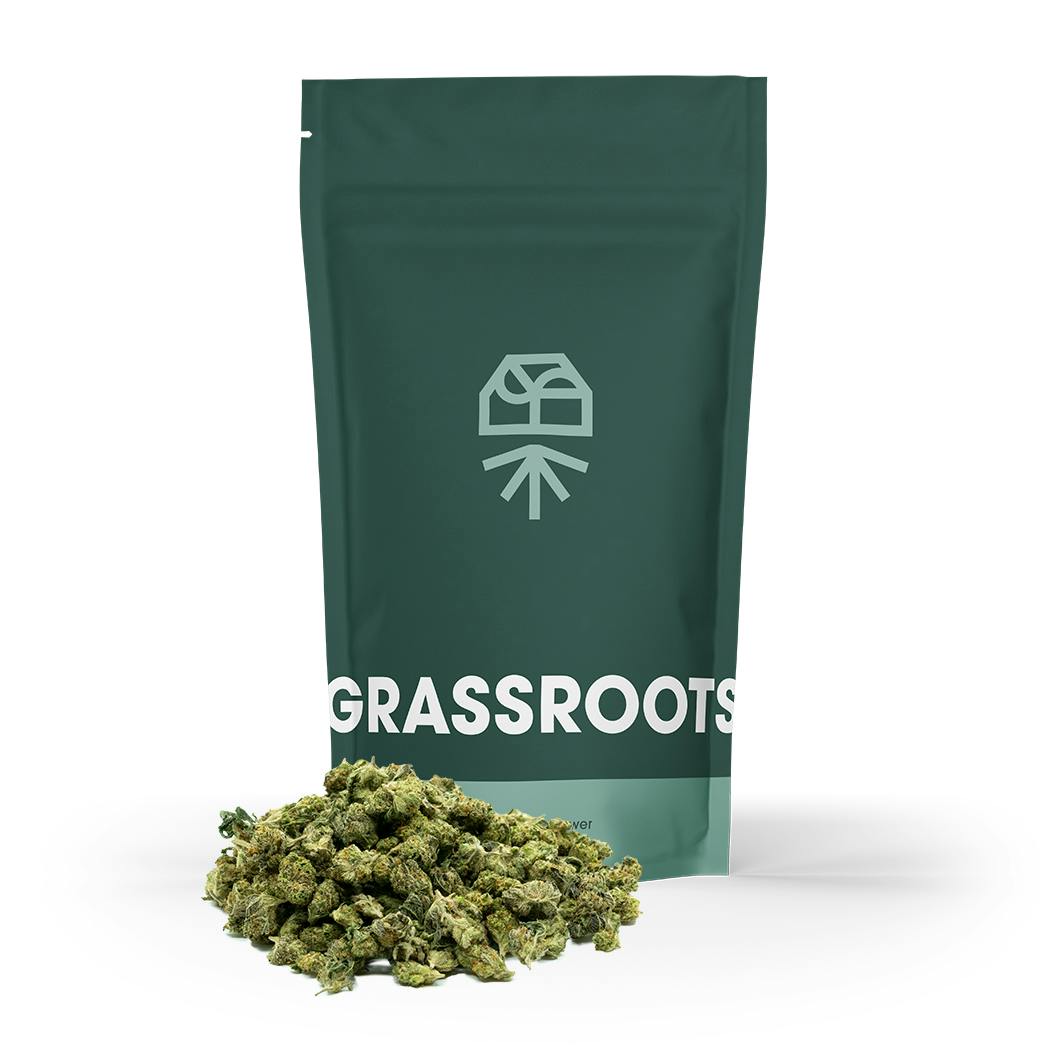
GrassrootsGrassroots Prepack Popcorn Flower Hybrid : Blue Lobster · 14g
$92.03$115.04
$107after tax

weeddispensarynearme.com
You must be 21 years or older to enter. By entering, you confirm you’re of legal age in your state to purchase cannabis.
For use only by adults 21+ • Keep out of reach of children
4 live products in stock
Quick answer · What is the Blue Lobster cannabis strain?
Blue Lobster arrives with the quiet authority of a well-aged coastal vintage — deep, resinous, and unhurried. A indica-leaning cultivar whose violet-tinged buds and salt-air sweetness recall the rocky shores of New England, it delivers a grounding, full-body experience that rewards patience and attentiveness. For the discerning New York adult seeking an evening anchor, Blue Lobster is the kind of strain that earns its place on the top shelf through character rather than novelty.
$107after tax
$30after tax
$17after tax
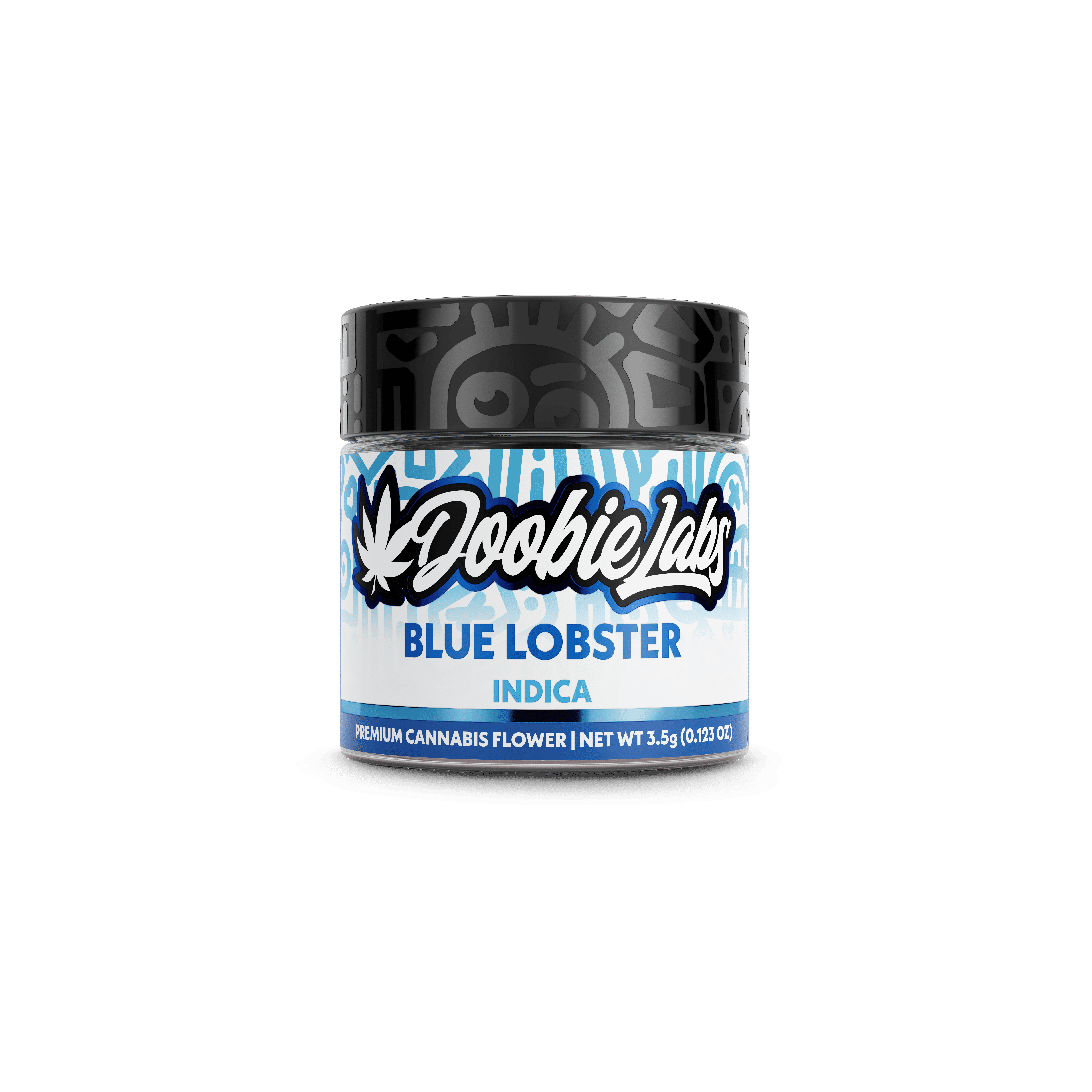
About Blue Lobster
Blue Lobster is a relatively modern indica-dominant hybrid whose precise lineage has not been exhaustively documented in the public domain, and the originating breeder has not made a definitive statement on all parent genetics. What is broadly referenced across cannabis communities points to Blueberry as the foundational maternal influence — specifically the legendary DJ Short Blueberry, a strain that traces its own heritage back to Thai, Purple Thai, and Afghani landraces first assembled by breeder DJ Short in the late 1970s and refined through the 1980s. The Blueberry lineage is responsible for Blue Lobster's characteristic anthocyanin-driven coloration, its deep berry aromatics, and much of its sedative body character. The paternal or secondary genetic contribution is less universally agreed upon. Some growers and seed-bank notes suggest an OG Kush or Kush-adjacent cross was introduced to add resin density, structural compactness, and a subtler earthy, fuel-adjacent depth beneath the berry notes. Others note similarities to Blue Moonshine, another DJ Short creation, raising the possibility of a tighter in-house lineage. Blue Lobster occupies a lineage space populated by celebrated siblings such as Blue Dream, Blueberry Headband, and Blue Cheese — all strains that leveraged DJ Short's Blueberry as a cornerstone. Its influence within that family is as a purer expression of the indica side of Blueberry's potential, stripped of the sativa lift that Blue Dream pursued and leaning instead into the sedative, resinous qualities the Afghani genetics always carried.
The onset of Blue Lobster tends to be measured and deliberate — not the rapid cerebral rush associated with sativa-forward cultivars, but a gradual warmth that pools first behind the eyes and across the temples, typically within ten to twenty minutes of inhalation. This introductory phase carries a mild mood elevation that is calm rather than energetic, offering a gentle clearing of mental static without sharpening focus toward productive output. As the session deepens into its peak, the indica character asserts itself clearly. A progressive physical heaviness settles into the shoulders, lower back, and limbs — the kind that makes a well-cushioned chair feel like a considered luxury rather than an afterthought. Myrcene, believed to be the dominant terpene in most Blue Lobster phenotypes, is associated in terpene research with sedative and muscle-relaxing qualities, which aligns with the strain's reputation for deep physical ease. Caryophyllene's presence adds a subtle body-warming quality without tipping into sedation alone. Duration runs on the longer side compared to lighter hybrids, with most consumers reporting a sustained peak of sixty to ninety minutes before a slow, comfortable tapering. The comedown is gentle — a natural drift toward drowsiness rather than an abrupt conclusion. As with all potent indica cultivars, those newer to cannabis or with lower tolerance should approach deliberately, as the body effect can intensify with larger consumption.
Blue Lobster's aromatic profile opens with an unmistakable wave of ripe blueberry and dark stone fruit — a genetic inheritance from the DJ Short Blueberry lineage that presents with striking clarity, particularly in well-cured, fresh flower. Beneath that leading fruit note, attentive noses will detect a subtle earthiness reminiscent of damp forest floor after rain, contributed by myrcene, which functions as the aromatic backbone of the cultivar and reinforces both the berry character and the earthy foundation. Caryophyllene introduces a secondary layer: a faint spice, something close to white pepper or dried clove, that gives the nose a grounding complexity and prevents the profile from reading as purely sweet. In some phenotypes, a quiet pine or cool herbal note emerges — attributable to trace pinene — lending an almost coastal, briny-green quality that mirrors the strain's evocative name. Linalool, when present, softens the overall aromatic impression with a faint floral note, similar to dried lavender tucked between the fruit tones. On the palate, Blue Lobster translates cleanly whether smoked or vaporized. Combustion tends to amplify the earthier bass notes, with the berry fruit remaining present but shifting toward a drier, slightly woody expression on the exhale. Vaporization at moderate temperatures preserves the fruit-forward character more faithfully, delivering a smooth, berry-tinged vapor that lingers pleasantly. The finish is long, slightly sweet, and grounded — a quality that distinguishes it from lighter, more fleeting floral strains.
Blue Lobster buds are among the more visually distinctive in the indica category, displaying the deep coloration that the Blueberry lineage is celebrated for. Calyxes are dense and tightly packed into compact, chunky formations — the hallmark structure of Afghani-influenced genetics — with little of the airy, elongated architecture seen in sativa or sativa-hybrid varieties. The base color ranges from forest green to a rich olive, overlaid in many phenotypes with deep violet and indigo hues that intensify with cold-weather finishing cycles during cultivation. Orange and amber pistils curl generously across the surface, providing warm contrast against the cooler green-purple palette. Trichome coverage is notably heavy, giving well-grown specimens a frosted, almost crystalline surface that signals the resin density characteristic of the OG-influenced side of its parentage. Under direct light, the trichome layer refracts with a faint iridescence. Bag appeal, in the parlance of cannabis retail, is considerable — Blue Lobster is a strain that communicates its quality visually before any aroma has been released.
Blue Lobster is considered a moderately approachable cultivar for experienced home growers, though its dense bud structure and susceptibility to moisture-related issues — particularly botrytis (bud rot) in humid environments — mean that environmental control is more important than raw skill. Indoor cultivation is generally preferred, as it allows for precise humidity management during the critical late-flower weeks when the compact cola structure becomes most vulnerable. Flowering time is typically reported in the eight-to-nine-week range under a standard twelve-and-twelve photoperiod, which is consistent with most Blueberry-derived indicas. Indoor yields are described as moderate to generous when the plant is given adequate lateral training such as low-stress training or light defoliation to improve airflow and light penetration. Outdoor cultivation is viable in temperate climates with reliable dry autumns; early harvest timing is often recommended to protect against late-season humidity. The cold-finishing technique — dropping nighttime temperatures in the final two weeks of flower — is widely cited among Blue Lobster cultivators as the mechanism for unlocking the strain's signature violet and indigo coloration. This approach activates anthocyanin expression without stressing the plant structurally, and represents the kind of nuanced horticultural attention the cultivar rewards generously.
Blue Lobster is unambiguously an evening and late-afternoon strain — the kind of cultivar that earns its place at the end of a considered day rather than the beginning. Its physical weight and gradual onset make it a natural companion to solo rituals of decompression: a long bath, an unhurried dinner eaten alone with a novel, or a restorative session on the couch with music chosen for depth rather than energy. For food pairings, the strain's blueberry and earth terpene profile finds a natural counterpart in dishes with earthy umami richness — a wild mushroom risotto, a well-aged cheese board with dried fruit and honeycomb, or a simple dark-chocolate dessert where the bitterness mirrors the strain's grounded spice notes. Musically, Blue Lobster rewards slow, textured listening: artists who work in low tempos and rich harmonic layers — Nils Frahm's piano works, Nick Cave's quieter recordings, or the deeper catalog of ambient composers like Harold Budd — complement the strain's introspective, unhurried character. For social occasions, it is better suited to intimate, small gatherings where conversation moves at its own pace rather than high-energy environments where its sedative arc might work against the moment.
Blueberry (DJ Short)
As the foundational parent, DJ Short's Blueberry offers the same berry-forward aromatic signature and deep indica body effect that define Blue Lobster, making it the most direct genetic reference point.
Granddaddy Purple
Sharing the violet coloration, grape-and-berry sweetness, and heavy indica sedation that Blue Lobster fans prize, Granddaddy Purple is a natural companion cultivar for those drawn to the strain's physical and visual character.
Blue Cheese
Another Blueberry-lineage descendant, Blue Cheese balances the characteristic berry sweetness with a savory, earthy depth that appeals to consumers who appreciate Blue Lobster's grounded complexity over simpler fruit profiles.
Purple Punch
Purple Punch's grape candy sweetness, compact bud structure, and reliable indica sedation offer a similar evening-anchor experience to Blue Lobster, with a slightly more dessert-forward flavor arc.
9 Pound Hammer
For Blue Lobster enthusiasts drawn primarily to its heavy physical effect and long-duration sedation, 9 Pound Hammer delivers a comparably weighted body experience with its own earthy-sweet terpene signature.
Blue Lobster is an indica-dominant cultivar. Its genetic foundation in DJ Short's Blueberry — itself rooted in Afghani and Thai landraces with a strong indica influence — produces the compact bud structure, heavy physical effect, and sedative arc that define the indica category. Consumers can expect a body-centered experience more consistent with evening use than daytime activity.
Blue Lobster leads with ripe blueberry and dark stone fruit, a direct inheritance from the Blueberry lineage, followed by a grounding earthiness and a subtle spice reminiscent of dried clove or white pepper. On the exhale, a faint woody depth emerges, particularly when combusted. Vaporization tends to preserve the fruit-forward character most faithfully, offering a smooth, berry-tinged finish.
Blue Lobster produces a gradual onset of mild mood elevation followed by a progressive and sustained body heaviness centered in the shoulders, back, and limbs. The peak is deeply physical and relaxing without being aggressively disorienting. Duration tends to run longer than lighter hybrids, with a gentle, drowsy comedown. It is considered most appropriate for evening or late-afternoon use.
Consumers who enjoy Blue Lobster typically also appreciate DJ Short's original Blueberry for its shared genetic character, Granddaddy Purple for its comparable violet aesthetics and indica sedation, Blue Cheese for its earthy Blueberry-lineage complexity, and Purple Punch for its dessert-sweet flavor and reliable evening-use profile. 9 Pound Hammer is another option for those prioritizing the physical, sedative dimension.
Blue Lobster is a potent indica cultivar, and those new to cannabis or returning after a long break should approach it with deliberate care. Its body effect can intensify significantly with larger consumption, and the sedative arc is pronounced. The standard principle of starting with a small amount and waiting a full fifteen to twenty minutes before considering more applies here with particular emphasis. It is not a strain designed for unfamiliar territory.
Myrcene is broadly considered the dominant terpene in Blue Lobster, contributing both its signature berry-earth aroma and its association with relaxing, sedative physical qualities. Caryophyllene adds a spice-and-clove depth and a subtle body-warming character. Linalool is present in many phenotypes, lending a faint floral softness, while trace amounts of pinene introduce a cool, herbal-green quality that gives the profile its distinctive complexity.
Blue Lobster is suited to evenings and late afternoons when obligations have concluded and decompression is the intention. Its sedative body arc and extended duration make daytime use impractical for most consumers who need to remain active or focused. It performs best as a deliberate closing ritual — paired with a quiet activity, a considered meal, or simply an unhurried transition toward rest.
Blue Lobster is recognized for its deep violet and indigo hues, which develop most fully when plants are finished in cooler nighttime temperatures — a technique that activates anthocyanin pigment expression. The buds are dense and compact with generous orange pistil coverage and a heavy trichome frost that gives mature flower a crystalline, resinous appearance. It is among the more visually arresting cultivars in the indica category.
Related strains
Pick your store
We'll show pricing, deals, and delivery zones for the store you pick. You can switch any time from the header.