On sale· 20% OFF
THC 29.33%Sativa
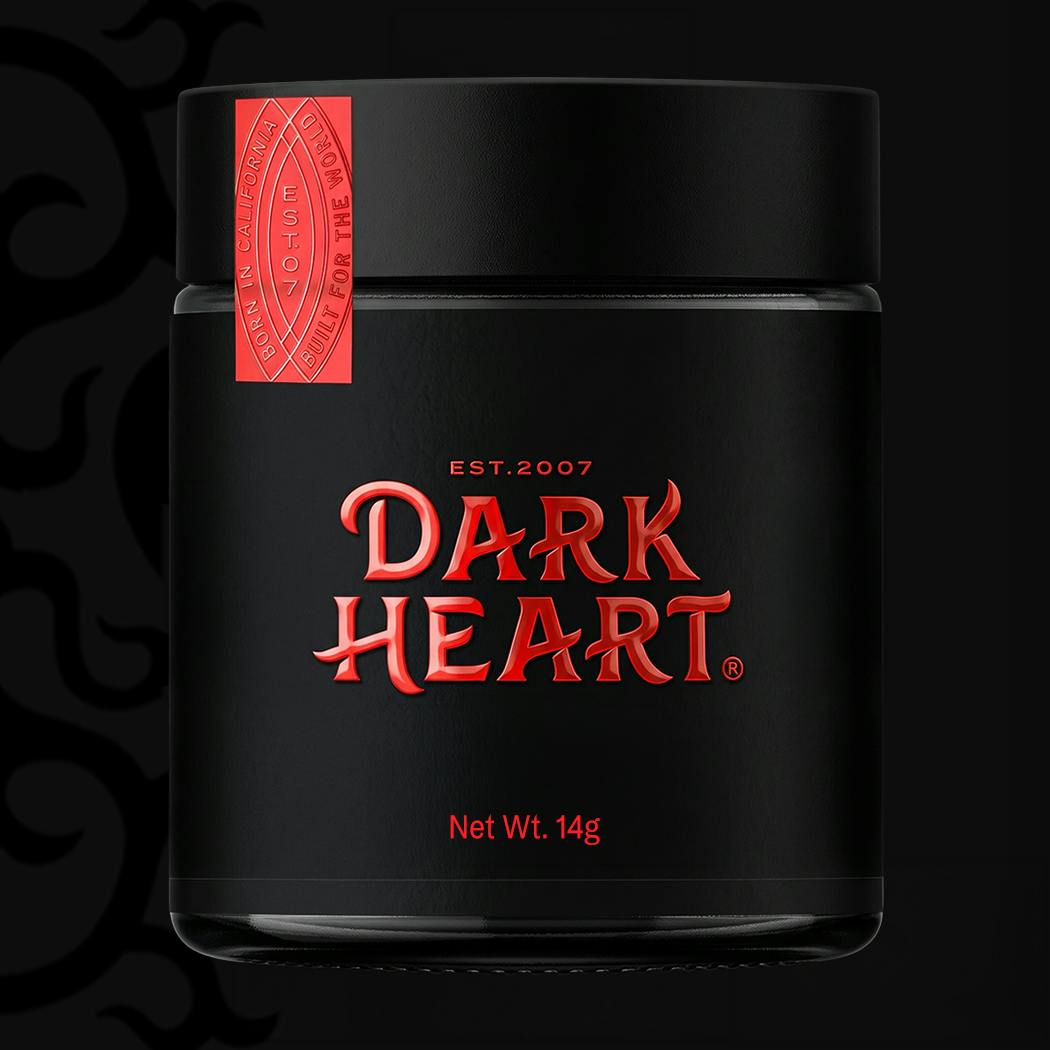
GrassrootsGrassroot Dark Heart Prepack Whole Flower - Sativa - Blackened Blue · 14g
$96.28$120.35
$112after tax

weeddispensarynearme.com
You must be 21 years or older to enter. By entering, you confirm you’re of legal age in your state to purchase cannabis.
For use only by adults 21+ • Keep out of reach of children
1 live products in stock
Quick answer · What is the Blackened Blue cannabis strain?
Blackened Blue arrives as a study in quiet intensity — a sativa-leaning cultivar whose deep indigo canopy and frost-laden calyxes belie the bright, clear-headed lift that follows. Equal parts visual drama and cerebral refinement, it draws in the curious with its berry-tinged perfume and rewards the patient with a sustained, focused energy that feels less like a rush than a well-tuned instrument coming into pitch.
$112after tax
About Blackened Blue
Blackened Blue's precise genetic record is not widely documented in major public databases such as Leafly or Wikileaf, and the breeder has not issued a formal, widely circulated lineage statement as of this writing. Based on available community sourcing and the strain's phenotypic characteristics, it is believed to descend from a cross involving Blueberry-family genetics — most likely a Blue line tracing back to DJ Short's landmark Blueberry, first stabilized in the late 1970s and early 1980s — combined with a dark-pigmented, possibly OG- or Kush-adjacent cultivar that contributes its characteristic anthocyanin-rich coloration and heavier resin output. DJ Short's Blueberry itself is a three-way hybrid of Highland Thai, Purple Thai, and Afghani, and that Afghani backbone is visible in Blackened Blue's slightly denser-than-expected bud structure for a sativa classification. The 'Blackened' prefix likely signals influence from a cultivar known for deep purple-to-black pigmentation under cooler temperatures — a trait that has become increasingly common in boutique American breeding circles throughout the 2010s and into the current decade. Genetic siblings and comparable phenotypes within the broader Blue family include Blue Dream, Blue Cookies, and Blueberry Headband, though Blackened Blue distinguishes itself through a more pronounced darkening of the flower and a terpene profile that skews earthier and more complex than the candy-sweet lineage members it may share ancestors with. Full third-party COA lineage verification is encouraged for cultivar-conscious consumers.
Blackened Blue presents as a thoughtful sativa, meaning its onset is perceptible without being abrupt. Most consumers report the first signs of effect arriving within five to fifteen minutes of inhalation — a gentle brightening behind the eyes that spreads into a widening of focus rather than a narrowing of it. This early cerebral quality feels organizing rather than overwhelming, lending itself well to tasks that benefit from sustained attention and a measured, unhurried perspective. As the experience deepens into its peak — typically between thirty and ninety minutes in — the cerebral character remains dominant, though a mild warmth tends to settle across the shoulders and upper back. This body component is subtle enough not to anchor the consumer but present enough to prevent the edge of anxiety that purely cerebral sativas can sometimes provoke in sensitive individuals. Myrcene's known sedative-modulating qualities likely contribute to this tempering effect, while limonene is associated in the literature with mood elevation and stress attenuation — both qualities well represented in the reported Blackened Blue experience. The comedown is gradual and generally clean, easing toward a baseline alertness rather than a fatigued finish. Total duration for most consumers tends to range from two to three hours, though individual response to cannabinoids varies considerably. As with any sativa of this character, a measured, low-and-slow approach is advisable for those new to the cultivar.
The first encounter with Blackened Blue in the jar is a layered olfactory event. A pronounced blueberry and mixed dark berry note dominates the top, carrying the unmistakable signature of myrcene — the most abundant terpene in cannabis globally, here manifesting in its fruity rather than its earthy register. Beneath that leading fruit note lies a cooler, almost forest-floor quality that points toward the presence of pinene, the bicyclic terpene associated with the scent of fresh conifer needles and open air. On closer inspection, a faint peppery undercurrent becomes apparent — likely caryophyllene, a sesquiterpene also found in black pepper and cloves. Caryophyllene is notable among cannabis terpenes for its ability to bind to CB2 receptors, and it lends a slight savory tension to what might otherwise read as a purely sweet profile. Traces of linalool — the floral terpene most associated with lavender — can occasionally be detected in well-cured batches, adding a soft, almost powdery dimension to the aromatic complexity. In the bowl or vaporizer, Blackened Blue's flavor follows its aroma closely but with added texture. The smoke is smooth and moderately dense, delivering a blue-fruit sweetness on the inhale that transitions through an herbal, slightly earthy middle and finishes with a clean, faintly spiced exhale. The aftertaste lingers pleasantly — dark berry and a whisper of pine — suggesting attentive cultivation and a careful cure.
Blackened Blue earns its name immediately upon visual inspection. The flowers present a striking, jewel-toned palette in which deep forest greens are overtaken, particularly toward the interior calyxes, by saturated indigo and near-black purple hues — a direct expression of anthocyanin pigmentation typically brought out by cooler nighttime temperatures during the final weeks of flowering. The contrast against the amber-to-rust pistils is considerable and makes for a visually distinctive bag presence. Bud structure reflects its sativa-dominant classification without being extreme about it — the flowers are moderately dense rather than loosely airy, with an elongated, slightly tapered calyx formation that suggests significant sativa influence while still holding together with enough body to feel substantial in hand. Trichome coverage is notably generous, with a near-uniform layer of milky-to-amber glandular trichomes that catch light across both the outer leaves and the inner calyx surfaces. The overall impression is of restrained abundance — a cultivar that does not shout but rewards close attention.
For cultivators drawn to Blackened Blue's visual drama, patience is the essential ingredient. The pronounced purple and near-black pigmentation that defines this cultivar's bag appeal is most reliably achieved by exposing plants to a deliberate temperature drop — ideally into the low sixties Fahrenheit — during the final two weeks of the flowering cycle. Without this cold stimulus, anthocyanin expression will be muted and the flower may finish in conventional greens. Flowering time is estimated in the range of nine to ten weeks when grown indoors under controlled conditions, which places it on the longer end of average for sativa-leaning varieties but consistent with Blueberry-lineage cultivars as a class. Indoor yields are reported as moderate, rewarding attentive growers rather than those seeking maximum output. Outdoor cultivation in a temperate climate — where natural autumn temperature drops assist pigment development — can produce strong results, provided a long enough season to accommodate the extended flower time. Overall, Blackened Blue is considered an intermediate-difficulty cultivar: manageable for an experienced home grower comfortable with training techniques such as low-stress training or a light scrog, but less forgiving of neglect than true beginner-friendly strains.
Blackened Blue occupies a particular and well-defined niche in the sativa category: it is a daytime cultivar suited to moments that benefit from engaged curiosity without demanding peak performance. A late Saturday morning spent at a museum or gallery, where sustained visual attention and a tendency toward associative thought are assets rather than liabilities, is an environment where this strain tends to reveal its better qualities. Similarly, it suits the creative practitioner who needs to move through an editing or drafting session with clarity rather than the frenetic scattered energy that heavier sativas sometimes produce. On the pairing front, Blackened Blue's terpene profile suggests a natural affinity with foods that echo its berry-and-earth character — a stone fruit charcuterie arrangement, a dark cherry shrub cocktail, or a mild aged cheese that plays off the strain's pinene-driven herbal undertone. Musically, it rewards mid-tempo, melodically rich listening: jazz with harmonic complexity (a late-period Miles Davis record, for instance), or carefully produced indie folk where lyrical nuance is the point. It is, at its core, a companion for attentive leisure rather than passive consumption.
Blueberry
As the likely ancestral root of Blackened Blue's berry-forward terpene profile and anthocyanin pigmentation, DJ Short's Blueberry offers a familiar aromatic and flavor foundation for anyone drawn to Blackened Blue's dark-fruit character.
Blue Dream
Sharing probable Blueberry lineage and a sativa-leaning, mood-lifting effect arc, Blue Dream provides a comparable onset and cerebral quality at a slightly lighter intensity — a useful reference point for gauging Blackened Blue's character.
Granddaddy Purple
Consumers captivated by Blackened Blue's deep purple coloration and dark berry nose will recognize a kindred aesthetic in Granddaddy Purple, though GDP skews more indica in effect and offers a softer, more sedative companion experience.
Purple Haze
Those drawn to Blackened Blue for its sativa clarity and visual purple drama will find Purple Haze a storied parallel — similarly energizing in effect character, with its own berry-adjacent sweetness and a long track record as a benchmark daytime cultivar.
Blue Cookies
For consumers who appreciate Blackened Blue's structural balance between cerebral lift and mild body warmth, Blue Cookies delivers a comparable hybrid arc with a complementary sweet, slightly earthy terpene profile.
Blackened Blue is classified as a sativa-dominant cultivar. Its effect profile supports that designation — the onset leans cerebral and focusing, with only a mild body component emerging at peak. That said, the likely Blueberry ancestry introduces a degree of Afghani indica genetics that softens what might otherwise be a sharply stimulating sativa experience, making it somewhat more balanced than a pure sativa expression.
Blackened Blue delivers a layered flavor experience anchored by a genuine dark berry and blueberry sweetness on the inhale, transitioning through an herbal, slightly earthy mid-palate. The exhale finishes with a faint peppery spice and a lingering note of pine and fruit. The smoke is smooth and moderately dense when combusted, and the flavor profile tends to be cleanly reproduced in a quality dry-herb vaporizer at moderate temperatures.
Consumers typically describe a clear, organized mental lift in the onset phase, followed by a sustained focus and a mild physical warmth that settles without anchoring. The experience skews energizing and socially open rather than sedative. Duration generally ranges from two to three hours. Because potency can vary by batch and individual tolerance, a measured, low-and-slow approach is advisable — particularly for those newer to sativa-dominant cultivars.
Consumers who enjoy Blackened Blue frequently appreciate Blueberry, Blue Dream, and Purple Haze for their overlapping terpene profiles and comparable sativa-leaning effect arcs. Granddaddy Purple appeals to those drawn to Blackened Blue's dramatic anthocyanin coloration, while Blue Cookies suits those who value the mild body warmth that tempers the cultivar's cerebral lift. Each offers a slightly different emphasis within a broadly familiar sensory territory.
Blackened Blue is a reasonable choice for adult newcomers to cannabis who are drawn to sativa-leaning effects, provided a genuinely gradual approach is taken. Sativa-dominant cultivars can produce heightened heart rate or a sense of mental acceleration in sensitive individuals. Starting with a very small quantity, allowing a full fifteen to twenty minutes between inhalations, and choosing a calm, comfortable environment significantly reduces the likelihood of an uncomfortable first experience with this cultivar.
Based on its aromatic character and reported flavor profile, Blackened Blue's dominant terpenes are most consistent with myrcene — contributing the foundational berry and slightly musky quality — supported by pinene, which delivers a clean, cool herbal note, and caryophyllene, responsible for the faint pepper-and-spice element on the exhale. Linalool may appear as a secondary contributor in well-cured batches, adding a soft floral dimension to the overall profile.
Blackened Blue is best suited to daytime and early evening consumption. Its sativa-dominant effect character — organized mental clarity and mild physical ease — aligns naturally with late-morning creative sessions, weekend afternoon leisure, or the early part of a social evening. It is generally not positioned as a cultivar for the period immediately before sleep, as its cerebral lift can delay the relaxed, quieted mental state most conducive to rest.
The deep indigo and near-black hues in Blackened Blue flowers are the expression of anthocyanins — water-soluble pigments present in many plants, including cannabis, whose color manifests when cooler temperatures during late flowering suppress chlorophyll production. In cultivation, growers achieve this by lowering nighttime temperatures in the final two weeks of the flowering cycle. The effect is genetic as well as environmental — not all strains carry significant anthocyanin potential regardless of temperature treatment.
Related strains
Pick your store
We'll show pricing, deals, and delivery zones for the store you pick. You can switch any time from the header.