On sale· 20% OFF
THC 74.5%Hybrid
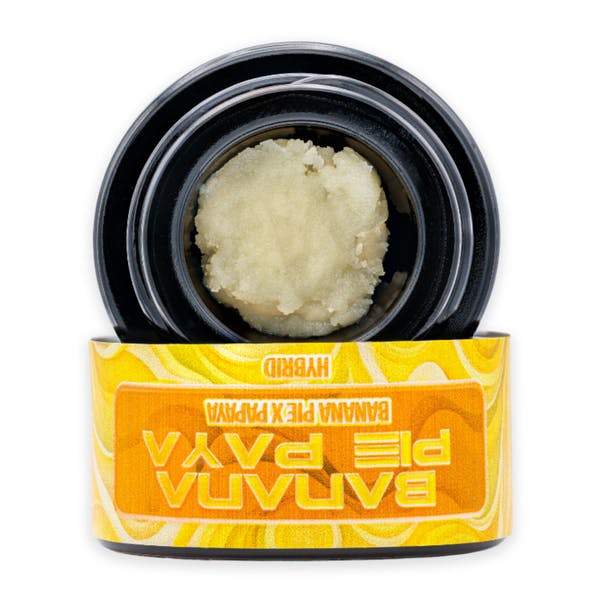
UmamiiUmamii | Live Rosin Jar | Banana Pie Paya · 1g
$58.06$72.57
$67after tax

weeddispensarynearme.com
You must be 21 years or older to enter. By entering, you confirm you’re of legal age in your state to purchase cannabis.
For use only by adults 21+ • Keep out of reach of children
1 live products in stock
Quick answer · What is the Banana Pie Paya cannabis strain?
Banana Pie Paya arrives as a quietly confident hybrid, its warm, custard-laced aroma drawing you in before the first inhale. A cross that marries tropical sweetness with a grounded, dessert-forward depth, this strain occupies the relaxed middle territory that seasoned consumers seek on unhurried evenings. Expect a gentle cerebral lift that settles into full-body ease, wrapped in a terpene profile as layered as a well-composed pastry.
$67after tax
About Banana Pie Paya
Banana Pie Paya is understood to be a phenotype or branded cut within the broader Banana Pie genetic family, a lineage rooted in the pairing of Banana OG and either a Pie-family cultivar — most commonly noted as a relative of Cherry Pie or Apple Fritter — though the precise second parent has not been publicly confirmed by a single, authoritative breeder statement, and some sources suggest additional undisclosed genetics may contribute to the Paya distinction. Banana OG itself is a descendant of OG Kush and Banana, lending the line its characteristic tropical, fuel-tinged foundation. The Banana Pie family gained momentum in the mid-2010s alongside the broader dessert-strain movement in California, a period when breeders were systematically stacking terpene-rich, terp-forward cultivars to satisfy a market hungry for novelty and complexity. The 'Paya' designation appears to represent a specific phenotypic selection — likely chosen for enhanced creaminess in the nose and a more balanced hybrid effect arc — though no single breeder or seed company has formally registered the name in widely indexed databases. Genetic siblings and close relatives in this family tree include Banana OG, Banana Kush, and various Pie-cross phenotypes circulating in the Northeast market. Consumers familiar with any of these lines will recognize the tropical backbone, though Banana Pie Paya trends toward a rounder, softer expression than the more fuel-forward OG cuts in the same family.
Onset for Banana Pie Paya typically arrives within five to ten minutes when smoked or vaporized, presenting first as a subtle pressure behind the eyes and temples that signals the opening of a moderate cerebral shift. The initial phase is characterized by an elevation in mood and a loosening of mental tension rather than a sharp, racing sativa-style focus — the myrcene and caryophyllene dominance in this cultivar appears to temper the lift, keeping the headspace warm and approachable rather than electric. As the experience deepens into its peak — generally between fifteen and forty-five minutes in — the body begins to register a progressive ease through the shoulders and lower back, inviting a posture of genuine relaxation without the heavy sedation associated with more indica-dominant cultivars. This is the hybrid sweet spot the strain is known for: present enough to engage with conversation or light creative activity, settled enough to prevent restlessness. The limonene contribution adds a faint brightness to the peak that keeps the overall character from feeling overly heavy. The comedown is notably gentle, with most consumers reporting a gradual, unhurried transition toward either continued relaxed wakefulness or natural drowsiness depending on time of day and individual tolerance. Duration of the primary effect window tends to fall in the two-to-three-hour range for average consumers. As always, those newer to cannabis are encouraged to start low and go slow, allowing ample time between sessions to assess their individual response.
The nose on Banana Pie Paya opens with an immediate wave of ripe banana and warm vanilla that owes its character primarily to myrcene, the most commonly dominant terpene in this cultivar. Myrcene contributes that soft, almost over-ripe tropical fruit quality alongside an earthy musk that prevents the sweetness from reading as synthetic or candy-like. Beneath it, a secondary layer of caryophyllene introduces a faint spice — a subtle warmth reminiscent of baked goods just removed from the oven — which adds structural complexity to the initial impression. On closer inspection, notes of creamy pastry crust emerge, and this is where limonene quietly asserts itself, lending a gentle citrus undertone that lifts the heavier fruit and earth notes and keeps the overall aroma profile feeling fresh rather than cloying. Some phenotypes of this line also carry a trace of linalool, contributing a whisper of floral depth that rounds the bouquet into something genuinely sophisticated. Pinene is reported as a minor tertiary terpene in select cuts, adding a faint green, almost herbal note at the far edge of the exhale. On the palate, Banana Pie Paya delivers generously. The smoke is smooth and full-bodied at low temperatures, with the banana and cream notes translating faithfully from nose to taste. Vapor at moderate temperatures tends to emphasize the spice and citrus mid-palate, making it particularly well-suited to connoisseur-grade vaporization. The finish is clean, with a mild sweetness that lingers without becoming heavy.
Banana Pie Paya typically presents in medium to large, densely packed calyxes that reflect its OG and Kush heritage in structure. The buds trend toward a tight, chunky formation rather than the elongated, airy architecture of more sativa-leaning cultivars, with leaves that tuck closely around a firm central core. Trichome coverage is notably generous, giving well-cured specimens a frosted, almost luminous quality under direct light — a visual cue that aligns with the strain's reputation for resin production. The color palette runs from a medium forest green through warmer olive tones, occasionally punctuated by subtle hints of pale gold or straw where phenotypic expression and curing conditions allow. Pistils are typically a warm amber-orange, winding visibly through the trichome layer and contributing to the overall impression of richness. The visual profile is cohesive and premium: not the dramatic purple of an anthocyanin-rich cultivar, but a quietly elegant presentation that rewards close inspection.
Banana Pie Paya is considered a moderately challenging cultivar for home growers, requiring attentive environmental management to realize its full terpene potential. Indoors, it performs well under controlled temperature and humidity, with a flowering window typically cited between eight and nine weeks. Indoor yields are moderate to above average when training techniques such as low-stress training or screen of green are employed to maximize canopy light penetration, given the strain's tendency toward dense, compact growth. Outdoors, the strain favors a warm, Mediterranean-style climate with consistent sun exposure and low humidity during the flowering phase, conditions that encourage resin development and reduce the risk of mold in its tightly packed bud structures. Harvest outdoors generally falls in late September to mid-October in Northern Hemisphere grows. For the cultivator-curious shopper, the primary takeaway is that this strain rewards patience and environmental precision — growers who invest in dialing in temperature and airflow will find the terpene expression markedly superior to rushed or crowded conditions.
Banana Pie Paya occupies the evening-transition hour with particular grace — that unhurried window between the end of a work day and the beginning of a proper night. Its balanced hybrid arc makes it equally well-suited to a quiet solo evening and a relaxed gathering of close friends, provided the setting is low-pressure and comfort-oriented rather than high-energy or socially demanding. The warmth of the terpene profile makes it a natural companion for the kind of evening that revolves around food, music, and uncomplicated conversation. On the culinary side, the strain's banana and warm spice profile pairs thoughtfully with dessert-forward pairings — a slice of tarte tatin, a mild aged cheese alongside dried fruit, or a well-made chai. For music, the mid-tempo warmth of the experience lends itself to soul, neo-soul, or low-key jazz: think an Ahmad Jamal record or a contemporary Sault album playing at a volume that invites listening without demanding it. It is not a strain for the frantic or the impatient, but for those who have learned the particular pleasure of settling in.
Banana OG
As a direct ancestor in the lineage, Banana OG shares the tropical, fuel-kissed foundation, though it leans more indica-heavy than the balanced Paya expression.
Banana Kush
Fans of Banana Kush will recognize the ripe tropical sweetness and the calming body effect, making the transition to Banana Pie Paya a natural lateral move with added dessert complexity.
Cherry Pie
Cherry Pie's balanced hybrid character and fruit-forward terpene profile mirror the accessible, even-keeled effect arc that defines Banana Pie Paya.
Gelato
Consumers drawn to Gelato's creamy dessert nose and smooth, sociable hybrid effects will find Banana Pie Paya occupies a closely related sensory and experiential register.
Wedding Cake
Wedding Cake shares the rich, pastry-influenced terpene architecture and the progressive body relaxation that characterizes Banana Pie Paya's peak effect window.
Banana Pie Paya is classified as a hybrid, drawing from both indica and sativa lineage through its Banana OG ancestry and Pie-family genetics. In practice, its effect profile leans toward the relaxed, body-aware end of the hybrid spectrum without fully crossing into heavy sedation, making it a versatile option for consumers who prefer a balanced rather than sharply directional experience.
Banana Pie Paya offers a smooth, dessert-forward palate centered on ripe banana and warm vanilla cream, with secondary notes of baked pastry crust and a subtle citrus brightness on the mid-palate. The finish is clean and mildly sweet. At lower vaporization temperatures, the creamier notes tend to come forward; at slightly higher temperatures, the spice and citrus become more prominent.
Most consumers report a warm, mood-elevating onset that transitions into full-body relaxation without heavy sedation. The cerebral component is present but measured — more of a settled, contented clarity than an energetic lift. The effect arc is well-suited to evening use, social settings with close company, or calm creative activity. Duration generally falls in the two-to-three-hour range for average consumers.
Consumers who enjoy Banana Pie Paya tend to also appreciate Banana OG, Banana Kush, Cherry Pie, Gelato, and Wedding Cake. These strains share either the tropical-fruit terpene signature, the dessert-forward nose, or the balanced hybrid effect arc that defines Banana Pie Paya. Each has its own character, but the throughline of warmth and approachability connects them meaningfully.
Banana Pie Paya can be approachable for adults new to cannabis, but its hybrid potency warrants respect. The balanced effect arc reduces the risk of an overwhelming experience compared to more intensely cerebral or sedative cultivars, but beginners are always encouraged to start with the smallest practical amount and allow sufficient time — at least ninety minutes — before considering any additional consumption.
Myrcene is widely reported as the primary terpene in Banana Pie Paya, contributing its signature tropical fruit and earthy musk character. Caryophyllene follows as a key secondary terpene, adding warm spice and structural depth. Limonene provides a brightening citrus note, while linalool and pinene appear as tertiary contributors in select phenotypes, adding floral and herbal nuance respectively.
The 'Paya' designation appears to identify a specific phenotypic selection within the broader Banana Pie genetic family, chosen for its enhanced creaminess of aroma and its more balanced hybrid effect expression. The term has not been formally defined or registered by a publicly named breeder, and its origins remain somewhat informal within the market — though the selection itself is distinguished by a notably refined terpene profile relative to baseline Banana Pie cuts.
Banana Pie Paya is best suited to the late afternoon or evening hours, when its progressive body relaxation can be appreciated without conflicting with daytime obligations. Its hybrid balance allows for comfortable social engagement earlier in the evening, while the gradual ease toward relaxation makes it equally appropriate as a wind-down strain later in the night. Midday consumption is possible for experienced consumers but may introduce unwanted sedative qualities.
Related strains
Pick your store
We'll show pricing, deals, and delivery zones for the store you pick. You can switch any time from the header.