BUY 4 PAY FOR 3 (BUY 3 GET 1 FREE MIX AND MATCH )
THC 0.2%Hybrid
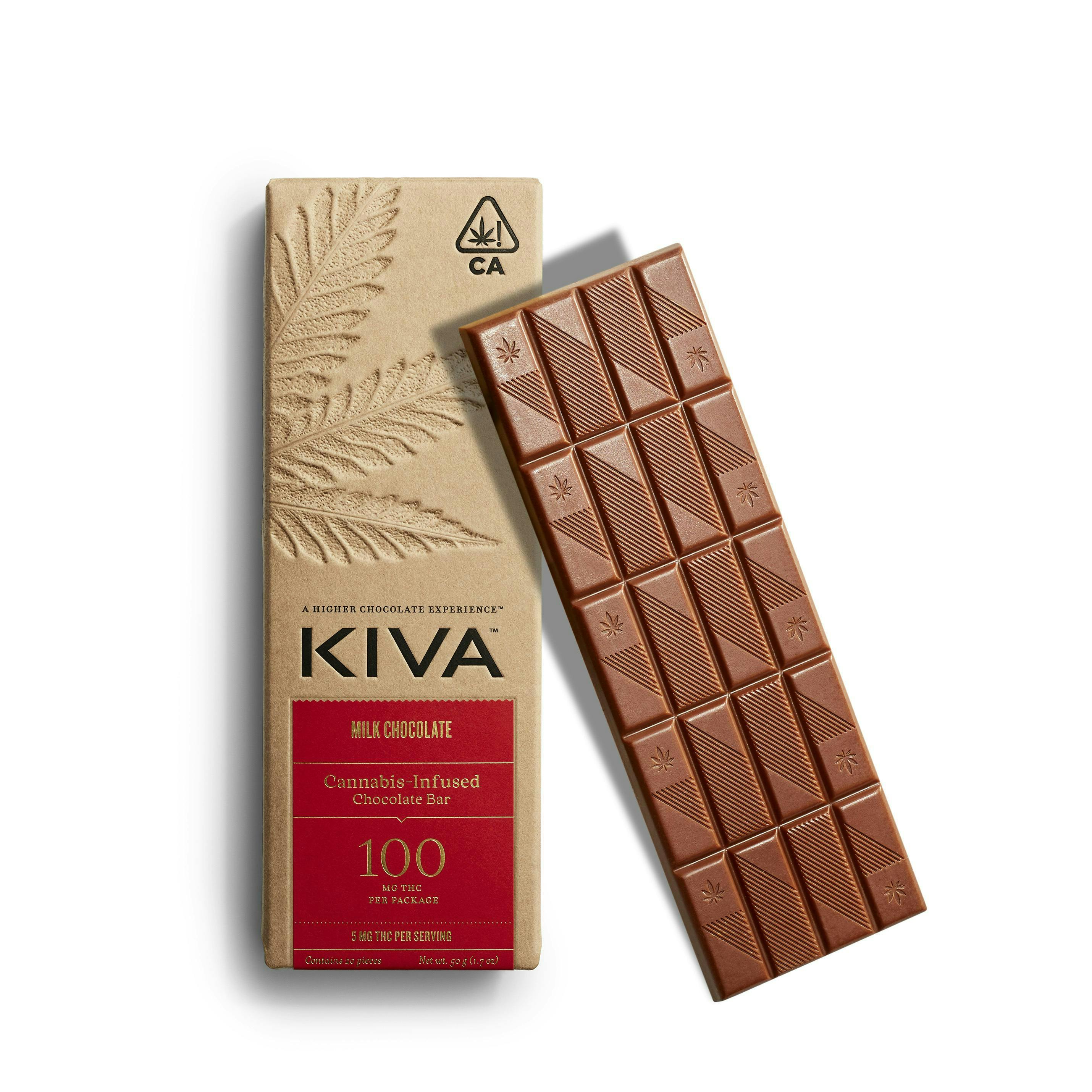
KivaKiva Bars Milk Chocolate 100mg · .1g
$30.00
$34after tax

weeddispensarynearme.com
You must be 21 years or older to enter. By entering, you confirm you’re of legal age in your state to purchase cannabis.
For use only by adults 21+ • Keep out of reach of children
Brand · 2 products live
Higher standards since day one In 2010, a young cannabis-loving couple set out on a mission to create a better edible experience for legal consumers. Scott Palmer and Kristi Knoblich Palmer were inspired by a visit to a local chocolatier, and soon started crafting the first Kiva bars in their home kitchen. They didn’t realize it at the time, but they weren’t just creating a premium edible product, they were setting the gold standard for the entire legal cannabis industry. In the last decade, customer support has turned this family-owned business into the #1 edibles brand in the country. Today, they are proud to employ 200+ passionate people, and have added Terra, Petra and Camino to their happy family of premium cannabis products.
Quick answer · What is the Kiva cannabis brand?
Kiva Confections has spent more than a decade refining the art of cannabis-infused chocolate and edibles, earning a reputation for consistency, precision dosing, and culinary craft that few brands in the category can match. Founded in California in 2010 by Scott Palmer and Kristi Knoblich Palmer, the company has grown from a home kitchen operation into one of the most recognized edibles brands in legal cannabis, available now through New York's adult-use market.
Kiva Confections has spent more than a decade refining the art of cannabis-infused chocolate and edibles, earning a reputation for consistency, precision dosing, and culinary craft that few brands in the category can match. Founded in California in 2010 by Scott Palmer and Kristi Knoblich Palmer, the company has grown from a home kitchen operation into one of the most recognized edibles brands in legal cannabis, available now through New York's adult-use market.
Kiva Confections was founded in 2010 by Scott Palmer and Kristi Knoblich Palmer, a couple whose shared enthusiasm for cannabis and fine food led them to experiment with cannabis-infused chocolate in their home kitchen. Inspired by a visit to a local California chocolatier, the Palmers began producing small-batch bars with an attention to ingredient quality and dose consistency that was notably absent from the edibles landscape of that era. The legal cannabis market was still in its infancy in California, and the dominant edibles on dispensary shelves were, by most accounts, inconsistently dosed and aesthetically indifferent. Kiva positioned itself as a corrective to that standard from the outset. Over the following decade, the company expanded its product range from chocolate bars into mints, gummies, and tinctures, each line developed with what Kiva describes as a focus on controlled, predictable consumer experience. The brand remained family-owned as it scaled, which has been a point of pride in its public communications. By the mid-2010s, Kiva had become one of the top-selling edibles brands in California, and the company subsequently expanded into additional regulated markets across the United States. Its entry into New York's adult-use market brought its philosophy of culinary precision to one of the country's most competitive retail environments, where discerning consumers have grown increasingly sophisticated in their expectations of edible products.
Kiva's visual identity is understated and purposefully refined, drawing on the design vocabulary of premium artisan food rather than legacy cannabis culture. The brand's packaging uses clean typography, muted botanical illustration, and a restrained color palette that signals quality without ornamentation. Chocolate bars arrive in slim, foil-wrapped formats enclosed in illustrated outer sleeves that would not look out of place beside a single-origin confectionery brand at a specialty grocer. The overall effect is one of quiet confidence — a brand that lets product consistency speak rather than leaning on loud graphic design. The shopper Kiva is speaking to is an adult consumer who approaches cannabis with the same discernment they might apply to wine, coffee, or craft food. This is not a brand oriented toward novelty or spectacle; it is built for the consumer who values knowing exactly what they are consuming and trusting that the experience will be repeatable. In market terms, Kiva occupies the prosumer mid-tier to accessible luxury segment — priced above value-tier edibles but positioned on the quality of its ingredients, its decade-plus manufacturing heritage, and a dosing philosophy that prioritizes approachability and predictability over maximum potency.
Kiva is a licensed cannabis processor and edibles manufacturer rather than a cultivator, meaning its expertise resides in infusion, formulation, and quality control rather than in growing cannabis at origin. The company has been transparent about its emphasis on precise extraction and infusion methodology, using cannabis oil that is tested and standardized before being incorporated into finished products. This standardization is central to the brand's identity: a Kiva product purchased in one regulated market is intended to deliver a dose-consistent experience comparable to the same product purchased in another. The company's production philosophy reflects an alignment with pharmaceutical-grade manufacturing principles applied to a culinary context — rigorous batch testing, consistent cannabinoid ratios, and terpene profiling where relevant. Kiva has also developed product-specific formulations, most notably in its Camino gummies line, which incorporates botanically sourced terpenes and other functional ingredients intended to shape the character of the experience. This approach places Kiva at the more scientifically minded end of the edibles spectrum, distinguishing it from brands that treat infusion as an additive process rather than an integrative one. The brand has not publicly detailed specific extraction vendors or methods used in New York production, and shoppers seeking full supply-chain transparency should consult current OCM labeling on individual products.
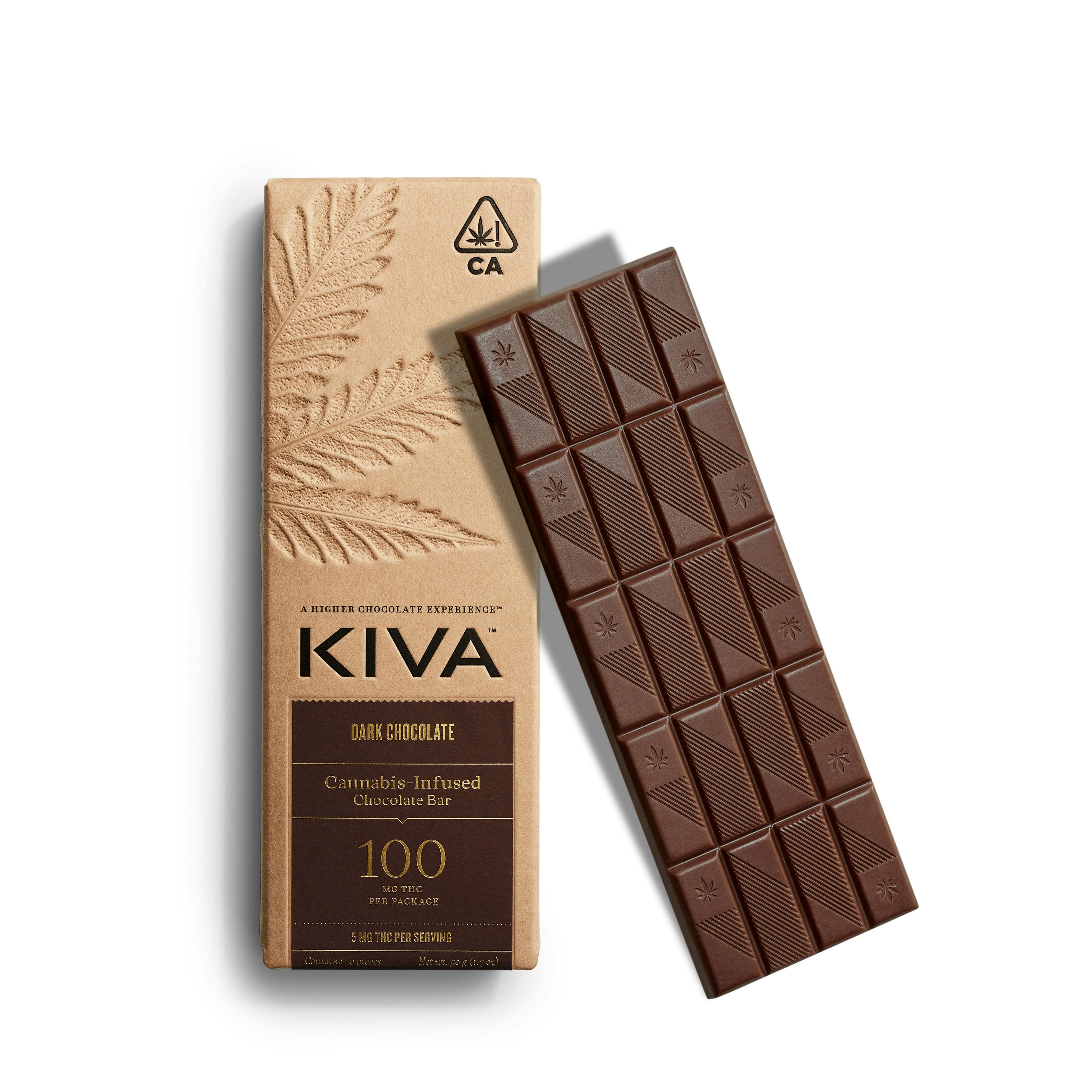
Kiva's chocolate bars remain the product that established the brand and continue to define its reputation. The bars are produced in milk and dark chocolate formats, infused to clearly marked dose levels, and segmented for easy portion control — a practical design choice that reflects the brand's commitment to intentional consumption. The chocolate itself is sourced with an attention to quality more typical of confectionery than cannabis, and this is evident in the finished product. The Camino gummies line has become arguably Kiva's most prominent current offering and the product most associated with the brand's expansion into broader markets. Camino gummies are formulated with specific terpene blends and positioned around experiential occasions — a format that invites the consumer to select a product based on the kind of session they are anticipating rather than simply by potency. Kiva's Terra Bites, chocolate-covered espresso beans or blueberries infused with cannabis, round out the portfolio as a more casual, snackable format. Across all lines, the unifying thread is dose clarity and a culinary baseline that exceeds category norms.
Kiva is a natural fit for the cannabis consumer who prefers a measured, considered experience over an improvisational one. The chocolate bars and Camino gummies in particular are well suited to social settings where sharing is expected — a dinner party, a weekend gathering, or an evening where cannabis is one element of a larger sensory experience rather than the centerpiece. The segmented bar format lends itself to consumption at one's own pace, making it appropriate for consumers still calibrating their relationship with edibles. The brand's occasion profile also extends to gifting. Kiva's packaging reads as a thoughtful, considered present in a way that more utilitarian cannabis products do not — the kind of item one might bring to a host or offer as an introduction to cannabis for a curious friend. For the regular cannabis consumer, Kiva's consistency makes it a reliable staple rather than an occasional treat, a product one returns to because the experience is known and dependable. The Camino line's occasion-oriented framing adds a layer of intentionality that resonates with consumers who think carefully about when and how they use cannabis.
Kiva Confections was founded in California and is headquartered there, with licensed manufacturing operations across multiple regulated U.S. markets. The company has entered the New York adult-use market and its products are available at licensed adult-use dispensaries in the state, including ZenZest. The brand has not publicly disclosed the precise structure of its New York licensing arrangement or named a specific New York manufacturing partner as of this writing; consumers seeking current licensing detail should consult the New York Office of Cannabis Management's public registry. Kiva has identified as a family-owned business since its founding, and Scott Palmer and Kristi Knoblich Palmer have been publicly named as co-founders. The company has not, to the best of public knowledge, made formal social-equity or BIPOC-owned designations part of its brand identity. Beyond California and New York, Kiva has operated in a number of regulated states including Nevada, Michigan, Illinois, and others, making it one of the more widely distributed premium edibles brands in the national legal market.
$34after tax
$34after tax
Kiva Confections was founded in California and maintains its headquarters there. The company has licensed operations across multiple regulated U.S. markets. For products sold in New York, the specific manufacturing arrangement has not been fully detailed in public filings as of this writing. Individual product packaging, as required by the New York Office of Cannabis Management, will carry the licensed producer's information and is the most reliable source for this detail.
Kiva products are available through New York's licensed adult-use retail network, including at ZenZest. The precise licensing structure governing their New York availability — whether through a direct OCM processor license or through a wholesale partnership with a New York-licensed entity — has not been comprehensively disclosed in public brand communications. Consumers can verify current licensing status through the New York Office of Cannabis Management's public registry.
Kiva is best known for cannabis-infused chocolate bars and, more recently, its Camino gummies line. The brand built its reputation on dose consistency and culinary ingredient quality at a time when the edibles category offered little of either. It has been widely cited in cannabis trade press as one of the top-selling edibles brands in the United States by revenue, with particular strength in its home market of California.
For a first experience with Kiva, the chocolate bars offer the clearest expression of what the brand has been doing since its founding — precise dosing, quality chocolate, and a format that allows easy portion control. Consumers who prefer a fruit-forward, gummy format and are interested in the brand's more recent work with terpene-infused occasion-specific formulations should explore the Camino line, which has become a signature offering in its own right.
Kiva occupies what might be described as the prosumer mid-tier to accessible luxury segment of the edibles market. It is priced above value-tier products and is produced with an attention to ingredient quality and manufacturing consistency that justifies that positioning, but it has not historically marketed itself as an ultra-premium or limited-edition product. It is a brand oriented toward quality and reliability rather than exclusivity.
Kiva Confections was co-founded by Scott Palmer and Kristi Knoblich Palmer, and the company has publicly identified as a family-owned business throughout its history. The Palmers have been named in numerous press profiles and brand communications as the principals of the company. There has been no public announcement of an acquisition or change of majority ownership as of this writing, though investors and growth capital are common in scaled cannabis operations and full ownership structure details are not always publicly disclosed.
Kiva's emphasis on clear, consistent dosing and its range of lower-dose formats make its products among the more approachable options in the edibles category for adults new to cannabis. The brand's dose-per-piece clarity and segmented bar format allow for intentional, incremental consumption. As with all cannabis edibles, adult consumers are advised to start with a low dose, allow adequate time for onset — typically 30 to 90 minutes — and consult a knowledgeable dispensary associate for personalized guidance.
Wana Brands
Wana shares Kiva's commitment to consistent dosing and broad multi-state distribution, making it a logical alternative for consumers who prioritize predictability in their edibles experience.
Défoncé Chocolatier
For the Kiva consumer drawn to the culinary craft of cannabis-infused chocolate specifically, Défoncé offers a comparably refined approach to single-origin ingredients and artisan production.
Plus Products
Plus gummies occupy a similar prosumer space in the edibles market, with an emphasis on clean ingredients, clear dosing, and a California heritage that parallels Kiva's origin story.
Coda Signature
Coda's focus on artisan cannabis confectionery and layered flavor profiles appeals to the same consumer who values Kiva's intersection of culinary quality and dose precision.
1906 New Highs
1906's use of functional botanicals alongside cannabinoids and its occasion-oriented product naming echoes the philosophy behind Kiva's Camino line, making it relevant to the same intentional consumer.
Pick your store
We'll show pricing, deals, and delivery zones for the store you pick. You can switch any time from the header.