THC 0.17%Sativa
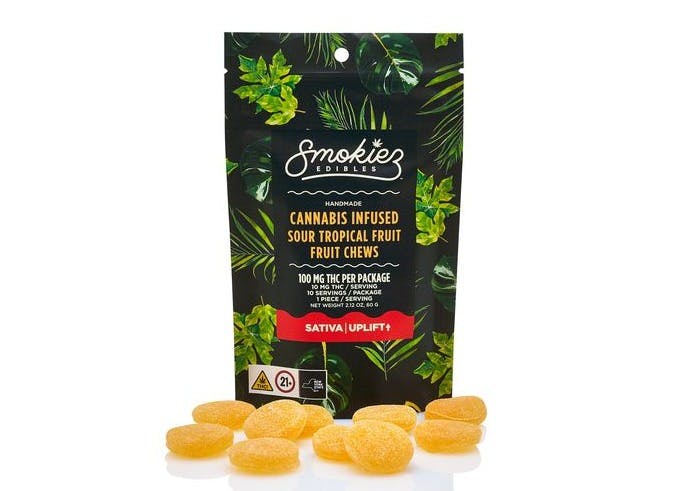
Smokiez EdiblesSour Tropical Fruit Sativa 100mg THC Fruit Chews · .1g
$22.12
$25after tax

weeddispensarynearme.com
You must be 21 years or older to enter. By entering, you confirm you’re of legal age in your state to purchase cannabis.
For use only by adults 21+ • Keep out of reach of children
1 live products in stock
Quick answer · What is the Sour Tropical Fruit cannabis strain?
Sour Tropical Fruit arrives as a spirited, sun-drenched sativa with a terpene profile that reads like a citrus grove meeting a ripe mango stand at dusk. Its aroma is vivid without being overwhelming, its lift purposeful without edging into anxiety. For those who favor a daytime session that keeps the mind engaged and the senses pleasantly illuminated, this cultivar occupies a confident, unhurried place in the premium sativa canon.
$25after tax
About Sour Tropical Fruit
Sour Tropical Fruit is a sativa-leaning hybrid whose precise genetic lineage has not been formally documented by a single widely credited breeder, making it a strain whose origins are somewhat debated in publicly available cannabis databases. The name strongly implies a cross drawing from Sour Diesel or a Sour-family parent — a lineage rooted in the legendary Chemdawg and Northern Lights or Skunk No. 1 genetics depending on the phenotype in question — paired with a tropical-forward cultivar such as Maui Wowie, Pineapple, or a similar island-heritage strain. This combination, if accurate to the name, would situate Sour Tropical Fruit within a broader late-2000s to early-2010s trend of blending East Coast sour diesel character with warmer, equatorial fruit genetics. Maui Wowie itself traces back to the volcanic soils of Hawaii, gaining cultural prominence through the 1970s counterculture before being folded into the modern breeding landscape. Sour Diesel, by contrast, emerged from New York and New Jersey circles in the early 1990s, making any genetic marriage of the two a meeting of distinct American cannabis histories. Phenotypic variation within the Sour Tropical Fruit name can be significant depending on the cultivator, meaning shoppers may encounter cuts that lean more sharply toward the fuel-laced diesel end or others that tilt unmistakably toward ripe mango and pineapple. Without a confirmed breeder on record, the lineage is best understood as a living, evolving expression rather than a fixed cultivar.
The onset of Sour Tropical Fruit tends to arrive within five to fifteen minutes of inhalation, announcing itself first as a gentle pressure behind the eyes and a brightening of mental focus. This initial cerebral lift is characteristic of sativa-dominant cultivars that carry meaningful limonene and terpinolene content — compounds associated with uplifted, alert states. The experience during the peak phase is predominantly head-forward: thoughts may feel faster or more associative, creative connections more fluid, and conversation more naturally animated than usual. Body sensation remains present but secondary during the height of the experience, offering a mild ease of tension rather than sedation or heaviness. This balance makes the session feel functional — conducive to movement, light physical activity, or engaged social settings — without the body lock that heavier indica-leaning cultivars can produce. Peak duration for most experienced adults tends to fall in the ninety-minute to two-hour range, though individual response varies considerably based on tolerance, consumption method, and setting. The comedown is generally described as gradual and clean, with the cerebral energy slowly softening into a comfortable, grounded calm rather than dropping sharply. As with any sativa of meaningful potency, those with sensitivity to THC-driven cerebral stimulation are encouraged to start with a conservative amount and allow adequate time before reassessing. The overall arc is one of purposeful energy followed by quiet resolution — a trajectory well-suited to daytime use.
The aromatic profile of Sour Tropical Fruit is anchored by a combination of limonene, myrcene, and terpinolene, with secondary contributions from ocimene and caryophyllene that add depth and dimension. Limonene leads the opening impression: bright, citrus-forward, with a tartness reminiscent of freshly cut grapefruit or lemon zest. This is the terpene most responsible for the strain's signature sour brightness, and it contributes to the uplifted, alert quality of the experience as well. Myrcene softens the citrus edge with a ripe, slightly musky tropical undercurrent — closer to mango or guava than to the sharper fruits. It brings an earthy warmth to the mid-nose that prevents the aroma from reading as purely candy-like or synthetic. Terpinolene adds a herbaceous, slightly floral lift that is common in sativa-leaning tropical cultivars; those familiar with Jack Herer or Durban Poison will recognize its contribution. Ocimene, present in smaller concentrations, introduces a delicate sweetness and a faint woody note that adds length to the aromatic finish. On the palate, Sour Tropical Fruit delivers a smoke or vapor character that opens tart and citrus-bright, transitions through a layer of ripe stone fruit and tropical sweetness in the mid-draw, and finishes with a mild herbal earthiness. The exhale carries a subtle fuel note that nods to any Sour Diesel heritage in the background. The overall flavor impression is cohesive and refined — neither one-dimensional sweetness nor aggressive diesel, but a layered interplay between the two.
Sour Tropical Fruit typically presents in medium to large, somewhat elongated buds consistent with sativa-dominant structure — airier and less compact than a classic indica, with visible gaps between calyxes that speak to the cultivar's equatorial heritage. The color palette leans toward vivid spring and medium greens, occasionally shading into lighter, almost lime-toned leaves when grown under optimal light conditions with a proper late-stage temperature differential. Pistils tend toward a warm amber-orange, weaving generously through the open bud structure and giving the flower a sun-warmed visual warmth. Trichome coverage is moderate to generous, with a frosted, resinous layer visible across the calyxes and sugar leaves that catches light with a pearlescent quality. The overall visual impression is of a lively, alive flower — not the dense, golf-ball compactness of a heavy indica, but an open, expressive structure that reflects its upward-growing sativa nature. Well-cured cuts will hold their color and trichome integrity with a slight stickiness on handling.
Sour Tropical Fruit, consistent with its presumed sativa-dominant heritage, is generally considered a moderately challenging cultivar for home growers, requiring some familiarity with managing stretch and canopy height. Sativa-leaning genetics tend to exhibit pronounced vertical growth during the flowering transition, and cultivators often employ low-stress or high-stress training techniques to keep plants within manageable bounds indoors. Indoor flowering time is estimated in the range of nine to eleven weeks, which is on the longer end of the sativa spectrum but typical for cultivars with tropical lineage. Indoor yields are moderate, rewarding growers who invest in environmental consistency — stable humidity, strong airflow, and dialed-in light intensity. Outdoor cultivation favors warm, Mediterranean-style climates with long growing seasons, where the plant can reach full expression before the autumn chill sets in. In the New York region, outdoor grows benefit from a sheltered, south-facing position. The strain is not considered ideal for first-time cultivators due to its extended flower time and stretch management requirements, but intermediate growers who prioritize aromatic complexity in their harvest will find the patience well rewarded.
Sour Tropical Fruit is at its most eloquent during the transitional hours of the day — mid-morning after the first coffee has settled, or the golden window of early afternoon before focus begins to flag. It suits solo creative work particularly well: writing, visual design, music production, or any pursuit that benefits from a loosening of rigid thinking without a full surrender of clarity. The limonene and terpinolene content supports an engaged, curious mental state that pairs naturally with tasks requiring both attention and imaginative flexibility. In social settings, this cultivar holds its own at small, convivial gatherings where conversation is the primary event — a weekend brunch, an informal studio session, or a relaxed gathering on a rooftop as the summer light changes. For food pairings, the tart citrus and tropical fruit notes in the terpene profile find a natural companion in ceviche, yuzu-dressed salads, or a well-made mango sorbet. Musically, the strain's energetic yet melodic character aligns with artists who bridge rhythm and texture — think Khruangbin, Snarky Puppy, or classic Fela Kuti. It rewards presence and curiosity in equal measure.
Sour Diesel
Fans of Sour Diesel's fuel-laced, cerebral sativa energy will recognize a familiar lift in Sour Tropical Fruit, with the added dimension of ripe tropical fruit softening the diesel edge.
Maui Wowie
The island-sourced sweetness and easygoing, socially animated effects of Maui Wowie align closely with the tropical arc of Sour Tropical Fruit, making it a natural companion for those drawn to sun-warmed sativa profiles.
Pineapple Express
Pineapple Express shares the fruit-forward brightness and functional daytime character that defines Sour Tropical Fruit, with overlapping citrus and tropical terpene signatures.
Jack Herer
The terpinolene-driven clarity and creative, head-centered lift of Jack Herer mirror the cerebral qualities of Sour Tropical Fruit, appealing to the same sativa-oriented, productivity-minded consumer.
Durban Poison
Those who favor Durban Poison's clean, alert sativa effect and sweet-anise terpene complexity will find Sour Tropical Fruit a compelling lateral move toward warmer, fruitier territory.
Sour Tropical Fruit is a sativa-dominant hybrid. Its presumed lineage — drawing from Sour Diesel-family genetics and tropical cultivars such as Maui Wowie — tilts the experience firmly toward the cerebral, uplifted, and energetic qualities associated with sativas. Some phenotypes may carry a modest body ease in the background, but the overall character is alert and head-forward rather than sedating.
Sour Tropical Fruit delivers a layered palate experience that opens with bright citrus tartness — lemon zest, grapefruit — transitions through ripe mango and tropical stone fruit in the mid-draw, and finishes with a light herbal earthiness and a faint fuel note on the exhale. The flavor is cohesive and expressive without being sugary or one-dimensional, reflecting a terpene profile led by limonene, myrcene, and terpinolene.
Typical effects include an uplifted, focused cerebral onset that arrives relatively quickly and peaks in an alert, creatively engaged state. Body sensation is present but secondary — a mild ease of tension rather than sedation. The experience generally suits daytime use, social settings, or creative work. The comedown is gradual and calm. As with any potent sativa, those sensitive to THC-driven stimulation should approach with care and start conservatively.
Consumers who enjoy Sour Tropical Fruit often gravitate toward Sour Diesel for its cerebral fuel-forward energy, Maui Wowie for its tropical brightness, Pineapple Express for its fruit-forward daytime character, Jack Herer for its terpinolene-driven clarity, and Durban Poison for its clean, alert sativa lift. Each shares overlapping terpene territory or effect arcs with Sour Tropical Fruit from a slightly different angle.
Sour Tropical Fruit can be approachable for adult-use newcomers who are curious about sativa-leaning cultivars, provided they follow a start-low, go-slow approach. The sativa-dominant character means the cerebral effects can feel pronounced for those unaccustomed to THC. A small initial amount and a comfortable, familiar setting are advisable. More experienced consumers will find the effect arc predictable and well-balanced for daytime use.
The dominant terpenes associated with Sour Tropical Fruit are limonene, myrcene, and terpinolene. Limonene contributes the citrus brightness and uplifted mental quality. Myrcene adds tropical depth and earthy warmth. Terpinolene brings a floral, herbaceous lift characteristic of island-heritage sativas. Secondary terpenes may include ocimene — adding sweetness and a woody finish — and caryophyllene, which introduces a mild spice and grounding quality.
Given its sativa-dominant profile and energizing terpene composition, Sour Tropical Fruit is best suited to daytime or early afternoon consumption. Mid-morning creative sessions, active weekend pursuits, or social gatherings in the hours before evening are natural fits. Evening or nighttime use is generally less aligned with the strain's alert, cerebral character, though individual response to cannabis always varies.
Sour Tropical Fruit is notably aromatic, with a vivid, fruit-forward scent profile that carries well in an open space. The limonene-dominant nose — tart citrus, ripe tropical fruit, a whisper of fuel — is expressive without being harsh or overpowering. Well-cured flower tends to have a clean, layered aroma that rewards close inspection. Those in shared living environments may want to be mindful of the strain's aromatic presence.
Related strains
Pick your store
We'll show pricing, deals, and delivery zones for the store you pick. You can switch any time from the header.