On sale· 15% OFF
THC 79.56%·CBD 0.15%Sativa
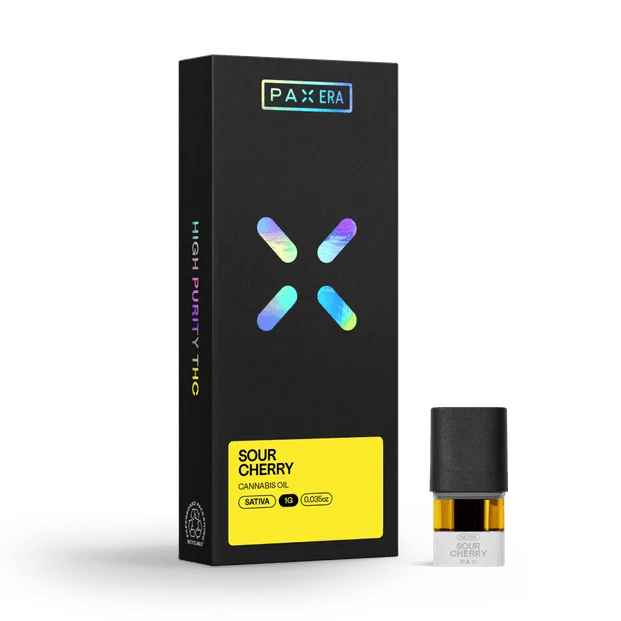
PAXPax | Sour Cherry | High Purity THC | AIO · 1g
$46.64$54.87
$54after tax

weeddispensarynearme.com
You must be 21 years or older to enter. By entering, you confirm you’re of legal age in your state to purchase cannabis.
For use only by adults 21+ • Keep out of reach of children
1 live products in stock
Quick answer · What is the Sour Cherry cannabis strain?
Sour Cherry is an indica-leaning cultivar that earns its name with quiet conviction — a deep, fruit-forward profile anchored by tart stone-fruit aromatics and a grounding body character that settles in gradually. Well-suited to the reflective end of the day, this strain rewards patience on the inhale and delivers a composed, unhurried experience that feels at once familiar and refined.
$54after tax
About Sour Cherry
Sour Cherry's precise lineage is not uniformly documented across public cannabis databases, and the breeder of record varies depending on the source consulted. The strain is most commonly attributed to a cross involving Cherry pie and a Sour phenotype — whether that Sour influence comes from Sour Diesel, a Sour Kush cut, or another acid-edged cultivar remains debated in cultivator communities. Cherry Pie itself is a well-established hybrid, generally credited to the Bay Area cannabis scene of the early 2010s and understood to descend from Granddaddy Purple and Durban Poison, lending both color and the characteristic sweetness that anchors Sour Cherry's profile. Some phenotypes marketed under the Sour Cherry name appear to carry Blackberry or other dark-fruit genetics in their background, which would help explain the occasional blue-purple tones observed in certain cuts. Without a single authoritative breeder page confirming parentage, shoppers should treat the lineage as broadly indica-dominant with a Sour-hybrid influence layered over a cherry-terpene base. As an indica-typed cultivar, Sour Cherry shares a family resemblance with Cherry Kush and Black Cherry OG — strains that similarly prioritize deep, sweet-tart fruit notes alongside a relaxing body effect. Its influence within the indica fruit-forward category has grown steadily as palate-conscious consumers seek complexity beyond the classic OG or Kush profile.
Sour Cherry's onset is characteristically gentle for an indica, arriving within five to fifteen minutes and beginning as a mild warmth behind the eyes and a subtle easing of muscular tension across the shoulders. The initial phase carries a quiet, slightly euphoric lift — not a cerebral surge but rather a softening of mental chatter — that allows the body effect to take center stage without disorientation. At its peak, the experience leans decidedly physical. A progressive sense of heaviness settles into the limbs, which many consumers describe as comfortable rather than immobilizing when consumed in moderate amounts. The high myrcene content common to indica-forward cultivars contributes to this sedative body quality, while any caryophyllene presence adds a measured sense of calm that complements rather than deepens the sedation. Linalool, when present, may round the experience with a gentle, almost floral ease. Duration tends toward the longer end of the indica spectrum — most consumers report a sustained plateau of two to three hours before a gradual, unhurried comedown that rarely produces abrupt drops in mood. The descent is smooth, drifting naturally toward rest. As with any potent indica, the principle of starting low and going slowly is worth honoring here, particularly for those newer to the cultivar or to cannabis broadly.
The aromatic profile of Sour Cherry opens with an immediate impression of ripe, tart stone fruit — closer to Morello cherry or black cherry than the sweeter Bing variety. This character is consistent with elevated myrcene, the most prevalent terpene in many indica cultivars, which contributes the earthy, slightly musky base note that keeps the fruit from reading as candy-like. Myrcene here acts as the foundation upon which brighter aromatic compounds rest. Caryophyllene introduces a subtle spice on the mid-register — a faint peppered quality that gives the profile definition and keeps it from being purely sweet. When linalool is present in meaningful amounts, it adds a whisper of lavender or soft florals that elegantly bridges the tart fruit and the spice. Some phenotypes also express hints of ocimene, which can introduce a faintly herbal or green note on the back end, lending complexity without disrupting the dominant fruit character. On the palate, whether consumed via dry herb vaporizer or combustion, Sour Cherry tends to deliver a smooth initial draw with the tart fruit note most legible at lower temperatures. The smoke, when combusted, is moderately full-bodied, leaving a lingering sweetness on the exhale that recalls dried cherry or fruit leather. Vapor tends to be cleaner and more precise in terpene expression, allowing the nuanced interplay between spice and fruit to read more distinctly.
Sour Cherry buds typically present with a dense, compact structure characteristic of indica-dominant genetics — tightly wound calyxes that form chunky, rounded formations rather than the elongated spear shapes associated with sativa influence. The color palette is one of the strain's most recognizable features: a deep forest green base often punctuated by purple and burgundy hues, particularly when the plant has been exposed to cooler nighttime temperatures during the final weeks of flowering. Rusty-orange pistils weave through the dense bud structure in generous numbers, providing warm contrast against the cooler greens and purples. Trichome coverage is typically generous, lending the flowers a frosted, slightly silvery appearance under direct light. Well-cultivated examples carry a sticky, resinous feel on handling — a tactile indicator of terpene and cannabinoid density that experienced shoppers will recognize as a marker of quality. The overall visual impression is rich, considered, and unmistakably indica in character.
Sour Cherry performs well both indoors and outdoors, though indoor cultivation allows for the kind of environmental control — particularly cooler late-flowering temperatures — that encourages the purple and burgundy pigmentation the strain is prized for. Flowering time generally falls within the eight-to-nine-week range for indoor grows, consistent with most indica-dominant cultivars. Indoor yields are moderate to generous when grown under optimal light and nutrition schedules, and the plant's compact structure makes it well-suited to screen-of-green (SCROG) setups or low-stress training techniques. Outdoor cultivation favors a temperate to mild climate with consistent sun exposure and low humidity during the flowering window, as the dense bud structure can be susceptible to moisture-related issues if airflow is inadequate. The strain is considered moderate in cultivation difficulty — accessible for an intermediate home grower who understands the basics of indica feeding and canopy management, though not the most forgiving choice for a first-time cultivator working without guidance.
Sour Cherry is a strain that belongs to the slower hours of the day — the period after the work is finished, when the intention is rest, reflection, or quiet companionship rather than productivity. Its grounding body character makes it particularly well-suited to solo evenings: reading in a low-lit room, watching a carefully chosen film, or simply allowing the mind to decompress without agenda. The tart, fruit-forward terpene profile pairs naturally with foods that share its flavor architecture. A small plate of aged cheese alongside fresh or preserved stone fruits — a Manchego with cherry preserves, for instance — mirrors the strain's interplay of sharp and sweet. On the music side, the settled, unhurried quality of Sour Cherry's peak suits slow jazz, ambient electronic, or late-night soul; genres where texture and atmosphere matter more than tempo. For those who enjoy outdoor evening settings, a quiet terrace as dusk turns to dark captures the mood this strain tends to cultivate — present, grounded, and pleasantly unhurried.
Cherry Pie
As one of Sour Cherry's likely parent strains, Cherry Pie shares the same sweet-tart stone-fruit aromatic profile and delivers a comparably balanced, indica-leaning body effect with a gentle euphoric lift.
Black Cherry OG
Black Cherry OG offers a similarly deep, dark-fruit aromatic character alongside a pronounced indica body effect, making it a natural next step for consumers drawn to Sour Cherry's fruit and sedation profile.
Granddaddy Purple
Sharing likely ancestry and a similar purple-hued appearance, Granddaddy Purple appeals to the same consumer seeking rich fruit notes — here leaning grape rather than cherry — and a deeply relaxing physical experience.
Cherry Kush
Cherry Kush blends the classic earthy, OG Kush body with a pronounced cherry-terpene overlay, offering Sour Cherry enthusiasts a familiar fruit-forward palate in a slightly earthier, more resinous package.
Sour Kush
For those drawn to the sour, acidic edge within Sour Cherry's profile, Sour Kush delivers a comparable tartness layered over indica-dominant effects, bridging the earthy and the bright in a similar fashion.
Sour Cherry is classified as an indica-dominant strain. Its effects and physical structure both reflect this orientation — dense bud formation, a relaxing and progressive body effect, and a terpene profile anchored by myrcene. The experience leans toward physical ease and winding down rather than energized cerebral activity, which aligns with the broader character of indica-leaning cultivars.
Sour Cherry delivers a tart, stone-fruit-forward flavor that reads more like dark cherry or Morello cherry than a sugary candy interpretation. A light spice note from caryophyllene adds depth on the mid-palate, while the exhale carries a lingering sweetness reminiscent of dried fruit or fruit preserves. Vapor tends to express the terpene nuance more cleanly than combustion.
Consumers typically describe a gradual onset of warmth and physical ease, beginning with a mild softening of mental tension before settling into a pronounced body effect. At peak, limbs feel heavy and comfortable, and the mind rests in a calm, unhurried state. The experience tends to be long-lasting and transitions smoothly into drowsiness, making it better suited to evening than daytime use.
Consumers who enjoy Sour Cherry frequently appreciate Cherry Pie, Black Cherry OG, and Granddaddy Purple for their shared fruit-forward aromatic profiles and relaxing indica-dominant effects. Cherry Kush offers a comparable cherry-terpene palate in a slightly earthier character, while Sour Kush appeals to those drawn specifically to Sour Cherry's tart, acidic edge.
Sour Cherry can be approachable, but its pronounced indica body effect warrants a cautious approach for those new to cannabis. The standard principle of starting low and going slowly applies with particular relevance here, as the progressive sedative quality can deepen significantly with larger amounts. A modest first session in a comfortable, familiar setting is a sensible way to gauge individual response.
Myrcene is generally considered the dominant terpene in Sour Cherry, contributing the earthy base and the sedative body quality associated with indica-leaning cultivars. Caryophyllene adds a subtle spice note and may contribute to the strain's calming character. Linalool, when present, introduces a soft floral quality, and some phenotypes express ocimene, which lends a faint herbal complexity.
Sour Cherry is well-suited to evening and nighttime use. Its grounding body effect and tendency toward a sedative comedown make daytime or task-oriented consumption less practical. The strain is at its best when the day's obligations are complete — a quiet evening at home, a low-key social setting, or as a prelude to rest are the contexts in which its character is most appreciated.
The purple and burgundy hues seen in certain Sour Cherry phenotypes result from anthocyanin pigments in the plant's genetic makeup. These pigments become more visually pronounced when the plant experiences cooler nighttime temperatures during the final weeks of flowering, a condition that many indoor cultivators deliberately introduce. The coloration is aesthetic rather than indicative of potency or effect.
Related strains
Pick your store
We'll show pricing, deals, and delivery zones for the store you pick. You can switch any time from the header.