On sale· 15% OFF
THC 0.19%Hybrid
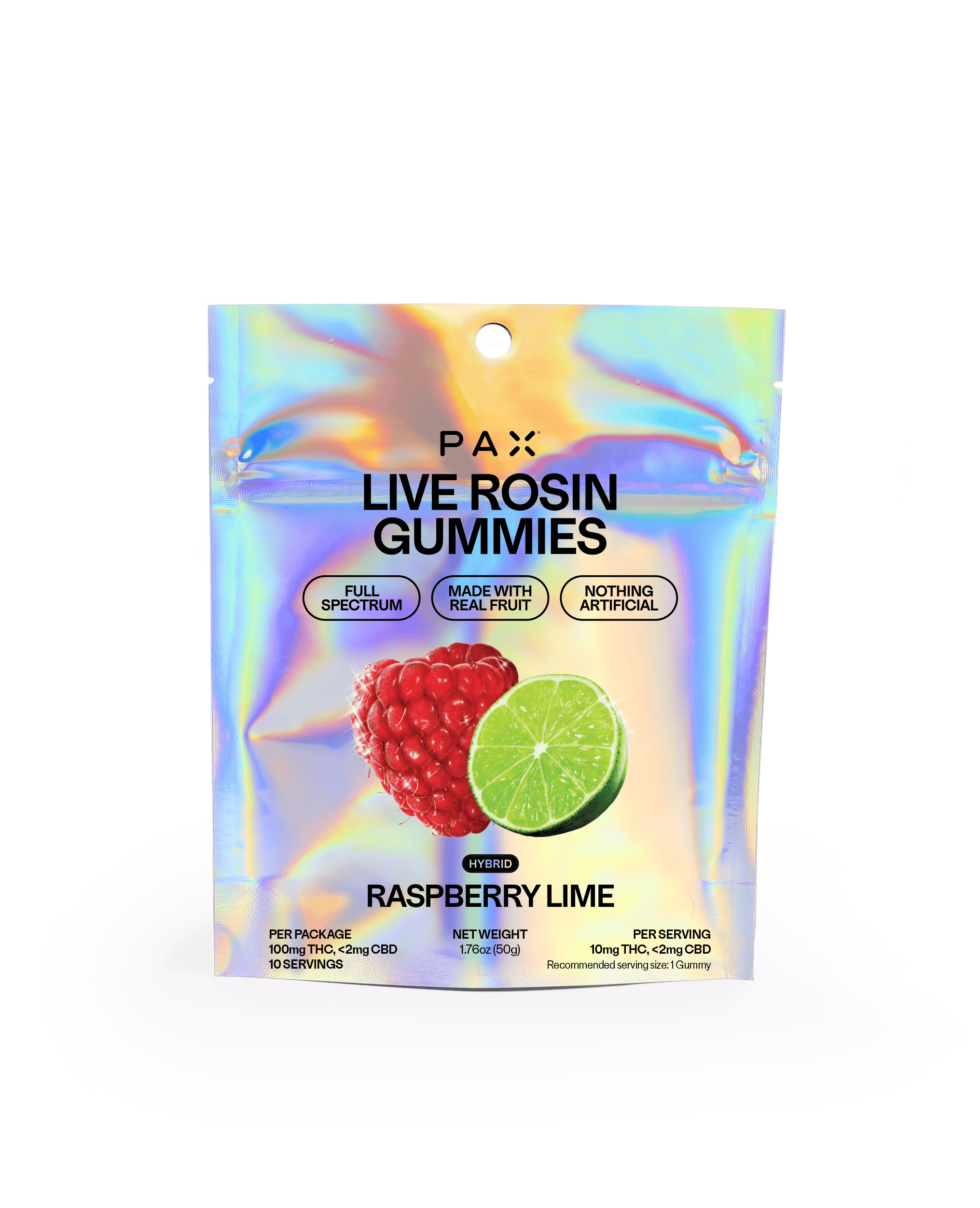
PAXLive Rosin Gummies | Raspberry Lime | 10 Pieces · .1g
$25.50$30.00
$29after tax

weeddispensarynearme.com
You must be 21 years or older to enter. By entering, you confirm you’re of legal age in your state to purchase cannabis.
For use only by adults 21+ • Keep out of reach of children
1 live products in stock
Quick answer · What is the Raspberry Lime cannabis strain?
Raspberry Lime is a vivid hybrid that earns its name from the first moment the jar is opened — a bright, fruit-forward bouquet that mingles tart berry with a citrus snap. The experience follows suit: a clear-headed lift that softens gradually into a relaxed, sociable ease. For those who appreciate cannabis with genuine aromatic character, Raspberry Lime offers a session that feels as considered as the name suggests.
$29after tax
About Raspberry Lime
Raspberry Lime's precise lineage is not universally documented across public cannabis registries, and the breeder has not made a definitive public statement naming confirmed parent strains across all available sources. What is most commonly cited within the community points toward a cross of raspberry-phenotype genetics — likely drawing from Raspberry Kush or a related Berry family cultivar — and a lime-accented sativa line, possibly influenced by strains within the Citrus or Lemon OG family. Some phenotype descriptions suggest influence from the broader DJ Short Blueberry lineage on the indica side, which would account for the strain's characteristic berry sweetness and resinous structure. The strain appears to have gained traction in the mid-2010s as craft cultivators in the Pacific Northwest and Colorado began prioritizing terpene-forward breeding over raw potency metrics. This era produced a wave of fruit-named hybrids — Strawberry Banana, Watermelon Zkittlez, and similar cultivars — all chasing the palate as much as the experience, and Raspberry Lime fits neatly within that movement. No widely recognized genetic siblings have been formally documented for this particular cultivar, though phenotypic variations do exist in some markets. Shoppers should note that strain names are not legally protected, so consistency between sources may vary.
Raspberry Lime typically announces itself within the first five to ten minutes — a gentle but noticeable cerebral brightening that sharpens focus without introducing the edge that some sativa-dominant strains carry. The onset is described by many consumers as clean and clarifying, with thoughts becoming more fluid and conversation coming more easily. This initial phase owes much to the strain's limonene and terpinolene content, both of which are associated with uplifted, alert mental states in the broader terpene literature. As the session progresses into its peak — usually around the twenty to forty-five minute window — the experience begins to settle into the body without becoming sedating. A mild warmth across the shoulders and a loosening of physical tension are commonly noted, reflecting the myrcene and caryophyllene presence that grounds the more stimulating top notes. The overall character during peak is best described as balanced: sociable and present, but not restless. The comedown is gradual and gentle, with most consumers reporting a return to baseline over two to three hours. There is little of the abrupt crash associated with some high-limonene cultivars. New consumers and those with lower tolerance should, as always, start low and go slow, as the initial clarity can give way to heavier sedation at higher doses.
The aromatic profile of Raspberry Lime is one of its most immediately compelling qualities. On the nose, limonene leads with a sharp, zesty citrus brightness — closer to fresh-squeezed lime rind than juice — followed almost immediately by the soft, jammy sweetness of ripe red berry that most associate with myrcene-rich fruit cultivars. Myrcene, the most prevalent terpene in cannabis broadly, contributes here not with the earthy musk it brings to OG-family strains, but with a riper, more tropical fruit quality that complements the citrus rather than competing with it. Secondary terpenes add depth and structure. Terpinolene introduces a faintly floral, almost herbal edge that keeps the profile from reading as candy-sweet, while caryophyllene — a peppery, slightly woody sesquiterpene — provides a subtle backbone on the mid-palate. A trace of ocimene may account for the bright, almost effervescent quality some consumers notice when the flower is freshly broken. On the palate, whether smoked or vaporized, Raspberry Lime delivers a smooth, fruit-forward inhale with the lime's tartness arriving first and the berry warmth following on the exhale. Vapor at lower temperatures (around 170–185°C) tends to emphasize the terpinolene florality, while higher-temperature smoke brings forward the earthier caryophyllene finish. The overall character is clean and refreshing, with minimal harshness on well-cured flower.
Raspberry Lime presents with the kind of visual appeal that reflects attentive cultivation. The buds are typically medium to dense in structure — not the rock-hard compression of an OG cut, but a firm, well-formed calyx architecture that holds its shape under light pressure. The color palette leans toward a medium forest green with occasional hints of deeper purple at the leaf margins, particularly in plants that have experienced a mild temperature drop in the final weeks of flower — a common technique among craft cultivators to encourage anthocyanin expression. Pistils are a warm amber to rust orange, distributed generously across the bud surface and visible against the green canopy. Trichome coverage is notably generous, lending the flower a frosted, slightly silvery sheen under direct light that speaks to the resin production expected from fruit-forward hybrid genetics. Overall, the presentation is tidy and considered — the kind of flower that photographs as well as it performs.
Raspberry Lime is considered a moderately approachable cultivar for those with some prior experience, though it is not typically recommended as a first project for novice home growers given its sensitivity to humidity fluctuations during the flowering period. Indoors, the plant responds well to screen of green (SCROG) training methods, which help manage its tendency toward moderate vertical stretch in early flower and encourage an even canopy that maximizes light penetration. Flowering time indoors typically falls in the eight to nine week range, with outdoor harvests in temperate climates occurring in early to mid October. Indoor yields are generally described as moderate to good under optimized conditions; outdoor plants in warm, Mediterranean-style climates can produce generous harvests when given sufficient root space. The strain favors consistent nighttime temperature drops in the final two weeks of flower — a practice that deepens terpene expression and may enhance the purple phenotype in predisposed cuts. Relative humidity should be kept below fifty percent during late flower to protect resin integrity.
Raspberry Lime occupies a particularly comfortable position in a well-curated cannabis rotation: it is social without being overwhelming, and pleasantly physical without pulling the consumer away from the moment. It is a natural fit for the kind of warm early evening that transitions from activity to conversation — a post-gallery-visit hour, a dinner gathering that has not yet fully assembled, or the first hour of a long weekend evening with close company. The strain's bright terpene profile pairs with notable ease alongside light, acid-forward foods: a ceviche, a citrus vinaigrette salad, or a charcuterie board with pickled accompaniments all complement rather than clash with the lime and berry aromatic thread. For a musical pairing, something in the vein of contemporary jazz or ambient electronic — artists whose work rewards attention without demanding it — aligns with the strain's balance of clarity and ease. Solo, it suits creative work that benefits from a lifted, unguarded mental state: writing, sketching, or the kind of thoughtful browsing that occasionally produces genuinely good ideas.
Strawberry Banana
Fans of Raspberry Lime's fruit-forward sweetness and balanced hybrid arc will find a familiar terpene warmth in Strawberry Banana's myrcene-rich, ripe berry profile.
Zkittlez
Zkittlez shares Raspberry Lime's candy-fruit aromatic identity and the same measured, body-inclusive high that never tips into sedation.
Citrus Punch
Those drawn to the lime-citrus brightness in Raspberry Lime will recognize a kindred limonene-forward energy in Citrus Punch's zesty, uplifting character.
Berry White
Berry White appeals to Raspberry Lime consumers who want to shift the balance slightly toward the indica end while retaining the sweet berry terpene signature.
Tropicana Cookies
The shared citrus-meets-fruit terpene architecture and clear cerebral onset make Tropicana Cookies a natural next step for Raspberry Lime enthusiasts seeking a touch more complexity.
Raspberry Lime is classified as a hybrid, expressing qualities of both indica and sativa lineage. The onset leans toward the uplifted, clear-headed character often associated with sativa genetics, while the mid-session and comedown introduce a more grounded, physically relaxed quality that reflects its indica side. Most consumers find the overall experience well-balanced — neither dominantly sedating nor overly stimulating — which makes it a versatile option across a range of occasions.
True to its name, Raspberry Lime delivers a palate experience centered on tart citrus and ripe red berry. The inhale is bright and lime-forward, carrying the zesty, slightly acidic character of fresh citrus rind. The exhale follows with a warmer, jammier berry sweetness. Secondary notes — faintly floral from terpinolene, with a subtle pepper finish from caryophyllene — keep the overall profile from reading as one-dimensional. Well-cured flower tends to express these flavors with particular clarity.
Raspberry Lime is generally described as producing a clean cerebral lift in the onset phase — thoughts become more fluid, mood brightens, and social ease increases. As the experience deepens, a mild body relaxation settles in without becoming sedating. The arc is smooth and gradual, making it suitable for active social settings or focused creative work. Duration typically runs two to three hours, with a gentle return to baseline. New consumers should begin with a modest amount and observe their response.
Consumers who enjoy Raspberry Lime often gravitate toward other fruit-forward hybrids with balanced effect profiles. Strawberry Banana and Zkittlez share its sweet, berry-centric terpene identity. Tropicana Cookies echoes the citrus brightness with added complexity. Berry White offers a similar aromatic palette for those who prefer a heavier indica lean. Citrus Punch is a strong parallel for those most drawn to the lime-forward top notes and uplifted onset.
Raspberry Lime's balanced hybrid profile makes it approachable for adults new to cannabis, provided the foundational guideline of starting low and going slow is observed. The onset is relatively clear and gradual — less abrupt than some high-THC sativa cuts — which gives newcomers time to gauge their response. That said, no strain is without the potential for overconsumption effects such as elevated anxiety or disorientation if approached without care. Beginning with a small amount and allowing adequate time before considering more is always advisable.
The terpene profile of Raspberry Lime is led by limonene, which drives the bright citrus and lime aromatic character, and myrcene, which contributes the ripe berry sweetness and a grounding physical quality. Terpinolene adds a floral, slightly herbal complexity that prevents the profile from reading as purely fruity. Caryophyllene rounds out the composition with a faint peppery earthiness on the exhale. Trace amounts of ocimene may contribute to the strain's effervescent, fresh-cut quality when the flower is first opened.
Within the crowded category of fruit-named hybrids, Raspberry Lime distinguishes itself through the interplay of tart citrus and berry rather than leaning entirely on sweet or tropical notes, as strains like Mango Haze or Pineapple Express tend to do. The lime element introduces an acidic brightness that keeps the profile lively and prevents the sweetness from becoming cloying. The effect arc is similarly more evenly balanced than some single-note fruit cultivars, offering both the uplift and the ease in a coherent progression.
Raspberry Lime's balanced hybrid nature makes it most at home in the late afternoon to early evening window — after the demands of the day have eased but before the intention is fully toward rest. The initial cerebral clarity supports engagement and conversation, while the body warmth that follows is well-suited to winding down. It is less ideally positioned as a morning strain, where more decisively sativa-leaning cultivars tend to serve better, and less suited to late-night use than heavier indica cuts.
Related strains
Pick your store
We'll show pricing, deals, and delivery zones for the store you pick. You can switch any time from the header.