THC 35.19%Hybrid
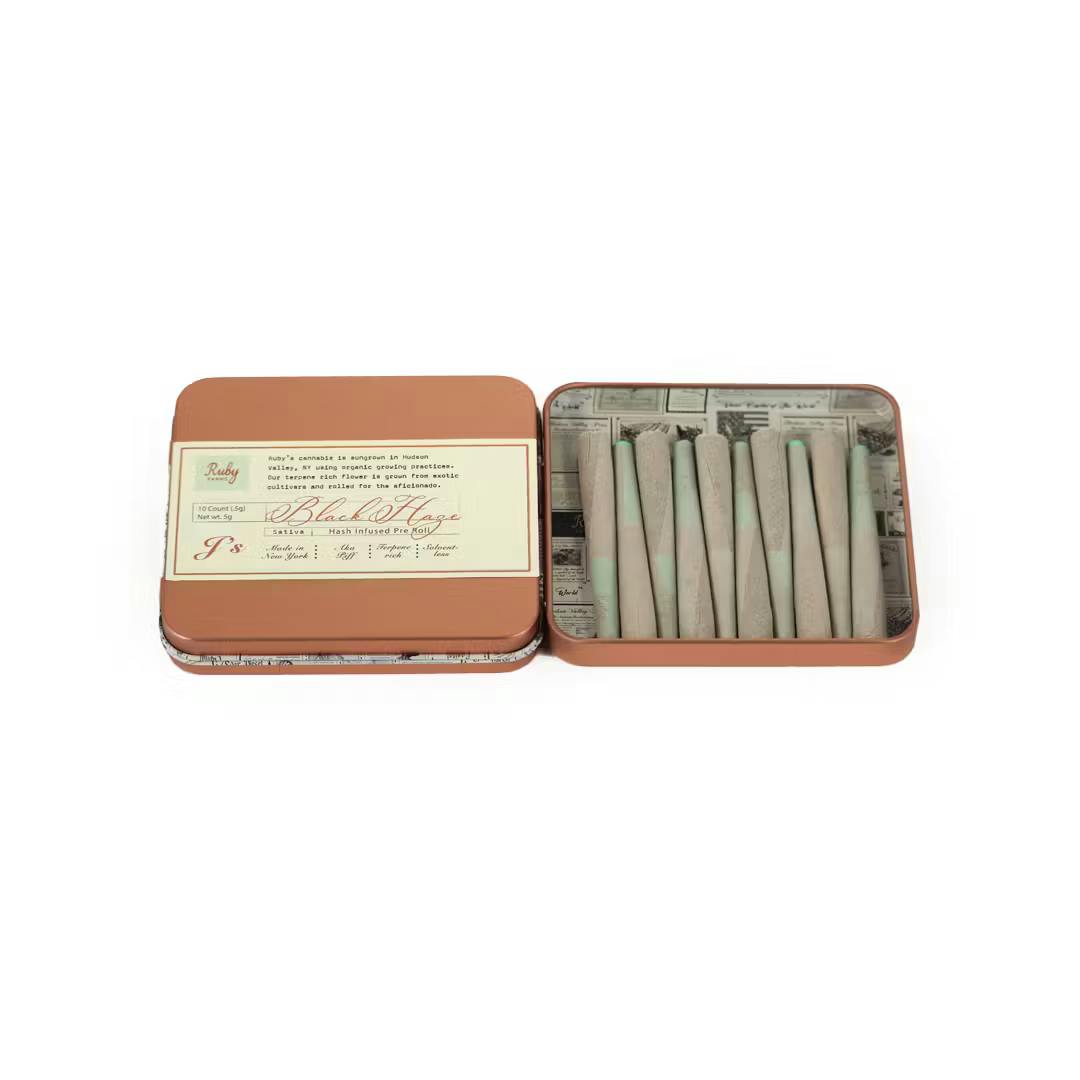
Ruby FarmsRuby Farms | Purple Voodoo | Hash Infused Doobies | 10pk · 0.5g/10pk
$58.41
$66after tax
weeddispensarynearme.com
You must be 21 years or older to enter. By entering, you confirm you’re of legal age in your state to purchase cannabis.
For use only by adults 21+ • Keep out of reach of children
1 live products in stock
Quick answer · What is the Purple Voodoo cannabis strain?
Purple Voodoo arrives with the quiet authority of a well-aged Burgundy — deep violet hues, a layered perfume of ripe berry and damp earth, and an effect profile that eases the mind into a contemplative, softly euphoric state. This hybrid carries the visual drama of a classic purple cultivar alongside a balanced character that speaks equally to the curious newcomer and the seasoned connoisseur browsing the shelves of a New York dispensary.
$66after tax
About Purple Voodoo
Purple Voodoo's precise lineage is not universally agreed upon in the public record, and the breeder has not made a fully verified, widely cited parentage statement. The strain is most commonly attributed to a cross involving Purple Urkle — the storied Mendocino County indica phenotype descended from Granddaddy Purple's extended family — and a Voodoo-line sativa, itself a 1990s-era Dutch seed-bank cultivar with Afghani and Thai roots that was popularized through High Times culture. That pairing, if accurate, would explain the strain's dual personality: the sedative, fruit-forward character inherited from Purple Urkle's Skunk and Mendocino Purps ancestry, balanced against the cerebral lift that the Voodoo sativa lineage supplies. Some phenotype hunters and online registry entries also suggest a possible connection to Purple Kush or GDP in the background, though these claims remain anecdotal. The strain likely emerged from Northern California's outdoor breeding scene in the mid-to-late 2000s, a period when anthocyanin-rich purple cultivars were commanding attention at harvest festivals and dispensary counters alike. Genetic siblings in spirit — if not in fact — include Grape Ape, Purple Hindu Kush, and Mendocino Purps, all of which share the same Californian purple-flower tradition and similar terpene signatures. What distinguishes Purple Voodoo within this family is its hybrid equilibrium: it leans purple and earthy without tipping fully into couch-lock territory.
The onset of Purple Voodoo tends to arrive within five to ten minutes of inhalation, beginning as a gentle brightening behind the eyes and a mild elevation of mood that feels more like a lifted emotional ceiling than a forceful rush. This initial cerebral warmth reflects the influence of the Voodoo sativa genetics — thoughtful, curious, gently social — and is supported in part by limonene's documented association with uplifted mood states. As the session progresses into its peak, typically between fifteen and forty-five minutes in, the body begins to register the Purple Urkle inheritance. A soft physical weight settles across the shoulders and upper back, and muscle tension has a tendency to dissolve without producing the full sedation associated with a heavy indica. The dominant terpene myrcene plays a central role here, contributing to the body-load quality that cannabis researchers associate with the compound's interaction with the endocannabinoid system. The experience sits comfortably in hybrid territory: clear enough to hold a conversation, relaxed enough to let the day's friction fall away. The comedown is characteristically gentle, with no abrupt drop in mood. Most users report a gradual return to baseline over two to three hours, often accompanied by a pleasant drowsiness in the final stage. Those new to cannabis or sensitive to THC are well served by the standard guidance of starting low and going slow, as the deceptively smooth onset can obscure the strain's cumulative potency.
The aromatic profile of Purple Voodoo opens with a prominent wave of ripe concord grape and mixed berry that owes its primary character to myrcene — the most abundant terpene in the majority of documented phenotypes. Myrcene brings that classic musky, slightly tropical undercurrent beneath the fruit notes, grounding what might otherwise read as purely sweet into something earthier and more complex. Secondary terpenes include caryophyllene, which introduces a faint spice and a woody pepper quality that sharpens the mid-palate and keeps the sweetness from becoming cloying. Traces of linalool add a whisper of lavender — almost imperceptible on the nose but perceptible on the exhale as a floral softness that lingers briefly. Some phenotypes also express pinene, lending a subtle piney freshness to the background that references the strain's outdoor Northern California heritage. Ocimene, when present, contributes a light herbal brightness that lifts the top of the aroma without dominating it. When smoked or vaporized, Purple Voodoo delivers a smooth, relatively full-bodied draw. The smoke is not harsh; it carries the grape and earth forward through inhalation and finishes on a mildly sweet, faintly spiced note on the exhale. Vaped at lower temperatures, the berry fruit notes become more transparent and precise, while the caryophyllene spice gains definition. The overall flavor impression is of a well-composed dessert wine reduced to vapor — ripe, grounded, and quietly sophisticated.
Purple Voodoo is visually among the more arresting hybrid cultivars in the contemporary New York market. Its buds are characteristically dense and rounded, with a compact calyx structure that speaks to the indica dominance in its physical architecture. The color palette is the strain's most immediate calling card: deep violet and plum tones saturate the outer leaves, while the inner calyxes often reveal a contrasting forest green that makes the purple appear even more saturated in natural light. This pigmentation is the result of anthocyanins expressed during cooler nighttime temperatures in the final weeks of flower — a trait reliably inherited from the Purple Urkle side of the lineage. Pistils run a warm amber-to-russet range and curl tightly against the bud surface, adding a copper thread to the color composition. Trichome coverage is generous and distributed evenly across both the buds and the sugar leaves, giving well-cultivated examples a frosted, almost luminous quality when examined under direct light. The visual result is a bud that photographs like a still life — structured, richly colored, and clearly the product of careful cultivation.
Purple Voodoo is considered a moderately demanding cultivar, better suited to growers with at least one or two seasons of experience than to first-time home cultivators. Indoors, the plant typically completes its flowering phase in eight to nine weeks and produces moderate-to-generous yields when trained using low-stress techniques such as LST or a screen-of-green setup. Its indica-leaning structure keeps the canopy relatively compact, making it manageable in limited indoor spaces. Outdoors, Purple Voodoo favors a Mediterranean-style climate with warm days and, critically, cool nights during the final weeks of flower — those temperature drops are what trigger the anthocyanin expression responsible for its signature purple coloration. Northern California and similarly temperate regions are well suited to outdoor cultivation. Growers in New York's climate should plan for greenhouse or controlled-environment grows to reliably achieve the deep violet hues and protect against late-season humidity that can threaten dense-budded cultivars. Vigilance against powdery mildew is advisable given the bud density. The strain is not recommended as a beginner's first grow, but it rewards attentive cultivators with striking, aromatic flowers.
Purple Voodoo occupies a particularly comfortable position for the late-afternoon to early-evening window — that transitional hour when the workday has closed but the evening has not yet fully committed to leisure. Its hybrid character means it does not demand inertia, yet it provides enough physical ease to make unwinding feel natural and unhurried. Solo, it pairs thoughtfully with creative work that benefits from emotional openness: writing, drawing, or exploratory listening to music with complex harmonic layers. Given the grape and earth terpene profile, Purple Voodoo finds a natural companion in food pairings that echo its flavor register. A charcuterie arrangement anchored by aged cheeses and dried fruits, or a dark-chocolate dessert with berry components, will resonate with the myrcene-and-caryophyllene backbone of the strain. Musically, the experience pairs well with anything that rewards close listening — ambient jazz, late-period soul records, or atmospheric electronic music. In a social setting, Purple Voodoo is best shared in a small, comfortable group where conversation can meander without agenda. It is less suited to high-energy environments and more at home in settings where the pace is intentional and the company is easy.
Granddaddy Purple
Fans of Purple Voodoo's grape-forward aroma and violet aesthetics will find a familiar sensory signature in GDP, though GDP leans more heavily into body sedation than Purple Voodoo's balanced hybrid profile.
Purple Urkle
As a likely parent of Purple Voodoo, Purple Urkle shares the berry perfume and relaxing body character, making it a natural bridge for those who want to explore the pure indica end of the same flavor family.
Grape Ape
Grape Ape's Mendocino Purps and Skunk No. 1 ancestry produces a similarly sweet, grapey profile with dense purple buds, appealing to the same shopper drawn to Purple Voodoo's visual and aromatic qualities.
Mendocino Purps
Sharing the same Northern California purple-cultivar tradition and a comparable terpene palette, Mendocino Purps offers a slightly more sativa-leaning version of the earthy-berry experience Purple Voodoo fans appreciate.
Purple Hindu Kush
For Purple Voodoo enthusiasts who find themselves drawn more to the body-relaxation side of the experience, Purple Hindu Kush delivers a deeper, more overtly indica expression within the same anthocyanin-rich color family.
Purple Voodoo is classified as a hybrid. Its most commonly cited lineage — Purple Urkle crossed with a Voodoo-line sativa — produces a cultivar that balances the body-relaxing, sedative qualities of an indica with the mood-lifting, mildly cerebral character of a sativa. The experience leans slightly toward the indica side during the later phase, but it does not present as a purely sedative strain.
Purple Voodoo tastes primarily of ripe concord grape and mixed berry, underscored by a musky earthiness from its dominant myrcene content. Secondary notes of woody pepper from caryophyllene and a whisper of lavender from linalool add complexity on the exhale. The overall flavor impression is smooth and fruit-forward — similar in register to a dark berry reduction — without veering into artificial sweetness.
Purple Voodoo typically begins with a gentle cerebral lift — elevated mood, mild creative curiosity — that transitions over thirty to forty-five minutes into a soft, encompassing body relaxation. The hybrid profile keeps users functional rather than sedated for most of the experience, with a gradual, drowsy comedown over two to three hours. Those new to cannabis should approach any new strain with a conservative starting amount.
Shoppers drawn to Purple Voodoo's grape-and-earth terpene profile and violet appearance tend to also appreciate Granddaddy Purple, Purple Urkle, and Grape Ape for their shared berry aromatics. Mendocino Purps offers a slightly more sativa-forward version of the same flavor tradition, while Purple Hindu Kush appeals to those who want a deeper indica expression within the same color family.
Purple Voodoo can be approachable for adults new to cannabis, but its smooth onset can mask a cumulative potency that catches some newcomers off guard. The standard guidance applies: start with a small amount, allow ten to fifteen minutes to assess the effect before continuing, and consume in a comfortable, familiar setting. Its mellow hybrid character is generally considered more forgiving than high-THC sativa-dominant cultivars.
Myrcene is the primary terpene in most Purple Voodoo phenotypes, contributing the signature musky berry aroma and the strain's body-relaxing quality. Caryophyllene follows as a significant secondary terpene, adding spice and woody depth. Linalool brings a subtle floral note, and traces of pinene and ocimene contribute freshness and herbal brightness. This terpene composition is typical of the Northern California purple-cultivar tradition.
Purple Voodoo suits the late-afternoon to early-evening window most naturally. Its hybrid balance allows it to ease the transition from the demands of the day into a more relaxed evening state without demanding immediate inactivity. It is less suited to morning use, when clarity and drive are priorities, and sits more comfortably in moments designed for winding down, creative exploration, or unhurried social connection.
Purple Voodoo is most commonly attributed to a cross between Purple Urkle — a well-regarded Mendocino County indica phenotype — and a Voodoo sativa, a Dutch seed-bank cultivar with Afghani and Thai genetics. This lineage has not been officially confirmed by a named breeder in widely cited public documentation, and some registry entries suggest additional purple-family genetics may be present. The full parentage should be considered partially debated.
Related strains
Pick your store
We'll show pricing, deals, and delivery zones for the store you pick. You can switch any time from the header.