
Indica-Hybrid
All strains Purple Chem
1 live products in stock
Quick answer · What is the Purple Chem cannabis strain?
Purple Chem arrives at the intersection of heritage and character — a strain where deep indigo foliage meets the unmistakable diesel-fuel pungency of its Chemdog ancestry. Indica-leaning in its temperament, it eases the body into a measured calm while leaving enough cerebral clarity to hold a conversation or appreciate a well-chosen record. For those who find comfort in complexity, Purple Chem offers a layered sensory experience that rewards a slow, attentive approach.
Shop Purple Chem · 1 of 1 live products
About Purple Chem
Everything to know about Purple Chem.
Lineage & origin
Purple Chem is generally understood to be a cross of Chemdawg — one of the most consequential strains in modern American cannabis — and a purple-expressing indica, most commonly cited as Granddaddy Purple or a related purple phenotype. The precise breeder origin has not been publicly confirmed in a single authoritative source, and the lineage is treated with some variability across databases such as Leafly and Wikileaf, making this a strain where the broad parentage is settled but finer genetic details remain debated. Chemdawg itself is legendary and somewhat mythologized: its own lineage is disputed, with origins loosely traced to a Grateful Dead concert in 1991 and cultivators in the northeastern United States. It became the backbone of strains like OG Kush and Sour Diesel, establishing a diesel-fuel aromatic lineage that defined a generation of cannabis culture. Granddaddy Purple, on the other hand, was formally introduced by Ken Estes in California around 2003, blending Purple Urkle and Big Bud to produce the vivid violet coloration and grape-forward terpene expression that GDP became known for. Where these two worlds converge in Purple Chem, the result is a hybrid that inherits the structural potency and aromatic intensity of its Chemdog parent while adopting the visual drama and softer body notes of its purple lineage. Phenotypic expression can vary — some cuts lean heavily toward the diesel signature, while others emphasize the grape and berry undertones more prominently.
Effects
Purple Chem tends to announce itself within five to fifteen minutes of inhalation, with an initial wave that settles at the temples and behind the eyes — a mild pressure that signals the onset of its indica-leaning character. The cerebral component is present but measured: a gentle lift in mood and a softening of mental noise rather than an energetic, sativa-style elevation. This makes the early stage of the experience social enough for relaxed conversation while already beginning the transition toward physical ease. At its peak, the body effect becomes the dominant narrative. A gradual relaxation moves through the shoulders and down the limbs, the kind of progressive unwinding that suits the end of a demanding day rather than the beginning of an active one. Myrcene, the most commonly cited dominant terpene in purple-expressing indica-leaning hybrids, is associated in cannabis research with sedative and muscle-relaxing qualities, lending some scientific grounding to the strain's reputation for physical calm. Caryophyllene, also frequently present in Chemdog genetics, contributes a grounding quality. The duration of effects is typically two to three hours, with a comedown that is gradual rather than abrupt — a slow, comfortable dissipation rather than a sharp drop. Novice consumers should approach with care: the combination of diesel-lineage potency and indica body weight can be more substantial than it first appears. Starting with a conservative amount and allowing adequate time before reassessing is the approach any thoughtful first-time visitor to this strain would be wise to take.
Aroma, flavor & terpenes
The aromatic profile of Purple Chem is one of productive contradiction — the sharp, fuel-forward pungency of its Chemdog genetics in dialogue with the softer, berry-adjacent sweetness inherited from its purple parent. On first encounter, diesel and earth dominate, the kind of assertive opening note that experienced Chemdog admirers will recognize immediately. Underneath, as the nose adjusts, a layer of dark fruit — grape skin, ripe blackberry, a whisper of floral violet — becomes discernible. Terpene analysis of Purple Chem typically identifies myrcene as a primary contributor, responsible for the musky, herbal base and the strain's broader earthy foundation. Caryophyllene, a sesquiterpene also found in black pepper and cloves, lends a subtle spice and a faint woodiness that gives the diesel note additional texture and depth. Limonene, while secondary, may contribute a faint citrus edge that keeps the top notes from becoming too heavy. In purple-expressing phenotypes, linalool — the terpene associated with lavender — is sometimes present and adds a barely perceptible floral quality to the finish. On the palate, Purple Chem smoke or vapor is assertive on the inhale: a full-bodied diesel presence with a rough, earthy texture that smooths slightly on the exhale as the berry and grape notes surface. Vaporized at lower temperatures, the fruit and floral qualities become more legible, offering a cleaner read on the strain's complexity. The finish tends to linger — a faint, sweet chemical aftertaste that is distinctly Chemdog in character.
Appearance
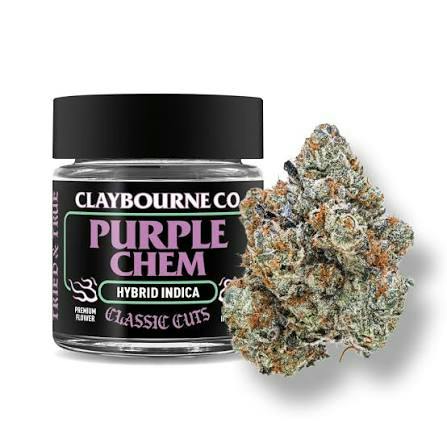
Purple Chem produces buds that are visually arresting by any standard — dense, tightly packed calyxes that carry the structural heft typical of indica-dominant architecture. The most striking feature is the coloration: deep violet and indigo hues suffuse the leaves and often the bud structure itself, the result of anthocyanin pigment expression triggered by cooler temperatures during the late flowering stage. This purple is not incidental but a defining visual trait, and it varies in intensity across phenotypes and growing conditions. Set against the deep tones of the foliage, the pistils present in warm amber and rust, creating a contrast that adds warmth to an otherwise cool-toned palette. Trichome coverage is generous — a frosted layer of resinous glands that catches light and signals the Chemdog lineage's characteristic resin production. The overall impression is of a bud that is as deliberately composed as it is naturally produced: dense, resinous, visually layered, and unmistakably premium in its presentation.
Growing notes
Purple Chem is considered a moderately challenging strain for home cultivators, demanding attentive environmental management in exchange for its visual and aromatic rewards. It performs well both indoors and in greenhouse settings where temperature can be carefully controlled — the characteristic purple coloration develops most reliably when nighttime temperatures are dropped several degrees below daytime levels during the final two to three weeks of flowering, a technique well-documented with anthocyanin-expressing cultivars. Indoors, Purple Chem typically flowers in approximately eight to nine weeks, with yields that are respectable but not excessive, reflecting the indica-leaning structure's tendency to produce dense, resinous buds over raw volume. Outdoor cultivation is viable in temperate climates with a dry, warm late season — excess moisture during flowering can compromise trichome quality and invite mold in the dense bud structure. Growers with experience managing Chemdog-lineage plants will find much that is familiar here, including the importance of adequate airflow and canopy management. For the cultivator-curious shopper, Purple Chem represents a strain whose growth demands are proportional to its character: exacting, but rewarding when conditions are respected.
When it's best enjoyed
Purple Chem finds its best expression in the transitional hours — late afternoon into evening, when the day's obligations have resolved and there is space to be present without pressure. Its indica-leaning nature makes it better suited to decompression than to initiation: a strain for winding down rather than ramping up, for unhurried conversation or the deliberate enjoyment of something well-made. Given its terpene profile — earthy, diesel-forward, with a fruit and spice undercurrent — Purple Chem pairs naturally with foods that share its complexity. A charcuterie arrangement with aged cheeses, dark chocolate, and preserved stone fruits would complement rather than compete with its aromatic character. Musically, it aligns with recordings that reward attentive listening: a well-mastered jazz record, a measured ambient work, or the kind of classic rock that carries genuine dynamic range. Solo or with a small, trusted group, this is a strain for those who appreciate the texture of an experience — not a social accelerant, but a companion for depth.
If you like Purple Chem, also explore
Granddaddy Purple
Fans of Purple Chem who favor its berry-grape sweetness and physical relaxation will find Granddaddy Purple a natural companion, sharing the same purple lineage and deeply calming body character.
Chemdawg
For those drawn to Purple Chem's assertive diesel pungency and resinous depth, the original Chemdawg offers that fuel-forward profile in undiluted form, with a similarly potent and complex effect arc.
Sour Grape
A cross of Sour Diesel and Granddaddy Purple, Sour Grape occupies similar aromatic territory — diesel and grape in tension — and will appeal to Purple Chem enthusiasts who enjoy that specific interplay.
GDP x OG Kush
This pairing of indica visual drama with OG earthiness shares Purple Chem's layered terpene character and deliberate, body-centered effect profile.
Purple Diesel
Closely related in concept, Purple Diesel crosses Sour Diesel heritage with a purple indica, producing a similar aromatic and visual experience that Purple Chem admirers will find immediately familiar.
Common questions
Is Purple Chem indica or sativa?+
Purple Chem is an indica-leaning hybrid. It carries the physical weight and progressive relaxation characteristic of indica-dominant genetics, drawn primarily from its Granddaddy Purple lineage, while the Chemdawg parentage contributes a degree of cerebral engagement at onset. The overall experience arc moves from a mild mental lift toward a grounding body effect, making it more suited to evening use than to active daytime activity.
What does Purple Chem taste like?+
Purple Chem presents a palate that balances the assertive diesel fuel pungency of its Chemdawg ancestry with the softer, darker fruit notes — grape skin, blackberry, a faint floral quality — of its purple indica lineage. On the exhale, a subtle spice from caryophyllene and a lingering sweet-chemical finish distinguish it from more straightforwardly fruity strains. Vaporized at moderate temperatures, the fruit and floral dimensions become more pronounced and legible.
What are the typical effects of Purple Chem?+
The experience typically begins with a gentle cerebral settling — a softening of mental activity and a mild mood elevation — before transitioning into a more pronounced body relaxation that moves through the shoulders and limbs. The peak is calm and grounding rather than sedating, though the indica character deepens over time. Effects generally last two to three hours, with a gradual, comfortable comedown. Those new to potent indica-leaning hybrids are advised to start conservatively.
What strains are similar to Purple Chem?+
Consumers who appreciate Purple Chem tend to gravitate toward strains that share its diesel-and-grape aromatic duality or its indica-leaning, body-centered effect profile. Granddaddy Purple, Chemdawg, Sour Grape, and Purple Diesel are frequently cited as natural companions. Each shares at least one defining characteristic — whether the pungent fuel lineage, the violet coloration, the physical relaxation, or the layered terpene complexity — that Purple Chem enthusiasts are likely to recognize and appreciate.
Is Purple Chem good for beginners?+
Purple Chem can be approachable for beginners who proceed thoughtfully, but its Chemdawg lineage means potency can be more substantial than the berry-sweet aroma might suggest. New consumers should follow a start-low, go-slow approach — allowing sufficient time between inhalations to fully assess the effect before continuing. The indica-leaning body weight, in particular, can be more pronounced than anticipated for those without a reference point for this type of experience.
What are the dominant terpenes in Purple Chem?+
Myrcene is typically the dominant terpene in Purple Chem, contributing the musky, herbal, earthy base that characterizes many indica-leaning cultivars and is associated with relaxing physical qualities. Caryophyllene, shared with the Chemdawg lineage, adds a spiced, woody complexity. Limonene may be present as a secondary terpene, offering a faint citrus edge, while linalool — associated with lavender — appears in some purple-expressing phenotypes, lending a subtle floral finish.
When is the best time of day to enjoy Purple Chem?+
Purple Chem is best positioned as a late-afternoon to evening strain. Its indica-leaning effect profile — progressive physical relaxation following a gentle cerebral onset — makes it well-suited to the transition out of the active day rather than the beginning of it. It is not ideally paired with tasks requiring sustained focus or physical coordination, but it rewards calm, intentional settings: a quiet evening at home, a relaxed dinner, or an unhurried listening session.
What is the lineage of Purple Chem?+
Purple Chem is broadly understood to be a cross of Chemdawg and a purple-expressing indica, most commonly cited as Granddaddy Purple. The precise breeder has not been publicly confirmed in a single authoritative source, and some variation exists across cannabis databases regarding the exact purple parent used. What is consistent across sources is the Chemdawg foundation — responsible for the diesel pungency and resinous character — and a purple indica contributor responsible for the coloration and softer body effects.
Related strains