
Indica
All strains Platinum Kush
1 live products in stock
Quick answer · What is the Platinum Kush cannabis strain?
Platinum Kush arrives with a quiet authority befitting its name — dense, silver-dusted buds that carry the unmistakable lineage of the Hindu Kush mountain range. A full-bodied indica of measured depth, it rewards those who approach it with patience and intention. Its resinous profile, balanced between earthy pine and subtle sweetness, makes it a natural choice for the end of a considered evening, when the city finally slows and stillness becomes its own reward.
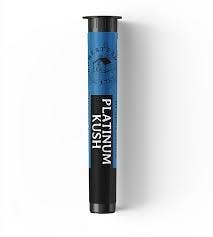
Shop Platinum Kush · 1 of 1 live products
About Platinum Kush
Everything to know about Platinum Kush.
Lineage & origin
Platinum Kush is generally understood to be a cross of OG Kush and an Afghani indica landrace, with some accounts introducing a third parent — Master Kush — though this third lineage remains a point of debate among breeders and enthusiasts. The Afghani parentage is the most well-documented thread: descended from landrace genetics native to the Hindu Kush mountain corridor, it introduced the dense bud structure, heavy resin production, and sedative body character that define the strain. OG Kush — itself a legendary hybrid whose own lineage is openly contested, often cited as a cross of Chemdawg, Lemon Thai, and Hindu Kush — contributed the fuel-tinged, complex aromatic profile and a layer of cerebral lift that tempers the landrace weight. The strain emerged from the West Coast cannabis scene during the mid-2000s, a period defined by the proliferation of Kush-family genetics through California's medical dispensary network. Platinum Kush was not the product of a single storied seed bank in the way that, say, OG Kush or Northern Lights can be traced to specific breeders, and its origins are credited to multiple cultivators working simultaneously with similar genetic stock. The name itself references the abundant trichome coverage that gives mature flowers a distinctly silvery, metallic sheen. Notable genetic relatives include Platinum OG — a direct three-way sibling that layers Master Kush into OG Kush — and Platinum Girl Scout Cookies, a later cross that brought Platinum genetics into the modern hybrid era. Platinum Kush remains one of the cleaner expressions of the lineage, prioritizing the classic indica experience over complexity.
Effects
The onset of Platinum Kush is characteristically measured — expect five to fifteen minutes before the experience begins to settle in, a pace that reflects its predominantly indica architecture. The first signals tend to be cranial: a mild pressure behind the eyes and a gentle narrowing of focus that many users describe as a quieting of mental noise rather than an elevation of mood. This initial phase is not especially euphoric, but it is pleasant and grounding. As the experience deepens into its peak — typically between twenty and forty-five minutes after consumption — the body component becomes the dominant voice. Myrcene, the most prevalent terpene in this strain, is associated in the literature with sedative, muscle-relaxing qualities, and that influence is apparent in the physical heaviness that spreads from the shoulders downward. The experience is full-bodied without being disorienting, provided consumption is approached with care. Caryophyllene contributes a calming, anti-anxious undertone that can smooth the edges of the body sensation and keep the experience from tipping into unease. The duration of a typical session runs two to three hours, with the peak body effect comprising the central hour. The comedown is gradual and often oriented toward rest — Platinum Kush does not snap back to baseline abruptly. For those new to potent indica cultivars, the standard counsel applies: start low, go slow, and allow ample time before considering any additional consumption.
Aroma, flavor & terpenes
The aromatic profile of Platinum Kush is anchored by myrcene, the terpene most commonly associated with earthy, musky, and faintly tropical notes — here expressed as a deep, damp-soil base that grounds the entire olfactory experience. Beneath that foundation, caryophyllene introduces a peppery, almost spiced warmth that adds structural complexity without sharpness. Together, these two terpenes account for the strain's characteristic heaviness of scent: a jar of Platinum Kush opened in a quiet room fills the space immediately. Pinene — both alpha and beta forms are reported in tested samples — contributes a cleaner, forested counterpoint: pine sap, green wood, a faint resinous brightness that lifts the earthier notes. Some phenotypes also present a secondary linalool presence, lending a subtle floral softness that reads more as texture than as a distinct floral note. Humulene, a terpene shared with hops and certain hardwoods, adds a dry, herbal undertone that keeps the aroma profile from veering into sweetness. On the palate — whether consumed via flower in a glass piece or through a dry-herb vaporizer, which tends to reveal more terpene nuance — Platinum Kush delivers a smooth, full smoke. The inhale carries pine and earth; the exhale softens into a faint hash sweetness that lingers at the back of the throat. The finish is clean and slightly woody. It is a flavor profile that rewards slow, attentive consumption rather than rushed sessions.
Appearance
Platinum Kush buds are textbook indica in their architecture: compact, tightly wound calyxes that stack into broad, almost cylindrical formations with little of the airy, larfy structure found in faster-growing hybrid lines. The density is immediately apparent to the touch — these flowers have a solidity that reflects the Afghani landrace heritage. The color palette ranges from medium to deep olive green, often interrupted by streaks of sage and, in properly cold-finished phenotypes, faint purple undertones in the inner leaves. The pistils — the hair-like structures that curl outward from the calyxes — are typically a warm amber to rust orange at maturity, standing in rich contrast against the green canvas. The defining visual feature, as the name implies, is the trichome density: a continuous, unbroken frost of stalked capitate trichomes gives the buds their characteristic platinum-silver shimmer under direct light, suggesting the resin content within.
Growing notes
Platinum Kush is generally considered a moderately challenging cultivar — more forgiving than some of the finickier OG Kush expressions, but not ideally suited to a first-time home grower. Its indica structure makes it naturally compact and well-suited to indoor cultivation, where canopy management through low-stress training or light defoliation can significantly improve light penetration and yield. Flowering time falls in the eight-to-nine-week range indoors, which is standard for Kush-family genetics. Indoor yields are typically moderate — the strain prioritizes resin quality and density over raw volume, a trade-off consistent with its Afghani parentage. Outdoor cultivation is feasible in warm, dry climates with long summers, where the plant benefits from a natural diurnal temperature drop in the final weeks of flower, which tends to enhance trichome development and bring out any latent purple coloration. High humidity during flowering should be carefully managed, as the dense bud structure creates conditions favorable to mold and botrytis. For the curious dispensary shopper, understanding these cultivation demands helps contextualize the premium craft quality that well-grown Platinum Kush represents.
When it's best enjoyed
Platinum Kush is at its most coherent in the late evening, when the obligations of the day have resolved and the night ahead is unstructured. Its body-forward character and gradual sedative arc make it a poor companion for anything that demands sharp executive function or rapid physical response — but for those who seek a deliberate, unhurried close to the day, it performs with quiet consistency. Solo listening sessions with low, textural music — drone, ambient, or acoustic jazz in a minor key — pair naturally with the strain's musky, earthy terpene profile and its tendency to narrow attention inward. On the culinary side, the herbal and pine notes in Platinum Kush find a complementary echo in umami-forward foods: aged cheeses, roasted mushroom dishes, or a simple broth with depth. These pairings work with the terpene profile rather than against it, creating a sensory coherence between what is tasted and what is consumed. For social settings, Platinum Kush is best suited to small gatherings of people who are already comfortable with one another — intimate conversations rather than large, active parties. Its pace encourages reflection over rapid exchange, making it the strain one reaches for at the end of a dinner rather than its beginning.
If you like Platinum Kush, also explore
Platinum OG
A direct genetic sibling incorporating Master Kush alongside OG Kush, Platinum OG offers a similarly resin-heavy, body-oriented experience for those who appreciate Platinum Kush's sedative depth.
OG Kush
As one of Platinum Kush's parent strains, OG Kush shares the earthy, fuel-touched terpene profile with a slightly more cerebral character — a natural step for those curious about where the lineage originates.
Master Kush
Master Kush delivers a similarly hash-forward, landrace-influenced body effect with comparable trichome density, appealing to fans of Platinum Kush's classic indica character.
Bubba Kush
Bubba Kush mirrors Platinum Kush's sedative, muscle-relaxing body quality and earthy-sweet aroma, making it a natural companion for evenings that call for deep physical ease.
Granddaddy Purple
For those drawn to Platinum Kush's heavy body effect and potential for purple-hued phenotypes, Granddaddy Purple offers a grape-and-berry aromatic variation on a similarly indica-dominant experience.
Common questions
Is Platinum Kush indica or sativa?+
Platinum Kush is a predominantly indica cultivar, rooted in Afghani landrace genetics crossed with OG Kush. Its growth structure — compact, dense buds on a short, bushy plant — and its effect profile, which leans toward physical relaxation and gradual sedation, are both consistent with classic indica expression. It is not a balanced hybrid, and those seeking an energizing or primarily cerebral experience would likely find it too body-forward.
What does Platinum Kush taste like?+
Platinum Kush delivers a smooth, full-bodied flavor that opens on pine and damp earth, reflecting its prominent myrcene and pinene terpene content. The exhale softens into a faint hash sweetness with a dry, herbal finish attributable to humulene and caryophyllene. Consumed at lower temperatures through a dry-herb vaporizer, the pine and floral notes become more distinct. The overall palate impression is clean, resinous, and quietly complex rather than overtly sweet.
What are the typical effects of Platinum Kush?+
Platinum Kush tends to produce a grounding, body-forward experience with an initial mild mental quieting followed by a deeper physical relaxation that sets in during the peak phase. The experience is generally described as calm rather than stimulating. Duration runs roughly two to three hours for most consumers. Given its potency, those with lower tolerance are encouraged to start low and go slow, allowing sufficient time between sessions to gauge their individual response.
What strains are similar to Platinum Kush?+
Consumers who enjoy Platinum Kush's resinous, sedative profile often find compatibility with Platinum OG, its closest genetic sibling, as well as Master Kush and Bubba Kush — both of which share the earthy, hash-forward indica character. OG Kush offers a slightly more cerebral version of the underlying terpene profile for those who want to explore the parent lineage. Granddaddy Purple is a useful alternative for those drawn to the heavy body effect with a sweeter aromatic profile.
Is Platinum Kush good for beginners?+
Platinum Kush is a potent indica, and those new to cannabis or to high-resin cultivars should approach it with measured caution. It is not inherently dangerous for a beginner, but its body-heavy effect and extended duration can feel overwhelming for someone unaccustomed to potent indica genetics. The standard guidance applies firmly here: start with a small amount, allow a full thirty minutes or more before considering any additional consumption, and choose a comfortable, familiar environment for a first session.
What are the dominant terpenes in Platinum Kush?+
The terpene profile of Platinum Kush is led by myrcene, which contributes earthy, musky, and faintly tropical aromatic notes and is associated with the strain's relaxing body character. Caryophyllene follows, adding a spiced, peppery warmth. Pinene introduces a clean, forested brightness, while humulene contributes a dry, herbal undertone. Some phenotypes also present linalool in secondary quantities, lending a subtle floral softness to the overall profile.
Where does the name Platinum Kush come from?+
The name references the strain's most visually arresting characteristic: an unusually dense coat of capitate trichomes that gives mature, well-cultivated flowers a silvery, almost metallic sheen under direct light. This trichome density is a direct inheritance from its Afghani landrace parentage, which has been selected for resin production over generations. The Kush portion of the name situates it within the broader Hindu Kush genetic family, grounding it in its geographical and botanical origins.
When is the best time of day to consume Platinum Kush?+
Platinum Kush is best suited to late evening consumption, after the structured demands of the day have concluded. Its gradual sedative arc, body-forward peak, and gentle orientation toward rest make it a considered choice for winding down rather than engaging outward. Consuming it earlier in the day — when focus, mobility, or social output are required — would work against its natural character. It is, at its core, a strain designed for stillness rather than motion.
Related strains