On sale· 25% OFF
THC 88.85%Hybrid
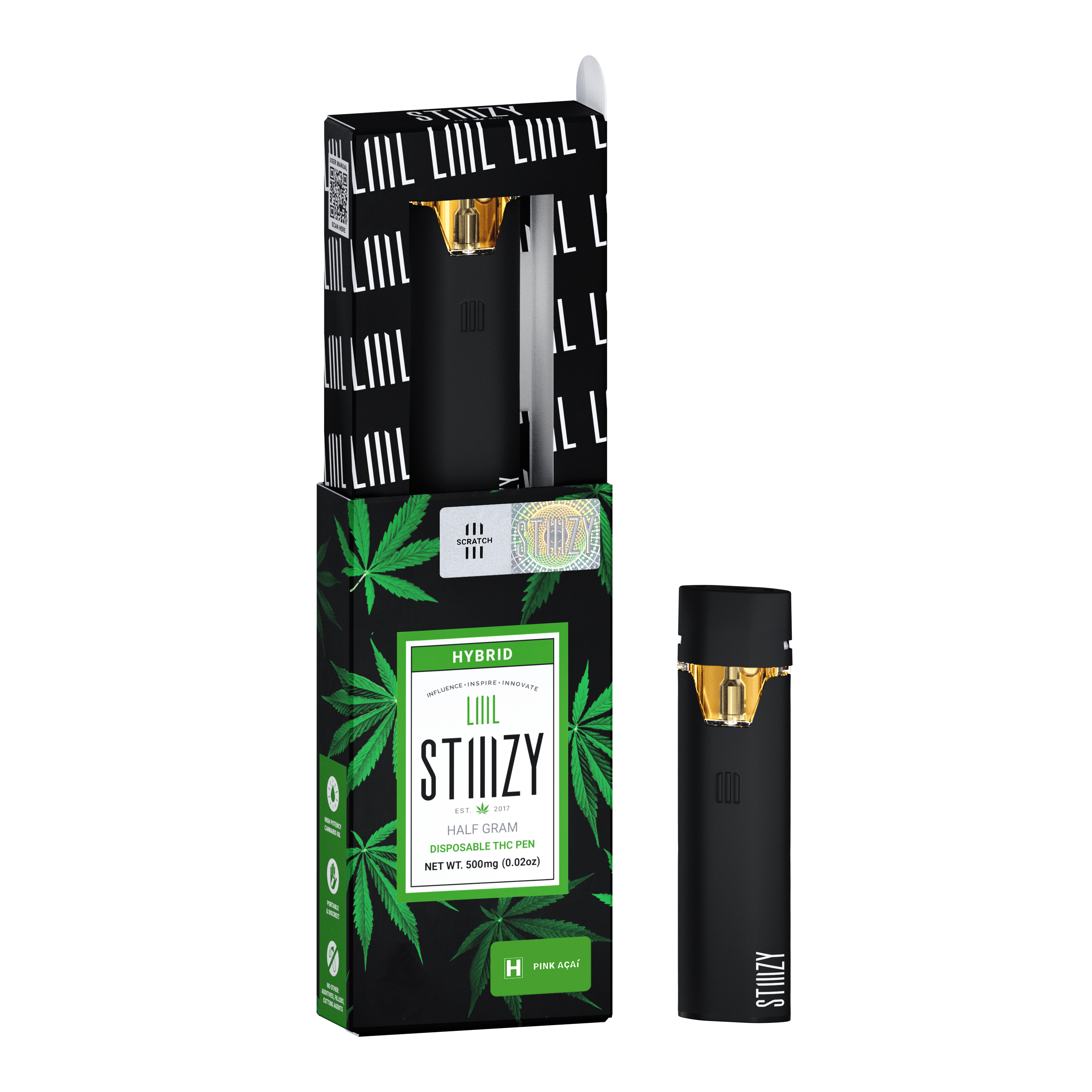
STIIIZYPink Acai LIIIL Disposable THC Pen | 0.5g · .5g
$20.57$27.43
$24after tax

weeddispensarynearme.com
You must be 21 years or older to enter. By entering, you confirm you’re of legal age in your state to purchase cannabis.
For use only by adults 21+ • Keep out of reach of children
2 live products in stock
Quick answer · What is the Pink Acai cannabis strain?
Pink Acai arrives like a carefully composed dessert course — its berry-forward aroma layered with subtle earthiness, its effects settling into a balanced state that neither overwhelms nor underwhelms. A hybrid that earns its name through genuine sensory correspondence, it occupies that rare middle ground between focused clarity and physical ease, making it a thoughtful selection for the experienced consumer and the curious newcomer alike.
$24after tax
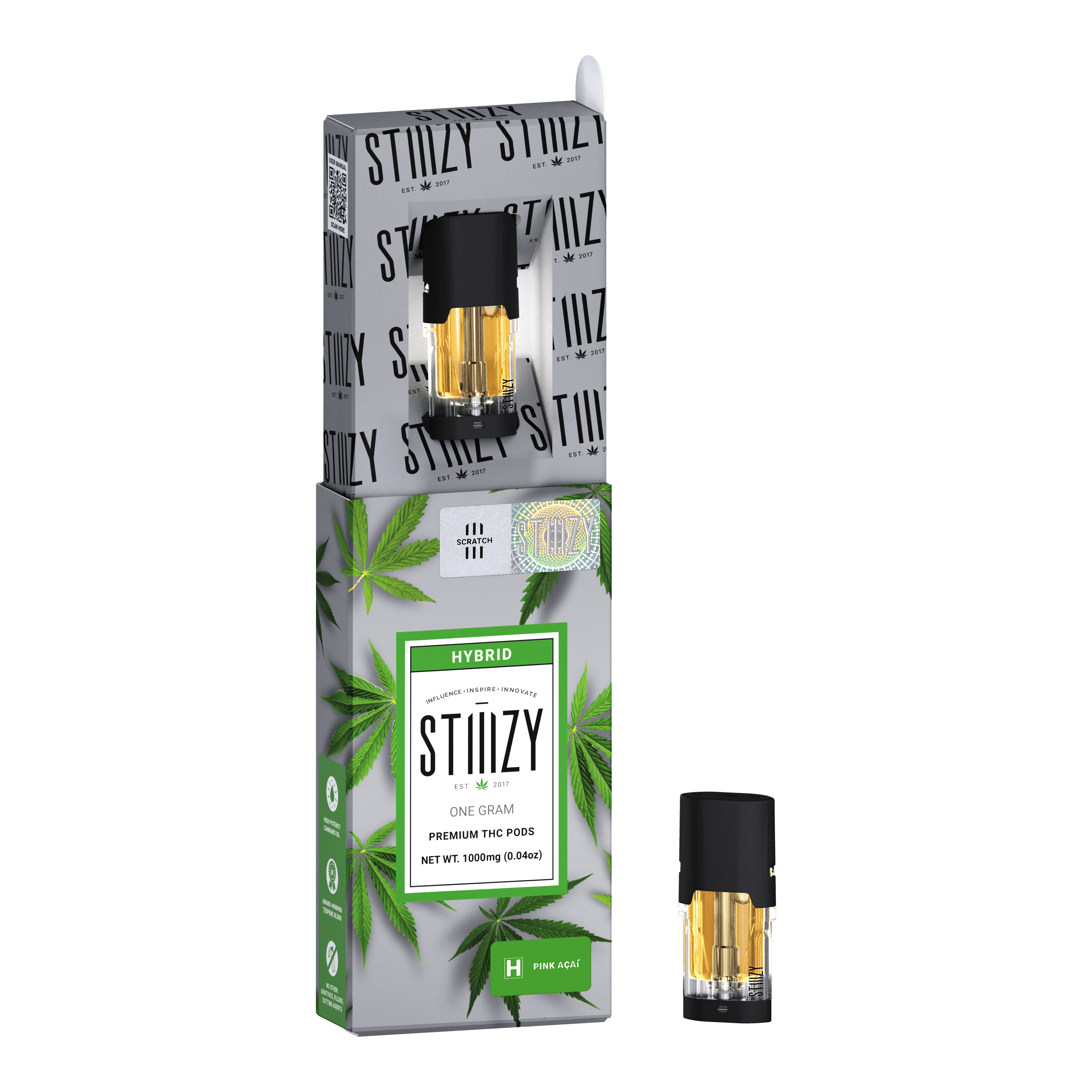
$35after tax
About Pink Acai
Pink Acai is generally attributed to Symbiotic Genetics, a California-based breeding operation known for producing visually striking, flavor-driven cultivars. The strain is widely understood to be a cross of Acai, itself a descendant of the Brazilian landrace-influenced lineage, and a pink or purple-expressing phenotype — though the breeder has not publicly detailed every genetic step in its construction, and some secondary sources list the parentage with slight variation. What is consistent across reporting is the involvement of genetics selected specifically for deep anthocyanin expression and dense terpene profiles oriented toward sweet fruit and berry. The broader Acai lineage carries influence from strains associated with South American and Caribbean cannabis genetics, contributing to the cultivar's characteristic tropical and earthy undertones. Symbiotic Genetics released Pink Acai as part of a generation of strains that prioritized terpene complexity and bag appeal simultaneously — a philosophy shared by genetic siblings and contemporaries from the same catalogue, including Jealousy and Runtz-adjacent crosses that defined a particular aesthetic moment in American cannabis breeding circa the early 2020s. Pink Acai gained traction quickly in dispensary markets on the West Coast before appearing in regulated East Coast markets. Its influence is modest in terms of being used as a parent itself, but its role as a showcase for how fruit-forward terpene architecture can be achieved without sacrificing structural integrity or potency has made it a reference point for modern hybrid design.
The onset of Pink Acai typically presents within five to fifteen minutes when inhaled, beginning with a gentle cerebral lift that sharpens attention without introducing anxiety. This initial phase is characterized by a lightness behind the eyes and a mild uplift in mood — effects consistent with the limonene component of its terpene profile, which is associated with elevated serotonergic activity in preclinical research, though the precise mechanisms in humans remain under study. As the experience deepens into its peak phase, usually between twenty and forty-five minutes after consumption, a complementary body quality begins to emerge. This is not a sedative heaviness but rather a softening of physical tension — the kind of ease that allows the mind's earlier clarity to settle into something more contemplative. The balance between these two qualities is what defines Pink Acai as a hybrid in a meaningful rather than merely taxonomic sense. Caryophyllene, a terpene that interacts with CB2 receptors in the endocannabinoid system, likely contributes to this body dimension. The duration of the full experience tends to run between ninety minutes and two and a half hours depending on individual metabolism, tolerance, and consumption method. The comedown is generally described as gradual and smooth — a slow return to baseline rather than an abrupt drop. Consumers who are newer to cannabis are encouraged to follow a start-low, go-slow approach, as the potency can present more fully than the pleasant aroma initially suggests.
The dominant terpene in most Pink Acai phenotypes is myrcene, which anchors the profile with its characteristic musky, ripe-fruit quality — reminiscent of overripe mango or crushed blackberry skin. Myrcene is among the most commonly occurring terpenes in cannabis and is associated with the earthy, slightly fermented dimension that prevents the strain's sweetness from feeling superficial or artificial. Layered above this base, limonene contributes a bright citrus note — closer to blood orange or pomelo zest than the sharper lemon character it expresses in other cultivars. This lifts the overall aroma profile, adding a freshness that keeps the sweetness from becoming cloying. Caryophyllene introduces a subtle spice, almost like a faint black pepper finish on the exhale, providing structural contrast and rounding the terpene composition into something genuinely complex rather than one-dimensional. Secondary contributions from ocimene add a faintly herbal, almost floral top note — like dried hibiscus or rosehip — that becomes more perceptible when the flower is broken apart. On the palate, Pink Acai delivers its berry and stone-fruit character cleanly on the inhale, with the spiced, earthy quality emerging in the mid-palate and a lingering sweetness on the exhale that makes each session feel considered and complete. In vapor at lower temperatures, the fruit-forward terpenes are particularly expressive and the overall profile reads as closer to fresh produce than combusted flower.
Pink Acai produces dense, well-structured buds that reflect the care taken in its phenotype selection. The calyxes stack tightly, creating an almost sculptural compression that holds together cleanly when handled. Coloration is one of its most distinctive attributes — the flowers display a range from deep forest green to soft lavender and, in phenotypes that have been exposed to cooler temperatures during the finishing phase of growth, a pronounced violet or mauve that gives the strain its chromatic identity. Pistils tend toward coral and rust tones, standing out warmly against the cooler purple-green backdrop of the leaves and calyxes. Trichome coverage is generous and consistent across the surface of well-cultivated specimens, lending the buds a frosted, almost powdery appearance under direct light. The overall visual presentation is one that rewards close attention — the interplay of color, resin, and structure makes Pink Acai among the more photogenic cultivars in the contemporary hybrid market.
Pink Acai is considered a moderately challenging cultivar for home growers, requiring attention to environmental conditions to fully express its signature coloration and terpene profile. The anthocyanin development responsible for its purple and pink hues is temperature-dependent — cooler nighttime temperatures during the final two to three weeks of flowering, ideally dropping into the lower sixties Fahrenheit, will encourage the most vivid chromatic expression. Indoors, Pink Acai typically completes its flowering cycle in approximately eight to nine weeks and responds well to training techniques such as low-stress training or light defoliation to improve canopy light penetration. Indoor yields are moderate to generous under optimal conditions. Outdoors, the strain prefers a Mediterranean-style climate with warm days, cooler nights, and low humidity during the finishing window to reduce the risk of mold in its dense bud structure. It is generally not recommended as a first cultivation project, but for growers with a season or two of experience, it offers a rewarding interplay of aesthetics and potency that makes the additional attention worthwhile.
Pink Acai occupies a comfortable position in the late afternoon and early evening — that window between the conclusion of the day's obligations and the beginning of a more relaxed social or personal rhythm. Its balanced effects make it a versatile companion for a solo creative session, where the cerebral clarity supports focused thought without the restlessness that higher-sativa cultivars can introduce, while the body ease prevents the kind of physical distraction that disrupts sustained concentration. At a small, unhurried gathering — the kind centered on a shared meal or an extended listening session — Pink Acai also performs well. Its flavor profile makes it a natural companion to foods with berry or stone-fruit elements: a charcuterie spread with fresh figs and aged goat cheese, or a light dessert built around raspberries or hibiscus. For a musical pairing, the strain's terpene architecture — simultaneously warm and precise — finds a natural counterpart in neo-soul or ambient jazz: think late-period D'Angelo or a Floating Points record played at a volume that fills but does not dominate the room.
Acai Berry Gelato
Shares the berry-dominant terpene profile and anthocyanin-driven coloration, making it an intuitive next step for consumers drawn to Pink Acai's fruit-forward character.
Runtz
Offers a similarly candy-sweet aroma and balanced hybrid effect arc, appealing to the same palate that gravitates toward Pink Acai's dessert-adjacent flavor profile.
Jealousy
Also attributed to Symbiotic Genetics and shares a comparable terpene-forward philosophy, providing a familiar genetic and experiential throughline for Pink Acai enthusiasts.
Purple Punch
Delivers a comparable grape-and-berry sweetness with a similarly relaxing body quality, suiting consumers who appreciate Pink Acai's physical ease alongside its aromatic depth.
Forbidden Fruit
Another fruit-forward hybrid with tropical and berry notes supported by myrcene and caryophyllene, offering a familiar sensory logic for those who enjoy Pink Acai's layered palate.
Pink Acai is classified as a hybrid, reflecting its balanced genetic composition. It does not lean strongly toward either the sedative end of the indica spectrum or the energizing end of the sativa spectrum. Most consumers report an experience that combines a mild cerebral lift with a complementary body ease — a duality that makes the hybrid classification more meaningful than nominal in this particular case.
Pink Acai delivers a predominantly berry and stone-fruit flavor, with ripe notes reminiscent of blackberry, blood orange, and fresh fig. Myrcene contributes an earthy, slightly musky depth, while caryophyllene introduces a faint spice on the exhale. In vapor, the fruit character is particularly clean and expressive. The overall profile reads as sweet without being artificial — more fresh produce than candy.
Consumers most commonly report an initial cerebral uplift — a gentle sharpening of mood and attention — followed by a softening physical quality that emerges as the experience peaks. The balance between these two dimensions is consistent with its hybrid character. The experience typically lasts between ninety minutes and two and a half hours, with a gradual, smooth comedown. Those new to cannabis should approach with a start-low, go-slow mindset.
Consumers who enjoy Pink Acai often find similar satisfaction in Runtz, Purple Punch, or Forbidden Fruit — all of which share fruit-forward terpene profiles and balanced hybrid effects. Acai Berry Gelato is a close sensory relative. Jealousy, also from Symbiotic Genetics, shares a philosophical and genetic lineage that appeals to the same palate. Each offers a slightly different angle on the berry-and-balance aesthetic.
Pink Acai is approachable in character but should be treated with reasonable respect by newer consumers. Its pleasant aroma and smooth onset can encourage overconsumption, and its potency — particularly in well-cultivated specimens — can present more fully than initial impressions suggest. A start-low, go-slow approach is always advisable for those building familiarity with cannabis, and Pink Acai is no exception to that principle.
The dominant terpene in most Pink Acai phenotypes is myrcene, which contributes its characteristic earthy, ripe-fruit foundation. Limonene is the principal secondary terpene, adding brightness and a citrus lift to the profile. Caryophyllene introduces spice and depth, and ocimene contributes a subtle floral, herbal top note. Together, these four terpenes construct a profile that is simultaneously sweet, complex, and structurally coherent.
Pink Acai is widely attributed to Symbiotic Genetics, a California-based breeding operation with a catalogue oriented toward terpene complexity and visual appeal. The strain gained prominence in regulated West Coast markets before reaching East Coast dispensaries. The breeder has not publicly disclosed every detail of the genetic construction, and some secondary sources list the parentage with minor variation, but Symbiotic Genetics is the consistently cited originator.
Pink Acai performs most naturally in the late afternoon or early evening — after the demands of the day have concluded but before the full relaxation of night. Its balanced effects support both quiet solo activities and unhurried social settings without leaning too heavily toward sedation or overstimulation. It is generally considered versatile enough for a range of contexts, provided the consumer is not seeking either a sharp functional focus or deep rest.
Related strains
Pick your store
We'll show pricing, deals, and delivery zones for the store you pick. You can switch any time from the header.