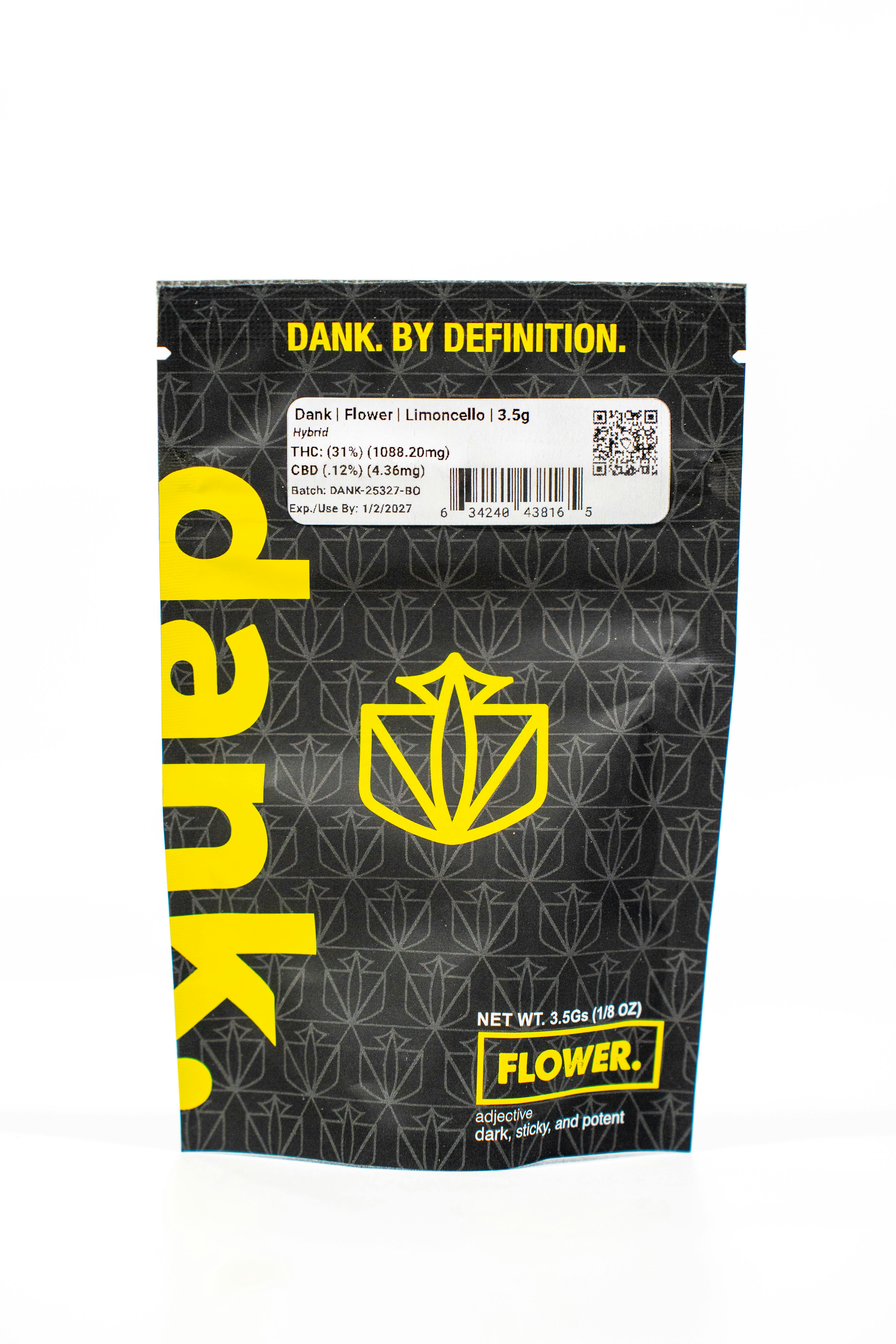
On sale· 25% OFF
THC 28.26%Hybrid
Dank By Definition.LIMONCELLO (3.5G BAG) · 3.5g
$33.19$44.25
$39after tax

weeddispensarynearme.com
You must be 21 years or older to enter. By entering, you confirm you’re of legal age in your state to purchase cannabis.
For use only by adults 21+ • Keep out of reach of children
3 live products in stock
Quick answer · What is the Limoncello cannabis strain?
Limoncello arrives like the first warm afternoon of a Mediterranean summer — bright, citrus-forward, and quietly euphoric. A well-balanced hybrid with an unmistakable lemon-cream character, this strain has carved out a devoted following among those who appreciate refined aromatics and a mood that lifts without overwhelming. Whether enjoyed in an afternoon session or as a social prelude to an evening out, Limoncello offers a sensory experience that rewards the attentive consumer.
$39after tax
![Quick Limoncello Gummies Hybrid [10 pack] | 100mg](https://images.dutchie.com/baaa19b39a40f590b11ec49403e99cb0)
About Limoncello
Limoncello is widely attributed to the cross of Lemon Skunk and Amnesia Haze, two celebrated European-influenced cultivars that together produce an offspring of considerable aromatic and psychoactive distinction. Lemon Skunk, itself a phenotype-selected descendant of Skunk No. 1 stock, contributes the sharp, zesty citrus backbone for which the lineage is known. Amnesia Haze, a multi-award-winning sativa-dominant strain with roots tracing back to Haze genetics blended with various landrace influences — including Thai, Hawaiian, and Afghani — lends the intellectual, clear-headed elevation and extended duration that Limoncello consumers often remark upon. The strain gained meaningful recognition in European cannabis culture before finding an enthusiastic audience in North American markets. While multiple breeders have worked with this or very similar genetic pairings — including Barneys Farm, which has released its own Limoncello offering — the precise originating breeder of the earliest Limoncello cut is not definitively settled in public documentation. Barneys Farm's version is among the most widely referenced and commercially available. Genetic siblings and closely related phenotypes include Lemon Haze, Super Lemon Haze, and various Amnesia-derived selections. Super Lemon Haze, a Green House Seeds creation and multiple Cannabis Cup winner, shares a conceptual and aromatic lineage with Limoncello, though they are distinct cultivars. Consumers familiar with lemon-forward Haze hybrids will recognize the family resemblance immediately.
Limoncello tends to announce itself with a relatively prompt onset — most consumers report noticing the first wave within five to ten minutes of inhalation. The initial impression is cerebral and clarifying, a gentle brightening of mood and sensory perception that feels more like a focused lens than an overwhelming rush. The dominant cannabinoids and the terpene profile conspire to produce what many describe as alert sociability: conversation feels easier, creative threads become more interesting to follow, and a general sense of ease settles into the chest and shoulders. The peak character is decidedly hybrid in nature, leaning sativa in its mental engagement while offering a mild but appreciable physical softening — a warmth through the limbs that prevents the experience from tipping into anxiety or restlessness. This balance is often credited in part to the myrcene and caryophyllene contributions of the Lemon Skunk parent, which temper the more energetic Haze influence. Duration for most consumers falls in the two-to-three-hour range for the active phase, though individual responses vary widely based on tolerance, consumption method, and setting. The comedown is characteristically gentle — a gradual return to baseline rather than an abrupt descent. Some consumers note mild fatigue in the final stage, a soft signal that the session is concluding. As with any hybrid of Haze lineage, newcomers are well advised to start with a modest quantity and allow time before revisiting.
The aromatic signature of Limoncello is dominated by limonene, the monoterpene responsible for the strain's defining bright lemon-rind quality. On the nose, the effect is immediate and vivid — think freshly grated zest rather than sweetened juice, with a clean, almost crystalline sharpness. Limonene is one of the more thoroughly studied cannabis terpenes and is associated with the uplifting, mood-clarifying character that Limoncello is known for delivering. Myrcene appears as a secondary presence, softening the citrus edge with an herbal, faintly musky warmth that keeps the overall profile from feeling austere. Where myrcene rises, the profile takes on a slight tropical undertone — a suggestion of ripe stone fruit lurking beneath the dominant lemon note. Caryophyllene, a sesquiterpene that interacts with CB2 receptors, contributes a subtle spiced, peppery back note that adds complexity and rounds out the exhale with a faint woody depth. Trace amounts of terpinolene can also appear in well-grown Limoncello cuts, adding a faintly floral, almost piney lift that brightens the top notes further. On the palate, whether smoked or vaporized, Limoncello delivers a smooth and distinctly creamy citrus flavor — an effect reminiscent of lemon curd or Italian limoncello liqueur, the namesake spirit. The smoke is clean and not overly resinous, making it approachable for those who prefer lighter, terpene-forward sessions. The exhale carries a lingering sweetness that fades slowly and pleasantly.
Well-cultivated Limoncello flower presents with a medium-to-dense bud structure that reflects its hybrid parentage — tighter and more compact than a pure Haze, but with an elongated calyx formation and some of the open, light-catching architecture that Amnesia-influenced genetics tend to produce. The color palette leans toward a vivid spring green, often punctuated by flashes of pale yellow and occasional hints of soft gold, particularly in phenotypes that have experienced a modest temperature drop late in flowering. Pistils are warm amber to orange and curl generously through the canopy of the bud, adding visual warmth against the green canvas. Trichome coverage is notably generous — a dense, even frost that catches light with a resinous shimmer and signals the aromatic intensity within. The calyxes are well-defined and plump, swelling to produce a bud that feels substantial and slightly sticky to the touch. Overall, Limoncello flower has a refined, almost jewel-like appearance that speaks to the quality achievable in properly dialed-in cultivation.
Limoncello performs well in both indoor and outdoor environments, though cultivators who prioritize terpene expression and trichome density often favor controlled indoor settings where humidity and temperature can be carefully managed. Flowering time runs approximately nine to ten weeks indoors, consistent with its Haze-influenced genetics, which trend toward longer maturation windows than shorter indica-dominant varieties. Outdoor cultivation is best suited to climates with extended warm seasons and low humidity during the late flowering period, as the dense calyx structure can be susceptible to moisture retention if conditions turn cool and damp prematurely. Indoor yields are considered moderate to generous when grown by cultivators with reasonable experience — topping, LST (low-stress training), and SCROG techniques are well-regarded methods for maximizing canopy light penetration and overall output. Outdoor plants can stretch to significant heights given Limoncello's sativa heritage, so space planning is worthwhile. The strain is considered intermediate in difficulty — straightforward enough for a motivated home cultivator with a few grows of experience, but rewarding in proportion to the attention given to environmental detail. The aromatic reward at harvest is substantial.
Limoncello occupies a particularly appealing niche for the consumer who seeks elevation without withdrawal from the world around them. It is a strain well-suited to the golden hours of a weekend afternoon — the kind of session that precedes a gallery visit, an unhurried dinner with close friends, or a long walk through one of New York's better-gardened parks in the company of good conversation. The cerebral clarity and mood lift make it a useful companion for creative work that benefits from a loosened perspective, though the physical ease it offers means it is equally at home in pure leisure. From a culinary pairing standpoint, Limoncello's limonene-forward profile finds natural harmony with dishes that carry citrus brightness — a Meyer lemon pasta, a well-dressed arugula salad, or the bitter-sweet finish of a limoncello dessert in an amusing homage to the strain's namesake. On the musical side, the clear-headed, rhythm-aware quality of the high pairs naturally with jazz that moves — Miles Davis's Kind of Blue, or the measured warmth of a Bill Evans trio. The strain is most at home when the moment has shape and intention but is under no pressure.
Super Lemon Haze
Fans of Limoncello's bright citrus character and clear-headed Haze-influenced elevation will find Super Lemon Haze to be a closely kindred experience, with comparable limonene dominance and an energetic yet focused effect arc.
Lemon Haze
Sharing the sharp lemon-rind aromatics and sativa-leaning euphoria that define the Limoncello experience, Lemon Haze offers a similar terpene-driven brightness with a slightly lighter body effect.
Amnesia Haze
As one of Limoncello's parent strains, Amnesia Haze appeals to consumers who want to explore the cerebral, spacious elevation that the Haze lineage is renowned for, with a more pronounced psychoactive duration.
Lemon Skunk
The other pillar of Limoncello's parentage, Lemon Skunk offers the same citrus-forward aromatic clarity with a slightly more grounded and accessible character, suitable for those who favor the flavor profile over extended Haze-style intensity.
Lemon Tree
With a creamy, dessert-like citrus profile and a balanced hybrid effect that blends mood lift with physical ease, Lemon Tree speaks directly to the consumer who values both aromatic refinement and session versatility in the way Limoncello does.
Limoncello is classified as a hybrid, crossing the sativa-dominant Amnesia Haze with the hybrid Lemon Skunk. In practice, its effect profile leans toward the sativa end of the spectrum — offering cerebral clarity, mood elevation, and alert sociability — while the Lemon Skunk parentage contributes a moderate physical ease that keeps the experience balanced. It is rarely described as sedating or heavily body-focused.
Limoncello delivers a distinct lemon-cream flavor that closely mirrors its namesake Italian liqueur — bright citrus on the front end, with a smooth, almost confectionary sweetness that softens the tartness. Secondary notes of spice and herbs arrive on the exhale, courtesy of caryophyllene and myrcene. The smoke or vapor is clean and approachable, leaving a pleasantly lingering citrus sweetness on the palate after the session.
Consumers consistently describe Limoncello as producing an uplifted, clear-headed euphoria accompanied by a gentle physical ease. Onset is relatively prompt, with a mood-brightening cerebral quality that encourages sociability and creative engagement. The experience typically sustains for two to three hours before a gradual, soft comedown. The balance between mental engagement and physical comfort makes it a well-regarded choice for daytime or early evening sessions.
Consumers drawn to Limoncello's citrus aromatics and balanced hybrid effects often appreciate Super Lemon Haze, Lemon Haze, Lemon Tree, Lemon Skunk, and Amnesia Haze. Each shares aspects of the lemon-forward terpene profile and the uplifting, Haze-influenced elevation that characterizes Limoncello, though each has its own distinct intensity, duration, and depth of body effect.
Limoncello is approachable for adult-use consumers new to cannabis, provided they follow a measured start-low, go-slow approach. Its Haze lineage means the cerebral effects can be more potent than anticipated — particularly for those unaccustomed to sativa-leaning cultivars. Beginning with a modest quantity, in a comfortable setting, and allowing adequate time before reassessing is always the recommended approach regardless of experience level.
Limonene is the primary terpene driving Limoncello's signature bright lemon-rind aroma and its mood-elevating character. Myrcene is a notable secondary terpene, contributing herbal warmth and a softening physical quality. Caryophyllene adds spiced, peppery complexity and is associated with a calming counterbalance to more energetic effects. Some phenotypes also express terpinolene, which introduces a faint floral and piney top note.
Limoncello is well-suited to daytime and early evening consumption given its alert, mood-elevating character. It pairs naturally with afternoon creative sessions, social gatherings, or any activity that benefits from an engaged, curious mindset. Most consumers find it less ideal as a nightcap, as its Haze-influenced cerebral quality can work against winding down. Early evening, before dinner or an event, tends to be a particularly fitting window.
The Limoncello name and genetic pairing — Lemon Skunk crossed with Amnesia Haze — has been associated most publicly with Barneys Farm, the Amsterdam-based seedbank known for producing multiple award-winning cultivars. However, the earliest originating cut is not definitively attributed to a single breeder in widely available public documentation, and variations of the Limoncello name have appeared across more than one seed company. The Barneys Farm version remains the most cited commercial reference.
Related strains
Pick your store
We'll show pricing, deals, and delivery zones for the store you pick. You can switch any time from the header.