THC 0.36%Indica
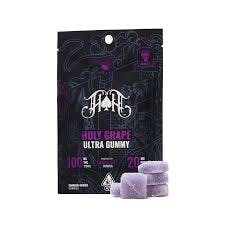
Heavy HittersHeavy Hitters | Holy Grape | THC Ultra Gummies | 100mg | 5pk · .1g
$24.78
$28after tax

weeddispensarynearme.com
You must be 21 years or older to enter. By entering, you confirm you’re of legal age in your state to purchase cannabis.
For use only by adults 21+ • Keep out of reach of children
1 live products in stock
Quick answer · What is the Holy Grape cannabis strain?
Holy Grape arrives like a deep exhale at the end of a long week — its dense, resinous buds carrying a perfume of ripe Concord grape, cedar, and faint floral earth. An indica-leaning variety with a well-documented lineage rooted in classic West Coast genetics, it delivers a weighted, contemplative calm that settles gradually into the body without fully extinguishing the mind. For the discerning New York consumer, Holy Grape occupies a rare position: expressive enough to be interesting, grounded enough to be genuinely restful.
$28after tax
About Holy Grape
Holy Grape is generally attributed to a cross of Holy Roller and Grape Stomper, two strains with distinct but complementary pedigrees. Holy Roller itself descends from the legendary OG Kush family, carrying the characteristic fuel-and-earth terpene signature that defined West Coast indica culture throughout the 2000s. Grape Stomper — also known as Sour Grapes in some catalogues — was developed by Gage Green Genetics and is believed to be a cross of Purple Elephant and Chemdawg Sour Diesel, a union that introduced pronounced anthocyanin expression and the grape-candy aromatic profile that defines Holy Grape's nose. The precise year of Holy Grape's first appearance is not consistently documented across public sources, though most breeder records and community discussions place its emergence in the early-to-mid 2010s, during a period when grape-forward phenotypes were gaining considerable traction in both craft and commercial markets. The breeder of record for Holy Grape as a distinct named variety has not been universally confirmed, and attribution varies across sources — a common situation with strains whose names proliferated through regional seed distribution rather than a single branded release. Genetically adjacent expressions worth noting include Grape Ape, Grapefruit, and GDP (Granddaddy Purple), all of which share the anthocyanin-rich, terpene-forward character that places Holy Grape within the broader purple-grape indica tradition. Phenotypic variation within Holy Grape can be significant, with some cuts leaning more toward the fuel notes of its OG lineage and others expressing a rounder, sweeter profile closer to Grape Stomper.
The onset of Holy Grape follows the measured pace typical of indica-dominant varieties. Most consumers report feeling the first signals within five to ten minutes of inhalation — a gentle pressure behind the eyes and a softening of muscular tension in the shoulders and neck. There is rarely a jarring rush; instead, the experience builds with a kind of deliberate accumulation, easing the consumer into an increasingly relaxed state over the course of twenty to forty minutes. At its peak, Holy Grape is predominantly a body-forward experience, though it retains enough cerebral warmth to sustain quiet conversation or passive creative engagement. The mind does not sharpen the way a sativa-leaning strain would prompt, but neither does it cloud entirely. Consumers frequently describe a pleasant mental quietude — a stepping-back from active cognition — that pairs naturally with the physical heaviness. This balance is likely tied to its terpene profile, where myrcene's well-documented sedative contribution combines with caryophyllene's anti-inflammatory interaction with CB2 receptors to reinforce the body-settling character. The duration of effects is typically two to three hours for moderate consumers, tapering into a gentle, drowsy comedown that many find well-suited to evening use. Novice consumers should note that the indica weight can accumulate more forcefully with larger sessions; the general principle of starting low and going slow applies with particular relevance here. There is little reported anxiety in the strain's profile, which speaks to the relative balance between its cannabinoid and terpene composition.
The aromatic profile of Holy Grape is among its most immediately compelling qualities. On first encounter, the nose is greeted by a pronounced wave of ripe dark fruit — Concord grape and blackberry chief among them — underpinned by a layer of damp cedar and cultivated earth. This characteristic expression is largely attributable to myrcene, the most abundant terpene in many indica-dominant varieties, which contributes the herbal, slightly musky base note that grounds the fruitier top layers. Myrcene also appears frequently in hops and mango, lending Holy Grape a faint tropical undercurrent that becomes more apparent as the bud is broken apart. Caryophyllene is typically the second dominant terpene, introducing a subtle spice — not unlike freshly cracked black pepper — that prevents the profile from reading as purely sweet. This peppery note is most perceptible on the mid-palate during the exhale, adding structural complexity to what might otherwise be a one-dimensional grape experience. Linalool, present in secondary concentrations, contributes a soft floral quality reminiscent of dried lavender, which surfaces in the aftertaste and rounds the overall profile toward something more refined. On the palate, whether consumed via flower or vaporizer, Holy Grape delivers a smooth, moderately dense smoke with a sweet-savory finish. The grape character carries through clearly on inhale, transitioning on exhale to earthier, slightly woody notes. Vaporizing at lower temperatures tends to foreground the fruit and floral elements, while higher-temperature sessions bring the spice and earth forward. The finish is clean, with minimal harshness, and the aftertaste lingers pleasantly.
Holy Grape's buds present in the compact, densely packed architecture expected of a well-grown indica. The calyxes stack tightly, forming chunky, almost spherical to short-oval structures that feel substantial in hand. The surface is generously coated in trichomes — milky to amber at peak harvest — giving the buds a frosted, slightly luminous quality under direct light that signals the resin density within. Colour is one of Holy Grape's most recognisable visual signatures. When grown in cooler late-flowering temperatures, anthocyanin expression produces deep purple and violet hues across the sugar leaves and occasionally the calyxes themselves, offset by a vivid forest green in the underlying bud tissue. Pistils range from rust-orange to a warm amber, weaving through the structure in dense clusters. The combination of purple, green, and amber gives well-cultivated Holy Grape a jewel-toned appearance that is genuinely striking at retail — a visual quality that reflects the Grape Stomper heritage and its predisposition toward pigment expression.
Holy Grape is considered a moderately challenging cultivar, better suited to growers with at least one or two completed cycles of experience. It performs well in both indoor and outdoor environments, though indoor cultivation with controlled temperature drops in the final weeks of flowering is generally recommended to encourage the anthocyanin expression that defines its visual appeal. Flowering time is typically eight to nine weeks indoors, placing it in the middle of the indica range. Indoor yields are reported as moderate to above average with proper training — techniques such as low-stress training or light defoliation can open the canopy and improve light penetration into the dense structure. Outdoor cultivation in climates with warm summers and cool autumns (not unlike New York's upstate regions) can produce generous harvests, with plants finishing naturally in late September to mid-October. The strain benefits from attentive humidity management during the late flowering phase, as the dense bud structure can be susceptible to moisture retention. For the cultivator-curious consumer, Holy Grape represents a rewarding project — its aromatic payoff and visual drama make the additional attention worthwhile.
Holy Grape finds its ideal context in the hours that belong neither fully to the day nor to sleep — that unhurried window between dinner and bed when the pace of the city finally relents. It is well-suited to solitary unwinding: reading something unhurried, sitting with a film that rewards attention rather than demanding it, or simply allowing the body to decompress after a physically demanding day. The grape and floral terpene notes have a sensory coherence that many consumers find particularly well-matched to passive, receptive states. For a food pairing, consider aged cheeses with a washed rind — something earthy and slightly funky that mirrors the strain's cedar-and-earth foundation — alongside a small pour of a Rhône Valley red or a dry lambic, both of which share the dark fruit and light spice character of the terpene profile. In terms of music, Holy Grape pairs naturally with slow-tempo jazz or ambient electronic — artists like Bill Evans or Brian Eno, whose compositional architecture rewards relaxed, unhurried listening. It is less a strain for animated social occasions and more a companion for the thoughtful, quiet end of the evening.
Granddaddy Purple
Shares the deep grape-and-berry aromatic profile and indica-dominant body effect, making it a natural next step for consumers who respond to Holy Grape's fruit-forward character.
Grape Ape
Another Mendocino-lineage grape indica with comparable terpene expression and a similarly weighted, progressive body effect that appeals to the same evening-use consumer.
Grape Stomper
As one of Holy Grape's direct parent strains, Grape Stomper offers a slightly more cerebral, hybrid-leaning version of the same grape-candy aromatic signature.
Purple Punch
Combines sweet berry and grape aromatics with a smooth, relaxing indica effect profile that mirrors Holy Grape's sensory and experiential lane closely.
Obama Runtz
For consumers drawn to Holy Grape's dense trichome coverage and sweet-earthy complexity, Obama Runtz offers a similarly premium aesthetic with comparable evening-suitable effects.
Holy Grape is an indica-dominant variety. Its lineage — rooted in OG Kush-adjacent genetics through Holy Roller and the grape-forward Grape Stomper — produces the characteristic body-weighted, progressively relaxing experience associated with indica types. While it retains enough cerebral warmth to sustain quiet engagement, its overall character leans clearly toward physical relaxation and evening use rather than energising, daytime activity.
Holy Grape delivers a primarily sweet, dark-fruit palate — ripe Concord grape and blackberry are the most prominent notes — transitioning on exhale to earthier tones of damp cedar and a faint peppery spice from its caryophyllene content. Linalool contributes a soft floral quality in the finish. The smoke is smooth and moderately dense, with a clean, lingering aftertaste that balances sweet and savory without either quality overpowering the other.
Consumers typically describe Holy Grape as a gradual, body-forward experience. Onset arrives within five to ten minutes as a softening of physical tension, building over twenty to forty minutes toward a weighted, relaxed state. Mental activity quiets without fully disengaging — a peaceful stillness rather than sedation. Duration runs approximately two to three hours for moderate consumers, with a drowsy, gentle comedown. Those new to cannabis should follow the standard guidance of starting with a small amount.
Consumers who enjoy Holy Grape often respond well to Granddaddy Purple and Grape Ape, both of which share its dark-fruit aromatic profile and indica-dominant effect character. Purple Punch offers a similarly sweet, smooth experience with comparable evening-use utility. Grape Stomper, as a direct parent strain, provides a slightly more hybrid-leaning version of the same grape-candy terpene signature for those who prefer a touch more cerebral energy alongside the body effect.
Holy Grape can be approachable for beginners who are drawn to relaxing, body-weighted experiences, but its indica potency warrants mindfulness. The effect builds gradually, which can lead newer consumers to misjudge the cumulative weight of a session. Following the standard principle of starting with a small amount and allowing sufficient time to assess before continuing is especially relevant here. Consumed thoughtfully, its smooth flavour and gentle onset make it less abrupt than many high-intensity varieties.
Myrcene is typically the primary terpene in Holy Grape, contributing its characteristic herbal, slightly musky base and the fruity top notes associated with the strain's grape identity. Caryophyllene follows as a prominent secondary terpene, adding peppery spice and interacting with the body's CB2 receptors. Linalool is present in supporting concentrations, introducing a floral, lavender-adjacent quality that surfaces in the exhale and finish. Together, these three terpenes define both the aroma and the experiential character of the strain.
Holy Grape is best suited to evening or late-afternoon consumption. Its indica-dominant profile produces a progressive body relaxation and mental quietude that aligns more naturally with decompression and rest than with daytime productivity or social energy. The drowsy quality of its comedown makes it particularly well-positioned for the hours leading into sleep. Consuming it earlier in the day is possible for seasoned consumers, but most will find its weight better matched to unhurried, low-demand contexts.
Yes — Holy Grape is a notably aromatic variety. The combination of myrcene, caryophyllene, and linalool produces a pronounced, layered scent profile that is immediately apparent when the bud is handled or broken apart. The dominant grape-and-dark-berry top notes are accessible and recognisable even to those unfamiliar with cannabis aromatics. Consumers who are mindful of discretion should be aware that the strain's aromatic presence is considerable both pre- and post-consumption.
Related strains
Pick your store
We'll show pricing, deals, and delivery zones for the store you pick. You can switch any time from the header.