
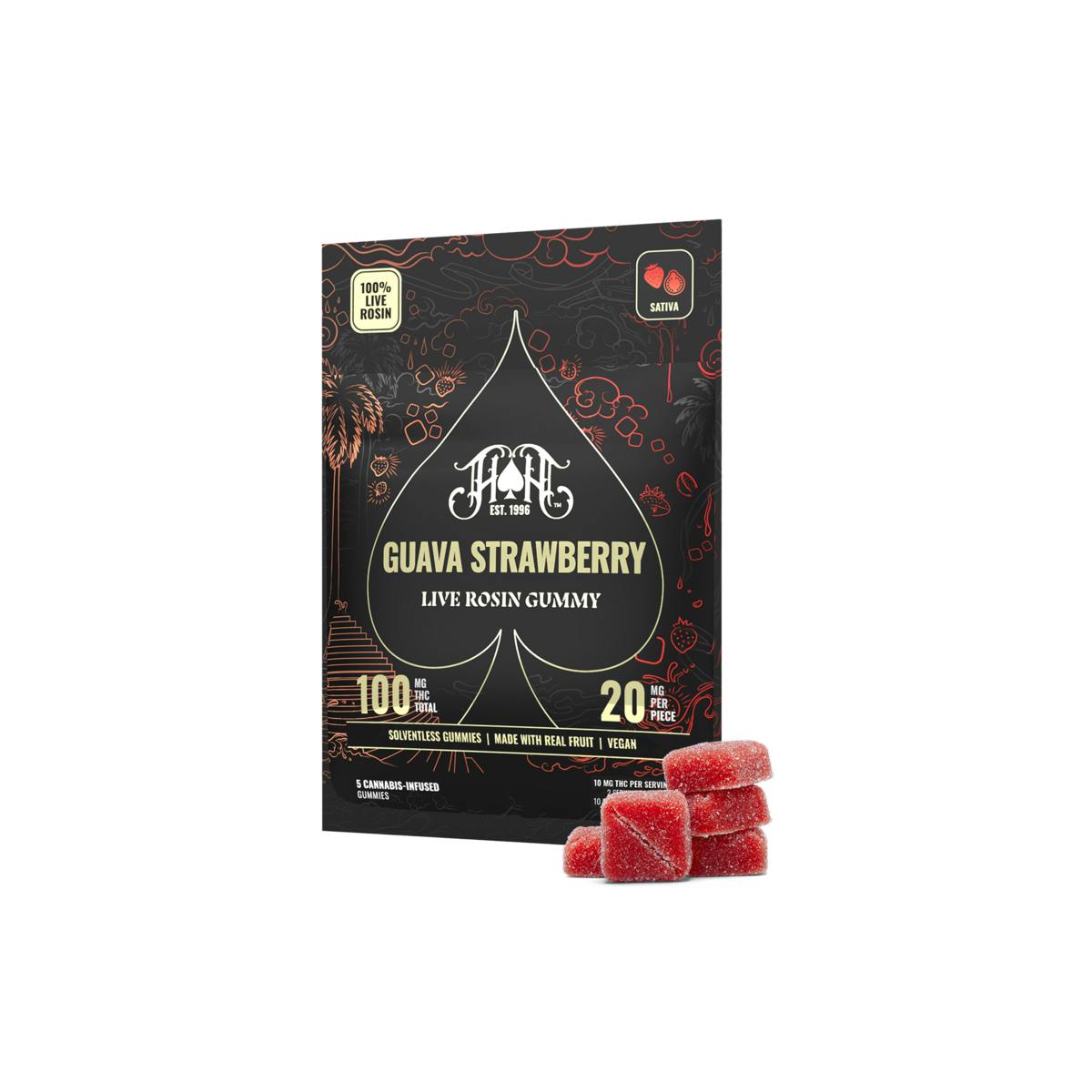
Guava Strawberry
1 live products in stock
Quick answer · What is the Guava Strawberry cannabis strain?
Guava Strawberry is a fruit-forward sativa whose tropical bouquet arrives before the jar is even opened. Vivid and uplifting in character, it carries the warm brightness of ripe guava layered over sun-sweetened berry, making it a natural companion for afternoons that deserve a little extra color. Its sativa leaning delivers a clear-headed lift that feels social and unhurried — an invitation rather than a demand.
Shop Guava Strawberry · 1 of 1 live products
About Guava Strawberry
Everything to know about Guava Strawberry.
Lineage & origin
Guava Strawberry is a relatively contemporary sativa-dominant hybrid whose precise parentage and original breeder have not been comprehensively documented in public cannabis registries as of this writing. What is broadly cited across community sources is that the strain draws from the Guava family — a loose constellation of tropical-leaning hybrids that themselves trace ancestry to Stardawg and various Cookies-adjacent genetics — crossed with a Strawberry-line cultivar, most likely derived from the Dutch classic Strawberry (sometimes called Strawberry Cough adjacent), known for its distinctive berry-sweet aroma and cerebral sativa character. The Guava parent lineage has been popularized in part by cultivators working within the California and Pacific Northwest markets during the mid-2010s craft cannabis renaissance, when fruit-terpene expression became a defining aesthetic of premium indoor production. Strawberry genetics, meanwhile, have circulated broadly since the early 2000s, with Dutch Passion credited for popularizing the archetype. Because no single breeder has publicly claimed a definitive Guava Strawberry release with verified seed-bank documentation, the strain likely exists in several distinct phenotypes across different regional markets. Shoppers should treat any given batch as an expression of a flavour archetype rather than a locked genetic profile. Its cultural siblings — strains like Guava Cake, Strawberry Cough, and Tropicana Cookies — offer useful reference points for understanding the flavour and effect space it inhabits.
Effects
Guava Strawberry's sativa-dominant profile typically announces itself within five to fifteen minutes of inhalation, beginning as a gentle brightening behind the eyes and temples — a shift in mental register that feels clarifying without being jarring. The onset is generally smooth and sociable, leaning toward the cerebral end of the spectrum without the edge that higher-myrcene or more indica-forward cultivars can introduce. Conversation tends to feel easier, and creative associations more fluid, during the peak window. That peak, which commonly arrives between fifteen and forty-five minutes in, is characterized by a lifted, present-tense quality of attention. The body remains largely mobile and comfortable — there is little of the sedating weight associated with indica-heavy cultivars — making this an appropriate choice for daytime or early-evening use when engagement with the world is still on the agenda. Limonene's documented mood-modulating properties and terpinolene's reputation for bright, mentally active effects both align with what users commonly report from this cultivar. The comedown is gradual and gentle, typically settling into a relaxed but functional baseline rather than any abrupt shift. Duration varies by individual tolerance and consumption method, but two to three hours is a reasonable general frame for the primary experience. As with any cannabis product, first-time or infrequent consumers are well-served by the standard principle: start low, go slow, and allow adequate time between sessions.
Aroma, flavor & terpenes
The aromatic identity of Guava Strawberry is built on a foundation of terpinolene and limonene — a pairing that produces the strain's signature impression of tropical fruit market in warm afternoon light. Terpinolene contributes floral, slightly piney top notes alongside its characteristic fresh-fruit sweetness, while limonene adds the brighter, citrus-adjacent lift that keeps the overall profile from feeling cloying. Together they create a fragrance that reads simultaneously as guava nectar and ripe strawberry, with a secondary herbal note that adds complexity. Myrcene, present in moderate amounts in many documented Guava-family cultivars, softens the edges of that brightness and gives the aroma a slightly earthy, mango-like depth. Ocimene may also play a supporting role, contributing a waxy, tropical-sweet nuance that amplifies the guava impression specifically. Some phenotypes carry a faint floral note — suggestive of linalool — that rounds the profile toward something almost perfumed. On the palate, the smoke or vapor is typically smooth and fruit-forward on the inhale, with the strawberry quality most apparent mid-palate and the guava character lingering into the exhale. The finish is clean and slightly sweet, without the harsh or acrid aftertaste that less carefully cultivated material can produce. Vapor delivery, in particular, tends to accentuate the terpene detail and is recommended for those who want to explore the full aromatic range of the cultivar.
Appearance
Guava Strawberry tends to produce medium to large buds with a structure that sits comfortably between the tight, golf-ball density associated with Cookies-line genetics and the slightly more open, elongated calyxes of classic sativa cultivars. The result is a well-formed, handled bud that holds its structure without feeling compressed. The colour palette leans toward a medium forest green, occasionally accented by subtle chartreuse or pale golden hues depending on growing conditions and curing practice. Pistils — the fine hair-like structures that weave through the bud — are typically a warm amber to rust orange, creating a pleasing contrast against the green canvas. Trichome coverage is generally generous across the surface of well-grown examples, giving the bud a frosted, slightly luminous quality in direct light that signals both potency and careful cultivation.
Growing notes
Guava Strawberry, given its sativa-dominant character and tropical genetic heritage, generally performs best under conditions that replicate a warm, moderately humid environment with consistent light intensity. Indoor cultivation allows the most control over these parameters, and experienced cultivators working indoors can expect a flowering window of approximately nine to eleven weeks — somewhat longer than many hybrid cultivars, a trait common among sativa-leaning genetics. Indoor yields are reported as moderate to generous when trained techniques such as low-stress training or screen-of-green are employed to manage the plant's natural tendency toward vertical growth. Outdoor cultivation is viable in climates that reliably deliver warm days and low humidity through the late-summer finishing window — think Mediterranean or coastal California conditions. This is not considered a beginner cultivar; its longer flowering time and sensitivity to humidity fluctuations during the late flower stage reward experience and attentive environmental management. Home cultivators curious about this genetic space might consider beginning with a more forgiving hybrid before attempting a longer-season sativa.
When it's best enjoyed
Guava Strawberry earns its place as a daylight or golden-hour cultivar. Its clear-headed, socially fluent effect profile and vivid aromatic presence make it a natural fit for creative afternoons — the kind spent sketching, writing, or working through a project that benefits from an open, associative mind rather than deep-focus intensity. It is equally at home as a companion for a leisurely weekend brunch or a late-afternoon walk through a neighborhood that rewards slow observation. For food pairing, the strain's tropical fruit terpene profile finds a harmonious counterpart in fresh, acid-bright dishes: a ceviche with mango and lime, a composed salad with citrus vinaigrette, or a charcuterie board built around aged goat cheese and fresh strawberry. Musically, the experience pairs well with something that shares its unhurried brightness — Brazilian jazz, early Stereolab, or a warm Balearic-influenced playlist. The through-line is cultivated ease: this is a strain for moments when pleasure is the primary agenda and there is room to let the afternoon take its own shape.
If you like Guava Strawberry, also explore
Strawberry Cough
Fans of Guava Strawberry's berry-sweet aroma and uplifting, socially engaging sativa energy will find Strawberry Cough a natural companion, sharing the strawberry-forward palate and clear-headed, anxiety-minimal character.
Tropicana Cookies
Tropicana Cookies shares the limonene-dominant, tropical-citrus terpene profile and sativa-leaning euphoria that define Guava Strawberry's daytime appeal.
Guava Cake
For those drawn specifically to the guava-family aromatic signature, Guava Cake offers a closely related flavour archetype with a slightly more balanced indica-hybrid body effect.
Mimosa
Mimosa's bright citrus-and-berry terpene expression and clean, uplifting sativa onset make it a close experiential relative for Guava Strawberry enthusiasts seeking another fruit-forward morning-friendly option.
Papaya Punch
Papaya Punch appeals to the same tropical-fruit sensibility with its myrcene-rich, mango-adjacent aroma, offering a slightly more relaxing body component for those who want a gentle bridge toward evening.
Common questions
Is Guava Strawberry indica or sativa?+
Guava Strawberry is classified as a sativa-dominant hybrid. Its effect profile reflects that orientation — onset is primarily cerebral and uplifting, with the body remaining mobile and comfortable throughout the experience. While all cannabis plants are variations of Cannabis sativa at the botanical level, in retail shorthand this strain leans clearly toward the energizing, day-appropriate end of the spectrum rather than the sedating, indica-associated range.
What does Guava Strawberry taste like?+
The flavor is tropical and fruit-forward, with ripe guava most prominent on the exhale and fresh strawberry most apparent mid-palate. A subtle herbal and slightly floral undercurrent adds complexity without muting the primary sweetness. The smoke or vapor is generally smooth and clean-finishing, with terpinolene and limonene providing the characteristic brightness that makes this strain immediately recognizable to those familiar with tropical-fruit cultivars.
What are the typical effects of Guava Strawberry?+
Consumers commonly report a clear-headed, socially engaged uplift that arrives relatively quickly after inhalation and sustains itself without heavy sedation. The experience is often described as mentally bright and creatively fluid, with the body remaining comfortable and functional. It is widely considered a daytime-appropriate cultivar. Individual responses vary based on tolerance, set, and setting — those new to cannabis should approach any new cultivar with measured, patient consumption.
What strains are similar to Guava Strawberry?+
Strawberry Cough and Mimosa share the berry-forward, uplifting sativa character most closely. Tropicana Cookies and Guava Cake echo the tropical terpene profile from slightly different genetic angles. Papaya Punch offers a related fruit-forward aroma with a more relaxed body effect for those seeking something a degree gentler. Any of these would appeal to a Guava Strawberry enthusiast exploring adjacent cultivars.
Is Guava Strawberry good for beginners?+
Guava Strawberry's sativa-dominant profile and clear-headed onset make it more approachable than many high-sedation hybrids, but its potency is not negligible. New consumers should follow the standard guidance: start with a minimal amount, wait a full fifteen to twenty minutes before considering more, and choose a calm, comfortable environment for the first experience. The fruit-forward aroma and smooth smoke character make it inviting, but patience and moderation remain the wisest approach for anyone new to cannabis.
What are the dominant terpenes in Guava Strawberry?+
Terpinolene and limonene are generally considered the primary terpene drivers, responsible for the strain's bright tropical-fruit and citrus character and its association with uplifting, mentally active effects. Myrcene appears as a secondary contributor, adding earthy depth and slight sweetness. Ocimene may also be present, amplifying the tropical-waxy nuance. Some phenotypes suggest minor linalool content, contributing a faint floral note to the overall aromatic composition.
When is the best time of day to enjoy Guava Strawberry?+
Given its sativa-dominant, clear-headed effect profile and vivid aromatic presence, Guava Strawberry is best suited to daytime or early-evening use — late morning through golden hour represents the natural window. It is a cultivar for moments requiring social presence, creative openness, or simple sensory enjoyment of an afternoon. It is generally not recommended as a late-night or pre-sleep choice, as its energizing character may work against rest.
Does Guava Strawberry have a well-documented breeder or origin?+
As of current public documentation, no single breeder or seed bank has established a definitive, widely cited claim to Guava Strawberry as a named, stabilized release. The strain appears to exist across several regional phenotypes, likely produced by independent cultivators working within the Guava and Strawberry genetic traditions. Shoppers should be aware that batch-to-batch variation may be more pronounced with this cultivar than with strains from established, documented breeding programs.