THC 23.28%Sativa
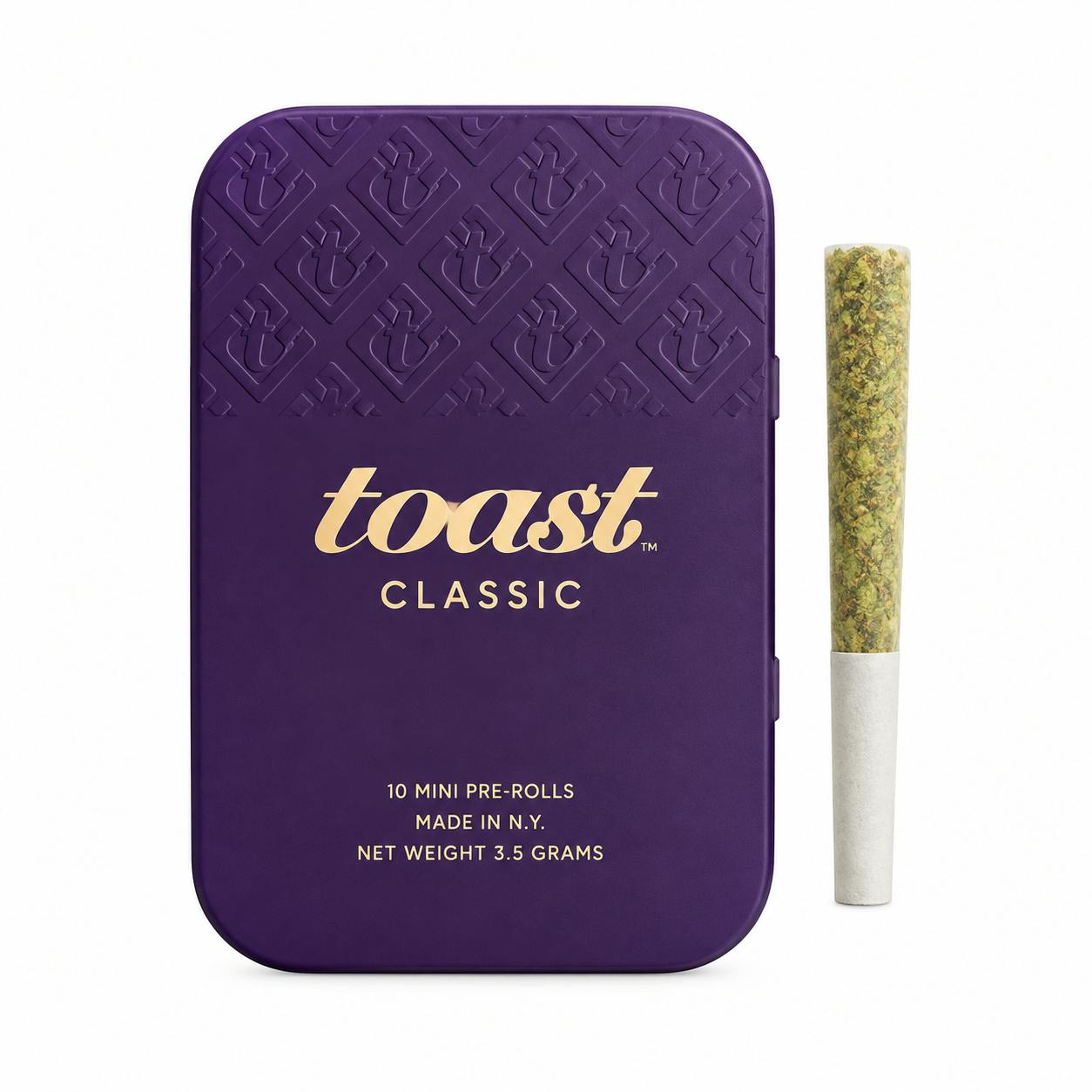
ToastToast | Garden Party | Classic Minis Pre-Roll 10pk · 0.35g/10pk
$44.25
$50after tax

weeddispensarynearme.com
You must be 21 years or older to enter. By entering, you confirm you’re of legal age in your state to purchase cannabis.
For use only by adults 21+ • Keep out of reach of children
1 live products in stock
Quick answer · What is the Garden Party cannabis strain?
Garden Party arrives like a warm afternoon in late June — bright, unhurried, and quietly social. A sativa-leaning cultivar whose lineage carries the green, herbal signatures of its parentage, this strain rewards those who appreciate nuance over novelty. Light on sedation and generous with a clear-headed lift, it suits the New York adult who moves between creative pursuits and easy conversation without wanting to lose the thread of either.
$50after tax
About Garden Party
Garden Party is a sativa-dominant cultivar whose precise parentage has not been universally confirmed in public breeder documentation, making definitive lineage claims difficult to source. Based on available community reporting on platforms such as Leafly and Wikileaf, the strain is widely associated with the broader family of green, terpene-forward sativas that emerged from Pacific Northwest and California breeding circles during the 2010s craft-cannabis renaissance. Some phenotype descriptions align loosely with crosses involving Green Crack and Wedding Cake genetics — a pairing that would account for its characteristic balance of cerebral clarity and mild floral sweetness — though the breeder has not publicly confirmed these parents. What is better documented is the cultural moment Garden Party entered: a period when the legal market began prioritizing terpene complexity and experiential nuance over raw cannabinoid percentage, and breeders were actively reaching toward strains that performed as well in social settings as they did for solo creative work. In that respect, Garden Party reflects a deliberate philosophy. Its sibling phenotypes, where they have been identified by cultivators, tend to share the same pale-green coloration and high resin expression, suggesting a genetically stable line even if its origins remain partially opaque. As with several boutique cultivars from this era, the story is still being written.
Garden Party tends to announce itself with relative promptness when consumed via flower — most users report a perceptible shift in mood and mental register within five to fifteen minutes, characterized by a brightening of sensory focus rather than an overwhelming surge. The onset is smooth by sativa standards, leaning toward an uplifted, socially engaged quality that does not carry the anxious edge sometimes associated with more stimulating varieties. Conversation feels easier; creative problems seem more approachable; the afternoon's ambient details — a particular quality of light, the texture of fabric — become temporarily more interesting. At its peak, the experience is predominantly cerebral. Body sensation remains present but peripheral — a mild ease rather than weight. This positions Garden Party as a strain for active hours rather than wind-down rituals. Duration typically runs in the range of one to two hours for moderate consumers, with a gentle, unhurried descent that rarely produces the abrupt crash some sativas are known for. The comedown is gradual, returning the user to baseline with a residual sense of well-being rather than fatigue. Terpenes likely contribute meaningfully here: myrcene in moderation anchors the experience without tipping toward sedation, while limonene's known mood-elevating associations align with the strain's characteristic brightness. Caryophyllene, a terpene that interacts with the endocannabinoid system's CB2 receptors, may contribute to the mild physical ease that keeps the experience from feeling wired.
The aromatic profile of Garden Party is one of its more immediately appealing qualities. On the nose, the strain leads with a bright, slightly tart green note — somewhere between fresh herbs and sun-warmed melon rind — before yielding to a quieter floral undercurrent. This opening character is consistent with a terpene profile in which limonene and ocimene share early prominence. Limonene contributes its recognizable citrus lift, while ocimene brings a sweeter, almost tropical brightness that keeps the overall impression from reading as simply sharp or sour. Beneath those top notes, myrcene adds a mild earthiness — not damp or heavy, but the kind of clean, grassy earthiness one associates with a kitchen garden in the morning. A background presence of caryophyllene introduces a faint spice, barely perceptible but enough to add structural complexity and prevent the profile from becoming one-dimensional. Some phenotypes carry a trace of linalool, lending a delicate lavender suggestion at the far edge of the exhale. On the palate — whether in flower or vapor — Garden Party is relatively smooth. The smoke carries the herbal and citrus notes forward without excess harshness, and the finish is clean, with a faint sweetness that lingers pleasantly. Vaporized at moderate temperatures, the floral and tropical elements of ocimene become more distinct, and the overall experience is refined enough to suit deliberate, appreciative consumption rather than utilitarian use. Pairing it with light, citrus-forward foods tends to amplify its more delicate terpene expressions.
Garden Party presents with a structure that reflects its sativa heritage — buds tend toward a somewhat elongated, tapered form rather than the dense, compact architecture typical of indica-dominant varieties. The calyxes are loosely stacked but not airy, held together by an above-average trichome coating that gives well-cured specimens a frosted, almost silver-dusted quality under direct light. The color palette runs from pale sage green to a slightly deeper forest green at the bud's interior, with occasional phenotypes showing faint purple blushes along the leaf margins when grown in cooler finishing temperatures. Pistils are predominantly amber to pale orange at maturity, weaving visibly through the bud structure and providing warm contrast against the cool greens. The trichome heads are generally milky-white with amber variation at peak harvest, a detail that experienced cultivators monitor closely to calibrate the final effect profile toward clarity or depth.
Garden Party is considered a moderately accessible cultivar for home growers with some prior experience, though those new to cannabis cultivation may find its sativa structure — including a tendency toward vertical stretch during the flowering phase — requires some canopy management to maximize yield and light penetration. Indoor cultivation is well-documented, with flowering typically completing in the range of nine to ten weeks. Indoor yields are moderate to above-moderate when trained techniques such as low-stress training or screen of green are employed. Outdoor cultivation suits warm, Mediterranean-adjacent climates — long, dry summers with cool autumnal nights encourage resin development and, in some phenotypes, the subtle purple coloration that distinguishes well-finished specimens. In New York's variable outdoor climate, late-season humidity management becomes a meaningful consideration. For the cultivator-curious shopper, this is a strain that rewards attentiveness and patience during the grow without demanding the technical precision of some more finicky boutique varieties. It is not a beginner's first project, but it is well within reach for someone with one or two prior harvests under their belt.
Garden Party earns its name most fully when the setting matches its character: outdoors, in daylight, among people whose company requires no performance. A rooftop afternoon with a small group of friends, a Sunday farmers' market visited with unhurried attention, or a long studio session where the goal is to stay engaged without overthinking — these are the moments where this strain's social, curious energy finds its natural expression. For solo use, it pairs particularly well with activities that benefit from heightened sensory engagement without demanding intense concentration: sketching, light reading, a slow walk through a botanical garden or park. Its terpene profile — citrus-forward, herbaceous, faintly floral — suggests an affinity with food and drink in the same register. Light aperitif-style snacks, a chilled glass of dry Riesling or sparkling water with citrus, fresh salads dressed with herbs: these pairings echo and amplify rather than compete with the strain's aromatic character. Musically, Garden Party suits instrumental jazz with an outdoor or acoustic quality — something warm in texture but open in structure, matching the strain's unhurried brightness without demanding any particular emotional destination.
Green Crack
Fans of Garden Party's clear-headed, energizing daytime lift will recognize a kindred spirit in Green Crack, which shares the focused cerebral quality and citrus-inflected terpene character without the floral softness.
Strawberry Cough
The smooth smoke, social ease, and bright fruity aromatics of Strawberry Cough occupy a very similar experiential space, appealing to those who prefer their sativas gentle rather than jarring.
Jack Herer
Jack Herer's well-documented blend of cerebral clarity and herbal-spice terpenes shares Garden Party's quality of keeping the mind active and curious throughout a session.
Mimosa
Mimosa's citrus-dominant terpene profile and uplifted, sociable character make it a natural companion recommendation for Garden Party enthusiasts seeking a similarly refined daytime experience.
Blue Dream
Blue Dream's approachable, full-spectrum lift and gentle body ease parallel Garden Party's balanced, crowd-pleasing nature for consumers who want to remain present and engaged.
Garden Party is classified as a sativa-dominant cultivar. Its effects profile — characterized by an uplifted, clear-headed mental quality and relatively light body sensation — aligns with what most consumers associate with sativa-leaning strains. The bud structure also reflects sativa heritage, with elongated, loosely packed calyxes rather than the dense formations typical of indica-dominant varieties. As with all cultivars, individual experience can vary based on personal physiology and consumption method.
Garden Party offers a palate that leads with bright citrus and fresh herbal notes, followed by a subtle floral sweetness on the exhale. Terpenes including limonene and ocimene contribute the citrus and tropical brightness, while myrcene adds a mild, clean earthiness. A trace of caryophyllene introduces faint spice at the finish. The smoke is relatively smooth, and the overall flavor impression is closer to a light, aromatic herb garden than to fuel or pine-dominant profiles.
The typical Garden Party experience begins with a prompt, mood-lifting onset — usually within five to fifteen minutes of consumption — that settles into a clear-headed, socially engaged mental state. Physical sedation is minimal; the predominant character is cerebral brightness and ease of conversation. The peak is sustained for approximately one to two hours for moderate consumers, followed by a gentle, unhurried return to baseline. It is generally considered a daytime or early-evening strain rather than a wind-down cultivar.
Consumers who appreciate Garden Party tend to respond well to strains that share its clear-headed, socially oriented sativa quality. Green Crack offers a comparable energetic lift; Strawberry Cough matches its smooth, approachable character; Jack Herer provides a similar herbal-cerebral experience with a longer track record. Mimosa echoes the citrus-forward terpene profile, and Blue Dream appeals to those who want a balanced, crowd-pleasing effect without sedation.
Garden Party is a reasonable choice for newer adult-use consumers relative to more potent or disorienting sativas, given its smooth onset and relatively gentle effect arc. That said, all cannabis should be approached with the standard guidance: start with a small amount, allow adequate time to assess the experience before consuming more, and choose a comfortable, familiar setting. Those sensitive to sativa-associated mental stimulation may want to proceed with particular care regardless of experience level.
Based on available strain reporting, the dominant terpenes in Garden Party are generally identified as limonene, ocimene, and myrcene, with secondary contributions from caryophyllene and, in some phenotypes, linalool. Limonene lends bright citrus character and is associated with mood elevation. Ocimene contributes a sweet, tropical brightness. Myrcene adds mild earthiness. Caryophyllene provides faint spice and interacts with CB2 receptors. Linalool, where present, offers a delicate floral note at the edge of the profile.
Garden Party is well-suited to daytime and early-afternoon consumption, when its clear-headed, energizing character can be put to use rather than working against the need to wind down. Its social brightness makes it a natural fit for weekend mornings into afternoon, creative work sessions, or outdoor activities where mental engagement and mild sensory enhancement are welcome. Most consumers find its effect arc too stimulating for use close to sleep, though individual response varies.
The precise breeder origin of Garden Party has not been definitively confirmed in widely available public sources, which is not uncommon for boutique cultivars that entered the market during the mid-2010s craft cannabis expansion. Community reporting suggests possible associations with Pacific Northwest or California breeding lineages, but no single breeder has been universally credited. Lineage details remain partially debated. Shoppers curious about a specific batch's provenance are encouraged to inquire about the cultivator of that particular lot.
Pick your store
We'll show pricing, deals, and delivery zones for the store you pick. You can switch any time from the header.