
Hybrid
All strains Bad Apple
1 live products in stock
Quick answer · What is the Bad Apple cannabis strain?
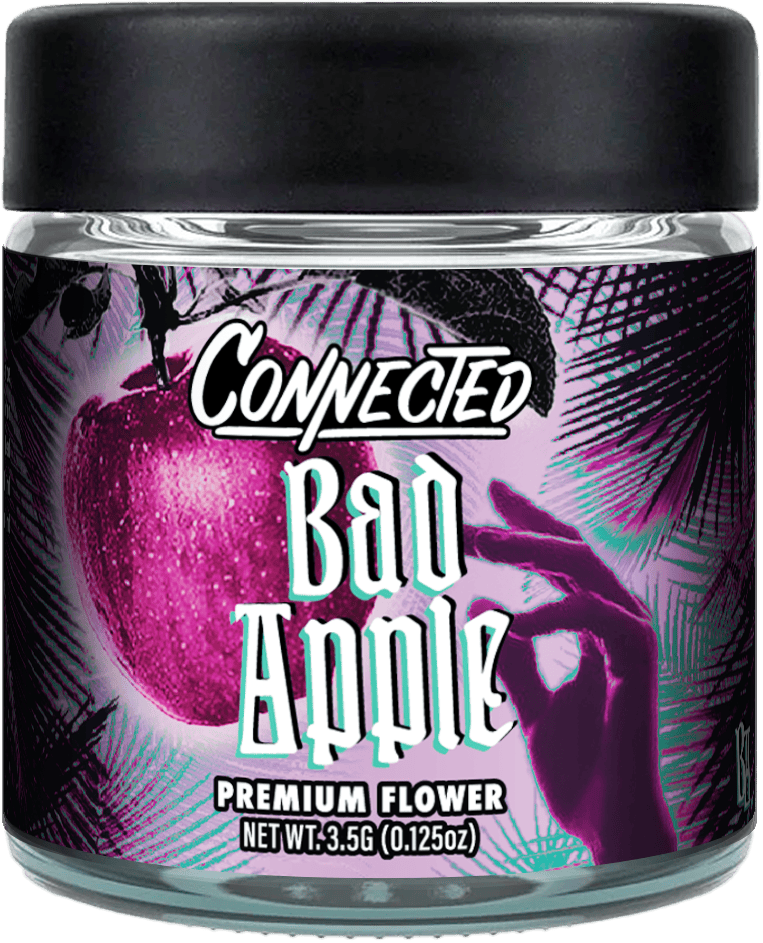
Bad Apple arrives with an identity as layered as its name suggests — a hybrid that balances tart, fruit-forward aromatics with a grounded, even-keeled effect profile. Cultivated for those who appreciate complexity without chaos, this strain offers a thoughtful interplay between cerebral lift and physical ease. Its apple-tinged, slightly sour fragrance is immediately distinctive, making it a natural conversation piece for the discerning New York cannabis enthusiast seeking something a little left of center.
Shop Bad Apple · 1 of 1 live products
About Bad Apple
Everything to know about Bad Apple.
Lineage & origin
Bad Apple's precise lineage is not universally agreed upon across public cannabis databases, and the breeder has not made a fully transparent disclosure of its parent strains. The most commonly cited genetic framework points to a cross involving Sour Apple — itself a union of Cinderella 99 and Sour Diesel — though some phenotype reports suggest additional indica-leaning genetics contributing to the strain's body character. Sour Apple, as a parent, brings the tart, fuel-laced fruit profile that defines much of Bad Apple's aromatic identity, while Cinderella 99's cerebral sativa influence is often credited for the strain's lifted, mentally engaging onset. The name Bad Apple leans into the sour, slightly rebellious quality of its fragrance while nodding to the apple-adjacent terpene expression that separates it from a straightforward diesel-dominant hybrid. It emerged largely through craft and small-batch cultivators rather than a flagship seed company release, which contributes to some variation in pheno expression across different producers. Cannabis enthusiasts will find that certain cuts lean more emphatically tart and green-apple in aroma, while others skew sweeter and more candy-like, suggesting the genetic pool has seen some phenotype selection over time. Sibling expressions within the Sour Apple family — including cuts tied to Sour Diesel lineage more broadly — share recognizable aromatic DNA with Bad Apple while diverging in effect character.
Effects
Bad Apple typically presents as a hybrid that leans slightly to the cerebral side during its onset, with effects arriving within five to fifteen minutes of inhalation. The initial phase is characterized by a brightening of mood and a mild sharpening of focus — not the jarring, anxious edge that can accompany pure sativa-dominant strains, but rather a calm, curious mental clarity. Conversations tend to flow more easily, and creative tasks feel more approachable without the sensation of racing thoughts. As the session progresses into its peak — generally between thirty and sixty minutes in — the body begins to register a measured physical ease. Muscle tension softens gradually, and there is a gentle warmth that settles through the limbs without tipping into sedation for most experienced consumers. This is where the hybrid balance becomes most apparent: the mind remains engaged while the body finds a comfortable equilibrium. The experience is often described as sociable yet introspective depending on set and setting. The comedown is notably smooth, with effects tapering over one to two hours rather than dropping off abruptly. Terpenes such as myrcene likely contribute to the mild body component, while limonene-driven brightness supports the uplifted mood character. Caryophyllene, if present in meaningful quantity, may add a subtle grounding quality during the latter portion of the experience. As with any cannabis product, newcomers are encouraged to start low and go slow to find a comfortable entry point.
Aroma, flavor & terpenes
The aromatic profile of Bad Apple is its most immediately striking quality. Dominant terpenes — most commonly myrcene, limonene, and caryophyllene — work in concert to produce a scent that reads as green apple with a faintly sour, fuel-edged undercurrent. Myrcene provides the strain's baseline earthiness and a soft, almost overripe-fruit sweetness that deepens the apple note rather than sweetening it into candy territory. Limonene contributes the bright, citrus-adjacent tartness that gives the strain its signature snap — the olfactory equivalent of biting into a Granny Smith. On the secondary level, traces of ocimene or terpinolene have been noted in select phenotypes, lending an occasional floral or faintly herbal lift to the bouquet. Pinene, when present, introduces a subtle green, almost stem-like quality that reinforces the fresh-fruit character without veering into forest or resin territory. Caryophyllene rounds out the lower register with a mild spice — think cracked black pepper at a distance — that keeps the overall profile from feeling one-dimensionally sweet. On the palate, Bad Apple translates faithfully from jar to smoke or vapor. The inhale tends to carry that tart, slightly sour apple quality most clearly, while the exhale reveals a warmer, earthier body with a faint fuel finish that dissipates cleanly. Vapor delivery often amplifies the citrus and fruit notes, while traditional flower combustion brings the spice and earth forward more prominently. The aftertaste is brief and pleasant, leaving little of the harshness sometimes associated with fuel-lineage strains.
Appearance
Bad Apple typically presents in medium to large, moderately dense buds that hold together well without the brick-like compression of some indica-dominant cultivars. The structure is classically hybrid — calyxes stack with reasonable organization, and the overall bud shape tends toward a slightly elongated, irregular form rather than perfectly round or pointed. Coloration ranges from a medium forest green to lighter sage hues, often with occasional patches of deeper olive where light exposure during growth was limited. Trichome coverage is generous on well-grown specimens, giving the surface a frosted, almost silvery quality that speaks to resin production. Pistils — the hair-like structures threaded through the bud — are typically amber to russet orange at harvest, creating a warm visual contrast against the green canvas. Under magnification, trichome heads appear predominantly cloudy to amber, consistent with a harvest timed for balanced effect. Overall, the visual presentation is understated rather than ostentatious, befitting a strain whose identity is built more on aromatic complexity than on showmanship.
Growing notes
Bad Apple is considered a moderately approachable cultivar for those with some prior growing experience, though true beginners may find its phenotype variability a mild challenge to navigate. It performs well both indoors under controlled lighting conditions and outdoors in temperate climates with warm days and moderate humidity — the latter is particularly important, as the strain can show some sensitivity to excess moisture during the late flowering period. Indoor flowering time typically falls in the eight to nine week range, with yields that are respectable but not exceptional compared to more commercially optimized genetics. Outdoor cultivators in environments similar to New York's climate should target a mid-to-late October harvest window. The plant tends toward medium height and responds well to low-stress training techniques that encourage lateral branching and canopy evenness. Resin production is a notable strength, making it a logical candidate for craft producers interested in concentrate applications alongside traditional flower. For the cultivator-curious shopper, Bad Apple represents the kind of small-batch, expressive genetics that reward patience and attention to environment.
When it's best enjoyed
Bad Apple occupies a comfortable middle ground that makes it well-suited to the transitional hours of the day — late afternoon into early evening, when the obligations of the workday have lifted but the night is still unwritten. It is equally at home in solo creative sessions as it is shared among a small group of friends with a common interest in unhurried conversation. Its hybrid character is neither so energizing that it feels out of place as the evening deepens, nor so sedating that it closes off engagement with the world around you. For food pairings, the strain's tart apple and citrus terpene profile finds a natural complement in aged sharp cheddar, green-apple chutney, or a dry, unoaked white wine enjoyed alongside. On the music side, the mid-tempo cerebral lift pairs naturally with jazz that carries both structure and improvisation — something in the vein of Bill Evans or late-period John Coltrane, where the mind can follow a thread without being overwhelmed. For the more active-minded consumer, a slow evening walk through a tree-lined neighborhood, particularly in autumn when the season mirrors the strain's apple-and-earth aromatics, is a quietly fitting choice.
If you like Bad Apple, also explore
Sour Apple
As the most likely parent of Bad Apple, Sour Apple shares the tart, fuel-edged apple aroma and balanced hybrid effect arc that defines the family.
Sour Diesel
Fans of Bad Apple's faintly diesel undercurrent and cerebral onset will find Sour Diesel a logical next step, though its energy runs notably more sativa-prominent.
Cinderella 99
Sharing probable lineage, Cinderella 99 offers a similar fruity brightness and uplifted mental character for those drawn to the lighter, more cerebral side of Bad Apple.
Green Crack
Those who appreciate Bad Apple's tart, fruit-forward profile and daytime-leaning mental clarity may find Green Crack's sharp mango-citrus energy a satisfying companion strain.
Headband
For consumers who value Bad Apple's measured hybrid balance — cerebral but grounded — Headband offers a similar equilibrium with a creamier, more fuel-forward aromatic identity.
Common questions
Is Bad Apple indica or sativa?+
Bad Apple is classified as a hybrid, and its effect profile reflects that balance clearly. The onset tends toward cerebral brightness associated with sativa-leaning genetics, while the mid-to-late session introduces a measured body ease more common to indica-influenced strains. Neither side dominates the other, making it a reliable choice for consumers who prefer not to commit entirely to one end of the spectrum.
What does Bad Apple taste like?+
The flavor profile centers on tart green apple with a faintly sour, fuel-edged exhale — a reflection of its probable Sour Apple lineage. On the inhale, the fruit note is most prominent; the exhale brings in warmer earth and a mild spice from caryophyllene. Vapor delivery tends to highlight the citrus and apple brightness, while combustion draws out the deeper, earthier qualities. The finish is clean and brief.
What are the typical effects of Bad Apple?+
Bad Apple typically begins with a mood-brightening, mildly focusing cerebral onset that arrives within the first fifteen minutes. As the experience develops, a gentle physical ease settles through the body without producing sedation in most consumers. The overall arc is even and social — suitable for both conversation and quiet creative engagement. Effects generally taper smoothly over one to two hours. New consumers should start low and go slow.
What strains are similar to Bad Apple?+
Consumers drawn to Bad Apple often find common ground with Sour Apple, its most likely parent, as well as Sour Diesel for shared fuel-and-fruit aromatics. Cinderella 99 mirrors the fruity cerebral brightness, while Green Crack appeals to those who favor the daytime-leaning tart profile. Headband offers a similar hybrid balance for those who appreciate Bad Apple's measured, even-keeled character.
Is Bad Apple good for beginners?+
Bad Apple's hybrid balance makes it more approachable than many sativa-dominant or high-potency strains, but its lineage — which includes Sour Diesel ancestry — means the cerebral component can feel pronounced for first-time or infrequent consumers. Beginners are always encouraged to start with a small amount and allow adequate time before considering additional consumption. The smooth comedown is a point in its favor for those new to cannabis.
What are the dominant terpenes in Bad Apple?+
The terpene profile most commonly associated with Bad Apple features myrcene as the earthiness and soft fruit anchor, limonene as the source of its characteristic tart citrus brightness, and caryophyllene providing mild spice and grounding depth. Secondary terpenes such as ocimene, terpinolene, or pinene appear in select phenotypes, contributing floral, herbal, or fresh green nuance. Together they produce the strain's signature green-apple and light fuel aromatic identity.
How does Bad Apple compare to Sour Apple?+
Bad Apple and Sour Apple share closely related aromatic DNA — both lead with tart, apple-forward fragrance underpinned by a faint fuel quality. Where they tend to diverge is in effect nuance: Bad Apple often presents a slightly more grounded, body-aware character, possibly owing to additional indica-leaning genetics in its lineage. Sour Apple can run marginally more energetic for some consumers. The two are close enough that fans of one frequently appreciate the other.
What is the best time of day to enjoy Bad Apple?+
Bad Apple is best positioned as a late-afternoon or early-evening strain. Its cerebral onset is engaging enough to support creative or social activity, while its body ease makes it a natural fit as the day winds down. It lacks the pronounced sedation that would make it a dedicated nighttime strain, and it is generally too body-aware to be the first choice for high-focus morning use. The transitional hours between work and leisure are where it tends to express itself most fully.
Related strains