Spend $100, Save $10
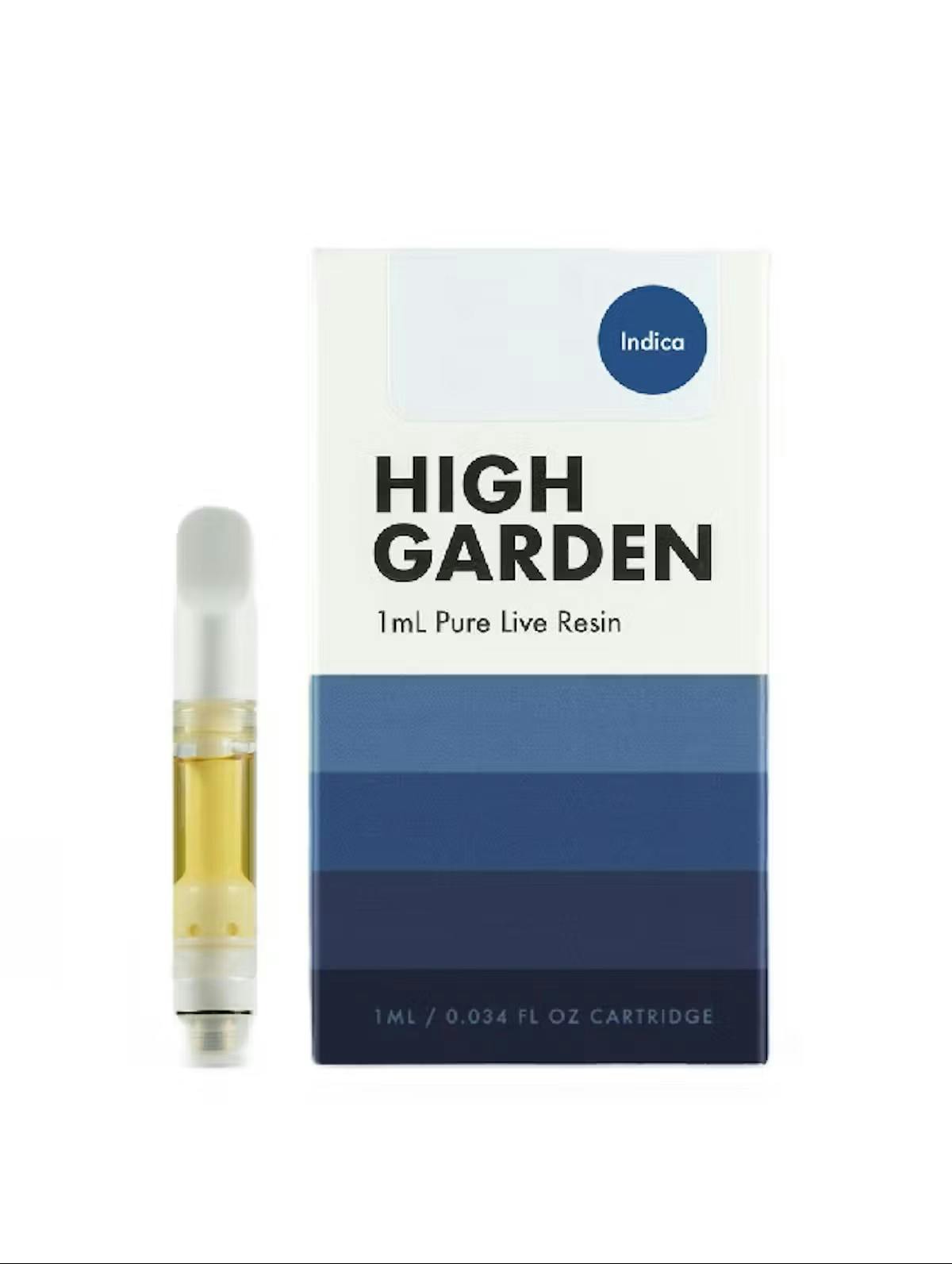
THC 92.23%·CBD 0.56%Indica
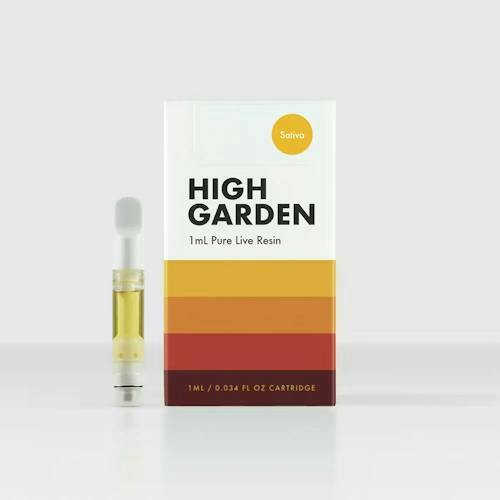
High GardenHigh Garden | Fruity Pebbles OG | Live Resin Cart | 1ml · 1ml
$43.36
$49after tax

weeddispensarynearme.com
You must be 21 years or older to enter. By entering, you confirm you’re of legal age in your state to purchase cannabis.
For use only by adults 21+ • Keep out of reach of children
Brand · 8 products live
Using state of the art techniques ensures the quality that High Garden is known for, exceptional cannabis that doesn’t cut corners. Light deprivation methods are utilized allowing plants to reach their full potential in a controlled environment dialed in to their needs, in doing so we have created a process that keeps sustainability high and environmental impact, low.
Quick answer · What is the High Garden cannabis brand?
High Garden is a New York cannabis brand built around light-deprivation greenhouse cultivation, a method that marries the spectral richness of natural sunlight with the precision of an indoor-controlled environment. Known for a measured, sustainability-conscious approach to growing, the brand has carved a quiet but deliberate presence in New York's adult-use market, offering vaporizer products rooted in flower quality rather than processing shortcuts.
High Garden is a New York cannabis brand built around light-deprivation greenhouse cultivation, a method that marries the spectral richness of natural sunlight with the precision of an indoor-controlled environment. Known for a measured, sustainability-conscious approach to growing, the brand has carved a quiet but deliberate presence in New York's adult-use market, offering vaporizer products rooted in flower quality rather than processing shortcuts.
High Garden's public-facing history is relatively spare — the founders have not broadly publicized a founding year or detailed biographical backgrounds through major cannabis press outlets such as MJBizDaily or Cannabis Wire. What is documented through their brand presence and New York market listings is a cultivar-forward philosophy anchored in light-deprivation greenhouse methodology, a technique that positions the brand between the efficiency of outdoor sun-grown farming and the precision of fully controlled indoor production. The gap High Garden appears to have identified is one familiar to discerning consumers: the perceived trade-off between environmental responsibility and product consistency. Conventional indoor grows achieve tight environmental control but carry a significant energy footprint; traditional outdoor grows reduce that footprint but surrender some control over flowering cycles and terpene expression. Light deprivation — which uses physical blackout systems to manipulate a plant's light cycle regardless of the natural season — offers a middle path. High Garden has organized its identity around that middle path, framing sustainability not as a marketing posture but as an operational design principle. Their entry into New York's adult-use market, where they appear in vaporizer product categories, reflects a brand that has translated greenhouse-grown flower into concentrated formats rather than relying on distillate pipelines disconnected from their cultivation roots.
High Garden's aesthetic sensibility reads as understated and nature-proximate — the kind of visual language that signals craft without leaning into the overwrought botanica styling that became a design cliché in the post-legalization wave. The brand does not appear to rely on maximalist graphics or streetwear-adjacent typography; instead, the design posture is restrained, with an implicit confidence that the cultivation philosophy speaks before the packaging does. The shopper persona High Garden seems to address is the informed cannabis consumer who has moved past novelty-seeking and is now reading labels the way a thoughtful wine buyer reads back-of-bottle producer notes — looking for process transparency, origin specificity, and a coherent point of view. In the New York market context, this places High Garden in the prosumer mid-tier to craft segment: above the commodity vaporizer category, below the bespoke single-origin luxury tier, and well-suited for a consumer who prizes authenticity of process over heritage brand recognition.
High Garden's foundational cultivation method is light deprivation, a greenhouse technique in which growers deploy opaque blackout curtains or automated shade systems to artificially shorten the daily light cycle that cannabis plants receive, triggering the flowering stage independent of the natural calendar. This allows for multiple harvests per year in a climate-controlled greenhouse environment, reducing the unpredictability associated with full outdoor cultivation while substantially lowering the energy consumption associated with fully artificial indoor lighting. Plants grown under light deprivation benefit from the full spectrum of natural sunlight during their vegetative phase, which many cultivators argue produces terpene profiles with a complexity that solely artificial lighting can struggle to replicate. High Garden's own brand language emphasizes that this controlled environment is 'dialed in' to plant needs — suggesting an attention to humidity, temperature, and airflow management consistent with a quality-forward greenhouse operation. Because their New York retail presence centers on vaporizer products, the inference is that greenhouse-sourced flower is being processed for concentrated formats, though the specific extraction methodology — whether CO2, hydrocarbon, or solventless — has not been publicly detailed in available sources. Regardless of extraction pathway, the cultivation philosophy implies that raw material quality is treated as the primary quality-control variable, which is a meaningful differentiator in a vaporizer category where many brands begin with purchased distillate.
High Garden's documented retail presence in New York adult-use dispensaries sits within the vaporizer category, which is the brand's primary consumer-facing format. Vaporizer products in the contemporary New York market span a wide range of quality and production approaches, from commodity distillate cartridges on one end to live resin and solventless rosin pods on the other. High Garden's positioning — rooted in light-deprivation greenhouse cultivation with an explicit emphasis on not cutting corners — places their vaporizer line in the quality-oriented segment of that spectrum, where the source material and process integrity are central to the value proposition. For the consumer evaluating vaporizers at ZenZest, High Garden's line represents a brand that has traced its product back to the cultivation environment, which is a less common claim in a category often characterized by opacity about sourcing. While specific named SKUs or pod system formats are not independently verified through public third-party sources, the brand's consistent emphasis on methodology over volume signals a line built for the consumer who would prefer to understand what they are inhaling before they consider price as a deciding factor.
High Garden fits naturally into the consumption occasions where product provenance and process integrity matter as much as effect. A consumer reaching for a High Garden vaporizer is likely not making an impulse purchase driven by price or packaging alone — they are the kind of person who has done some reading, who perhaps already asks budtenders about extraction methods, and who finds the light-deprivation cultivation story genuinely interesting rather than incidental. The vaporizer format itself is well-suited to the on-the-go consumer who values discretion and convenience without wanting to compromise on quality: a weekend hike, a measured post-work ritual, a social setting where a flower session is impractical. High Garden's sustainability framing also makes the brand a thoughtful choice for the environmentally attentive consumer who wants to align purchasing decisions with broader values — a growing and documentable segment of New York's adult-use market. For gifting, the brand's understated aesthetic and process credibility offer the giver a narrative: this is a brand with a considered point of view, not simply a product in a box.
High Garden operates within New York's adult-use cannabis market and appears in dispensary retail listings — including at ZenZest on weeddispensarynearme.com — in the vaporizer category. The precise nature of their New York OCM licensing status (whether as a licensed processor, cultivator, or through a wholesale distribution arrangement with a licensed New York partner) has not been independently confirmed through publicly available OCM filings or major cannabis trade press at the time of writing. Consumers seeking licensing verification are encouraged to consult the New York Office of Cannabis Management's public license lookup. The brand has not publicly disclosed social-equity, women-owned, or BIPOC-owned certification status through major press channels. High Garden's geographic operational scope beyond New York has also not been widely documented in public cannabis trade sources, and the founders have not publicly elaborated on multi-state expansion plans.
$49after tax
$49after tax
$49after tax
$49after tax
$49after tax
$49after tax
$49after tax
$49after tax
High Garden uses light-deprivation greenhouse cultivation, a method in which blackout systems manipulate the plant's light cycle to trigger flowering on a controlled schedule while still allowing plants to benefit from natural sunlight. This approach is intended to reduce energy consumption relative to fully indoor grows while maintaining consistency. The precise facility location has not been publicly detailed in available cannabis trade sources.
High Garden products appear in New York adult-use dispensary retail listings, including at ZenZest. However, the specific nature of their New York OCM licensing — whether as a direct licensee or through a wholesale distribution partnership with a licensed New York entity — has not been independently confirmed through publicly available OCM records at the time of writing. Shoppers can verify current license status through the New York Office of Cannabis Management's public lookup tool.
High Garden is best known for its commitment to light-deprivation greenhouse cultivation as a foundation for quality and sustainability, and for bringing that cultivation philosophy into the vaporizer category. In a segment of the market often dominated by brands that source commodity distillate, High Garden's emphasis on process integrity and environmental mindfulness distinguishes it for the informed New York adult-use consumer.
High Garden's documented New York retail presence is in the vaporizer category, making that the logical starting point for a first-time buyer. For a consumer already familiar with vaporizer products and interested in how cultivation method influences the final experience, High Garden's light-deprivation sourcing story offers a meaningful point of comparison against distillate-based alternatives in the same format.
High Garden occupies a craft-to-prosumer mid-tier position rather than the ultra-luxury segment. The brand's emphasis on sustainable cultivation method and process transparency appeals to quality-conscious consumers, but its aesthetic and pricing approach appear designed for accessibility within the informed shopper tier rather than positioning as a rarefied collector's item.
The founders and ownership structure of High Garden have not been publicly elaborated upon through major cannabis trade press such as MJBizDaily, Cannabis Wire, or the Green Market Report at the time of writing. The brand has not publicly disclosed individual founder names, investor backing, or parent company affiliation through sources independently verifiable for this profile.
High Garden explicitly frames its light-deprivation greenhouse method as a sustainability-oriented choice. By allowing plants to use natural sunlight during their vegetative phase and using blackout systems only to control the flowering trigger, the approach reduces reliance on artificial lighting and the associated energy load. The brand's own language characterizes this as keeping environmental impact low — a claim consistent with how light-deprivation cultivation is broadly understood in the industry.
Jeeter
Consumers who appreciate High Garden's focus on source-material quality in a convenient format often gravitate toward Jeeter for its similarly process-forward infused pre-roll and vaporizer offerings in the mid-to-upper market tier.
Florist Farms
A fellow New York brand emphasizing greenhouse and sustainable growing practices, Florist Farms appeals to the same environmentally conscious, cultivation-curious consumer that High Garden attracts.
Sunmed / Your CBD Store
Shoppers drawn to High Garden's sun-and-greenhouse cultivation transparency often explore Sunmed for its similarly articulated emphasis on clean growing environments and process integrity in extract formats.
Acreage Holdings / The Botanist
New York consumers who value a brand that traces its vaporizer products back to a defined cultivation operation will find a parallel commitment to vertically integrated quality at The Botanist's New York dispensary network.
Dose
For the New York adult-use consumer who wants a vaporizer brand with a clear process philosophy and a calm, non-hype aesthetic, Dose offers a similarly restrained sensibility and quality orientation.
Pick your store
We'll show pricing, deals, and delivery zones for the store you pick. You can switch any time from the header.