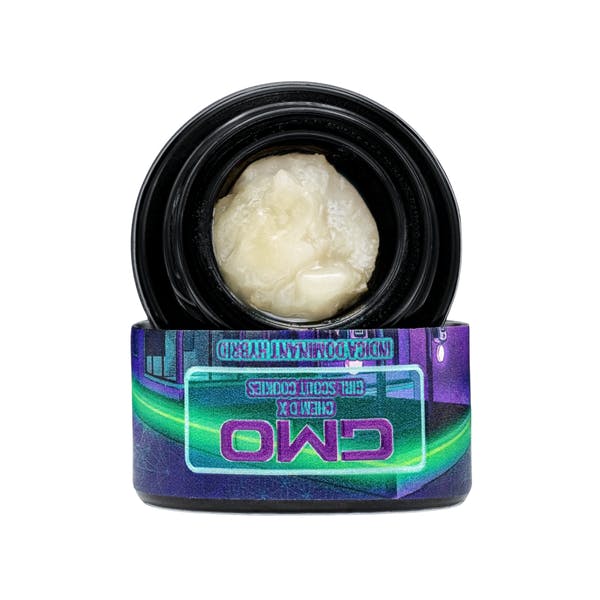
On sale· 20% OFF
THC 70.7%Indica-Hybrid
UmamiiUmamii | Live Rosin Jar | GMO · 2g
$80.00$100.00
$93after tax

weeddispensarynearme.com
You must be 21 years or older to enter. By entering, you confirm you’re of legal age in your state to purchase cannabis.
For use only by adults 21+ • Keep out of reach of children
Tottenville, Staten Island's southernmost neighborhood, carries a quietly refined pace — bayfront air, tree-lined streets off Amboy Road, and a community that values quality over noise. For adults 21 and older seeking solventless cannabis concentrates, rosin has emerged as the category that matches that sensibility: clean, terpene-forward, and crafted without chemical solvents.
About Rosin
Rosin occupies a singular position in New York's licensed adult-use cannabis market. Unlike hydrocarbon or CO2 extracts, rosin is produced entirely through heat and pressure — no butane, no propane, no residual solvents to account for. The result is a concentrate that retains the full aromatic and cannabinoid complexity of the source flower, often expressing nuances that other extraction methods strip away in the pursuit of raw potency. For the discerning consumer, that complexity is the point. New York's Office of Cannabis Management licenses rosin producers under strict manufacturing regulations, meaning every gram sold at a legal dispensary has passed state-mandated testing for potency, residual solvents, pesticides, heavy metals, and microbial contamination. That testing infrastructure matters especially for concentrates, where contaminants that exist in trace amounts in flower can become meaningfully concentrated during extraction. Buying from a licensed retailer is not simply a legal formality — it is a meaningful quality assurance step. Within the rosin category, shoppers will encounter several distinct formats. Hash rosin, pressed from bubble hash or dry sift rather than raw flower, is widely regarded as the premium tier: the additional refinement step removes plant material and lipids, yielding a smoother, more translucent product with an elevated terpene profile. Live rosin, made from fresh-frozen cannabis rather than dried and cured material, captures volatile aromatics that would otherwise dissipate during the cure. Flower rosin, pressed directly from dried bud, offers an accessible entry point with more rustic character. Potency in legal New York rosin products typically ranges from 60 to 85 percent total THC, with the remaining profile comprised of minor cannabinoids and terpenes. Consumers new to concentrates are advised to start low and go slow, given the significant step up in potency relative to flower.
Rosin for Tottenville shoppers
Tottenville sits at the very tip of Staten Island, bounded by Raritan Bay to the south and east and defined on its commercial spine by Amboy Road. It is a neighborhood with the temperament of a small coastal town grafted onto one of the five boroughs — unhurried, residential, and quietly proud of its remove from the city's density. The cannabis consumer here tends to reflect that temperament: knowledgeable, self-sufficient, and less interested in trend-chasing than in finding a reliable product that performs. The bayfront setting has a practical dimension for concentrate shoppers. Humidity off Raritan Bay, particularly through late spring and into hurricane season, can affect cannabis storage in ways that matter more for rosin than for flower. Because rosin contains no residual solvents and a relatively high terpene load, it is sensitive to heat and moisture — a cold, sealed environment is ideal. Tottenville residents who commute via the Staten Island Railway from Tottenville Station will appreciate that rosin, sold in small glass or silicone jars, travels compactly and discreetly. There is no bulk or odor management concern comparable to carrying flower. Occasion-wise, Tottenville's weekend culture gravitates toward the waterfront, the quiet streets off Main Street, and the kind of unhurried social settings — a back porch facing the bay, an evening walk through Conference House Park — where a small-format, high-quality concentrate fits naturally. Rosin's clean burn and expressive terpene profile suit those moments: there is no chemical aftertaste to contend with, and a small quantity goes considerably further than an equivalent volume of flower.
What to look for
Evaluating rosin begins with the source material and the pressing method. Hash rosin commands a premium because the additional step of washing the starting material into bubble hash removes plant waxes, chlorophyll, and other compounds that dilute the final product's clarity and smoothness. Look for descriptors like '73-micron' or '90-micron' on the label — these indicate the filter screen size used during bubble hash production, which correlates with the quality and purity of the trichome heads being pressed. First-press rosin, as opposed to second-press or trim-run, signals that the producer prioritized quality over yield. Terpenes are the operative variable in distinguishing one rosin from another. For consumers drawn to rosin precisely because it preserves the aromatic complexity of the plant, reading the terpene panel on a licensed product's certificate of analysis is worth the effort. Myrcene-dominant profiles tend toward earthy, relaxing character; limonene contributes citrus brightness; caryophyllene adds a peppery warmth that some consumers find pairs well with evening hours outdoors near the water. Live rosin, in particular, will often display a more complex and volatile terpene profile than flower rosin, because fresh-frozen starting material retains compounds that evaporate during conventional curing. For Tottenville shoppers new to concentrates, format matters. A dab rig offers the most expressive experience but requires equipment and some technique. A dab pen or concentrate-compatible vaporizer is the more practical entry point — portable, consistent in temperature, and appropriate for the kind of understated outdoor settings that define this neighborhood's character. Cold-cure rosin, which has a smooth, budder-like consistency, tends to be easier to handle and load than a saucy or shatter-style presentation, making it a sensible choice for those building their first rosin practice.
Why ZenZest for rosin in Tottenville
ZenZest Cannabis Dispensary maintains a Staten Island location at 2343 Forest Ave, Staten Island, NY 10303 — approximately 9.1 miles from Tottenville's Amboy Road corridor. For a neighborhood that sits at the borough's southern extreme, that distance is a real consideration, which is precisely where ZenZest's same-day delivery program becomes relevant. Orders over $100 qualify for free same-day delivery across more than 80 New York ZIP codes, and ZIP code 10307 is among them. A rosin order placed in the morning can arrive before an evening spent on the water without requiring the trip north up Richmond Avenue. Beyond logistics, ZenZest operates within New York's licensed adult-use framework, meaning every product on its menu — including its rosin selection — has been sourced from state-licensed manufacturers and carries the testing documentation that distinguishes legal cannabis from the unregulated market. For concentrate shoppers who care about what is actually in their product, that provenance is not incidental. The Forest Ave location also serves as a resource for customers who prefer to examine products in person before purchasing, and staff can speak to the specific terpene profiles and source cultivars behind the rosin offerings at any given time.
ZenZest Staten Island · 2343 Forest Ave, Staten Island, NY 10303 · 9.1 miles from Tottenville.
$93after tax
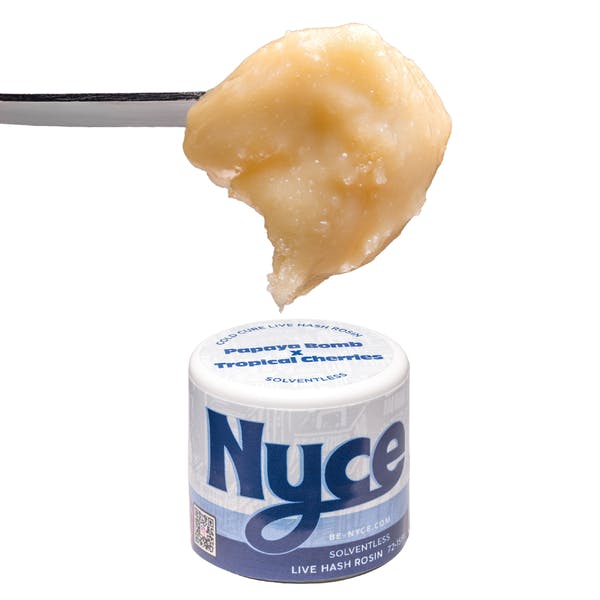
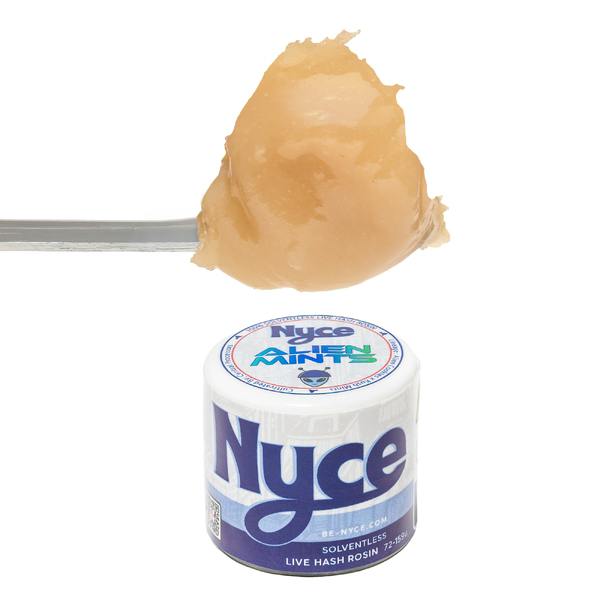
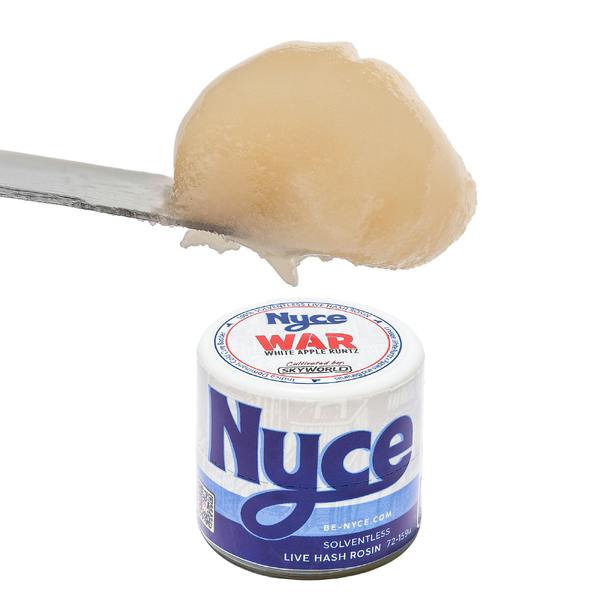
Rosin is distinguished by its solventless production method. Where many popular concentrates — wax, shatter, distillate — are produced using hydrocarbon gases or carbon dioxide as extraction solvents, rosin relies solely on controlled heat and pressure applied to cannabis plant material or bubble hash. No chemical solvents are introduced, which means there is no residual solvent to purge from the final product. For licensed New York products, this distinction is reflected in the certificate of analysis: rosin should show non-detectable residual solvent levels by design, not simply because purging was done well.
Live rosin commands a price premium because it begins with fresh-frozen starting material — cannabis harvested and immediately frozen to preserve the volatile terpene fraction that would otherwise dissipate during a conventional dry-and-cure cycle. For consumers who prioritize aromatic complexity and a more complete expression of a given cultivar, that premium reflects genuine product differentiation. For someone primarily interested in potency rather than terpene nuance, high-quality hash rosin made from cured material may offer comparable THC levels at a more accessible price. The choice depends on what you value in the concentrate experience.
Rosin is sensitive to heat, light, and humidity — all environmental factors that Tottenville residents contend with given the neighborhood's proximity to Raritan Bay. The standard guidance is to store rosin in an airtight glass or silicone container, away from direct light, at a cool and stable temperature. A refrigerator works well for medium-term storage; a freezer is appropriate for longer periods, though the product should be allowed to return to room temperature before handling to avoid condensation. Avoid leaving rosin jars in a car on warm days, as heat accelerates terpene loss and can degrade consistency.
Licensed New York dispensaries, including ZenZest, carry rosin in forms suited to multiple consumption methods. Traditional dabbing using a rig and a heated nail or electronic nail remains the benchmark for terpene expression, but it requires dedicated equipment and some familiarity with technique. Dab pens and wax pens are a more portable and approachable format — particularly relevant for Tottenville residents who might enjoy a concentrate session outdoors near Conference House Park or the bay. Some consumers also incorporate small amounts of rosin as a flower topper in a bowl or joint, though this is a less precise method of dosing.
Legal rosin products in New York's adult-use market typically test between 60 and 85 percent total THC, depending on the source material quality, the pressing method, and whether the product is flower rosin, hash rosin, or live rosin. This represents a significant increase over the 20 to 30 percent THC levels common in premium flower. Consumers transitioning from flower to concentrates are consistently advised to start with a very small quantity — a portion roughly the size of a grain of rice is a reasonable beginning — and to allow adequate time to assess the effect before considering additional consumption.
Yes. ZIP code 10307, which covers Tottenville, is among the more than 80 New York ZIP codes eligible for ZenZest's same-day delivery program. Orders of $100 or more qualify for free same-day delivery. Given that quality hash rosin and live rosin products are often priced at a premium relative to flower, meeting that threshold is frequently straightforward for concentrate shoppers. The delivery option is particularly practical for Tottenville residents given the neighborhood's distance from the nearest licensed retail locations.
In quality rosin — particularly live rosin and cold-cure hash rosin — terpene concentrations can actually exceed those found in the source flower, because the extraction process concentrates the trichome content. However, the terpene profile can shift somewhat from what was present in the original cultivar. Heat applied during pressing can volatilize the most sensitive terpenes; this is one reason low-temperature pressing is preferred for quality rosin production. Licensed New York products include terpene panels on their certificates of analysis, which allows consumers to identify specific aromatic compounds and make informed selections based on their preferences.
A certificate of analysis from a state-approved laboratory should accompany every legal concentrate sold in New York. For rosin, the relevant data points include: total THC and CBD potency, the terpene panel (which informs aroma, flavor, and experiential character), residual solvent levels (which should be non-detectable for a true solventless rosin), heavy metal testing, pesticide screening, and microbial contamination results. Licensed dispensaries are required to have this documentation available. Consumers who ask to see a product's COA at ZenZest or via the delivery platform are making a fully reasonable and informed request.
Rosin can be an appropriate entry point into concentrates for a consumer who approaches it with appropriate care. Its solventless profile means the flavor profile is clean and arguably more intuitive than that of some solvent-extracted products, which can carry chemical or artificial notes in lower-quality examples. The primary adjustment for any new concentrate consumer is potency management. Rosin is substantially more potent than flower by volume, and the onset of effects from dabbing or a dab pen is relatively rapid. Starting with the smallest practical quantity and waiting a full 15 to 20 minutes before any additional consumption is the standard guidance for this category.
Tottenville's character — bayfront, residential, and notably quieter than the rest of the borough — lends itself to consumption occasions where a compact, discreet, and high-quality product is preferable to larger-format options. Rosin in a small jar, consumed via a portable dab pen, fits that profile well. The neighborhood's outdoor spaces, including the grounds near Raritan Bay and the historic Conference House area, attract residents for extended outdoor stays where a small, odor-controlled format is practical. Humidity from the bay is the primary environmental consideration; keeping rosin sealed and away from prolonged exposure to moisture preserves both consistency and terpene quality.
Pick your store
We'll show pricing, deals, and delivery zones for the store you pick. You can switch any time from the header.