On sale· 15% OFF
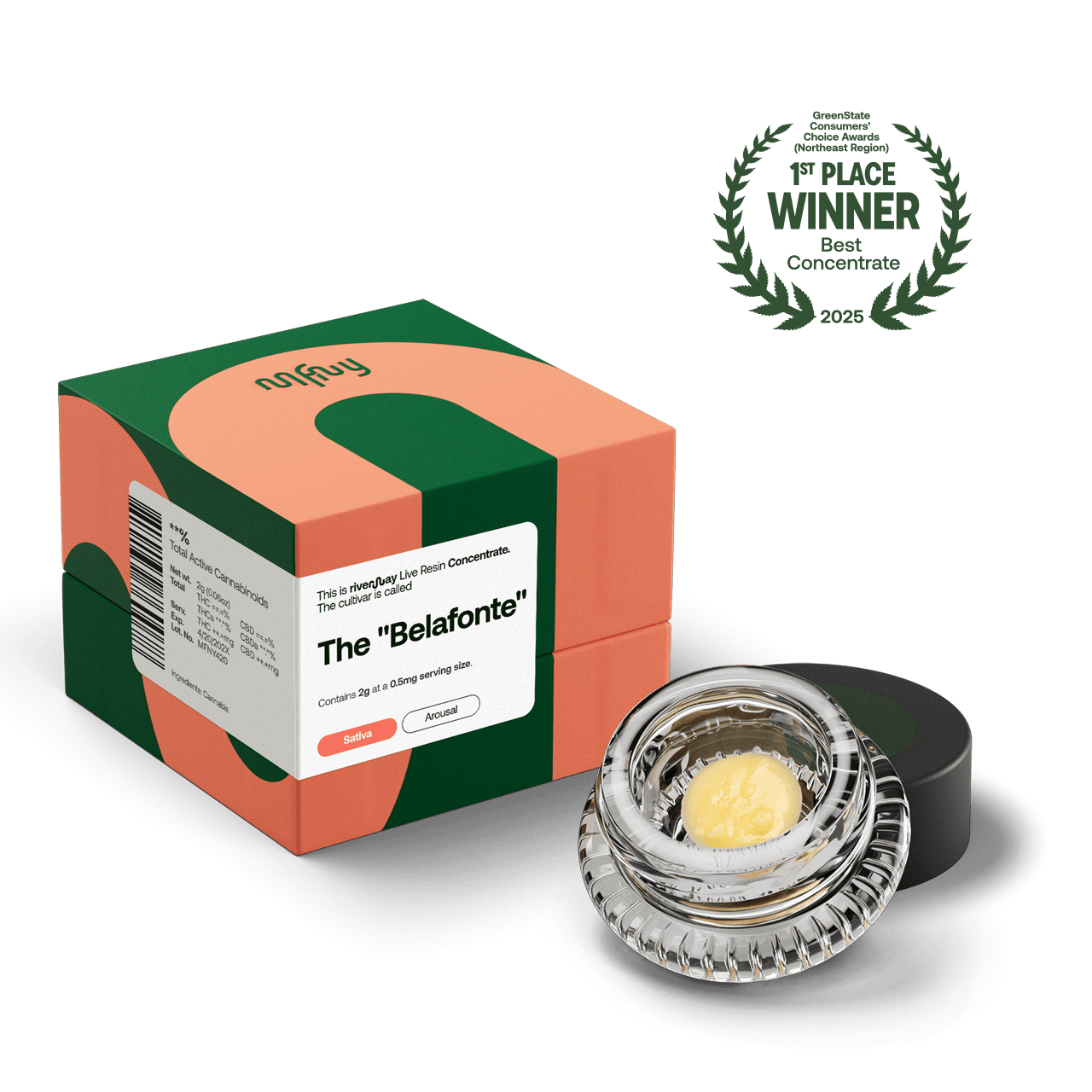
THC 71.35%Sativa
MFNYThe Belafonte Live Resin Badder | 2g · 2g
$76.73$90.27
$88after tax

weeddispensarynearme.com
You must be 21 years or older to enter. By entering, you confirm you’re of legal age in your state to purchase cannabis.
For use only by adults 21+ • Keep out of reach of children
Norwood, tucked into the northern Bronx along the corridors of Jerome Avenue and Gun Hill Road, has cultivated a reputation for no-nonsense authenticity. That same directness informs how discerning adults here are approaching live resin — a concentrate category defined by its fidelity to the living plant, its aromatic complexity, and its premium position within New York's growing licensed cannabis market.
About Live Resin
Live resin occupies a distinct tier within the concentrate landscape, and understanding why begins with the extraction process itself. Unlike distillates or conventionally produced concentrates, live resin is made from cannabis that is frozen immediately after harvest — often within hours — preserving the full terpene and cannabinoid profile of the living plant before the drying and curing process can degrade those volatile compounds. The result is a product that smells, tastes, and feels markedly closer to fresh flower than almost any other processed format. In New York's licensed adult-use market, live resin arrives in several forms. Sauce, which features crystalline THCA suspended in a terpene-rich liquid, is prized by those who want maximum aromatic expression. Badder and sugar are slightly drier, easier to handle with a dab tool, and still retain much of that fresh-plant character. Cartridges filled with live resin oil have also become a popular entry point, offering the convenience of a vape pen without sacrificing the terpene depth that separates live resin from standard distillate carts. All cannabis products sold in New York through licensed dispensaries are tested by state-approved laboratories for potency, residual solvents, pesticides, and heavy metals. For concentrate shoppers, this matters enormously: the solvents used in hydrocarbon or CO2 extraction must fall below strict thresholds, and the COA — certificate of analysis — should be accessible either on the product packaging or through a QR code scan. Reputable retailers will always be able to provide this documentation on request. THC potency in live resin concentrates typically runs between 60 and 90 percent, a range that places these products firmly in the experienced-consumer category. New York's Office of Cannabis Management encourages a start-low, go-slow approach for anyone exploring concentrates for the first time, and that guidance is especially relevant here.
Live Resin for Norwood shoppers
Norwood is a neighborhood defined by its rhythms: the elevated 4 and D trains rattling above Jerome Avenue, the steady foot traffic around Gun Hill Road, the institutional gravity of Montefiore Medical Center drawing shift workers and commuters through at all hours. For adults 21 and over who live here, cannabis consumption is rarely performative — it tends to be intentional, woven into genuine moments of decompression after long commutes or demanding workdays. Live resin, in this context, suits the neighborhood well. Concentrate formats are discreet in a way that flower is not. A live resin cartridge paired with a quality battery is pocket-sized and produces far less ambient odor than combusted cannabis, making it practical for adults navigating apartment buildings, shared spaces, or simply preferring a lower-profile experience. The cold winters that settle into the ZIP code 10467 also make an indoor-friendly format genuinely appealing — nobody wants to step outside onto a frozen Gun Hill Road at 11 p.m. if the alternative is a compact, shelf-stable concentrate enjoyed at home. The neighborhood's demographic mix skews toward working professionals, healthcare workers, and long-tenured Bronx families who have watched the cannabis conversation shift from prohibition to licensing with a measured skepticism. That skepticism often extends to products: Norwood shoppers tend to ask questions, read labels, and appreciate when a retailer can explain the difference between a live resin sauce and a live resin badder without condescension. This is a community that rewards substance over marketing gloss.
What to look for
Selecting a quality live resin product requires looking past the packaging and engaging with a few key variables. Terpenes are the primary differentiator: limonene will push a product toward citrus brightness and an uplifting character, while myrcene leans earthy and relaxing. Caryophyllene adds a peppery warmth and is unique among common cannabis terpenes for its ability to interact with the body's endocannabinoid system directly. Linalool brings floral, calming notes. When evaluating any live resin at a dispensary counter, ask whether the COA lists terpene percentages — a total terpene content above two to three percent is a reasonable indicator of a product that has retained meaningful aromatic complexity. For format, consider your consumption setup before purchasing. Sauce and sugar require a dab rig or an electronic dab device — investments that pay off in flavor clarity but demand a slightly steeper learning curve. Badder, with its workable consistency, is often considered the most approachable concentrate for someone transitioning from flower. Live resin cartridges eliminate hardware complexity almost entirely and are compatible with standard 510-thread batteries widely available across New York. For Norwood shoppers specifically, the live resin cartridge format is often the most practical starting point, particularly for anyone whose cannabis use fits into a busy schedule structured around hospital shift work, retail hours, or the Jerome Avenue corridor's commercial rhythms. If you are an experienced consumer looking to explore the fuller expressive range of live resin, a sauce or badder from a New York-licensed extractor — ideally sourced from in-state cultivated cannabis — represents the category at its most honest and complex.
Why ZenZest for live resin in Norwood
ZenZest Cannabis Dispensary operates two licensed locations across the New York metropolitan area, with the Queens store at 272-06 Union Tpke, Bellerose, NY 11004 serving as the closest brick-and-mortar option for Norwood residents — approximately 12.8 miles from the heart of the neighborhood. The Queens location carries a curated selection of New York-licensed concentrates, including live resin in multiple formats, with staff trained to walk shoppers through COAs and terpene profiles without pressure or oversimplification. For Norwood adults who prefer not to make the trip, ZenZest offers free same-day delivery on orders over $100 to more than 80 New York ZIP codes, with 10467 among the eligible areas. Ordering through the ZenZest platform allows shoppers to browse live resin inventory, review lab results, and select products at their own pace — a genuine advantage for a neighborhood that values considered decisions over impulse purchases. Delivery arrives discreetly and in compliant packaging, consistent with New York adult-use regulations.
ZenZest Queens · 272-06 Union Tpke, Bellerose, NY 11004 · 12.8 miles from Norwood.
$88after tax
$84after tax
Live resin is produced from cannabis that is frozen immediately after harvest rather than dried and cured. This process preserves a broader spectrum of terpenes — the aromatic compounds responsible for flavor and, many consumers report, the character of the experience. Standard concentrates like distillate are refined to isolate primarily THC, often stripping terpenes in the process. Live resin retains far more of the original plant's chemical complexity, which is why its aroma is typically more pronounced and its flavor noticeably more layered.
It can be, but with clear caveats. Live resin concentrates sold in New York's licensed market typically test between 60 and 90 percent THC, which is substantially more potent by weight than flower. The Office of Cannabis Management recommends a start-low, go-slow approach, and this is especially relevant with concentrates. A live resin cartridge is often the most approachable entry point because the dose-per-draw is easier to moderate than an open-faced dab from a rig. First-time concentrate users in Norwood should prioritize format over potency percentage initially.
For a winding-down, decompression-oriented experience, many consumers gravitate toward live resin products high in myrcene, which is associated with earthy, relaxing qualities, or linalool, which carries floral, calming characteristics. Beta-caryophyllene is also worth noting — it has a peppery warmth and is frequently present in cultivars described as balanced. Ask your dispensary associate to pull up the terpene breakdown on the COA for any product you are considering; this information should be readily available at any licensed New York retailer.
Most live resin cartridges sold at New York licensed dispensaries use a standard 510-thread connection, which is compatible with the vast majority of batteries sold at cannabis retailers and vape shops. However, some brands use proprietary pod systems that require a matching battery. Before purchasing, confirm the connection type with the dispensary associate. If you are buying your first battery, a variable-voltage 510-thread battery gives you the most flexibility and allows you to find the temperature setting that best expresses the terpene profile of your live resin cart.
Live resin is sensitive to heat, light, and air exposure. For sauce and badder formats, an airtight silicone or glass container stored in a cool, dark location is ideal — a kitchen drawer away from the stove works well. Cartridges should be stored upright and at room temperature; extreme cold, like leaving a cartridge in a car overnight during a January freeze, can cause the oil to thicken and clog. Extreme heat degrades terpenes rapidly. Consistent room temperature, away from direct sunlight, preserves potency and flavor for the longest period.
Sauce is the most terpene-expressive format — it features crystalline THCA in a liquid terpene matrix, producing an intensely aromatic product that is slightly more delicate to handle. Badder has a creamy, butter-like consistency that is easy to work with a dab tool. Sugar is drier and more granular, sitting between sauce and badder in texture. For a daily-use consumer in Norwood who values convenience, a live resin cartridge removes the hardware requirement entirely. For home sessions where flavor is the priority, badder is often the most beginner-friendly open-concentrate format.
New York's cannabis licensing framework strongly prioritizes in-state cultivation, and a growing proportion of concentrates available at licensed dispensaries are produced from New York-grown cannabis. However, this varies by product and brand. You can typically identify the source by reviewing the product's label or COA, which will list the cultivar and often the grower. Supporting New York-licensed cultivators is a meaningful way to invest in the state's emerging cannabis economy, and many Bronx-area consumers have expressed preference for locally sourced products.
Yes, ZenZest Cannabis Dispensary offers free same-day delivery to the 10467 ZIP code, which covers the Norwood neighborhood. Delivery is free on orders over $100, consistent with their policy across the more than 80 New York ZIP codes they serve. Orders can be placed through ZenZest's online platform, where live resin inventory — including cartridges, sauces, and other concentrate formats from New York-licensed producers — is listed with available lab information. All deliveries comply with New York adult-use regulations and arrive in compliant packaging.
A COA for a live resin product will typically list total THC and THCA percentages, residual solvent levels, pesticide screening results, heavy metal screening, and, on more detailed reports, a terpene breakdown. For concentrate shoppers, residual solvent levels are particularly important — New York regulations set strict limits, and a passing result should be clearly indicated. Terpene totals above two percent generally indicate a product with meaningful aromatic complexity. Total THC is useful for potency context, but experienced concentrate consumers often weight terpene profiles as highly as raw potency numbers.
Four questions tend to yield the most useful information: What cultivar was used, and what are the dominant terpenes? Can I see the COA? What format — sauce, badder, cartridge — do you recommend for my experience level and consumption setup? And finally, is this product from a New York-licensed cultivator and extractor? A knowledgeable associate should be able to answer all four without hesitation. If the answers feel vague or the COA is unavailable, that is a signal worth taking seriously before purchasing a premium concentrate product.
Pick your store
We'll show pricing, deals, and delivery zones for the store you pick. You can switch any time from the header.