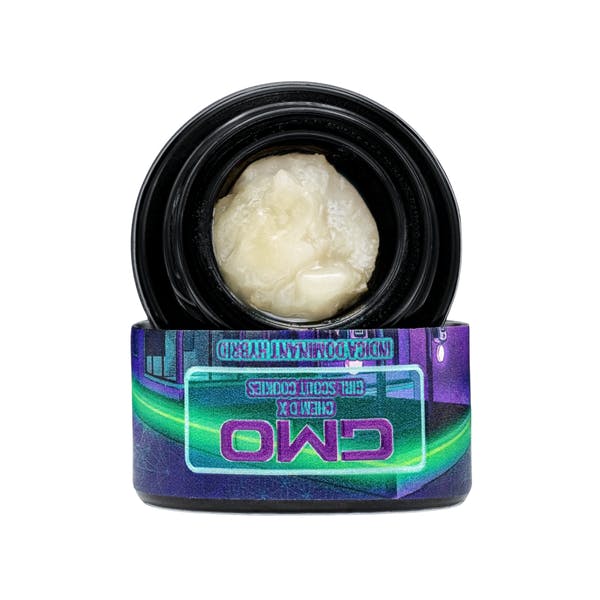
On sale· 20% OFF
THC 70.7%Indica-Hybrid
UmamiiUmamii | Live Rosin Jar | GMO · 2g
$80.00$100.00
$93after tax

weeddispensarynearme.com
You must be 21 years or older to enter. By entering, you confirm you’re of legal age in your state to purchase cannabis.
For use only by adults 21+ • Keep out of reach of children
Marine Park, Brooklyn's most spacious and unhurried neighborhood, has quietly become home to a discerning adult-use cannabis shopper — one who appreciates craft over convenience. Rosin, the solventless concentrate extracted purely through heat and pressure, fits this community's preference for straightforward quality. Along the corridors of Avenue U and Fillmore Avenue, the demand for clean, terpene-forward extracts is growing among the 11234's most thoughtful consumers.
About Rosin
Rosin occupies a singular position in the New York licensed cannabis market. Unlike hydrocarbon extracts such as BHO or distillate, rosin is produced without chemical solvents — a simple application of heat and pressure to cured flower, fresh-frozen material, or sieved kief is all that separates raw plant from finished concentrate. The result is a product that retains the full-spectrum character of the cultivar from which it was derived, including cannabinoids, terpenes, and minor compounds that contribute to what researchers call the entourage effect. New York's licensed dispensary ecosystem has matured enough that consumers in Kings County now have reliable access to two primary expressions of rosin: flower rosin, pressed from dried and cured cannabis, and live rosin, made from fresh-frozen material harvested immediately after the plant is cut. Live rosin commands a premium price point and is widely considered the apex of solventless extraction because the freezing process preserves volatile terpenes that would otherwise be lost during the curing cycle. Expect terpene profiles that read as vivid, true-to-strain, and occasionally complex in ways that dried-flower rosin cannot always replicate. Within NY's regulated adult-use framework, all rosin sold at licensed retailers must pass testing for residual solvents, pesticides, heavy metals, and potency — a set of standards that gives consumers concrete assurance about what they are putting into their bodies. Because rosin inherently contains no solvents, it routinely passes residual solvent panels with ease, which is part of why solventless advocates regard it as the cleanest category in the concentrate aisle. Format versatility is another reason rosin has earned a loyal following. The same material can be consumed via a dab rig, a portable electronic dab device, or packed into the bowl of a pipe beneath a cap of flower. Rosin is also increasingly available in pre-filled, solventless vape cartridges and infused pre-rolls, allowing consumers who are new to concentrates to encounter the category without investing in specialized hardware.
Rosin for Marine Park shoppers
Marine Park is not a neighborhood in a hurry. Bordered by the salt marshes of the eponymous park and anchored by the low-key commercial energy of Avenue U and Fillmore Avenue, the community draws longtime Brooklyn families, active retirees, and a younger generation that grew up here and stayed. The pace is deliberate, the blocks are wide, and the general sensibility leans toward the practical and the proven over the trendy and the transient. That character aligns naturally with rosin's appeal. Shoppers on Fillmore Avenue who have already cycled through pre-rolls and vape cartridges tend to arrive at concentrates looking for something more intentional — a product that rewards attention and delivers a fuller expression of the plant. The outdoor lifestyle that defines this ZIP, from the 35 acres of Marine Park's ball fields and promenades to the bike paths along Flatbush Avenue South, also creates occasions where a high-quality, small-volume concentrate fits neatly into a routine. A rice-grain-sized portion of live rosin before a late-afternoon walk through the park occupies a very different category of experience than a half-smoked pre-roll. The 11234's proximity to the Belt Parkway also means that many residents commute by car rather than subway, which shapes how they prefer to consume. There is less call here for the discreet, pocket-sized cartridge pen that dominates Manhattan micro-dosing culture. Instead, the home session — unhurried, on a couch or in a backyard — is the dominant ritual, and rosin's versatility as a dab, a bowl-topper, or an infused-joint ingredient serves that setting extremely well.
What to look for
Evaluating rosin at a licensed New York dispensary begins with understanding the source material. Hash rosin made from full-melt bubble hash sits at the top of the quality spectrum, followed by live rosin, then cured flower rosin. The certificate of analysis, which a reputable retailer will provide on request or via a QR code on the label, should show total THC in the range of 65–85 percent for most quality rosins, along with a terpene panel that confirms the product has not been stripped of its volatile aromatics during pressing. Myrcene, limonene, caryophyllene, linalool, and terpinolene are among the terpenes most commonly preserved in fresh-frozen live rosin, and their presence in meaningful concentrations — ideally above 1 percent combined — is a reliable indicator of a well-produced extract. Texture is an underappreciated guide to quality. Live rosin pressed at careful temperatures often presents as a pale, creamy badder or a sandy, crumble-like consistency. A very dark or greenish color can indicate high-temperature pressing that degraded chlorophyll and terpenes. Sauce-style live rosin, which separates into a terp-rich liquid layer surrounding crystalline THCA, is another premium expression worth seeking out. For first-time concentrate consumers, the start-low, go-slow principle is especially relevant here — rosin is significantly more potent per unit volume than flower, and the experience is correspondingly more intense. For Marine Park shoppers specifically, the home-session context suggests that a half-gram jar of live rosin from a single, named cultivar offers the most satisfaction per dollar. Pair it with a reliable electronic nail or a simple quartz banger heated to between 450 and 550 degrees Fahrenheit for low-temperature dabbing that preserves the terpene character. If hardware feels like a barrier, ask your budtender about solventless-infused pre-rolls, which incorporate rosin directly into a finished joint format.
Why ZenZest for rosin in Marine Park
ZenZest Cannabis Dispensary serves the Marine Park community through its Staten Island location at 2343 Forest Ave, Staten Island, NY 10303, approximately 11.6 miles from the heart of the 11234. While that distance might suggest inconvenience, ZenZest's free same-day delivery changes the calculation entirely. Orders over $100 are delivered at no charge across more than 80 New York ZIP codes, which means a curated selection of licensed rosin — live rosin, hash rosin, solventless cartridges, and rosin-infused pre-rolls — can arrive at a Marine Park address without a trip across a bridge. ZenZest's product curation reflects the same editorial standards that distinguish premium dispensaries from commodity retail. The rosin category is stocked with attention to source, extraction method, and batch transparency, and the team is prepared to walk shoppers through COA data and terpene profiles. For residents of Fillmore Avenue or the side streets near Marine Park itself, that combination of knowledgeable staff, curated solventless inventory, and reliable same-day delivery makes ZenZest a practical and premium choice for adult-use rosin in Kings County.
ZenZest Staten Island · 2343 Forest Ave, Staten Island, NY 10303 · 11.6 miles from Marine Park.
$93after tax
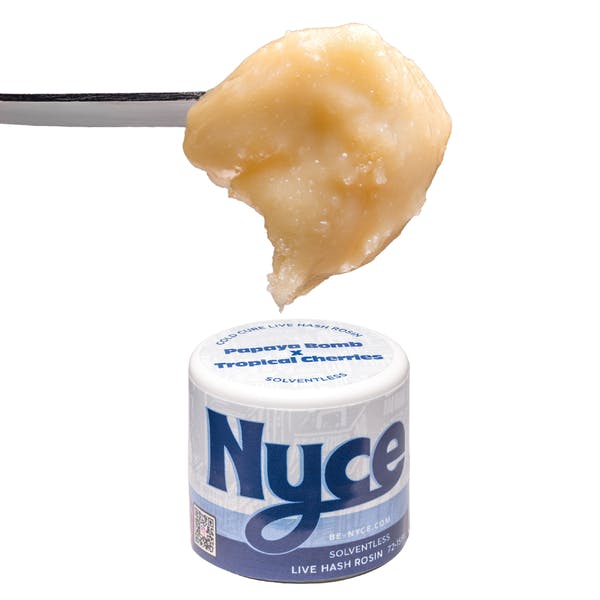
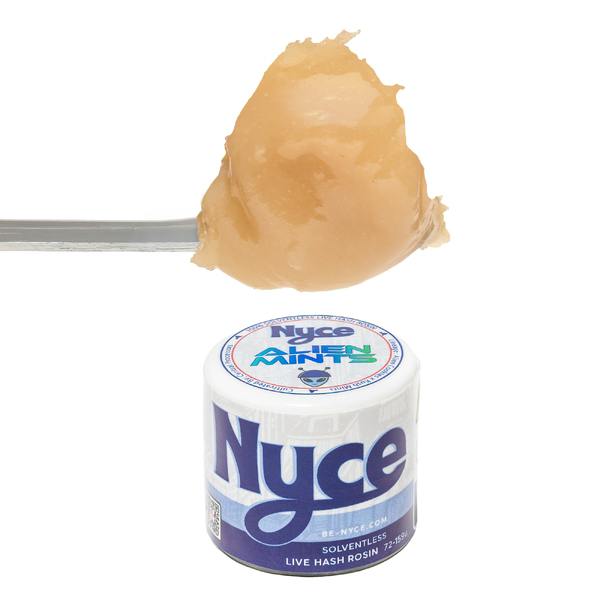
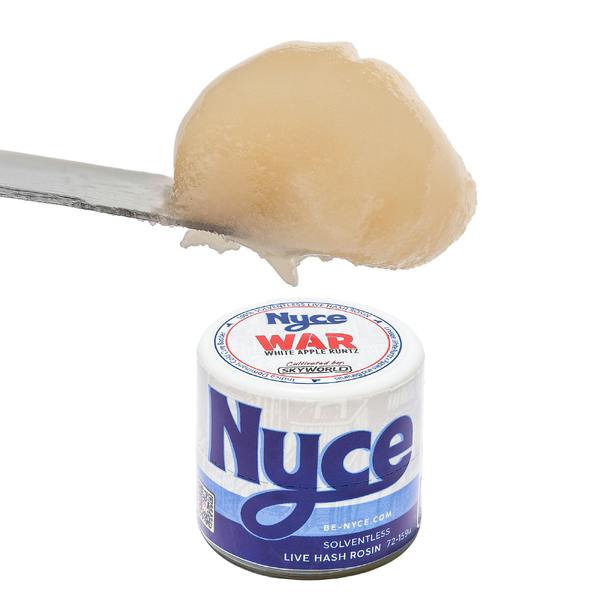
Rosin is produced entirely without chemical solvents. Heat and pressure are applied to cannabis material — flower, kief, or bubble hash — and the resulting extract is mechanically separated rather than chemically washed. This process preserves the plant's native terpene and cannabinoid profile more completely than hydrocarbon or CO2 extraction. Under New York's adult-use regulations, all concentrates must pass residual solvent testing, but rosin typically registers non-detect levels because no solvents were ever introduced.
Live rosin begins with fresh-frozen cannabis harvested at peak ripeness, which preserves volatile terpenes that evaporate during the curing process. The result is a more aromatic, often more complex extract. Cured flower rosin is less expensive and still a high-quality solventless product, with a somewhat earthier, more muted terpene expression. For a Marine Park consumer who values the full-spectrum character of a specific cultivar, the premium for live rosin is generally justified. For someone new to concentrates, cured rosin is an excellent, more accessible entry point.
Low-temperature dabbing in the 450–530 degree Fahrenheit range is widely regarded as optimal for preserving rosin's terpene character while still fully vaporizing the extract. Higher temperatures above 600 degrees will produce larger clouds but destroy much of the aromatic complexity that distinguishes a premium live rosin from a lesser product. Electronic nails and temperature-controlled dab devices make consistent low-temp sessions easier to achieve than a torch-and-timer setup, particularly for consumers who are new to the format. This is general guidance, not a medical recommendation.
Yes, several formats require no specialized hardware. Rosin-infused pre-rolls incorporate concentrate directly into the flower, and they smoke from a standard lighter like any other pre-roll. Rosin can also be placed on top of a flower bowl in a pipe or bong as a bowl-topper. Solventless vape cartridges made from rosin are available at licensed NY retailers and use the same 510-thread batteries as standard cartridges. For Marine Park consumers who prefer a low-barrier entry into the category, these options offer the quality of rosin without the learning curve of traditional dabbing.
Rosin is sensitive to heat, light, and oxygen. Short-term storage — up to a week or two — in the original sealed jar at room temperature in a dark cabinet is generally sufficient. For longer storage, a refrigerator or freezer in an airtight container is preferred. Marine Park summers can push indoor temperatures above 80 degrees Fahrenheit in homes without central air conditioning, and even brief exposure to that level of warmth can cause rosin to lose terpene intensity and change texture. Cold storage is a simple, practical solution for the warmer months.
The terpenes most commonly associated with rosin's desirable aromatic and experiential qualities include myrcene, which contributes earthy, herbal depth; limonene, which reads as citrus-bright; caryophyllene, which is spicy and often associated with a relaxing character; linalool, which is floral and lavender-adjacent; and terpinolene, which appears frequently in sativa-leaning cultivars and offers a piney, fresh quality. A rosin's COA terpene panel should ideally show a combined terpene content above 1 percent to indicate that meaningful aromatic compounds survived the pressing process.
Under New York's Marihuana Regulation and Taxation Act, adults 21 and older may purchase up to 3 ounces of cannabis flower or up to 24 grams of concentrated cannabis in a single transaction. Rosin falls under the concentrated cannabis category, so a 24-gram per-transaction limit applies. For context, rosin is most commonly sold in half-gram or one-gram jars at licensed dispensaries, meaning the per-transaction limit is effectively several months' supply for a moderate consumer. There is no possession limit enforced differently in Kings County than anywhere else in New York.
ZenZest Cannabis Dispensary offers free same-day delivery on orders over $100 across more than 80 New York ZIP codes. The 11234 ZIP code that covers Marine Park is included in the delivery zone served from ZenZest's Staten Island location at 2343 Forest Ave. Shoppers on or near Fillmore Avenue, Avenue U, and throughout the Marine Park grid should confirm their specific address eligibility at checkout, but coverage across the 11234 is broad. The $100 order minimum is easily reached when combining a jar of live rosin with additional items from the menu.
Hash rosin begins with bubble hash — a water-sieved concentrate made by agitating cannabis material in ice water and collecting the separated trichomes through fine mesh screens. That hash is then pressed under heat and pressure to yield rosin. Because bubble hash is already a concentrated form of trichomes, the resulting rosin is exceptionally pure and often presents full-melt characteristics, meaning it vaporizes almost completely without residue. Hash rosin made from six-star full-melt ice water hash is generally considered the most refined expression of solventless extraction available in the licensed NY market.
Distillate cartridges are processed to very high THC concentrations — often above 90 percent — but the refining process strips away most minor cannabinoids and terpenes. Flavor is typically reintroduced artificially via botanical or cannabis-derived terpene blends. Rosin cartridges, by contrast, retain the original full-spectrum profile of the cultivar, including minor cannabinoids and naturally occurring terpenes. Most rosin users report a more nuanced, layered experience compared to distillate, though individual responses vary. For a Marine Park consumer who has found distillate cartridges one-dimensional, solventless rosin cartridges offer a meaningfully different and generally richer point of comparison.
Pick your store
We'll show pricing, deals, and delivery zones for the store you pick. You can switch any time from the header.