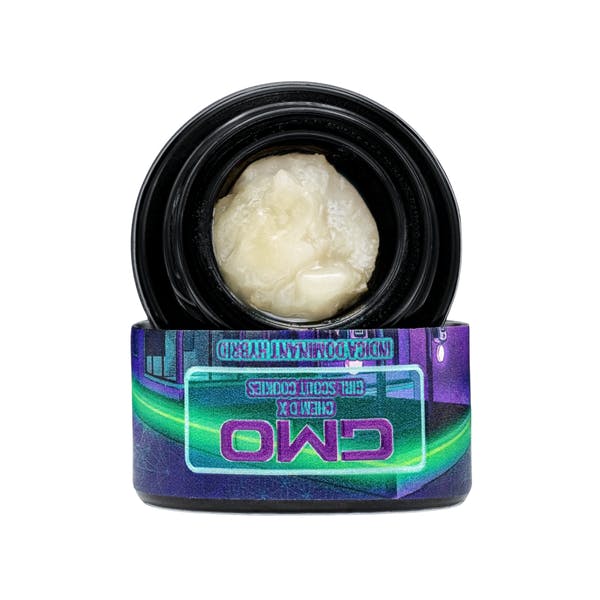
On sale· 20% OFF
THC 70.7%Indica-Hybrid
UmamiiUmamii | Live Rosin Jar | GMO · 2g
$80.00$100.00
$93after tax

weeddispensarynearme.com
You must be 21 years or older to enter. By entering, you confirm you’re of legal age in your state to purchase cannabis.
For use only by adults 21+ • Keep out of reach of children
Greenwich Village has long drawn those who prize craft over convenience — the same sensibility now extends to the cannabis shelves lining Macdougal Street's cultural corridor. For adults 21 and older navigating ZIP codes 10003, 10011, and 10012, solventless rosin represents the neighborhood's preferred expression of the plant: labor-intensive, uncompromising in purity, and quietly luxurious in effect.
About Rosin
Rosin occupies a singular position in the New York licensed cannabis market. Unlike extracts produced with hydrocarbon or CO₂ solvents, rosin is made exclusively through the application of heat and pressure — no chemical intermediaries, no residual solvents to test against, no shortcuts. The result is a full-spectrum concentrate that retains the terpene architecture and cannabinoid ratios of the source material with remarkable fidelity. For consumers who approach cannabis with the same deliberateness they bring to natural-wine selection or single-origin coffee, rosin is the obvious endpoint. New York's licensed producers must submit every concentrate batch to state-approved laboratories, and rosin is no exception. Certificate-of-analysis documents confirm cannabinoid percentages, verify the absence of pesticides, heavy metals, and microbial contaminants, and increasingly include detailed terpene breakdowns. Shopping inside the licensed market — rather than through unregulated channels — is the only reliable way to access that transparency. The CoA is the concentrate consumer's primary tool, and legitimate New York dispensaries make it available before purchase. Within the rosin category, shoppers will encounter several distinct formats. Fresh-press rosin is processed immediately after harvest from fresh-frozen flower, preserving volatile terpenes that would otherwise degrade during curing. Cured rosin, derived from dried and cured flower or hash, offers a more familiar aromatic profile that translates well to consumers transitioning from flower. Live rosin — a term used somewhat interchangeably with fresh-press by some producers, though technically referencing fresh-frozen starting material — tends to command a premium price and is widely regarded as the category's apex expression. Hash rosin, pressed from bubble hash rather than raw flower, delivers exceptional clarity and potency, with THC concentrations routinely ranging from 70 to 90 percent in compliant New York products.
Rosin for Greenwich Village shoppers
Greenwich Village moves at a particular rhythm — one calibrated to long evenings at West Village wine bars, late-night sets at the Village Vanguard on West 11th Street, afternoon sprawls across Washington Square Park, and the perpetual intellectual hum of the NYU campus that anchors the neighborhood's eastern edge. These are, in the main, unhurried occasions that reward products requiring a measure of attention and intention. Rosin fits that context precisely. It is not a format designed for frictionless consumption on a subway platform; it is designed to be appreciated slowly, with proper equipment, in an environment where the experience itself is the point. The Village's demographic breadth matters here. The neighborhood contains longtime residents in rent-stabilized apartments on Bleecker Street alongside graduate students from the Stern and Tisch schools, creative professionals in the landmarked Federal-style townhouses between Sixth and Seventh Avenues, and a hospitality and arts workforce that keeps irregular hours. These groups share an appetite for quality and a resistance to being sold something they haven't evaluated themselves. The solventless category speaks to that skepticism: the production method is legible, the ingredient list is exactly one item long, and the results are verifiable through publicly available lab documentation. Weather also shapes purchasing behavior in 10003, 10011, and 10012. Manhattan winters concentrate social life indoors — studio apartments, converted lofts, intimate dinner parties in the shadow of the Jefferson Market Library. Rosin, consumed via dab rig or quality vaporizer, is a fundamentally indoor experience that scales gracefully with the Village's winter social calendar. By summer, Washington Square's perennial fountain crowd and the greenmarket-adjacent foot traffic on LaGuardia Place create a different rhythm, though rosin's portability in cartridge form means the category travels well into warmer months.
What to look for
Selecting rosin in New York's licensed market begins with the certificate of analysis, specifically the terpene panel. The dominant terpenes in a given batch are the single most reliable predictor of effect character. Myrcene, earthy and slightly sedative, is common in indica-leaning cultivars and tends toward physical relaxation — suitable for evening wind-downs after a long day of navigating the L and A trains. Limonene, bright and citrus-forward, pairs well with social occasions and tends to appear in sativa-leaning and hybrid rosin. Caryophyllene, which binds to CB2 receptors in a way no other common terpene does, contributes a peppery warmth that many consumers associate with stress reduction without heavy sedation — a useful property for a neighborhood that rarely fully powers down. THC potency in rosin concentrates warrants careful attention from consumers accustomed to flower. While a well-cultivated New York flower product might test between 20 and 28 percent THC, rosin typically ranges from 65 to 85 percent, with premium live rosin and hash rosin occasionally exceeding that range. The standard guidance for all concentrate newcomers applies here: start with a portion no larger than a grain of rice, allow adequate time for onset — which with dabbing is rapid but with vaporizer cartridges can take several minutes — before considering additional consumption. New York's Office of Cannabis Management does not endorse any specific dosing protocol, and no quantity recommendation here should be construed as medical advice. Format trade-offs are worth examining for the Village consumer specifically. Sauce and badder consistencies offer easier handling with a standard dab tool and preserve exceptional terpene expression. Rosin cartridges — less common but increasingly available through licensed New York producers — sacrifice some terpene fidelity in exchange for discretion and portability, relevant for commuters heading downtown toward the 1 and 2 lines at Christopher Street. For the Village shopper willing to invest in proper equipment, a quality dab rig or precision vaporizer with temperature control unlocks the full aromatic range that makes rosin worth its premium price point.
Why ZenZest for rosin in Greenwich Village
ZenZest Cannabis Dispensary serves Greenwich Village through its Staten Island location at 2343 Forest Ave, Staten Island, NY 10303, approximately 10.9 miles from Washington Square Park. The store carries a curated selection of New York-licensed rosin products — including live rosin, hash rosin, and solventless cartridges from compliant in-state producers — with staff prepared to walk through certificate-of-analysis documentation for any product on the floor. For adults 21 and older seeking a premium retail environment over a transactional one, ZenZest is built around that slower, more considered shopping experience. For Greenwich Village residents who prefer not to make the trip, ZenZest offers free same-day delivery on orders over $100 to more than 80 New York ZIP codes, with coverage extending throughout Manhattan including 10003, 10011, and 10012. Orders placed through the ZenZest platform arrive with full product documentation and are fulfilled exclusively from licensed inventory. For a neighborhood that has always valued the delivery of fine things directly to its brownstones and apartments, this channel aligns naturally with how the Village already lives.
ZenZest Staten Island · 2343 Forest Ave, Staten Island, NY 10303 · 10.9 miles from Greenwich Village.
$93after tax
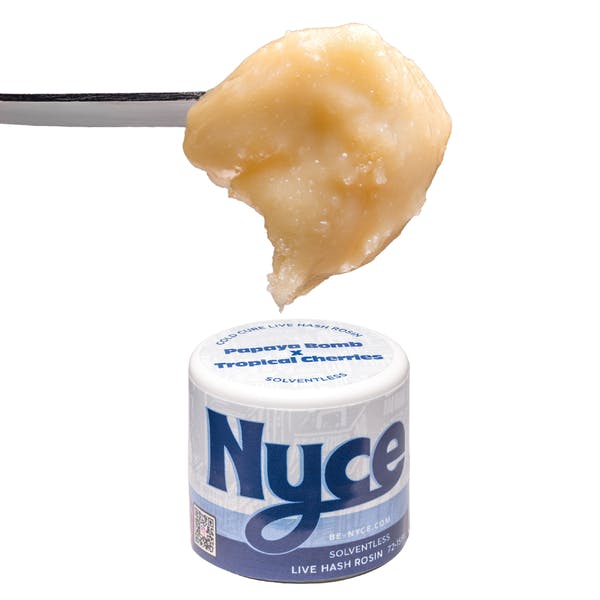
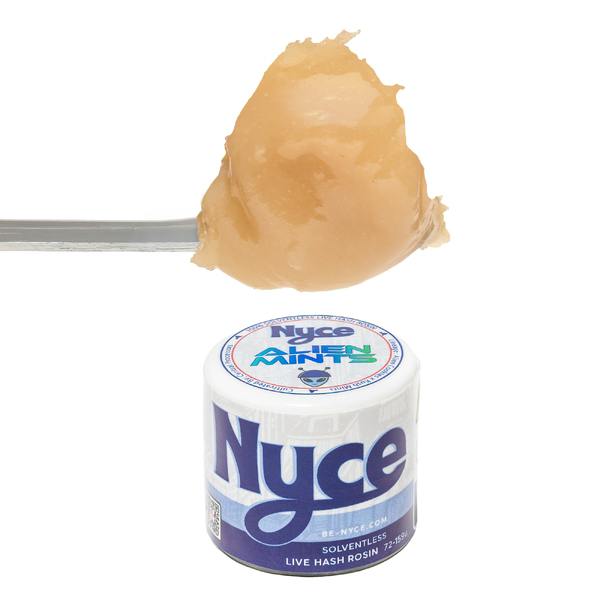
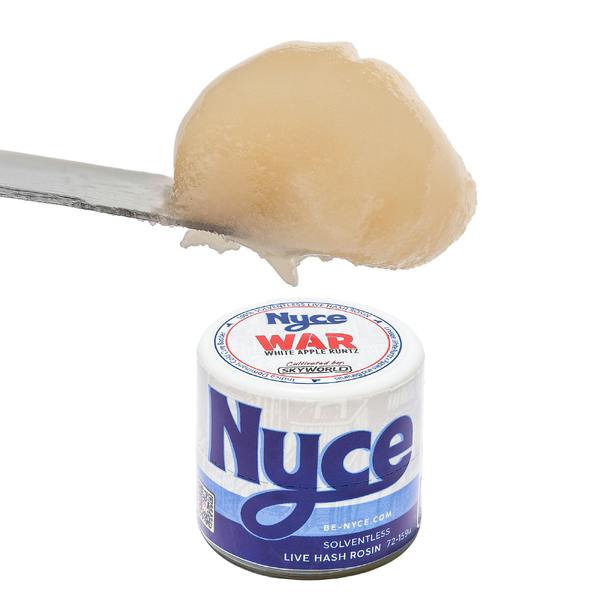
Rosin is the only major concentrate category produced entirely without chemical solvents. Heat and pressure are applied to cannabis flower, hash, or dry sift, causing the resin to separate mechanically. The finished product contains no residual butane, propane, or CO₂, which means the terpene and cannabinoid profile you read on the certificate of analysis reflects only what was present in the original plant material. For consumers in Greenwich Village who prioritize ingredient transparency — the same sensibility that drives demand for natural wine and unfiltered olive oil in this neighborhood — that distinction is meaningful.
Live rosin is pressed from fresh-frozen cannabis, harvested and immediately frozen to preserve volatile terpenes that would otherwise dissipate during the drying and curing process. Cured rosin is pressed from flower that has been dried and aged in the conventional manner. Live rosin tends to be more aromatically complex and is generally priced higher; cured rosin offers a warmer, more familiar aromatic character closer to what flower consumers already know. For first-time rosin purchasers, cured rosin provides an accessible introduction, while experienced consumers often gravitate toward live or hash rosin for the added nuance.
Rosin is more sensitive to heat and light than cured flower, and improper storage accelerates terpene degradation and can alter consistency. The ideal storage environment is cool, dark, and airtight — a dedicated silicone or glass container sealed inside a small cooler or the coldest section of a standard refrigerator works well for medium-term storage up to a month. For longer-term preservation, a freezer is appropriate provided the container is fully airtight to prevent moisture intrusion. Allow refrigerated or frozen rosin to return fully to room temperature before opening the container.
A traditional dab rig with a quartz banger and a butane torch offers the most complete sensory experience, but it is also the highest-maintenance setup. For apartment dwellers in 10003 or 10011 who want a less involved option, an electronic dab device — often called an e-rig or portable dab rig — provides precise temperature control without an open flame and is easier to manage in a smaller living space. Rosin can also be added sparingly to flower in a pipe or joint, though this introduces combustion, which somewhat defeats the purpose of a solventless product. Rosin-compatible vaporizer cartridges, where available, offer the most portable format.
Yes, substantially. Licensed New York flower products typically test between 18 and 28 percent THC by weight. Rosin concentrates routinely range from 65 to 85 percent. The onset when dabbing is rapid, generally within minutes, and the effects are correspondingly more pronounced than an equivalent session with flower. New York's regulatory framework does not specify dosing, but the widely shared consumer guidance — start with a portion no larger than a grain of rice, wait at least fifteen minutes before reassessing — is particularly relevant for anyone moving into concentrates for the first time.
A New York licensed dispensary is required to provide access to the CoA for any product it sells. For rosin, the most relevant sections are: total THC and total CBD percentages, confirming potency; the terpene panel, which identifies the dominant aromatic compounds and helps predict the effect character; and the contaminant screens for pesticides, heavy metals, residual solvents, and microbial matter. A clean pass across all contaminant categories is a baseline expectation. The terpene panel, however, is where informed selection begins — it is the difference between choosing rosin by label design and choosing by what is actually inside the jar.
Myrcene appears frequently in indica-leaning rosin and is associated with a physical, settling quality — well suited to an evening at home near Washington Square after a demanding day. Limonene, brighter and more citrus-forward, tends to accompany sativa-leaning and hybrid cultivars and is often described as mood-elevating. Caryophyllene contributes a warm, peppery character and is notable for its interaction with the CB2 receptor system. Terpinolene and ocimene appear in some cultivars with a floral, almost herbaceous quality. Linalool, less common but present in certain rosin batches, carries a lavender-adjacent softness associated with relaxation.
Yes. ZenZest's free same-day delivery service covers more than 80 New York ZIP codes, including 10003, 10011, and 10012 — the three ZIP codes that span Greenwich Village. Orders over $100 qualify for free delivery. The process mirrors ordering from any premium New York delivery service: browse licensed inventory through the ZenZest platform, add products to your cart, verify that your address falls within the delivery zone, and confirm your order. All deliveries require valid 21-plus identification at the door and are fulfilled exclusively from ZenZest's licensed inventory, with certificate-of-analysis documentation available for any product.
The price premium reflects both the yield limitations of the production process and the quality of starting material required to produce rosin worth purchasing. Solvent-based extraction is more efficient — it recovers more cannabinoid content per pound of input material. Rosin pressing, by contrast, requires premium-quality flower or bubble hash and produces lower yields per input pound. Producers absorb those economics into the wholesale price, which flows through to retail. Hash rosin, pressed from hand-washed bubble hash rather than flower directly, involves an additional labor-intensive step that further justifies its position at the top of the concentrate price range.
Cultivar selection and terpene profile are the primary levers for matching rosin to a use occasion. Sativa-leaning and hybrid rosin with dominant limonene, terpinolene, or pinene tends to be associated with a lighter, more clearheaded character appropriate for daytime engagement — an afternoon session before a gallery opening on West 10th Street, for example, or a slow weekend morning before the Washington Square greenmarket. Avoiding high-myrcene, indica-leaning rosin during daylight hours is a reasonable heuristic for consumers seeking to remain functional. THC potency should be moderated further for daytime use; lower-temperature dabbing also extracts more terpene-forward vapor with a less intensely psychoactive character.
Pick your store
We'll show pricing, deals, and delivery zones for the store you pick. You can switch any time from the header.