On sale· 20% OFF
THC 70.7%Indica-Hybrid
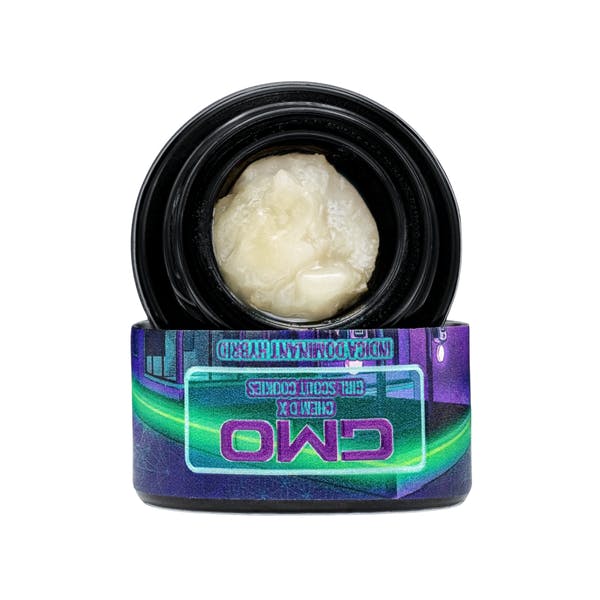
UmamiiUmamii | Live Rosin Jar | GMO · 2g
$80.00$100.00
$93after tax

weeddispensarynearme.com
You must be 21 years or older to enter. By entering, you confirm you’re of legal age in your state to purchase cannabis.
For use only by adults 21+ • Keep out of reach of children
Gramercy's composed, tree-lined streets — Irving Place, the wrought-iron perimeter of Gramercy Park, the broad southward sweep of Park Avenue South — set a standard for discernment that extends naturally to cannabis. For the neighborhood's adult residents seeking a solventless concentrate, rosin has become the category of choice: clean in process, expressive in flavor, and precisely aligned with Gramercy's understated sense of quality.
About Rosin
Rosin occupies a singular position in New York's licensed adult-use cannabis market. Unlike hydrocarbon extracts that rely on solvents such as butane or propane, rosin is produced entirely through the application of heat and pressure — a process that preserves the full spectrum of cannabinoids and terpenes present in the original plant material. The result is a concentrate that functions as a near-unmediated expression of the cultivar it came from, with none of the residual solvent concerns that occasionally shadow other extraction categories. Within the broader concentrate landscape, rosin arrives in several distinct textures: fresh-press, which is soft and saucy and tends toward the most vibrant terpene expression; cold-cure, which is whipped to a badder or butter consistency and offers a slightly more stable handling experience; and live rosin, which is pressed from freshly frozen material and is widely regarded as the apex of the category for aromatic complexity. Each texture interacts differently with a dab rig, e-nail, or rosin-specific vaporizer, so understanding the format before purchasing matters as much as understanding the strain. New York's Office of Cannabis Management licenses only cultivators and processors who meet state compliance standards, meaning every jar of rosin on a licensed dispensary shelf has passed testing for residual solvents (confirming zero, by definition), potency, pesticides, heavy metals, and microbials. For concentrate shoppers accustomed to legacy-market products, the licensed tier offers a meaningful leap in accountability — certificates of analysis are publicly available, and batch-level traceability is required. That transparency is particularly valued in a neighborhood like Gramercy, where residents tend to research purchases before committing to them.
Rosin for Gramercy shoppers
Gramercy draws a specific kind of New Yorker: professionals in finance, publishing, design, and medicine who chose the neighborhood deliberately, for its relative quiet, its proximity to Midtown without the unrelenting noise, and the sense that life here proceeds at a slightly more considered pace than in the blocks north of 34th Street. Cannabis consumption in this context tends toward the intentional — a wind-down after a long day at a desk off Park Avenue South, a measured moment of decompression before an evening at one of the neighborhood's storied restaurants, or a weekend afternoon on a private terrace in the ZIP code 10003 or 10010 corridor. Rosin fits that occasion profile well. Because it is consumed in small amounts — even a modest dab of a high-quality live rosin delivers a full, layered experience — it suits the Gramercy resident who values efficiency and control. The format is not about volume; it is about precision. A well-curated jar of rosin can last weeks for a moderate consumer, making the per-use cost of a premium product more palatable than the headline price on the jar might initially suggest. Seasonal considerations also apply in this part of Manhattan. In winter, when Irving Place is cold and gray and the park is locked to non-keyholders, the preference for at-home consumption rises sharply. A concentrate consumed with a quality portable e-nail or desktop rig in a well-appointed apartment off Lexington Avenue is a fundamentally different experience than a park-bench pre-roll. Summer, by contrast, opens up rooftop terraces and the occasional garden access that Gramercy's townhouse stock affords — though discretion remains the neighborhood's operative value regardless of season.
What to look for
Shopping for rosin in New York's licensed market rewards a methodical approach. The first thing to examine is the source material: flower rosin (pressed from dried, cured bud) is the most accessible entry point, while hash rosin — pressed from ice-water hash — adds a layer of refinement and is worth the premium for those who prioritize terpene complexity and a cleaner inhale. Live rosin, made from freshly frozen material, is the most expressive and the most expensive, and represents the category's ceiling for flavor and aroma. Terpene profiles are the most reliable guide to the experiential character of a given rosin. Myrcene-dominant profiles — common in Indica-leaning cultivars — tend toward an earthy, relaxed character well-suited to evening use. Limonene and terpinolene lean brighter and more energetic; caryophyllene adds a peppery, grounding quality that many consumers find conducive to social settings. Certificates of analysis from licensed New York processors will list dominant terpenes; a knowledgeable budtender can help cross-reference these against your preferred use occasions. THC potency in rosin typically ranges from the mid-60s to mid-80s on a percentage basis, and sometimes higher in live rosin from premium cultivars. For consumers new to concentrates, the general principle of starting with a very small amount and waiting to assess the effect fully before consuming more is the sensible approach — a principle sometimes abbreviated as 'start low, go slow.' Format trade-offs are also worth considering: a jar of cold-cure rosin has a longer shelf life and is easier to handle than a fresh-press, which can be more runny and requires cooler storage. For Gramercy residents who may purchase infrequently and store product for extended periods, cold-cure badder or a pressed rosin puck offers practical advantages alongside its sensory ones.
Why ZenZest for rosin in Gramercy
ZenZest Cannabis Dispensary's nearest location to Gramercy is ZenZest Staten Island at 2343 Forest Ave, Staten Island, NY 10303, approximately 11.8 miles from the neighborhood's core — a manageable trip for those who prefer to browse a curated concentrate selection in person, speak with staff about batch-specific terpene profiles, and examine certificates of analysis before purchasing. The store's selection spans the rosin category comprehensively, from approachable flower rosin to small-batch live rosin from New York cultivators. For Gramercy residents who prefer the convenience of delivery — and given the neighborhood's professional cadence, that cohort is substantial — ZenZest offers free same-day delivery on orders over $100 across more than 80 New York ZIP codes, including 10010 and 10016. Ordering online allows shoppers to review product details, lab data, and pricing at their own pace, with delivery arriving without the need to navigate crosstown traffic or the subway after a long workday. For a neighborhood that values time as acutely as Gramercy does, that service model is not a minor convenience — it is a meaningful part of the value proposition.
ZenZest Staten Island · 2343 Forest Ave, Staten Island, NY 10303 · 11.8 miles from Gramercy.
$93after tax
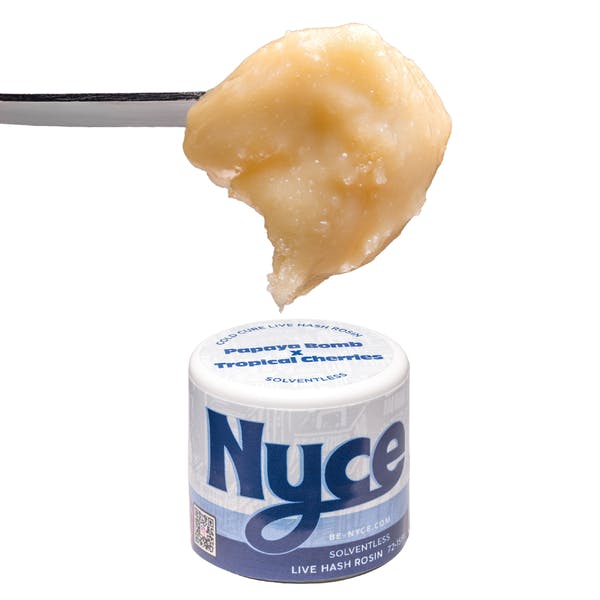
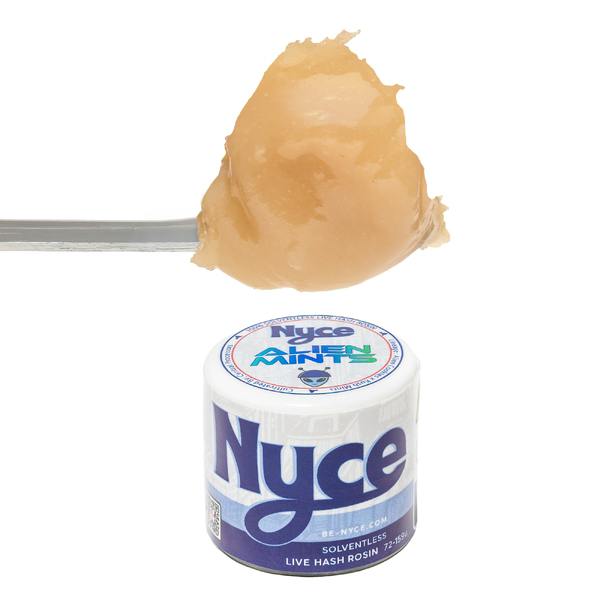
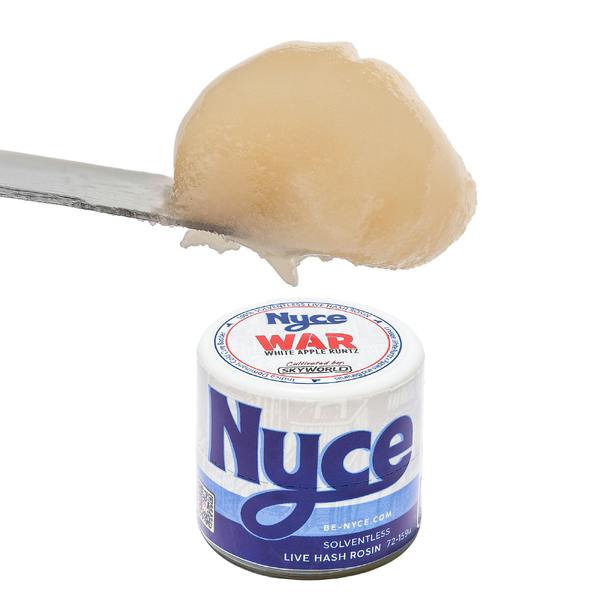
Rosin is a solventless concentrate produced by applying controlled heat and pressure to cannabis plant material — flower, kief, or ice-water hash — to extract cannabinoids and terpenes in their natural form. Unlike BHO (butane hash oil) or other hydrocarbon extracts, no chemical solvent is introduced at any point, meaning there is nothing to purge from the final product. In New York's licensed market, all concentrates are tested for residual solvents, but rosin is unique in that compliant results are guaranteed by the process itself. This makes it a preferred choice for consumers in neighborhoods like Gramercy who tend to evaluate purchases carefully before committing.
Flower rosin is pressed directly from dried, cured cannabis bud and is the most widely available and most affordable entry point in the category. Hash rosin adds a refinement step: ice-water extraction is used to isolate trichome heads into bubble hash before pressing, yielding a cleaner, more concentrated product with a purer terpene profile. Live rosin goes further still, using freshly frozen plant material rather than dried and cured flower, which preserves volatile aromatic compounds that are lost during the drying process. The result is a product with exceptional aromatic complexity. Each tier reflects a meaningful increase in labor and source-material quality, and the price differential in New York's licensed market tracks accordingly.
Rosin is sensitive to heat and light, both of which degrade terpenes and cannabinoids over time. For short-term storage — up to two weeks — a cool, dark environment such as a kitchen drawer away from the stove is generally sufficient. For longer storage, many consumers refrigerate or freeze rosin in its sealed container, allowing it to return to room temperature before opening to prevent condensation from introducing moisture. Cold-cure rosin in a firm badder consistency is more forgiving than fresh-press, which can become runny at room temperature. Gramercy apartments with efficient climate control year-round tend to offer favorable ambient conditions, though south-facing units that receive direct sun exposure in the afternoon may benefit from an extra layer of caution.
Rosin can be consumed using a traditional dab rig paired with a quartz banger heated with a torch, though many consumers in urban apartment settings prefer the greater temperature precision and reduced open-flame footprint of an electronic nail (e-nail) or a purpose-built electronic dab device. Portable electronic dab pens designed specifically for concentrates are also a practical option in a setting where discretion and minimal equipment are priorities. For those new to the format, a rosin-compatible portable vaporizer with a concentrate insert offers a gentle introduction without requiring a dedicated rig setup. All of these options are available through licensed New York accessories retailers.
For an evening wind-down after a demanding workday — a common use occasion in a neighborhood where many residents hold high-pressure professional roles — terpene profiles leaning toward myrcene, linalool, or beta-caryophyllene tend to be well-regarded. Myrcene is associated with an earthy, relaxed character; linalool carries a floral quality; and beta-caryophyllene, a sesquiterpene that also interacts with CB2 receptors, adds a grounding, peppery note. The certificate of analysis for any licensed New York rosin will include a terpene panel, and a knowledgeable staff member at ZenZest can help you identify batches with those dominant profiles. These are general sensory observations, not medical guidance.
Rosin is a high-potency product — typical THC percentages in the licensed New York market range from the mid-60s to the mid-80s or beyond — and it is not generally recommended as a starting point for consumers with no prior cannabis experience at all. However, for someone who has used flower and wishes to explore concentrates, rosin is arguably a more approachable entry point than some other extract categories because its flavor profile is close to the source material, its production method is transparent, and its consistency is predictable batch to batch from reputable processors. The universal guidance applies: start with an amount smaller than you think you need, assess fully before consuming more, and give yourself ample time in a comfortable environment for the initial experience.
Yes. ZenZest Cannabis Dispensary offers free same-day delivery on orders over $100 to more than 80 New York ZIP codes, and both 10010 and 10016 are included in that delivery footprint. Orders can be placed online, where product listings include detailed descriptions, lab-tested potency and terpene data, and pricing. For Gramercy residents whose schedules do not accommodate a trip to a physical store, delivery provides a practical way to access ZenZest's concentrate selection — including rosin — without leaving the neighborhood. Standard identification verification confirming adult-use eligibility (21+) applies at the time of delivery.
A certificate of analysis (COA) for a licensed New York rosin will include, at minimum, a cannabinoid potency panel (listing THC, THCA, CBD, and minor cannabinoids as percentages), a terpene panel (listing individual terpenes in milligrams per gram or as a percentage), and results for pesticides, heavy metals, microbials, and residual solvents (which, for rosin, should show non-detected across all solvent analytes). The most useful sections for a consumer selecting between products are the potency panel and the terpene panel. Batch numbers on the product packaging correspond to the COA; licensed dispensaries are required to make these documents available, and many post them online for each active SKU.
In New York's licensed adult-use market, pricing for rosin reflects the labor and material intensity of the production process. Flower rosin typically falls in the range of $40 to $65 per gram, depending on the cultivar and the processor's reputation. Hash rosin occupies a mid-tier, generally ranging from $60 to $90 per gram. Live rosin from small-batch New York cultivators can reach $80 to $120 per gram or more at the premium end. For Gramercy consumers accustomed to evaluating price-per-use across premium categories — wine, coffee, fine skincare — the calculus is familiar: a higher upfront cost per unit paired with a smaller amount consumed per session often yields a comparable or lower cost per occasion than mass-market alternatives.
Yes. New York's cannabis licensing framework has progressively expanded the number of state-licensed cultivators and processors, and an increasing share of rosin on licensed dispensary shelves is sourced from New York-grown material — including farms in the Hudson Valley, the Catskills corridor, and Long Island. For consumers who place value on regional provenance, traceability, and supporting the state's licensed industry, seeking out New York-origin rosin is a meaningful distinction. Regional terroir does influence terpene expression, particularly in outdoor and greenhouse-grown material, and New York's cultivation seasons produce cultivars with flavor profiles that reflect the state's specific agricultural conditions. Staff at ZenZest can identify which current rosin SKUs are sourced from New York licensees.
Pick your store
We'll show pricing, deals, and delivery zones for the store you pick. You can switch any time from the header.