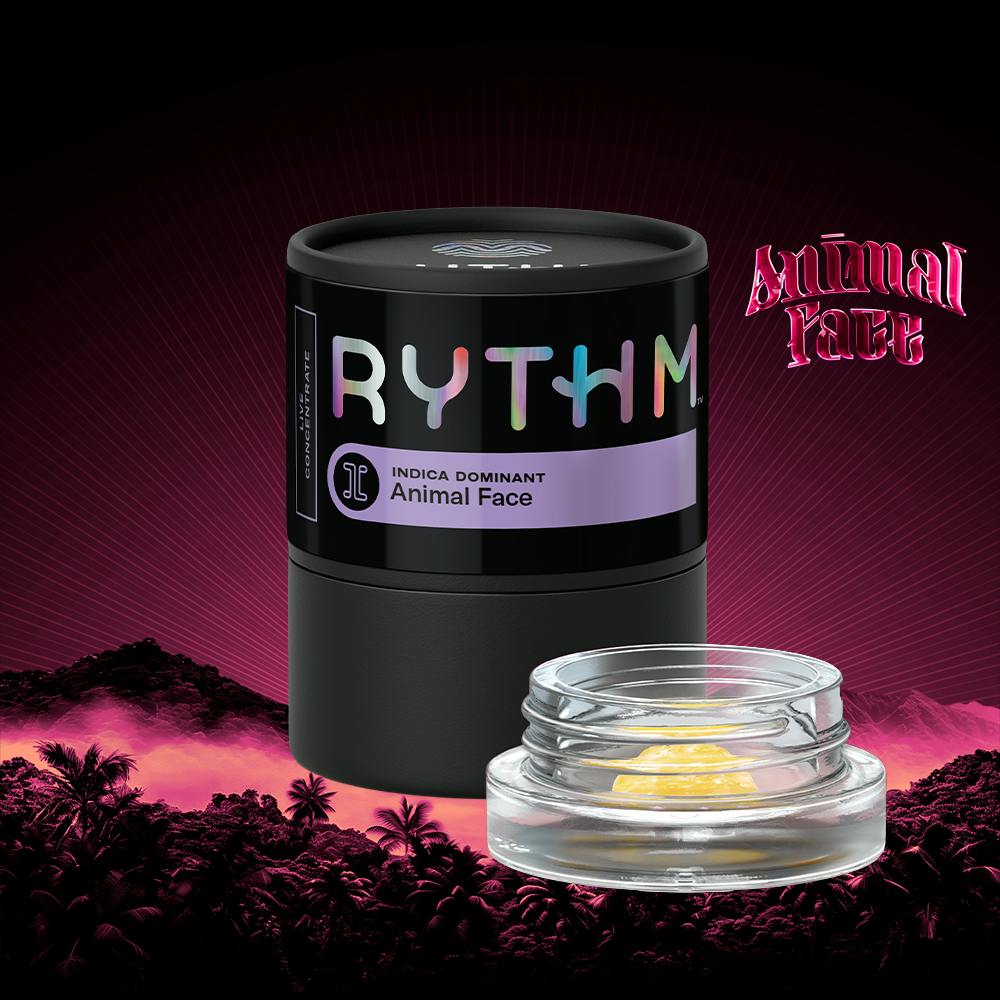
On sale· 20% OFF
THC 79.9%Indica-Hybrid
RYTHMRythm | Animal Face | Live Resin Concentrate | Indica · 2g
$72.22$90.27
$84after tax

weeddispensarynearme.com
You must be 21 years or older to enter. By entering, you confirm you’re of legal age in your state to purchase cannabis.
For use only by adults 21+ • Keep out of reach of children
Glen Oaks, tucked into the northeastern edge of Queens along Union Turnpike, has developed a quiet sophistication that pairs naturally with the most craft-forward corner of the cannabis market. Live resin — extracted from flash-frozen, freshly harvested flower — delivers a terpene profile so faithful to the living plant that seasoned consumers rarely settle for anything less once they have experienced it.
About Live Resin
Live resin occupies a distinct tier in New York's licensed cannabis landscape, and understanding why begins with the harvest itself. Unlike conventional concentrates made from dried and cured flower, live resin is produced from plants that are frozen immediately after cutting — locking in volatile aromatic compounds, called terpenes, that would otherwise evaporate during the drying process. The result is an extract that smells and tastes remarkably close to the original cultivar: a full-spectrum sensory record of the plant at its peak. New York's Office of Cannabis Management licenses the producers who supply dispensary shelves, which means every live resin product available through a legal retailer in Queens County has passed third-party testing for potency, pesticides, residual solvents, and microbial contaminants. Shoppers can review certificates of analysis on request, giving them a level of product transparency that legacy-market purchases never offered. That accountability matters when you are evaluating a category where quality varies considerably from batch to batch. Format diversity is one of live resin's great strengths. The category encompasses sauce — a viscous, terpene-rich liquid studded with crystalline THCA — as well as badder, sugar, and live resin cartridges that fit standard 510-thread batteries. Each format has its own texture, ease of use, and intensity profile. Sauce and badder are typically consumed via a dab rig or e-rig, while cartridges offer discreet, portable convenience without any additional hardware investment. Potency in live resin concentrates is meaningfully higher than in flower, with most licensed New York products registering between 65 and 90 percent total cannabinoids. For adults who are newer to concentrates, the standard advisory applies: start with the smallest possible amount, allow adequate time to gauge effect, and build from there. The elevated terpene content also means the experience is notably more nuanced than high-THC distillate, producing effects that many consumers describe as more layered and true to the source strain.
Live Resin for Glen Oaks shoppers
Glen Oaks sits at ZIP code 11004, a residential enclave where co-op apartments in Glen Oaks Village share block space with single-family homes on streets like 260th Street and Union Turnpike's quieter eastern stretch. The neighborhood's pace is unhurried — weekend mornings at the local park, evening walks along the parkway service road, dinners that linger. Live resin fits this rhythm. It rewards deliberate consumption: the ritual of loading a dab, appreciating the aroma, and settling into an evening without rushing. Commuters who take the Q46 bus along Union Turnpike or drive the Grand Central Parkway into Manhattan tend to return home with a clear separation-of-work-from-leisure mindset. A small amount of a well-chosen live resin cultivar — perhaps a myrcene-forward indica-leaning variety — can serve as that sensory boundary, a deliberate transition from a demanding commute to a genuinely restful evening. The relatively low ambient noise of this corner of Queens, compared to neighborhoods further west, means the sensory richness of live resin is easier to appreciate. Seasonal context is worth noting. Queens County winters can be genuinely cold along Union Turnpike, and the enclosed, home-centered social life that comes with those months suits the dab-at-home format well. Summers in Glen Oaks, with open windows and evenings on small patios, favor live resin cartridges — discreet, odor-contained, and easy to put down when neighbors are nearby. The neighborhood's demographic mix, which skews toward established adults with discerning tastes, aligns with live resin's premium positioning and higher price-per-gram compared to flower or standard distillate vapes.
What to look for
When evaluating live resin on a dispensary shelf, the first thing to examine is the terpene percentage listed on the certificate of analysis. A well-made live resin will commonly show total terpenes above two percent, and often considerably higher in sauce-format products. The dominant terpenes tell you a great deal about the likely sensory experience: myrcene tends toward earthy, herbal depth; limonene brings citrus brightness; caryophyllene adds a subtle spice; terpinolene contributes floral, almost orchard-like notes. Reading these figures, rather than relying solely on indica or sativa labeling, gives you a more reliable guide to what you are purchasing. Format trade-offs deserve careful consideration for Glen Oaks shoppers in particular. If you have a dedicated space at home — a living room, a home office with good ventilation — a sauce or badder product consumed on an e-rig offers the fullest expression of the live resin terpene profile, and the per-dose cost is often lower than cartridges on a gram-for-gram basis. Cartridges, however, require no additional equipment, produce less odor, and travel well for adults who want flexibility without the commitment of a full dab setup. Many regular live resin consumers keep both formats on hand for different occasions. THC potency in this category commonly ranges from the high sixties to the low nineties in percentage terms. That range can feel abstract until you compare it to the fifteen-to-thirty percent THC found in premium flower — concentrates are genuinely more potent per unit of material consumed. New consumers to this category should purchase a small quantity first, regardless of the cultivar's reputation, and follow a start-low, go-slow approach. Experienced concentrate consumers should still pay attention to batch-to-batch variation, since even the same strain from the same producer can shift notably across harvests.
Why ZenZest for live resin in Glen Oaks
ZenZest Cannabis Dispensary operates its Queens location at 272-06 Union Turnpike in Bellerose — placing it approximately 0.8 miles from the heart of Glen Oaks Village, a straightforward drive or a short ride along the very corridor that defines daily life in this neighborhood. The store carries a curated selection of licensed live resin products across formats, and staff are trained to walk customers through certificates of analysis, terpene breakdowns, and format considerations without pressure. It is the kind of retail environment where asking a detailed question is welcomed rather than rushed past. For Glen Oaks residents who prefer to shop from home, ZenZest offers free same-day delivery on orders over one hundred dollars to more than eighty New York ZIP codes, with 11004 among the eligible areas. Orders placed through the ZenZest platform can be scheduled to arrive within a practical window, making it genuinely convenient to restock a live resin supply without a dedicated trip. Whether you visit the Union Turnpike store in person or order for delivery, every product on offer is licensed, tested, and compliant with New York State adult-use regulations.
ZenZest Queens · 272-06 Union Tpke, Bellerose, NY 11004 · 0.8 miles from Glen Oaks.
$84after tax
The critical distinction is when the plant material is processed. Standard concentrates — wax, shatter, most distillates — are made from flower that has been dried and cured, a process that degrades many of the volatile terpenes responsible for aroma, flavor, and nuanced effect. Live resin starts with plants that are frozen immediately after harvest, preserving those compounds. The result is a more aromatic, more complex product that many experienced consumers find to be a truer representation of the original cultivar.
Live resin cartridges are widely available at licensed New York dispensaries and fit standard 510-thread batteries, which are sold separately and inexpensively. These cartridges retain a higher terpene content than standard distillate carts, meaning the flavor and aroma experience is noticeably richer. They are a practical choice for Glen Oaks residents who want live resin's quality profile in a discreet, portable format — without investing in or learning to use a dedicated dab rig or e-rig.
Live resin is best stored in a cool, dark environment — away from heat sources, direct sunlight, and humidity fluctuations. An airtight glass or silicone container in a drawer or cabinet works well for sauce and badder formats. Cartridges should be kept upright when not in use and away from extreme cold, which can cause the oil to thicken and clog the mouthpiece. Given Queens winters, avoid leaving cartridges in a cold car for extended periods, as repeated temperature swings accelerate degradation of terpene content.
Myrcene is the terpene most commonly associated with a heavy, settled quality — it is found in high concentrations in many indica-leaning cultivars and contributes an earthy, herbal aroma. Linalool, which is also present in lavender, has a similarly calming aromatic character. Caryophyllene, a spicy, peppery terpene, is notable because it also interacts with CB2 receptors. Reviewing the terpene panel on a product's certificate of analysis before purchasing is a more reliable method than relying on strain names alone, which are not consistently standardized across producers.
Licensed live resin products available in New York commonly test between 65 and 90 percent total cannabinoids, though the precise figure varies by producer, cultivar, and format. Sauce-style live resin sometimes runs slightly lower due to its terpene-rich, crystal-heavy composition, while more processed forms can register toward the higher end of that range. Reading the certificate of analysis, which licensed dispensaries can provide, gives you the accurate figure for the specific batch you are purchasing — far more reliable than general category estimates.
ZenZest Cannabis Dispensary offers free same-day delivery to ZIP code 11004, which covers Glen Oaks, on orders over one hundred dollars. Orders below that threshold may still be eligible for delivery with a service fee — it is worth confirming current terms directly with the retailer. Same-day delivery is a practical option for residents who prefer not to make a dedicated trip along Union Turnpike, particularly during cold winter months or busy weekday evenings when in-store shopping is less convenient.
Sauce is a liquid-forward format, typically containing distinct THCA crystals suspended in a highly terpene-rich oily layer. Badder has been whipped to a smooth, creamy consistency and is generally easier to handle on a dab tool without spilling. For someone new to concentrates, badder's texture is often more forgiving — it stays where you place it and loads onto a nail or e-rig insert more predictably. Either format requires a heat source and appropriate hardware, so cartridges remain the most approachable entry point for those who are completely new to the category.
Live resin cartridges are typically somewhat less potent per inhalation than a properly sized dab of sauce or badder, both because cartridges are often blended with carrier material to achieve the right viscosity and because the hardware delivers a smaller volume of vapor per draw. That moderation is not necessarily a disadvantage — many users find cartridges easier to titrate to their preferred level of effect. For those seeking maximum terpene fidelity and the most pronounced experience, dabbable formats deliver a fuller expression of the live resin's character.
Both categories prioritize fresh, frozen plant material, but the extraction method differs significantly. Live resin uses hydrocarbon or CO2 solvents to strip cannabinoids and terpenes, then removes those solvents before the final product reaches retail. Live rosin uses only heat and pressure — no solvents at all — producing what many consider the purest expression of the plant, often at a higher price point. Solvent-based live resin is not inferior; both are rigorously tested for residual solvents in the New York licensed market. The choice often comes down to personal preference and budget.
Ask to see the certificate of analysis for the specific batch, noting the total terpene percentage, dominant terpene profile, and total cannabinoid content. Ask whether the product is a single-cultivar expression or a blend, since single-cultivar live resins tend to have more distinctive, traceable flavor profiles. Inquire about the producer's reputation for consistency batch to batch. Finally, ask whether the format — sauce, badder, or cartridge — suits the hardware you already own, since purchasing a dabbable concentrate without the appropriate equipment creates an immediate obstacle to use.
Pick your store
We'll show pricing, deals, and delivery zones for the store you pick. You can switch any time from the header.