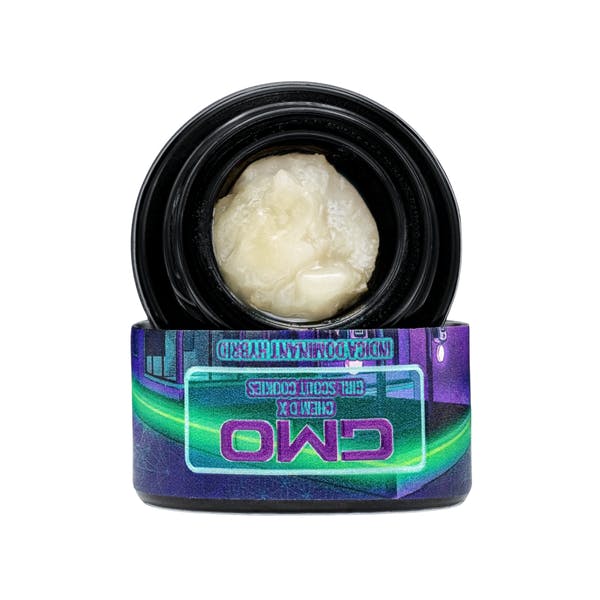
On sale· 20% OFF
THC 70.7%Indica-Hybrid
UmamiiUmamii | Live Rosin Jar | GMO · 2g
$80.00$100.00
$93after tax

weeddispensarynearme.com
You must be 21 years or older to enter. By entering, you confirm you’re of legal age in your state to purchase cannabis.
For use only by adults 21+ • Keep out of reach of children
East Village has long traded in authenticity — from the record shops on St. Marks Place to the murals bleeding down Avenue A — and that same uncompromised standard now shapes how its residents approach cannabis. Rosin, the solventless concentrate pressed from whole flower or hash, fits this neighborhood's no-filler ethos precisely: nothing extracted, nothing added, nothing hidden.
About Rosin
Rosin occupies a particular tier within New York's licensed concentrate market. Unlike hydrocarbon extracts that rely on butane or propane as a solvent, rosin is produced entirely through heat and pressure applied to cured flower, fresh-frozen material (yielding live rosin), or bubble hash. The result is a full-spectrum oil that preserves the plant's original terpene profile with remarkable fidelity. For the adult-use shopper navigating New York's Office of Cannabis Management–licensed retail ecosystem, this distinction matters: solventless products are increasingly regarded as a quality benchmark, and a well-made rosin will carry the genetic fingerprint of its source material in a way that distillate simply cannot replicate. New York's licensed market has matured enough that consumers can now find rosin in several formats — traditional slab or badder, rosin cartridges, and rosin-infused pre-rolls — each processed at different temperatures to achieve distinct textures and viscosities. A slab pressed at lower temperatures retains a glassy, stable consistency and typically shows higher terpene retention. A whipped or buddered rosin has been agitated post-press to encourage nucleation, producing a softer, more workable texture that many dabbers prefer for ease of handling. Live rosin, made from fresh-frozen flower harvested at peak terpene expression, commands the upper end of the price range and delivers an aromatic intensity that experienced concentrate consumers tend to find unmatched. For shoppers in New York County, the OCM's seed-to-sale tracking means every licensed rosin product comes with a certificate of analysis verifying cannabinoid content and confirming the absence of residual solvents — the latter being somewhat moot for solventless products, but still a useful transparency signal. When evaluating options on a licensed dispensary's menu, checking the COA date and the harvest date of the source material is a sound habit. Rosin pressed from fresh or recently cured flower will generally outperform product sitting on a shelf for extended periods, as terpenes are volatile and degrade with time and light exposure.
Rosin for East Village shoppers
East Village exists at an interesting cultural intersection: it carries the memory of its countercultural past — the punk venues, the community gardens tucked behind Avenue A, the political energy that still crackles through Tompkins Square Park — while housing a newer layer of residents who commute into Midtown financial offices or work in the creative and tech industries clustered around the Flatiron District and SoHo. That duality shapes cannabis consumption patterns in the neighborhood in fairly predictable ways. The longtime resident who has been exploring cannabis for decades is often already comfortable with concentrates and actively seeking the solventless tier. The newer professional resident may be curious but approaching with more deliberation, drawn to rosin's cleaner provenance story rather than necessarily its potency. The ZIP codes 10003 and 10009 cover a neighborhood that is walkable in almost every direction — the L train at First Avenue and the 6 at Astor Place mean commutes rarely require a car, and daily life unfolds largely on foot between the East River and Lafayette Street. That pedestrian rhythm has practical implications for how and when people consume. A rosin product consumed at home before an evening walk through Tompkins Square Park, or before settling into one of the wine bars tucked along Seventh Street, suits the neighborhood's pace far better than a heavy session. Occasion-driven, intentional use is the governing logic here, and rosin — dense in effect, requiring only small amounts — fits that intention elegantly. Seasonal considerations apply as well. East Village winters are cold enough that outdoor consumption becomes genuinely unappealing by December, concentrating use indoors where a quality dab rig or a rosin-filled vaporizer makes practical sense. Summers, by contrast, bring the neighborhood fully outdoors, and the portability of a rosin cartridge or a rosin-infused pre-roll becomes relevant for those seeking a format that travels.
What to look for
When evaluating rosin on a dispensary menu, the first variable to examine is source material. Flower rosin pressed from a single-cultivar run carries a different character than hash rosin pressed from bubble hash made of the same cultivar — hash rosin typically achieves greater concentration and a more refined terpene profile because the initial hash-washing step already separates trichome heads from plant matter. For shoppers newer to concentrates, flower rosin is often the gentler introduction: slightly lower potency ceiling, familiar cultivar names, and generally more accessible price points. Terpene profile is the second critical variable, and for rosin it is particularly meaningful because the solventless process preserves these compounds more completely than solvent-based methods. Myrcene-forward profiles tend toward sedating and body-heavy effects — well-suited to the unwinding-at-home occasion. Limonene and pinene contribute uplifting, clarifying qualities that some consumers find better suited to creative or social settings. Caryophyllene, a terpene also found in black pepper and cloves, introduces a subtle spice and has been studied for its interaction with the endocannabinoid system via CB2 receptors. A licensed dispensary's COA or menu terpene breakdown will often list the top three to five terpenes by percentage — that information is worth reading before purchasing. THC potency in rosin typically ranges from the low sixties to the mid-eighties on a percentage basis, substantially higher than flower. Anyone new to concentrates or returning after a long break should begin with a very small amount and allow adequate time before assessing effect — the general principle of starting low and going slow applies with particular emphasis in this category. Format trade-offs are straightforward: a slab or badder requires a dab rig or compatible device, rosin cartridges offer portability with some terpene compromise from the heating element, and rosin-infused pre-rolls offer the lowest barrier to entry at modest potency.
Why ZenZest for rosin in East Village
ZenZest Cannabis Dispensary operates its Staten Island location at 2343 Forest Ave, Staten Island, NY 10303 — approximately 11.4 miles from the heart of the East Village. While that distance might suggest a trek, ZenZest's free same-day delivery service, available on orders over $100 across more than 80 New York ZIP codes, means that the full concentrate menu — including any rosin in current stock — can arrive at a 10003 or 10009 address without requiring a trip off the island of Manhattan. For a neighborhood whose residents are accustomed to having nearly everything delivered with urban efficiency, this is a natural fit. ZenZest operates as a fully licensed adult-use retailer under OCM oversight, carrying products whose provenance and testing documentation are verifiable. The dispensary's selection tends to reflect a considered approach to premium categories — solventless concentrates included — making it a credible destination for East Village shoppers who approach rosin with the same discernment they bring to everything else they consume. Browsing the menu online before placing a delivery order is encouraged; concentrate inventories rotate, and the most expressive rosin products move quickly.
ZenZest Staten Island · 2343 Forest Ave, Staten Island, NY 10303 · 11.4 miles from East Village.
$93after tax
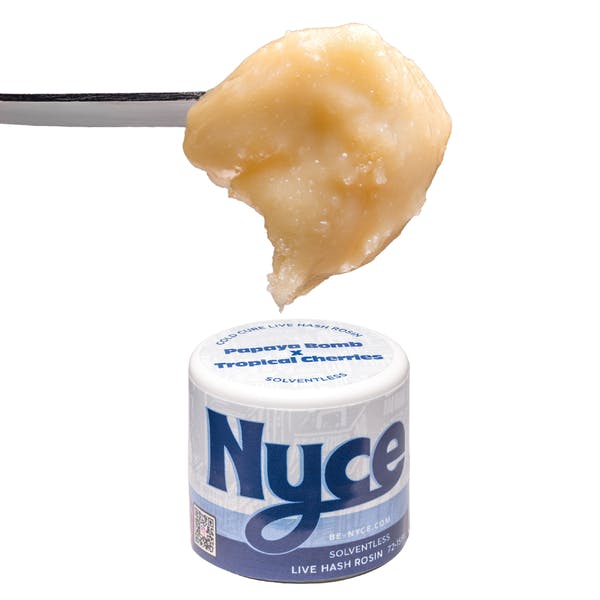
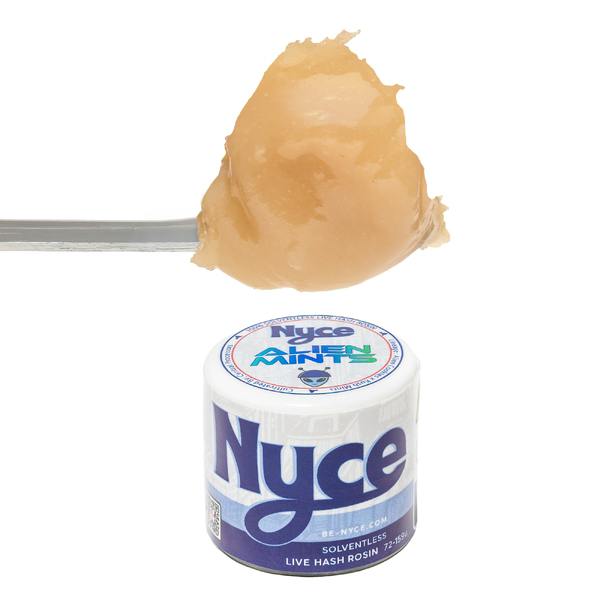
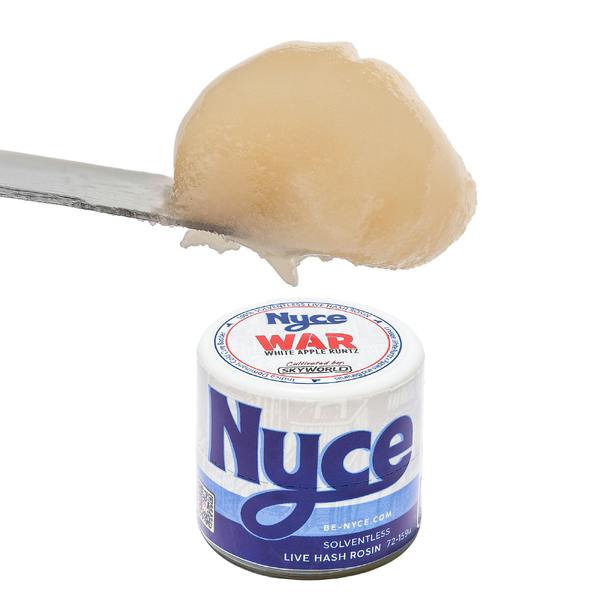
Rosin is produced by applying calibrated heat and mechanical pressure to cannabis flower or hash, causing trichome resin to separate from plant material without the introduction of any hydrocarbon or chemical solvent. The resulting oil is as close to unmediated plant chemistry as the concentrate format allows. For East Village consumers who tend to scrutinize ingredient lists and sourcing across every category of product they purchase — food, wine, personal care — the solventless distinction carries the same kind of provenance weight. No residual solvents means no concern about incomplete purging, and the COA simply confirms what the process already guarantees.
Cured rosin is pressed from flower that has been dried and cured in the conventional manner, a process that develops particular flavor compounds through enzymatic breakdown while allowing some of the more volatile terpenes to dissipate. Live rosin begins with fresh-frozen plant material — harvested and immediately frozen to preserve the full terpene expression present at peak growth. Live rosin generally delivers a more vivid, aromatic profile and is priced accordingly. For a first-time rosin purchase, cured flower rosin from a cultivar you already enjoy in flower form is a reasonable starting point; live rosin is the natural next step for those seeking greater complexity.
Rosin's potency range — typically between sixty and eighty-five percent THC by weight — is meaningfully higher than the fifteen-to-thirty percent range common in licensed New York flower. The transition is manageable with deliberate calibration: begin with an amount smaller than a grain of rice, allow at least fifteen minutes before reassessing, and approach the first few sessions in a familiar, comfortable home setting. The East Village's walkable, low-stress domestic environment actually suits this kind of mindful introduction. The principle of starting low and going slow is not a caveat — it is the practical framework for getting the most from a high-quality product.
The primary options are a dab rig with an electronic nail or quartz banger, a portable electronic dab device such as an e-rig, or a dedicated concentrate vaporizer with a chamber designed for wax-consistency material. For apartment dwellers in 10003 or 10009 who are conscious of odor and neighbors, an e-rig operated at lower temperatures produces less visible vapor and dissipates more quickly than a torch-and-banger setup at high heat. Rosin cartridges, where available, offer the most discreet option at the cost of some terpene fidelity, which is a reasonable trade-off in a dense residential building.
A COA for rosin will report total THC and total CBD as percentages by weight, along with a terpene panel and a confirmation that residual solvent levels are below detection thresholds — the last item being a formality for solventless products but still worth confirming. Pay attention to the analysis date relative to the production date; terpenes degrade over time, and a COA from six or more months prior may not accurately represent the product's current aromatic character. The harvest or press date, when listed on the label or menu, is an equally useful data point.
ZenZest Cannabis Dispensary offers free same-day delivery on orders over $100 to more than 80 New York ZIP codes, which includes delivery-eligible addresses in 10003 and 10009. Orders are fulfilled through the dispensary's licensed adult-use delivery operation, compliant with OCM regulations. Delivery requires a valid government-issued ID confirming age of twenty-one or older, presented at the door. It is worth reviewing the current menu online before ordering, as concentrate inventory — particularly premium rosin — rotates frequently.
A social or lightly exploratory evening in East Village — the kind that might involve a record shop, a small bar on St. Marks, or a quiet park bench at Tompkins Square — tends to favor rosin profiles with elevated limonene and terpinolene, which are associated with uplifting, sociable qualities. Pinene can contribute a clarity that some people find conducive to conversation and observation. Myrcene-dominant profiles, by contrast, lean more sedating and are better suited to winding down at home after that same evening. Reading the terpene panel on a COA before purchasing allows you to match the product to the intended occasion.
Rosin is sensitive to heat, light, and air exposure — all of which accelerate terpene degradation and can cause the product to oxidize and lose potency. Silicone containers, while convenient, are not ideal for long-term storage because rosin can absorb into the material over time. Parchment-lined glass jars sealed tightly and stored in a cool, dark location — a kitchen drawer away from the stove, or a small cabinet — are preferable. For storage beyond a few weeks, a dedicated concentrate container kept in a mini-refrigerator at a consistent temperature is the most reliable method. Allow refrigerated rosin to return to room temperature before handling to prevent condensation.
Rosin-infused pre-rolls — flower rolls coated or filled with rosin and sometimes finished with kief — offer an accessible entry point into concentrate-level potency without any additional equipment. The experience differs from a pure dab in that the terpene expression is partially mediated by the combustion of flower, but the potency uplift over a standard pre-roll is substantial. For East Village shoppers who prefer not to invest in glassware or electronic devices before deciding whether concentrates suit their routine, an infused pre-roll from a licensed New York producer is a practical first step. As always, approach cautiously and allow time between draws.
Within New York's licensed adult-use market, rosin is positioned at the upper tier of the concentrate price spectrum. Flower rosin in half-gram or full-gram units typically ranges from roughly forty dollars to eighty dollars per gram depending on the producer and source cultivar. Live rosin — made from fresh-frozen material — generally commands a premium above that range. Hash rosin pressed from ice-water-extracted bubble hash sits in a similar tier to live rosin. These price points reflect the labor intensity of the process, lower yield compared to solvent-based extraction, and the premium placed on solventless production. Comparing cost-per-gram across menu options, alongside COA terpene data, is the most rational framework for making a purchasing decision.
Pick your store
We'll show pricing, deals, and delivery zones for the store you pick. You can switch any time from the header.