On sale· 20% OFF
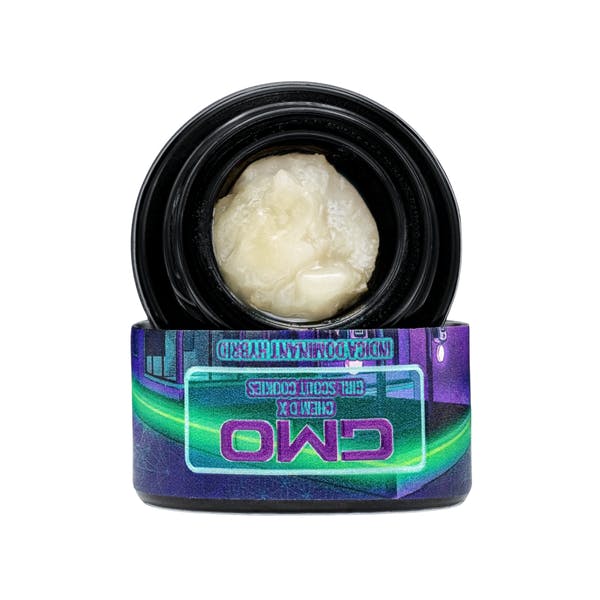
THC 70.7%Indica-Hybrid
UmamiiUmamii | Live Rosin Jar | GMO · 2g
$80.00$100.00
$93after tax

weeddispensarynearme.com
You must be 21 years or older to enter. By entering, you confirm you’re of legal age in your state to purchase cannabis.
For use only by adults 21+ • Keep out of reach of children
Cobble Hill moves at a considered pace — brownstone-lined blocks, the quiet hum of Court Street, the Mediterranean warmth of Atlantic Avenue — and the cannabis concentrates available through New York's licensed market match that sensibility: precise, potent, and worth slowing down to appreciate. For adults 21 and older who prefer depth over novelty, this category rewards attention.
About Concentrates
Cannabis concentrates represent the most refined expression of what the plant produces. Through extraction methods ranging from solventless pressing — rosin, bubble hash — to hydrocarbon and CO2 processes, licensed New York producers isolate the cannabinoids and terpenes that define each cultivar, stripping away plant matter to deliver a product of notable intensity. The result is a category that demands a degree of familiarity but offers a ceiling of experience that flower alone rarely reaches. New York's Office of Cannabis Management licenses the producers whose concentrates reach retail shelves, meaning every gram sold through a compliant dispensary carries a certificate of analysis. Residual solvents, pesticide screens, and potency figures are not estimates — they are verified. For a category where a single inhalation can be several times more potent than a standard flower session, that transparency is not a footnote; it is the foundation of responsible shopping. The format landscape within concentrates is genuinely broad. Live rosin, pressed from fresh-frozen flower without solvents, preserves the aromatic complexity of a cultivar at harvest. Live resin, extracted via hydrocarbons from fresh-frozen material, offers comparable terpene fidelity at a more accessible price point. Distillate cartridges sacrifice some terpene nuance for convenience and discretion. Shatter, wax, budder, and sugar are defined more by texture than process, each behaving differently on a nail or in a portable device. Understanding these distinctions transforms a concentrates purchase from an impulse into an informed decision.
Concentrates for Cobble Hill shoppers
Cobble Hill occupies a particular register in Brooklyn's residential hierarchy. Between the brownstones of Warren and Kane Streets, the specialty grocers and wine bars along Court Street, and the long commercial stretch of Atlantic Avenue — where Lebanese bakeries and design showrooms coexist with practiced ease — the neighborhood attracts residents who have strong opinions about provenance and process. The same instinct that leads a Cobble Hill shopper to ask a cheesemonger about aging conditions tends to translate into curiosity about extraction method and terpene profile when they enter a dispensary. Seasonality matters here more than many neighborhoods acknowledge. Brooklyn winters along the waterfront carry a genuine chill, and concentrates are predominantly an indoor pursuit — a live rosin session at home on a February evening, after a walk back from a dinner on Smith Street, aligns naturally with the way the neighborhood uses its domestic spaces. In summer, when the brownstone stoops fill and the blocks soften into something almost Mediterranean, lower-potency formats like hash rosin pressed into cartridges offer an option that is discreet and portable for an evening stroll toward the Brooklyn Heights Promenade. The 11231 ZIP also captures a population that commutes regularly — to Manhattan via the F or G at Bergen Street, or across the bridge by bicycle. Concentrates in cartridge form are the category most compatible with a morning routine that ends, not begins, with consumption: compact, odor-minimizing, and dosage-consistent enough that a considered adult can calibrate their evening with reasonable predictability.
What to look for
When evaluating concentrates in this category, terpene content deserves as much attention as THC percentage. A live rosin testing at 68 percent THC with a robust myrcene and caryophyllene profile will deliver a qualitatively different experience than a distillate cartridge at 85 percent THC with added botanical terpenes. Myrcene tends to read as earthy and calming; limonene skews bright and uplifting; terpinolene adds a floral, almost herbal note that many find particularly pleasant in solventless formats. The certificate of analysis on any licensed New York product will list these figures — treat them as the primary data, not the cultivar name alone. Format trade-offs are worth mapping against your actual consumption habits. A dab rig or electronic nail produces the fullest expression of a live rosin or live resin but requires equipment, a water source, and a degree of privacy that a Court Street apartment may or may not accommodate easily. A portable dab device — e-rigs or hash pens — narrows that gap considerably. Cartridges attached to a standard 510-thread battery occupy a different position entirely: they are the most portable and lowest-commitment entry point, though the terpene complexity is often reduced compared to solventless options. For shoppers approaching concentrates for the first time, the principle of starting low and going slow is particularly relevant here, given the potency range involved. A small quantity of a well-reviewed live rosin, evaluated over several sessions, provides far more useful information than a large purchase of an untested format. Seek out budtenders who can speak specifically to the extraction batch and the cultivar source — in New York's licensed market, that information should be readily available.
Why ZenZest for concentrates in Cobble Hill
ZenZest Cannabis Dispensary maintains a location at 2343 Forest Ave, Staten Island, NY 10303, approximately 9.3 miles from Cobble Hill — a distance that, given New York's geography, is manageable but not effortless. The more relevant option for most 11231 residents is ZenZest's same-day delivery service, which covers more than 80 New York ZIP codes and is offered at no charge on orders over $100. For a category like concentrates, where a considered selection of two or three products from reputable licensed producers can approach that threshold, the delivery model is practical rather than incidental. ZenZest's inventory draws from New York's licensed producer network, with concentrates spanning solventless, hydrocarbon, and cartridge formats. The ability to browse certificates of analysis before purchasing, then receive products the same day without a cross-borough commute, suits the Cobble Hill resident who treats cannabis with the same thoughtfulness they bring to any other premium consumable. Orders can be placed through the ZenZest platform, and the delivery coverage makes Union Street or Atlantic Avenue as accessible as any neighborhood in the borough.
ZenZest Staten Island · 2343 Forest Ave, Staten Island, NY 10303 · 9.3 miles from Cobble Hill.
$93after tax
$35after tax
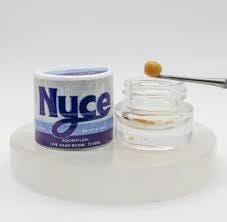
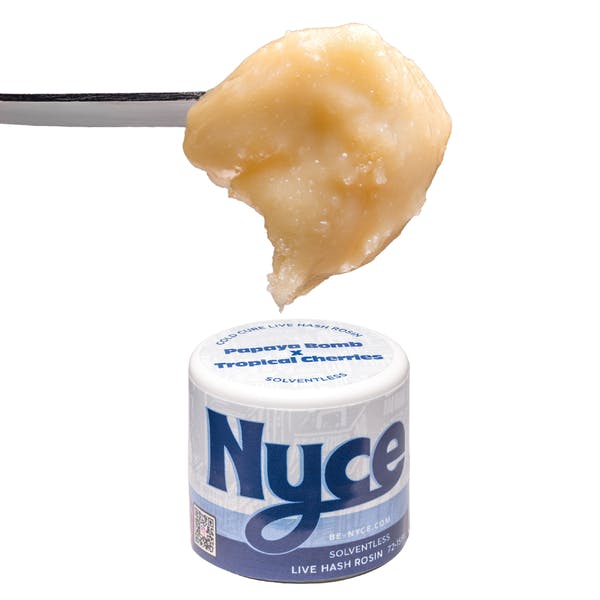
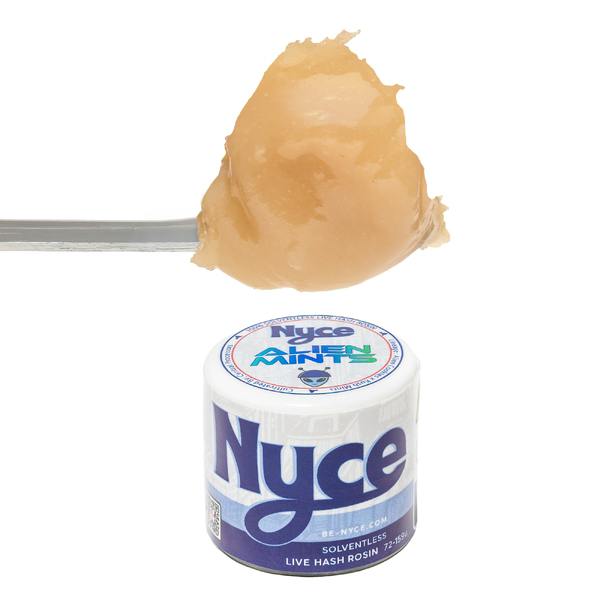
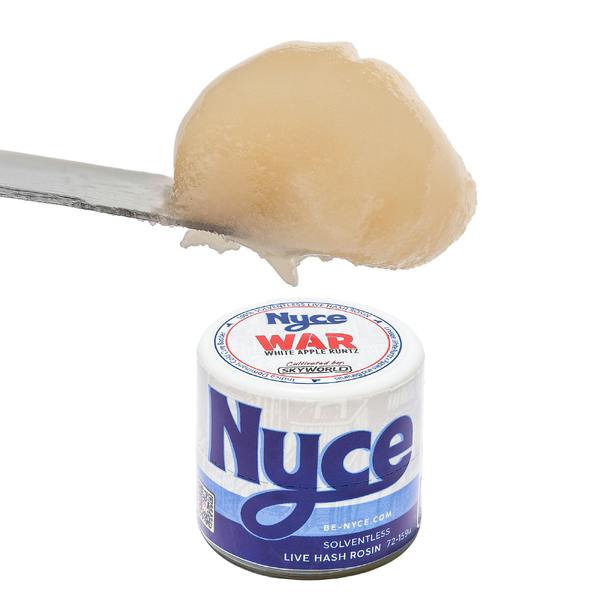
Live rosin is produced by applying heat and pressure to fresh-frozen cannabis flower, with no solvents involved. Live resin uses hydrocarbon solvents on fresh-frozen material and is then purged. Both preserve terpene complexity at high levels. For a first purchase, live rosin is often recommended because its solventless process appeals to buyers who prioritize purity, and its aroma tends to be more immediately legible — an advantage for someone mapping their preferences. That said, live resin cartridges are a lower-commitment entry point at a more accessible price.
Portable electronic rigs — often called e-rigs — are compact enough for apartment use and require no open flame, making them well-suited to a brownstone rental where landlord restrictions or shared ventilation are concerns. Cartridge-based concentrates attached to a 510-thread battery are the most minimal option: no additional equipment, no exposed heating element, and an odor profile that dissipates quickly. A standard dab rig with a quartz nail is the most expressive format but requires more space, a water source, and a torch, which may not suit every living situation.
Certified concentrates available through New York's licensed market typically range from approximately 55 percent THC in certain solventless hash products up to 85 to 90 percent in distillate cartridges. Live rosin commonly tests between 65 and 78 percent. These figures are verified by third-party laboratories and listed on the certificate of analysis accompanying each product. Potency alone is not a reliable quality indicator — a 70 percent live rosin with an intact terpene profile will often be preferred by experienced consumers over a 90 percent distillate.
Yes. ZenZest Cannabis Dispensary's same-day delivery service covers more than 80 New York ZIP codes, and 11231 — which encompasses most of Cobble Hill — falls within that coverage area. Delivery is offered at no charge on orders exceeding $100. New York adult-use delivery requires recipients to be 21 or older and to present valid government-issued identification upon receipt. Orders are placed through the ZenZest platform, and same-day windows are subject to availability.
Yes, and this segment has grown meaningfully within New York's licensed market since adult-use sales began. Solventless products include bubble hash, produced by agitating fresh-frozen cannabis in ice water; rosin, pressed from dry flower or sift using heat and pressure; and live rosin, pressed from fresh-frozen material. These products carry no residual solvent concerns by definition, and their terpene preservation is generally regarded as among the highest in the concentrates category. Certificates of analysis for solventless products will still list cannabinoid and terpene content, and reputable retailers can identify the cultivar source.
Myrcene is the terpene most commonly associated with a relaxing, grounding quality and appears prominently in many indica-leaning cultivars. Caryophyllene, which carries a spicy, woody character, is another candidate and is notable for also interacting with CB2 receptors. Linalool, more floral in aroma, appears in smaller concentrations in some cultivars and may contribute to a quieter quality. These are general orientations — individual response varies, and no terpene profile guarantees a specific outcome. The certificate of analysis on any licensed product will list terpene percentages, which should inform your selection.
Concentrates are sensitive to heat, light, and air exposure, all of which degrade terpene content and alter texture over time. Storage in a cool, dark location — a drawer or cabinet away from windows and heat sources — is the baseline recommendation. For solventless products like live rosin, short-term refrigeration in an airtight, non-reactive container is appropriate if the product will not be consumed within one to two weeks. Cartridges should be stored upright and at room temperature to prevent oil migration and maintain consistent draw resistance.
Shatter, wax, and budder are textural categories, not extraction categories — they describe the physical form a concentrate takes based on post-extraction processing conditions such as temperature, agitation, and humidity. Shatter is glassy and brittle; wax is opaque and crumbly; budder is whipped to a smooth, creamy consistency. None of these textures is inherently superior in quality. They do behave differently in practice — budder is easier to portion precisely with a tool, while shatter can be more difficult to work with in cold conditions. The certificate of analysis, not the texture, is the quality indicator.
For a commuter using the F or G train from Bergen Street, the cartridge format has a clear practical advantage. A 510-thread cartridge on a standard battery is compact, produces minimal odor, and can be used discreetly during an evening wind-down at home without any additional equipment or preparation. Traditional concentrates — live rosin, wax, shatter — require a device with a heating element, which adds setup time and limits portability. The trade-off is that cartridges typically offer less terpene complexity than solventless formats, but for a daily use case centered on convenience, the format logic is straightforward.
New York's Office of Cannabis Management requires licensed cultivators, processors, and retailers to maintain chain-of-custody documentation and third-party laboratory testing for all adult-use products. On a compliant concentrate label, you should expect to find the producer's license number, a batch-specific certificate of analysis reference, cannabinoid potency figures, a list of tested terpenes if above reportable thresholds, and a harvest or extraction date. Any product sold through a licensed dispensary without these identifiers warrants scrutiny. Purchasing exclusively through licensed retailers is the only mechanism consumers have to verify these standards are in place.
Pick your store
We'll show pricing, deals, and delivery zones for the store you pick. You can switch any time from the header.